Raw Milk Legalized in West Virginia: How Sales Work Under HB 4911
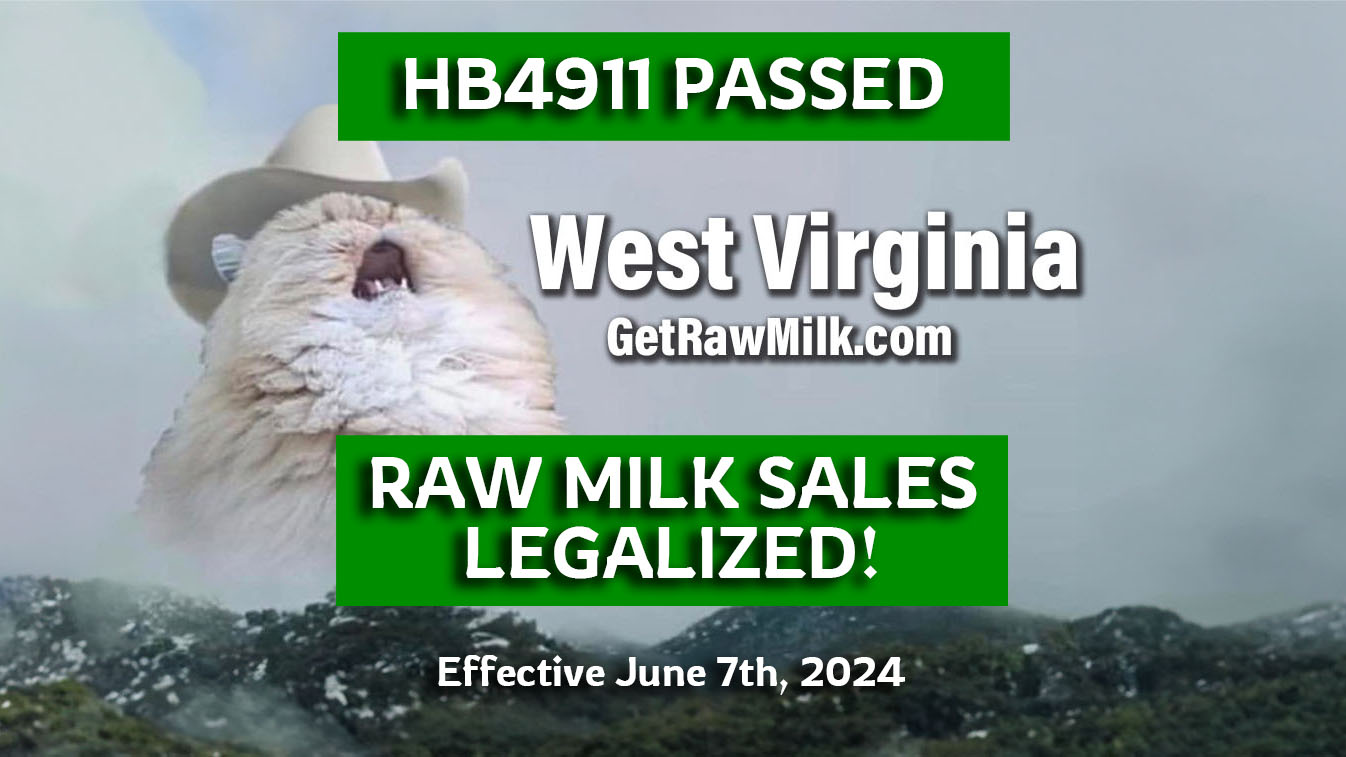
Raw milk sales have been legal in West Virginia since June 7, 2024. House Bill 4911 rewrote West Virginia Code §19-1-7 so that raw milk “may be sold by a seller in West Virginia to a consumer in West Virginia,” as long as each container carries the required label. A state rule that took effect in 2025 confirms that it is lawful to transport, sell and possess raw milk and raw milk products anywhere within the state. No license or permit is required, and the law does not limit sales to the farm.
How HB 4911 became law
Delegates Hornby, Summers, Chiarelli, Thorne, Foster, DeVault and Dillon introduced HB 4911 on January 18, 2024. The House passed it in February, the Senate passed an amended version on March 8, and the House agreed to the Senate’s changes on March 9, according to the bill’s official history.
Governor Jim Justice neither signed nor vetoed the bill. When a governor takes no action on a passed bill within the time the state constitution allows, the bill becomes law without a signature. HB 4911 took effect ninety days after passage, on June 7, 2024.
The law opens with the words “Notwithstanding any other provision of this code to the contrary,” so it overrides the pasteurization requirements elsewhere in state law for raw milk sold to consumers in West Virginia.
What the label must say
Every container of raw milk sold under the law must be clearly labeled “unpasteurized raw milk” and must show:
- the seller’s name and physical address
- the date of production
- this warning: “Consuming unpasteurized raw milk may increase your risk of foodborne illness, especially for children, elderly, immunocompromised individuals, and persons with certain medical conditions.”
The 2025 raw milk rule
HB 4911 authorized the West Virginia Department of Agriculture to write rules for raw milk sales. The resulting rule, 61 CSR 41, took effect on May 8, 2025. It adds detail without narrowing who may sell:
- Who may sell. A “seller” is “a person or entity offering for sale raw milk to a consumer.” The definition is not limited to the farm that produced the milk.
- Where. “It is lawful to transport, sell, and possess raw milk and raw milk products within the State of West Virginia.” The rule covers raw milk products as well as fluid milk, and it does not restrict sales to a particular place.
- Storage. Raw milk and raw milk products held for sale must be kept between 35 and 40 degrees Fahrenheit until the sale.
- Labels. Labels must be in English, printed legibly in waterproof ink, and list the contents and quantity along with the statutory label and warning.
The rule is scheduled to expire on August 1, 2029 unless it is renewed, which is standard for West Virginia legislative rules. The statute itself does not expire.
Where raw milk is available
Because the law lets any seller offer labeled raw milk to a consumer within the state, raw milk can be sold on farms, delivered, or offered by other sellers, including stores. Many producers sell directly from the farm, and some continue to use herdshares. To find a source, browse raw milk farms and retailers in West Virginia.
Herdshares came first
Before HB 4911, herdshares were the only legal route to raw milk in West Virginia. Senate Bill 387, signed on March 4, 2016 and in effect that May, allowed consumers to own a share of a dairy animal and receive its milk under a written agreement. Herdshares remain available alongside direct sales.
West Virginia’s path, from no legal access to herdshares in 2016 and open sales in 2024, is one of the larger shifts on the raw milk law timeline. For the full state summary and official links, see raw milk laws in West Virginia.
Frequently asked questions
Is raw milk legal in West Virginia?
Yes. Since June 7, 2024, HB 4911 has allowed a seller in West Virginia to sell raw milk to a consumer in West Virginia, as long as each container is labeled “unpasteurized raw milk” with the seller’s name and address, the production date and a health warning.
Do you need a license to sell raw milk in West Virginia?
No. Neither the statute nor the 2025 rule requires a license or permit. Sellers must follow the labeling requirements and keep raw milk between 35 and 40 degrees Fahrenheit until it is sold.
Can stores sell raw milk in West Virginia?
The law does not limit sales to the farm. The 2025 rule defines a seller as any person or entity offering raw milk for sale to a consumer and makes it lawful to transport, sell and possess raw milk and raw milk products within the state.
Can raw milk products such as butter or cheese be sold in West Virginia?
Yes. The 2025 rule applies to raw milk and raw milk products, with the same labeling and storage requirements.