Alaska liberalised substantially in 2023 and now runs one of the more accessible raw milk frameworks in the country, built on producer registration rather than full dairy licensing. Both direct sale and herdshares are lawful, which is an unusual combination.
Is raw milk legal in Alaska?
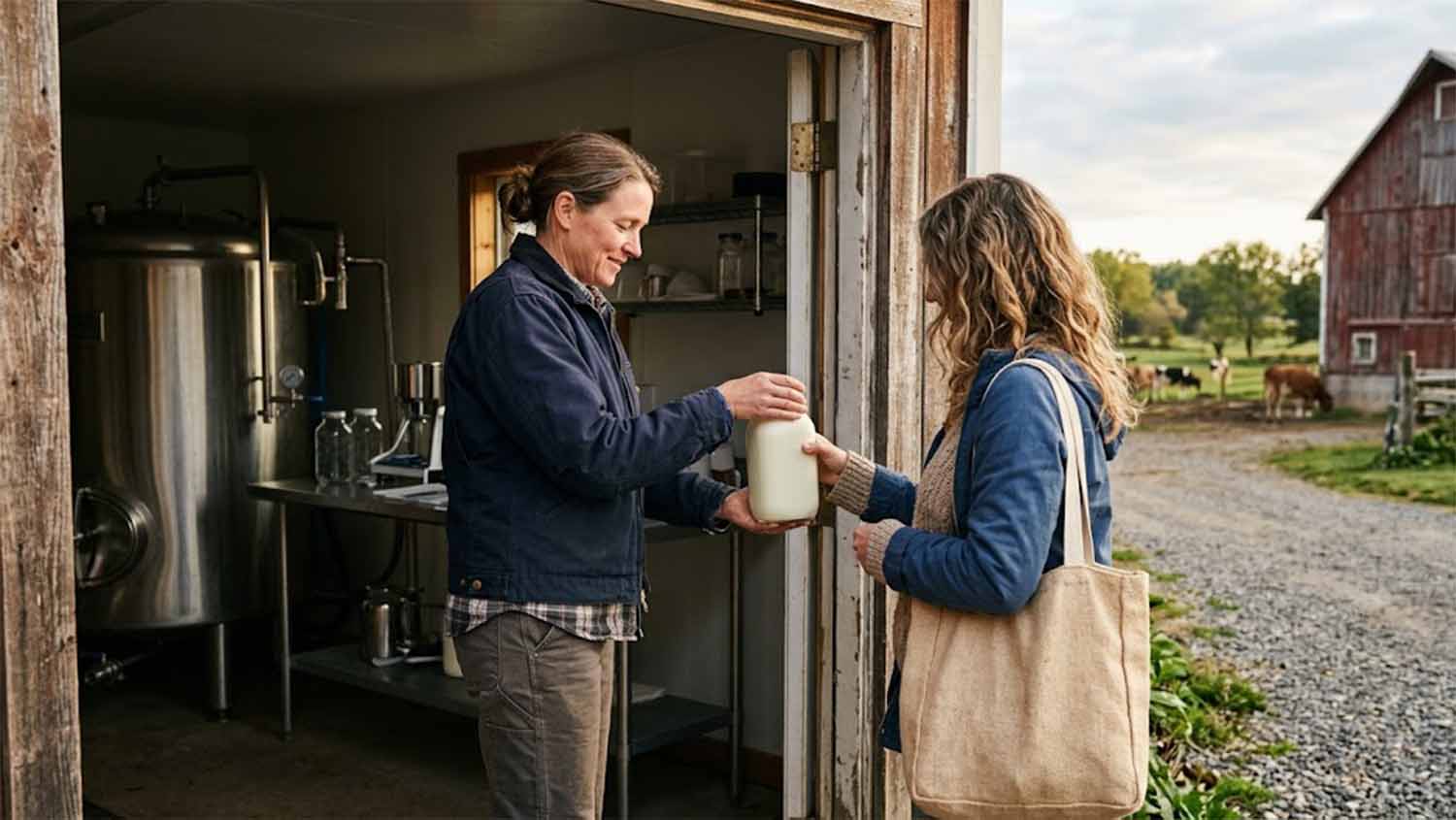
Yes. 18 AAC 32.070, effective 26 March 2023, permits registered producers to sell raw milk and raw milk products from cows, goats and sheep direct to consumers, at registered markets, and through retail establishments. Herdshare distribution of raw milk and raw dairy products is separately lawful, so consumers can take either route.
Registration requirements
A producer selling under 18 AAC 32.070 must own the animals that produced the milk, have engaged a licensed veterinarian, demonstrate knowledge of animal care requirements and facilities, and register the activity with the Department of Environmental Conservation to obtain a unique registration number, which is required in order to sell. Registration must be renewed annually, no later than 15 January.
Two limits define the edges of the scheme. Product may not be distributed interstate, which is the federal restriction under 21 CFR 1240.61 rather than a state rule. And raw milk products may not be sold into food processing establishments or food service, so restaurants and manufacturers remain outside the framework.
Labelling
Product must carry the statement: "ATTENTION: This product has not been pasteurized and, therefore, may contain harmful bacteria that can cause serious illness, or even death. Infants, children, the elderly, women who are pregnant, and persons with weakened immune systems are at highest risk." The word ATTENTION must appear in letters at least a quarter of an inch tall.
Where to buy
Registered producers sell at the farm, at markets and through retail outlets, concentrated in the Matanuska-Susitna Valley, the Kenai Peninsula and around Anchorage and Fairbanks, which is where Alaska's limited agricultural land sits. Herdshares operate alongside. Because registration is a public process administered by DEC, the department is the practical starting point for identifying registered producers. For the federal framework, see the United States raw milk laws overview.