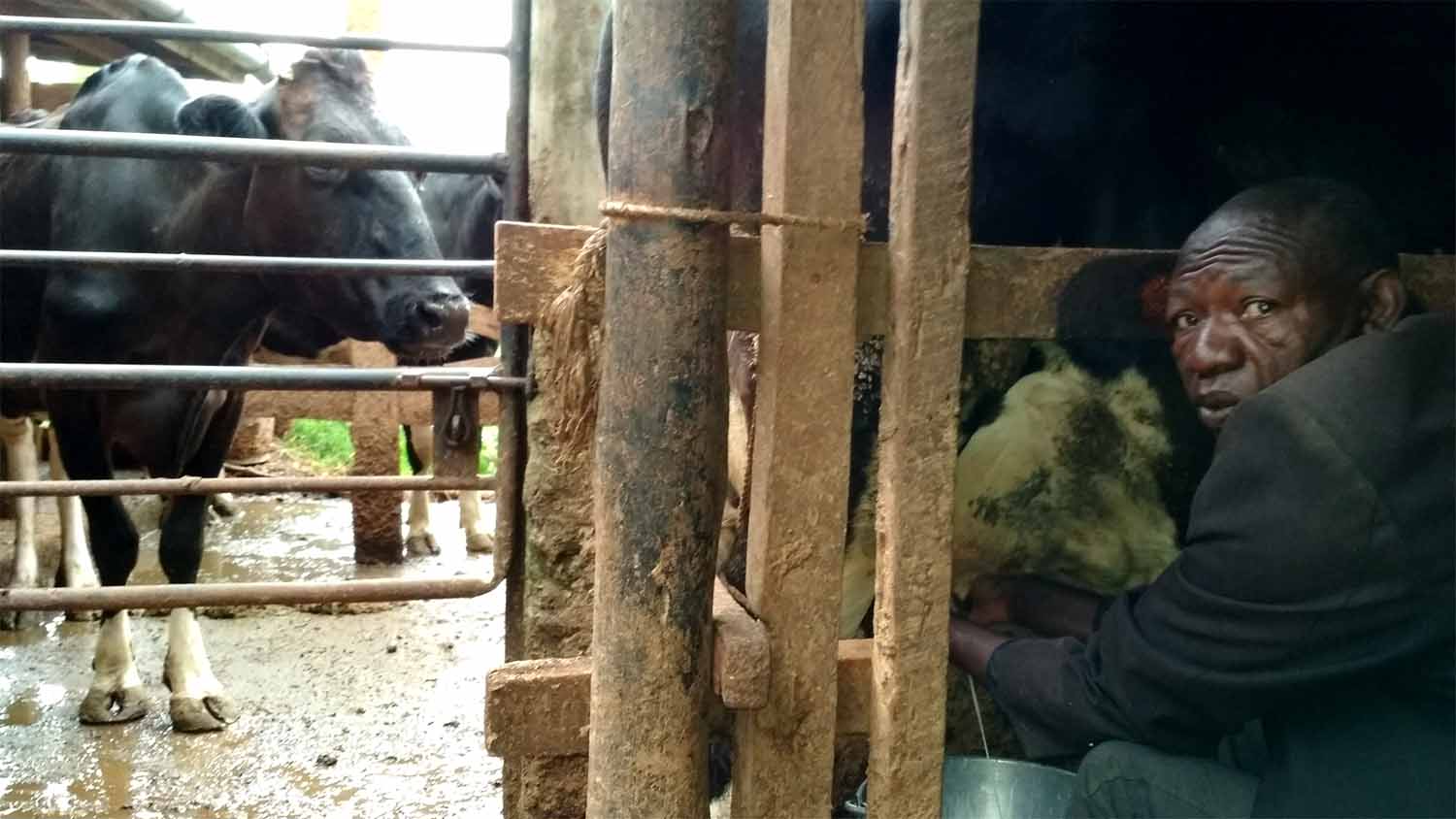
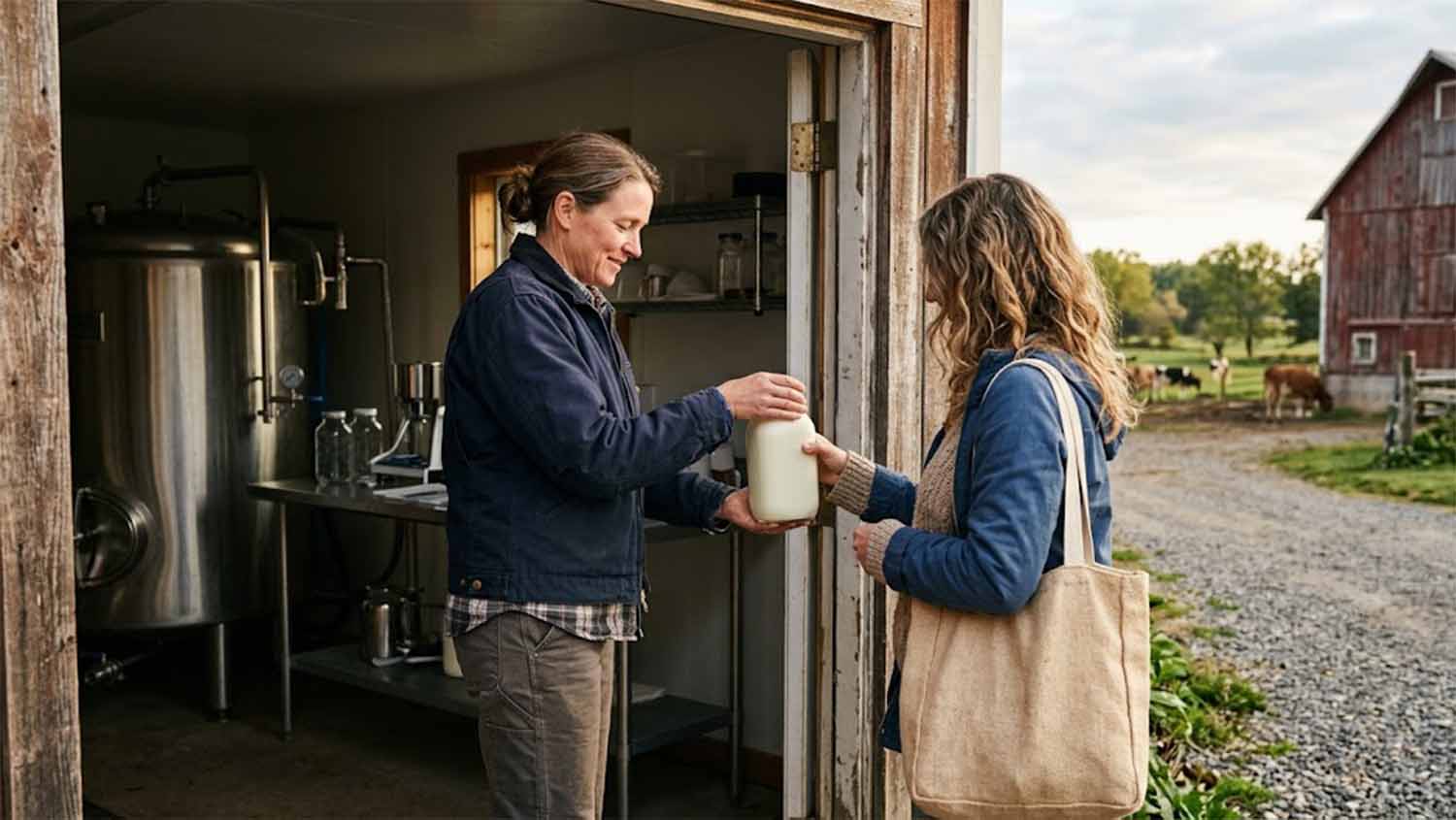
Nebraska keeps it simple, and its legal basis is unusually clean. Raw milk and raw cream may be sold at the farm directly to consumers, and no permit is required, because a qualifying farm sale is exempt from the state dairy statute altogether rather than merely excused from pasteurization.
Is raw milk legal in Nebraska?
Yes, at the farm. Neb. Rev. Stat. 2-3969(3) provides that "milk and cream produced by farmers exclusively for sale at the farm directly to customers for consumption and not for resale shall be exempt from the Nebraska Milk Act."
That wording carries real weight. The exemption is from the entire Act, not from a single requirement, so the permits, inspections, grading and labelling machinery the Act establishes simply does not reach a qualifying farm sale. There is no application, no fee, no inspection schedule and no state register for this activity.
The three conditions
All three come straight from the statute, and all three must hold:
The milk or cream is produced by the farmer selling it. It is sold exclusively at the farm, directly to the customer. And it is for consumption, not for resale.
Step outside those and the general rule in 2-3969(1) applies instead: only milk from approved sources holding an appropriate departmental permit may be sold to a final consumer or to restaurants, soda fountains, grocery stores or similar establishments. That is precisely why Nebraska raw milk stays at the farm gate rather than moving into shops or onto market stalls.
What you can buy
Milk and cream are both named in the statute, which is a meaningful inclusion and not universal among states. Cow dairies predominate, with goat producers scattered across the state.
Aged raw milk cheese is separately legal throughout Nebraska under the federal 60 day rule and needs no arrangement at all on the buyer's side.
Notes for producers
Two points from the Act are worth knowing if you are considering selling. Even where a permit does apply, Nebraska charges no fee for a Grade A milk producer permit or a manufacturing grade milk producer permit under 2-3971. And the state adopts the federal Grade A Pasteurized Milk Ordinance by reference, currently the 2017 Revision, so permitted operations work to the national standard.
Herdshares are not addressed by the Nebraska Milk Act in either direction, so the on-farm exemption remains the established and well-understood route.
How to find a producer
Buy at the farm. Nebraska has a large agricultural base, and producers operate across the eastern farming counties, the Platte valley and the central and southeastern regions, serving Omaha, Lincoln, Grand Island, Kearney, Norfolk and Columbus from the surrounding countryside.
Because no permit is involved, there is no state list to consult, and most sellers are small family operations found through local food networks, farm stands, farmers market conversations and word of mouth. Nebraska has Amish and Mennonite communities in the eastern counties maintaining traditional dairying.
Crossing state lines
Missouri to the southeast is the most flexible neighbour, allowing on-farm sales and delivery with no permit, plus farmers market sales for permitted producers. Iowa to the east permits licensed farm-direct sales and delivery. South Dakota to the north allows farm purchase and producer delivery. Kansas to the south allows on-farm sales with no permit and unrestricted advertising. Colorado to the west operates through herdshares, and Wyoming has among the broadest access in the country. Federal law at 21 CFR 1240.61 restricts interstate commerce in raw milk, though the FDA has stated it has never taken and does not intend to take enforcement action against an individual transporting raw milk across a state line solely for personal consumption. For the federal framework, see the United States raw milk laws overview.