There is no federal law against producing, buying, or drinking raw milk in the United States. Federal authority reaches interstate commerce, and the applicable rule, 21 CFR 1240.61, requires that milk in final package form for direct human consumption be pasteurized before it crosses a state line. Everything inside a state boundary is governed by that state's own law, which is why raw milk availability varies so sharply from one state to the next. Roughly 30 states allow some form of raw milk sale, whether through retail stores, on-farm sales, or herdshare agreements, while a smaller group prohibits distribution outright.
Select a state below for its specific rules, permitted sales channels, licensing requirements, and official state resources.
Is raw milk legal in the United States?
The answer depends entirely on which state, and on whether the milk crosses a state line. Intrastate sales are a matter of state law and are legal in some form in most states. Interstate shipment of unpasteurized milk packaged for direct human consumption is prohibited under federal regulation, regardless of whether both states involved permit raw milk internally. This two-track structure has been in place since 1987 and is the single most important thing to understand about raw milk law in the country.
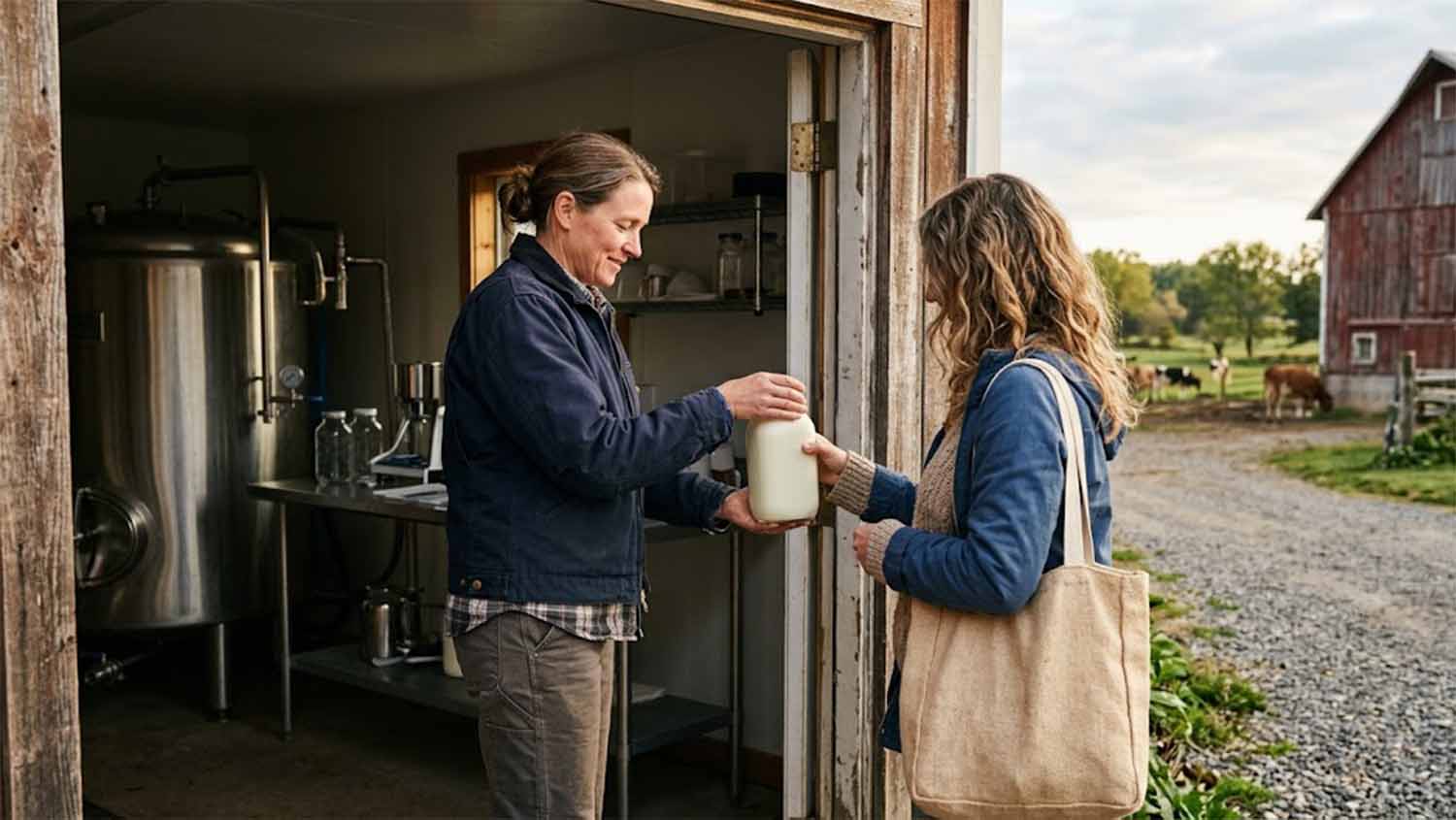
State pathways generally fall into four categories. Retail sales allow raw milk on grocery or health store shelves and exist in states with the most developed regulatory frameworks, including California, Pennsylvania, Idaho, and Maine. On-farm sales, the most common pathway, permit purchase directly at the farm where the milk was produced. Herdshare or cowshare agreements let a consumer buy an ownership interest in an animal or herd and receive milk as an owner rather than a purchaser, which is legal by statute, regulation, policy, or court decision in around a dozen states. Pet or animal consumption labeling allows sale of raw milk not labeled for human consumption in several states that otherwise restrict it.
The federal interstate rule: 21 CFR 1240.61
The operative federal text reads: "No person shall cause to be delivered into interstate commerce or shall sell, otherwise distribute, or hold for sale or other distribution after shipment in interstate commerce any milk or milk product in final package form for direct human consumption unless the product has been pasteurized or is made from dairy ingredients (milk or milk products) that have all been pasteurized, except where alternative procedures to pasteurization are provided for by regulation, such as in part 133 of this chapter."
Three limits are built into that sentence. It applies to interstate commerce, not to activity inside a state. It applies to milk in final package form for direct human consumption, not to bulk milk moving to a processor for pasteurization. And it carves out alternative procedures provided by regulation, which is the opening that permits aged raw milk cheese. The FDA has also stated that it "has never taken, nor does it intend to take, enforcement action against an individual who purchased and transported raw milk across state lines solely for his or her own personal consumption."
How the federal rule came about
In an order published October 10, 1973, the FDA revised the identity standards for fluid milk products and imposed a pasteurization requirement for interstate commerce. The Commissioner addressed objections from raw milk advocates directly, noting that those who objected "contended that raw certified milk is a safe product, and that raw milk is superior in flavor," and concluding that "it is reasonable to require that fluid milk products for consumer use moving in interstate commerce be pasteurized." Critically, the same order stated: "This decision does not conflict with the right of individual states to authorize the intrastate distribution of raw milk to consumers." Certified raw milk retained an exemption after a producer objection.
The FDA drafted a broader prohibition in 1982 but did not adopt it. In September 1984, Public Citizen and the American Public Health Association sued the Secretary of Health and Human Services to compel a ban on raw milk sales. The court ruled against the government and ordered the agency to publish a proposed regulation. The resulting final rule, 21 CFR 1240.61, was published August 10, 1987 and took effect September 9, 1987 (Public Citizen v. Heckler, 653 F. Supp. 1229 (D.D.C. 1987)). The interstate restriction is therefore the product of litigation and agency rulemaking rather than an act of Congress, which is why legislation to reverse it has been introduced repeatedly.
Raw milk cheese and the 60 day rule
Cheese made from unpasteurized milk may be sold legally throughout the United States, including across state lines, provided it has been cured for at least 60 days at a temperature not less than 35°F. This standard dates to 1950 and appears throughout the cheese standards of identity in 21 CFR Part 133. It applies to a substantial share of the roughly 70 defined cheese varieties, covering many aged styles including cheddar, blue, gruyère, parmesan, and Swiss. Fresh raw milk cheeses that cannot meet the aging threshold, such as raw brie, camembert, and queso fresco, cannot be sold commercially in interstate commerce or imported, which is why many European cheeses are unavailable in their traditional form in American shops.
The Pasteurized Milk Ordinance
The Grade "A" Pasteurized Milk Ordinance (PMO) is a model regulation issued by the FDA and revised biennially through the National Conference on Interstate Milk Shipments (NCIMS), a body formed in 1950 to coordinate state milk sanitation programs. The PMO is not binding federal law. States adopt it voluntarily, and nearly all have, which is why Grade A dairy requirements look broadly similar nationwide. Because the PMO governs Grade A pasteurized milk, states that permit raw milk sales generally do so through separate statutes or permit categories that sit outside the PMO framework.
Interstate Milk Freedom Act of 2026
H.R. 7880, the Interstate Milk Freedom Act of 2026, was introduced March 9, 2026 by Representative Thomas Massie (R-KY) with Representative Chellie Pingree (D-ME) as co-lead, joined by Representatives Davidson, Grothman, Higgins of Louisiana, Perry, Roy, Smucker, Boebert, and Mace. It was referred to the House Committee on Energy and Commerce.
The bill would bar any federal department, agency, or court from restricting interstate traffic in unpasteurized milk packaged for direct human consumption, but only where the state of origin already allows raw milk distribution by any means, the milk complies with that state's production and labeling laws, and it is being moved to another state that also allows raw milk distribution. It expressly preempts no state law, so states that prohibit raw milk would be unaffected. It also defines "cowshare" in federal terms for the first time, covering an undivided interest in a cow, goat, sheep, or water buffalo held under a written bill of sale and boarding contract. Massie has introduced versions of this legislation in 2014, 2015, 2019, 2021, and 2024, and offered it as a Farm Bill amendment in 2018. Further detail is available in this analysis of the Interstate Milk Freedom Act of 2026, and the broader debate is covered in opposing views on the federal raw milk ban.
Enforcement and litigation
Federal enforcement has historically focused on commercial operations shipping across state lines rather than on individual consumers. The most prominent recent litigation involves Amos Miller of Miller's Organic Farm in Bird-in-Hand, Pennsylvania, whose private membership food club distributes raw dairy nationally. In a January 2025 decision the Pennsylvania Commonwealth Court allowed Miller to continue distributing raw milk to customers outside Pennsylvania while the state's case against him proceeds, producing the unusual result that he may ship out of state but faces restrictions at home. That case is examined in more detail in this report on the Amos Miller ruling.
Has federal raw milk policy changed?
No. 21 CFR 1240.61 remains in force exactly as written, no rulemaking to amend or repeal it has been initiated, and no federal raw milk standard or certification program exists. Consumers and producers should treat the current regulation, and their own state's statutes, as controlling.
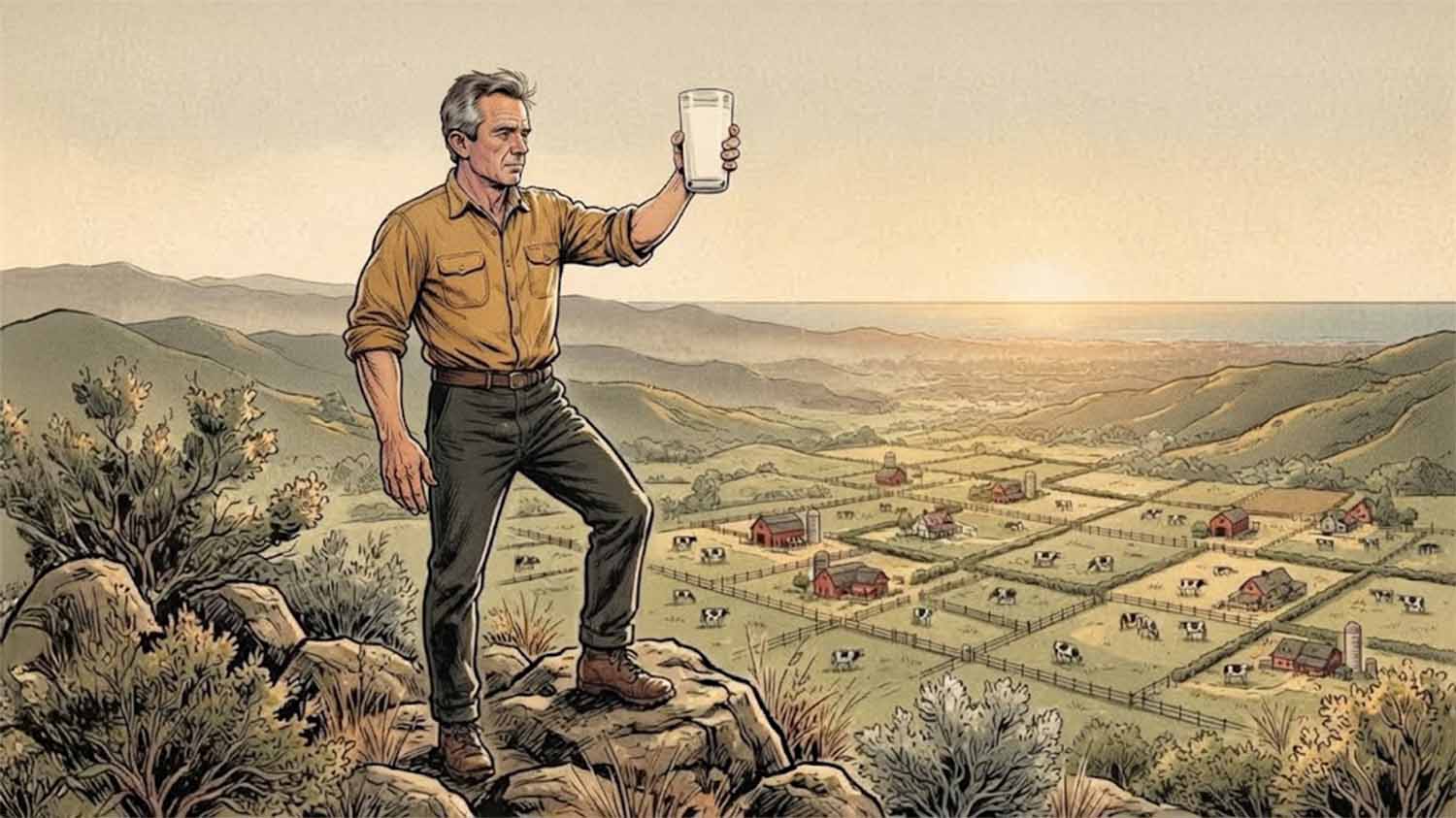
This is worth stating plainly because the period since 2025 produced a great deal of talk and no regulatory movement. In January 2025 staff for Health and Human Services Secretary Robert F. Kennedy Jr. approached Mark McAfee of Raw Farm, one of the largest raw dairies in the country, encouraging him to apply for a federal advisory role on raw milk policy and requesting written proposals. McAfee submitted them. The follow-through did not come: his subsequent request to meet with senior FDA officials was declined in a form letter from the Principal Deputy Director of the agency's Human Foods Program, which stated that "given our need to balance agency priorities, the Human Foods Program respectfully declines your request for a meeting at this time, though we remain open to dialogue with the raw milk industry." Kennedy separately declined to intervene when contacted directly during an enforcement dispute. The sequence is documented in this account of how the raw milk industry was solicited and then ignored.
The episode illustrates a structural point that matters more than any individual official. Regulatory outcomes for raw milk have tracked institutional access rather than stated sympathy: large produce and dairy interests reach federal decision makers directly and quickly, while raw milk producers receive form letters, and that asymmetry has not shifted with changes in leadership. Anyone tracking federal reform should watch for a published proposed rule in the Federal Register or floor action on H.R. 7880, not statements of support.
Finding raw milk in the United States
Because availability is set state by state, the practical starting point is the state page. Select a state below to see whether it permits retail sale, on-farm sale, herdshares, or pet milk labeling, along with any permit and testing requirements that apply to producers. In states with retail access, raw milk is typically stocked by health food stores, food co-ops, and some conventional grocers. In on-farm states, purchase generally requires visiting the farm in person, and some states cap the volume that may be sold or restrict advertising. In herdshare states, arrangements are usually made directly with a farmer under a written contract, and the milk is legally the owner's rather than a retail purchase.