How to Get Raw Milk Anywhere
Raw milk isn’t always five minutes away. Sales are outright banned in some states, and even where it’s legal, availability can be scarce and access decentralized by design. None of that has to be the end of the search. What follows is an ordered set of options for getting raw milk even in places where it’s genuinely difficult.
Search Online First
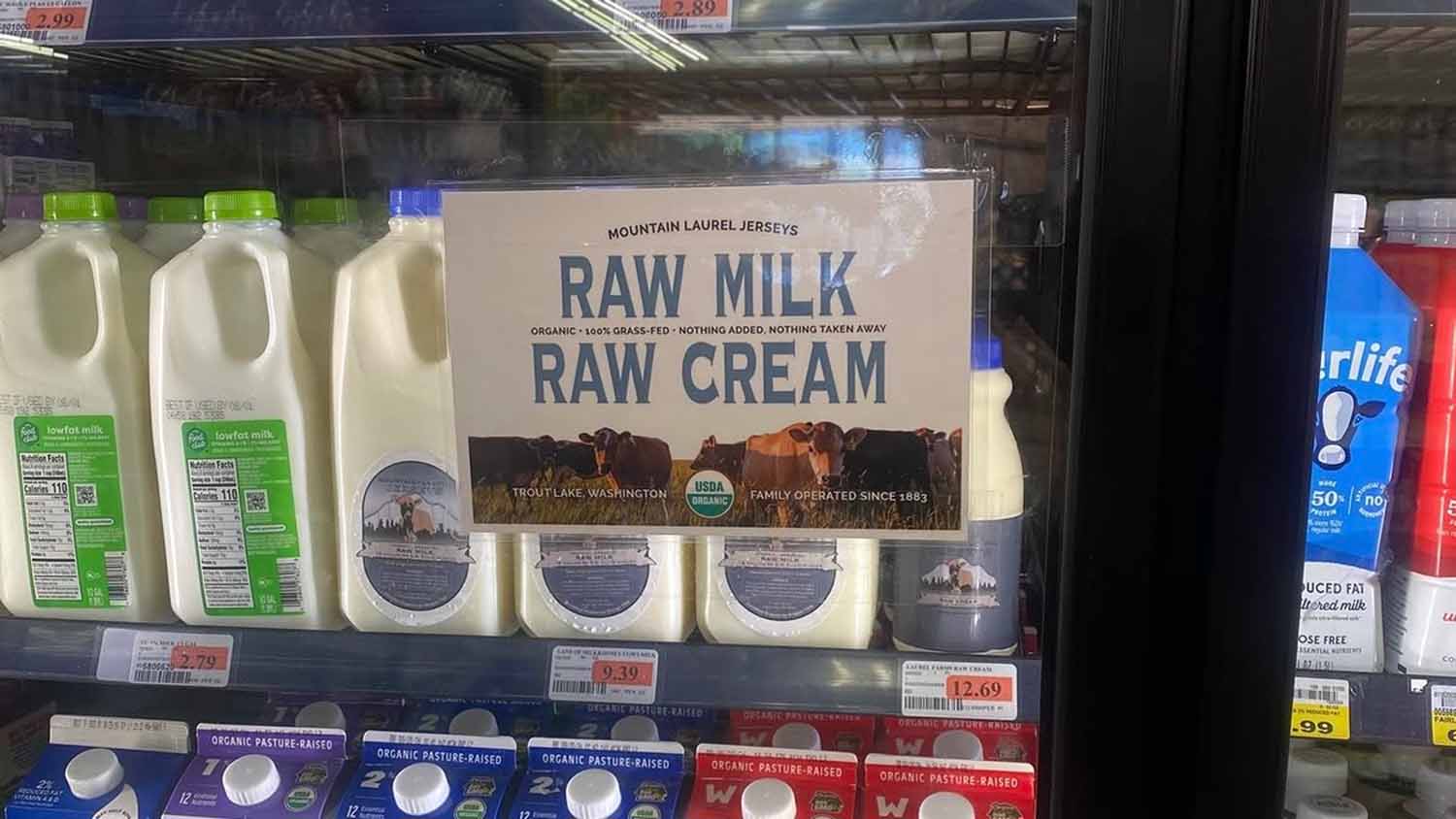
Before anything else, check GetRawMilk.com’s search and map tools for farms and retailers nearby. The database covers farm and retail locations, including grocery stores in states where raw milk is sold that way. A few independent directories exist too, useful for filling gaps the main search doesn’t catch.
No Options Nearby? Measure the Distance
If nothing turns up close by, the next question is simply how far the nearest option actually is.
Within 100 miles: a day trip is realistic.
Within 500 miles: a weekend trip covers it.
Within 1,000 miles or more: a short planned trip, solo or with others, is still on the table.
Make the Trip
Gas costs money, but a single supply run with a clear goal, getting raw milk, and accomplishing it, is straightforward and often worth the trip on its own. That covers one-off access. Regular access is a different problem, and it has its own solutions.
Milk Runs and Drop Points
Many farms offer drop points: bulk deliveries to a central location serving a group of buyers who live too far from the farm itself for individual trips to make sense. A common structure is one person with reliable fridge space taking orders from a roster of buyers, placing the order directly with the farm, receiving the delivery, and holding it for pickup. Some drop points are more individually timed, with each buyer ordering separately and picking up within a specified window.
A milk run works the same way without a farm’s involvement: a group of people who all want regular access organize their own trip. One person makes the drive and picks up a bulk order; the group splits fuel costs and, often, pays the driver something for their time. A weekly, biweekly, or monthly schedule turns this into a routine rather than a one-off. Enough people in a group run can also make it worth a farmer’s time to set up a formal delivery route, or to work out a standing drop arrangement directly.
Crossing State Lines
Driving to another state to buy raw milk, where it’s sold legally in that state, and bringing it back for personal consumption is a normal and common way people access raw milk from states where it isn’t otherwise available. The federal rule governing interstate raw milk sales, 21 CFR 1240.61, prohibits interstate sale or distribution of raw milk to consumers; it does not address an individual personally transporting milk they’ve already purchased across a state line for their own use. This is a common, low-friction way a lot of people get raw milk in practice.
One point worth being direct about: discretion matters here. Buying milk legally in one state and bringing it home doesn’t change based on how it’s talked about, but broadcasting the specifics, naming farms, routes, or arrangements, in a state where raw milk sales are banned creates unnecessary attention for everyone involved, farmer included.
Crossing Into Canada
This one is different and worth stating plainly: raw milk is explicitly listed by the Canadian Food Inspection Agency as prohibited for personal import, unlike commercially pasteurized dairy, which does have a personal-use allowance. This is a stated restriction on the product itself, not a general customs formality. Whatever happens in practice at a given crossing is a separate question from what the regulation says, and readers should go in knowing the actual rule rather than assuming otherwise.
Underground and Informal Sources
People keep dairy animals in rural areas without operating as a registered business, because the milk stays within family or a small circle of close relations on informal, often cash-based terms. Farmers already selling eggs, meat, or produce may know of or be open to this kind of arrangement, or know someone who is.
If an arrangement like this comes together, discretion is the operating principle. Don’t post about it, don’t name the source publicly, and ask the farmer before bringing anyone new into the arrangement. Getting an informal source into regulatory trouble by being careless with information is a real risk, not a hypothetical one, and it affects everyone connected to that source, not just the person who talked.
Buying Your Own Animal
Owning a dairy animal, alone or with others, is the most self-directed option. It requires land or boarding arrangements, a caretaker (which can be the owner, a partner, or whoever provides boarding), a feed source, and the animal itself.
Land can be owned outright or leased from someone willing to board animals for compensation. Caretaking covers feeding and health management, which benefits from a working relationship with a veterinarian and connections to people with more farming experience. Animals for sale can be found through local agricultural communities and classifieds; getting involved in those communities directly tends to pay off beyond just the transaction.
Two realistic paths: build the full setup independently (land, infrastructure, animals, ongoing care), or find someone already set up to board, milk, and manage animals in exchange for compensation. Most people land somewhere between the two, with a mix of hands-on involvement and help from others along the way.
This option scales down to small setups more easily than commercial production does, since most areas outside dense zoning have some property available for keeping a small number of animals, and it bypasses the regulatory framework that applies to commercial sale, though home-production regulations still vary by location and are worth checking directly.