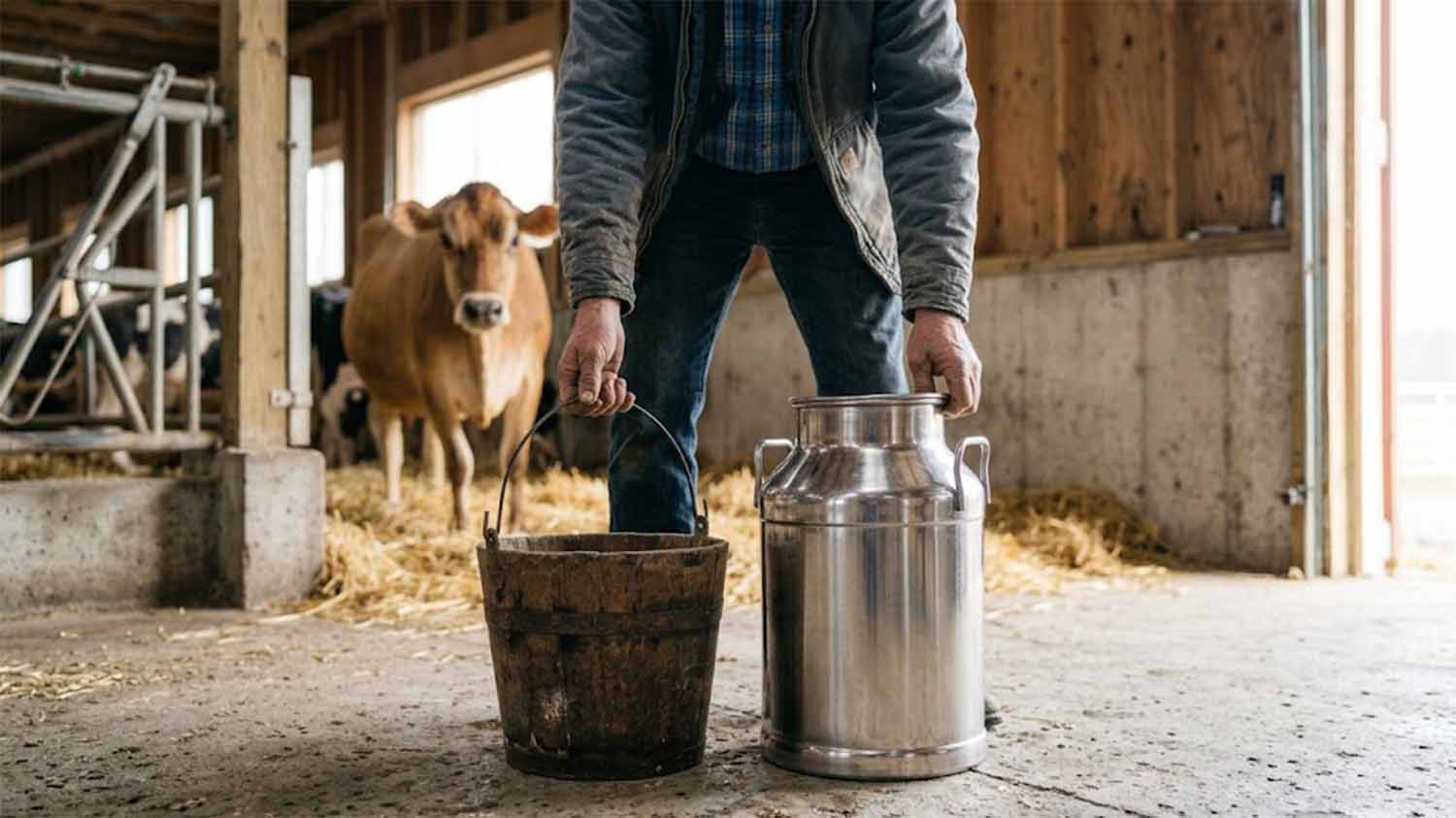
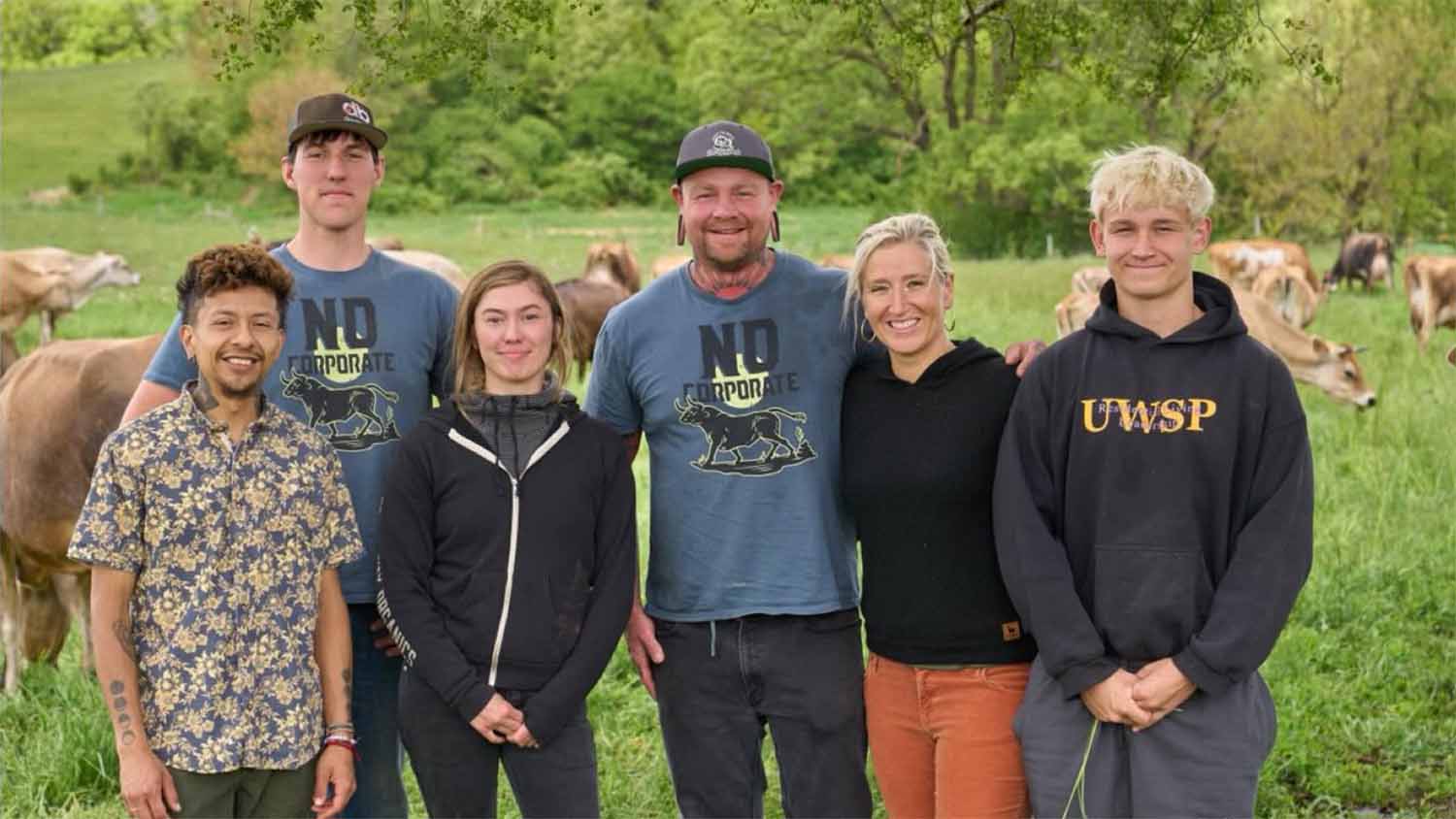
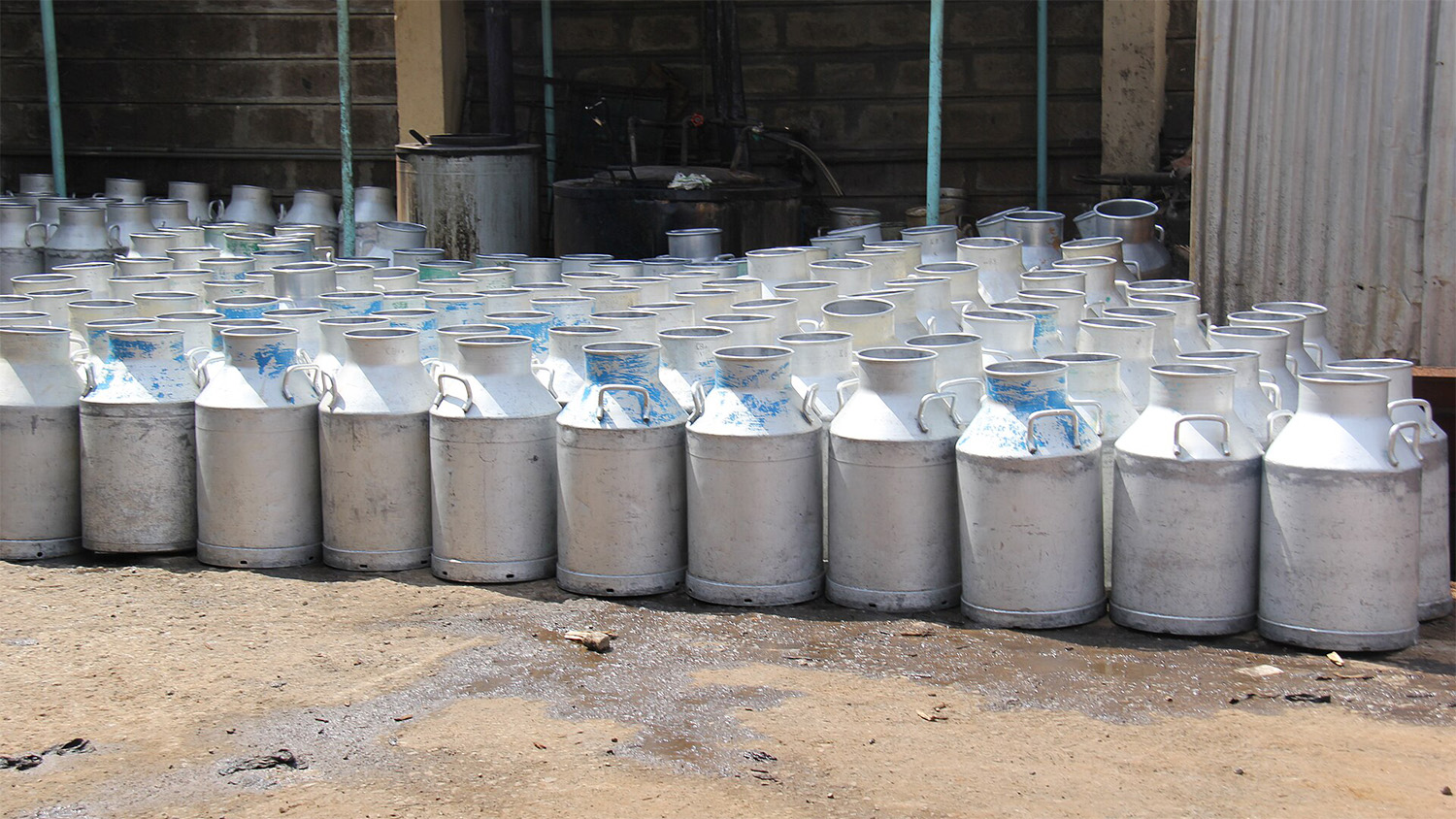
Canada has the strictest raw milk regime in the developed world and is the only G7 nation in which raw milk cannot be sold legally in any form. The sale of unpasteurized milk for human consumption is prohibited nationwide under federal regulation, and no province or territory offers a legal pathway around it. There is no retail exemption, no on-farm sales permit, and no recognized herdshare or cow-share structure anywhere in the country. This puts Canada in a different position from the United States, where raw milk is a state matter and most states allow some form of sale, and from much of Europe, where farm-direct sale and vending machines are regulated rather than banned.
One important exception exists at the federal level: cheese. Raw milk cheese aged at least 60 days is legal and widely sold across Canada, and Quebec goes further still.
Select a province or territory below for its specific enforcement approach and provincial dairy legislation.
Is raw milk legal in Canada?
No. Selling raw milk for human consumption is illegal in every province and territory. The prohibition sits in section B.08.002.2 of the Food and Drug Regulations (C.R.C., c. 870), which states that "no person shall sell the normal lacteal secretion obtained from the mammary gland of the cow, genus Bos, or of any other animal, or sell a dairy product made with any such secretion, unless the secretion or dairy product has been pasteurized" to the phosphatase tolerance specified in official method MFO-3.
Drinking raw milk is not itself an offence, and a farmer may consume milk from their own animals. It is the act of selling or distributing that the regulation reaches. Provinces layer their own dairy legislation and public health statutes on top of the federal rule, and provincial health authorities and agriculture ministries carry out most enforcement, which is why prosecutions are typically brought under provincial milk acts rather than federal law.
The two federal exemptions
Subsection B.08.002.2(2) exempts exactly two things from the pasteurization requirement. The first is cheese, which is why raw milk cheese is legal in Canada. The second is food sold for further manufacturing or processing in order to pasteurize it, which is the provision that allows farmers to ship raw milk to a dairy for processing in the normal course of business. Neither exemption creates any route for selling drinking milk to a consumer.
Raw milk cheese and the 60 day rule
Cheese made from unpasteurized milk may be manufactured and sold throughout Canada provided it is stored for at least 60 days from the start of manufacture at a temperature of at least 2°C. The requirement appears in the cheese standards of the Food and Drug Regulations (B.08.030, B.08.043 and B.08.044). This mirrors the equivalent United States rule and makes many traditional aged styles available, while excluding fresh and short-ripened raw milk cheeses.
Quebec is the exception. In 2008 the province authorized production and sale of raw milk cheeses aged less than 60 days, subject to a stricter control regime including monthly milk quality testing and veterinary inspection of the producing herds. Quebec has by far the most developed artisanal raw milk cheese sector in the country as a result. The provincial framework sits in tension with the federal standard and has not been challenged by Health Canada.
How the ban came about
The national prohibition dates to 1991, when Health Minister Benoît Bouchard issued the ministerial order amending the Food and Drug Regulations to add clause B.08.002.2(1) (SOR/91-549, later amended by SOR/95-499). Before that, raw milk regulation had been left largely to the provinces. Ontario had already banned sale in 1938, but the 1991 order made the prohibition uniform and federal.
The ban also sits inside Canada's supply management system, under which fluid milk production is governed by provincial marketing boards and production quota. A farmer selling milk outside the quota system is in conflict with that structure independently of the pasteurization rule, which is part of why proposals to legalize direct sales attract opposition from organized dairy as well as from public health bodies. The dairy industry was consulted directly during development of the 1991 ban and its national advocacy body continues to oppose legalization.
That structural link has drawn criticism from inside Canadian food policy. Sylvain Charlebois of Dalhousie University argued in Canadian Grocer in October 2024 that the prohibition compounds waste, noting that Canadian dairy farms dispose of somewhere between 600 million and one billion litres of milk on farm each year while consumers who want raw milk are pushed underground. He proposed a dedicated quota category letting licensed raw milk producers sell direct, adapted from Ontario's existing artisan dairy licences, along with exemptions for small regenerative farms.
Cow-shares and the courts
Cow-share and herdshare arrangements, in which a consumer buys an ownership interest in an animal and receives milk as an owner rather than a purchaser, have been tested repeatedly in Canadian courts and have consistently failed.
The best known case is that of Michael Schmidt of Glencolton Farms in Durham, Ontario, who has run a cow-share program since the 1990s and whose legal conflict with authorities dates to 1994. Charged in 2006 following an undercover operation, he was acquitted on 19 counts in January 2010 on the reasoning that his cow-share program did not advertise or solicit and that members were warned. That ruling was overturned on appeal and he was convicted on 13 counts, fined $9,150 and given one year of probation. The Ontario Court of Appeal upheld those convictions in March 2014, finding that the oral cow-share agreement in evidence had not transferred ownership of any cow, and holding separately that the Milk Act licensing requirement applies whether or not an operation describes itself as private. The Supreme Court of Canada declined to hear a further appeal in August 2014. Schmidt was later sentenced to 60 days in jail for obstructing a peace officer, and the farm has been raided repeatedly.
The most recent chapter ended differently. A prosecution of Schmidt and his wife Elisa Vanderhout, built on an investigation running from 2019 to 2021, was dismissed on September 26, 2023 after the defence produced expert handwriting analysis indicating that the investigating officer had authored the anonymous citizen complaints used to justify the charges. The court found the investigator had fabricated those complaints and misled authorities. The surveillance effort behind the case had covered 68 people, 45 licence plates and some 788 hours. The dismissal turned on investigator conduct rather than on the validity of the prohibition, so the ban itself was untouched, but it closed a pursuit that had run nearly thirty years without a single reported illness or government finding of pathogens traced to the farm's milk.
In British Columbia, Alice Jongerden of Home on the Range in Chilliwack milked a herd for roughly 400 cow-share members until the Fraser Health Authority obtained a permanent injunction in March 2010 barring distribution for human consumption. When she continued distributing bottles labelled "Not For Human Consumption," the court found her in contempt, holding that she was aware members would drink it. The BC courts treated raw milk as a health hazard within the meaning of provincial public health legislation, a characterization that has shaped enforcement in that province since.
Who is working to legalize raw milk in Canada
The main organized advocate is the Canadian Artisan Dairy Alliance (CADA), a federally incorporated not-for-profit registered under the Canada Not-for-Profit Act. CADA does not argue for an unregulated market. Its position is that Canada should replace prohibition with a licensed and inspected framework comparable to those operating in roughly a dozen United States states and across much of Europe, on the reasoning that bringing existing demand into a regulated system is better public health policy than leaving it in an unmonitored underground market. The organization has taken the argument to mainstream media, including a CBC Calgary interview.
Separately, an independent peer review panel convened through the Alliance for Risk Assessment is scheduled for October 26, 2026 in Austin, Texas, to evaluate evidence maps on the benefits and risks of pasteurizing cow's milk and human donor breastmilk. The presenting team includes medical microbiologist Peg Coleman, emeritus professor Rodney Dietert, and Warner North, a past president of the Society for Risk Analysis. It is a privately crowdfunded scientific review rather than a government proceeding, and CADA is listed among its supporting organizations. Note that this is not a Canadian regulatory review and carries no legal force, a distinction worth keeping in mind given how it is sometimes described.
Current reform efforts
Legislative pressure has come from rural municipalities rather than from Parliament. At the Rural Municipalities of Alberta Fall 2025 convention, Reeve Ryan Ratzlaff of the MD of Greenview presented Resolution 4-25F, which carried with roughly two-thirds support. It calls on the RMA to "advocate to the Government of Canada to amend Division 8 of the Food and Drug Regulations to permit, under specified conditions, the on-farm sale of unpasteurized dairy products directly to informed consumers," with provincial frameworks covering producer training, labelling, traceability, on-farm oversight, and optional rural pilot programs. The vote is covered in this report on how Alberta's rural districts voted two thirds in favour of raw milk.
Ottawa declined. Responding in late 2025, the federal government restated that the existing restrictions remain "necessary to protect the Canadian population," and the RMA lists the resolution's status as Intent Not Met. A parallel effort through the House of Commons petition system fared no better: Petition e-5275, sponsored by MP Peter Fonseca, ran from December 11, 2024 to April 10, 2025 and asked the government to re-examine its policy, set safety guidelines including mandatory producer training, and allow provinces to regulate farm-direct sales and herd shares. It closed with 524 validated signatures, the largest share from Alberta. Earlier parliamentary activity is covered in this account of the Canadian raw milk hearings.
The practical position as of 2026 is unchanged: no bill to amend B.08.002.2 has been introduced, Health Canada maintains that the prohibition is necessary, and there is no pilot program or provincial exemption anywhere in the country. A fuller picture of where the campaign currently stands is set out in this update on Canadian raw milk legalization.
Finding raw milk in Canada
There is no legal retail or farm-direct source of drinking milk anywhere in Canada, and the practical reality is an informal market. Demand is well documented, particularly in Alberta, where the Greenview resolution noted that many residents already consume unpasteurized milk. Supply generally moves through private membership associations, buying clubs, and direct arrangements with farmers, all of which remain outside the law and exposed to enforcement, as the Schmidt and Jongerden cases demonstrate. Some consumers in border regions travel to United States jurisdictions that permit sale, though bringing raw milk back across the border for distribution is a separate matter under both countries' rules.
Raw milk cheese is the one fully legal option. Aged raw milk cheeses are stocked by cheese shops, specialty grocers, and directly by producers across the country, and Quebec additionally offers raw milk cheeses aged under 60 days that are unavailable elsewhere in Canada.