How John D. Rockefeller Shaped the Push for Pasteurization Laws
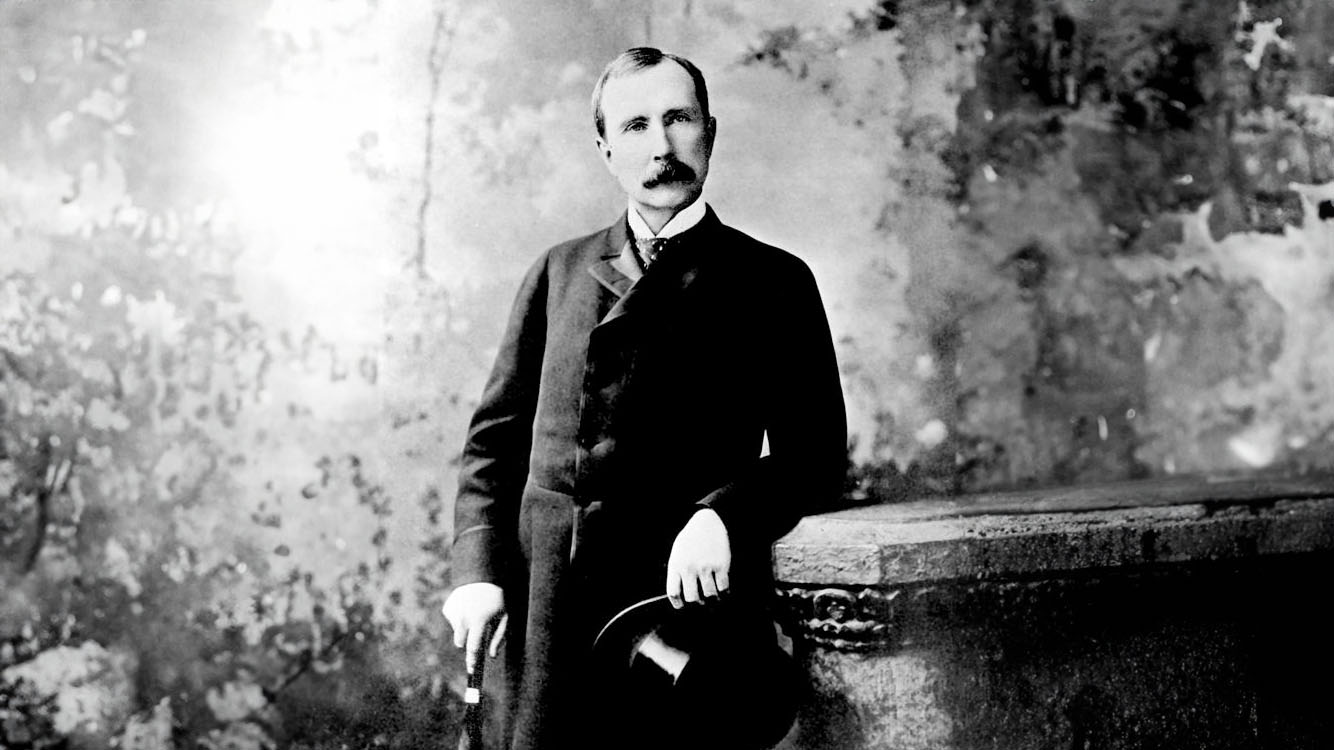
John D. Rockefeller‘s name does not appear on any pasteurization ordinance. His money appears behind the research that produced them. In the two cities that led the country toward compulsory pasteurization, New York and Chicago, the research, the institutions and many of the people who shaped milk policy traced back to Rockefeller philanthropy and the Rockefeller family.
That influence did not require a lobbyist. A medical institute that set the research agenda, a university that trained and employed the experts, and a family tragedy that funded a laboratory did the work instead.
The milk problem around 1900
At the turn of the 20th century, city milk was a public health emergency. The Swill Milk Scandal had exposed distillery dairies selling adulterated milk in New York in 1858, and Upton Sinclair’s The Jungle described Chicago families buying “pale-blue milk” that “was watered, and doctored with formaldehyde besides.” Tuberculosis, the country’s leading cause of death, killed about 148,000 Americans in 1900, and an estimated 10 percent or more of cases were the bovine form, much of it spread to children through milk from infected cows.
Reformers split over the fix. Physicians led by Henry Leber Coit built certified milk, a raw milk standard backed by herd testing, worker health exams and strict bacterial limits. Nathan Straus pushed heat treatment instead, opening pasteurized milk depots in New York in 1893. Which approach cities would write into law was still an open question, and the answer depended heavily on who funded the science.
New York: the Rockefeller Institute’s first project
Rockefeller founded the Rockefeller Institute for Medical Research in 1901. Its first program was a survey of New York City’s milk supply. In May 1901 the institute gave the city’s Board of Health a $2,400 grant to pay for dairy and creamery inspections and a testing laboratory. Some samples, mostly from tenement grocery stores, held 4 million to 600 million bacteria per teaspoon. The findings led to four new city inspector positions and, according to the Rockefeller Archive Center, informed the federal Pure Food and Drug Act of 1906.
The institute’s first board of scientific directors put Rockefeller-funded science in the same hands as city milk policy. Hermann Biggs, general medical officer of the New York City Department of Health, championed the milk survey. Pediatrician L. Emmett Holt used an institute grant to study milk in the tenement districts, showed that high bacterial counts drove infant deaths, and helped create the city’s milk commissions.
New York adopted a milk grading system in January 1912. Its top grades still allowed certified and inspected raw milk alongside pasteurized milk, but the direction was set, and the city moved steadily toward pasteurization from there.
Chicago: the university and the McCormick Institute
Rockefeller founded the University of Chicago in 1890 with a $600,000 pledge and later called it “the best investment I ever made” (History of the University of Chicago). Martin Ryerson, president of the university’s board of trustees from 1892 to 1922, also served as a trustee of the Rockefeller Foundation.
The family’s tie to infectious disease research in Chicago was personal. In 1901, Rockefeller’s grandson, John Rockefeller McCormick, died of scarlet fever, one of the diseases most often traced to milk at the time. The next year his parents, Rockefeller’s daughter Edith Rockefeller McCormick and her husband Harold McCormick, founded the John McCormick Institute for Infectious Diseases. Its director, Ludvig Hektoen, also headed the University of Chicago’s pathology department, so the city’s leading infectious disease researcher worked inside two Rockefeller-funded institutions at once.
In 1908, Health Commissioner W.A. Evans pushed the city’s first pasteurization ordinance through Chicago City Council under Mayor Fred Busse, two years after The Jungle. It was the first such ordinance in the country, but it was narrower than its reputation: it required pasteurization only for milk from herds that had not been tuberculin tested. Chicago did not require pasteurization of all milk until 1916, eight years later, a gap examined in Alan Czaplicki’s “Pure Milk Is Better Than Purified Milk”. The 1916 rule ended the sale of raw milk in the city.
Who profited from the mandates
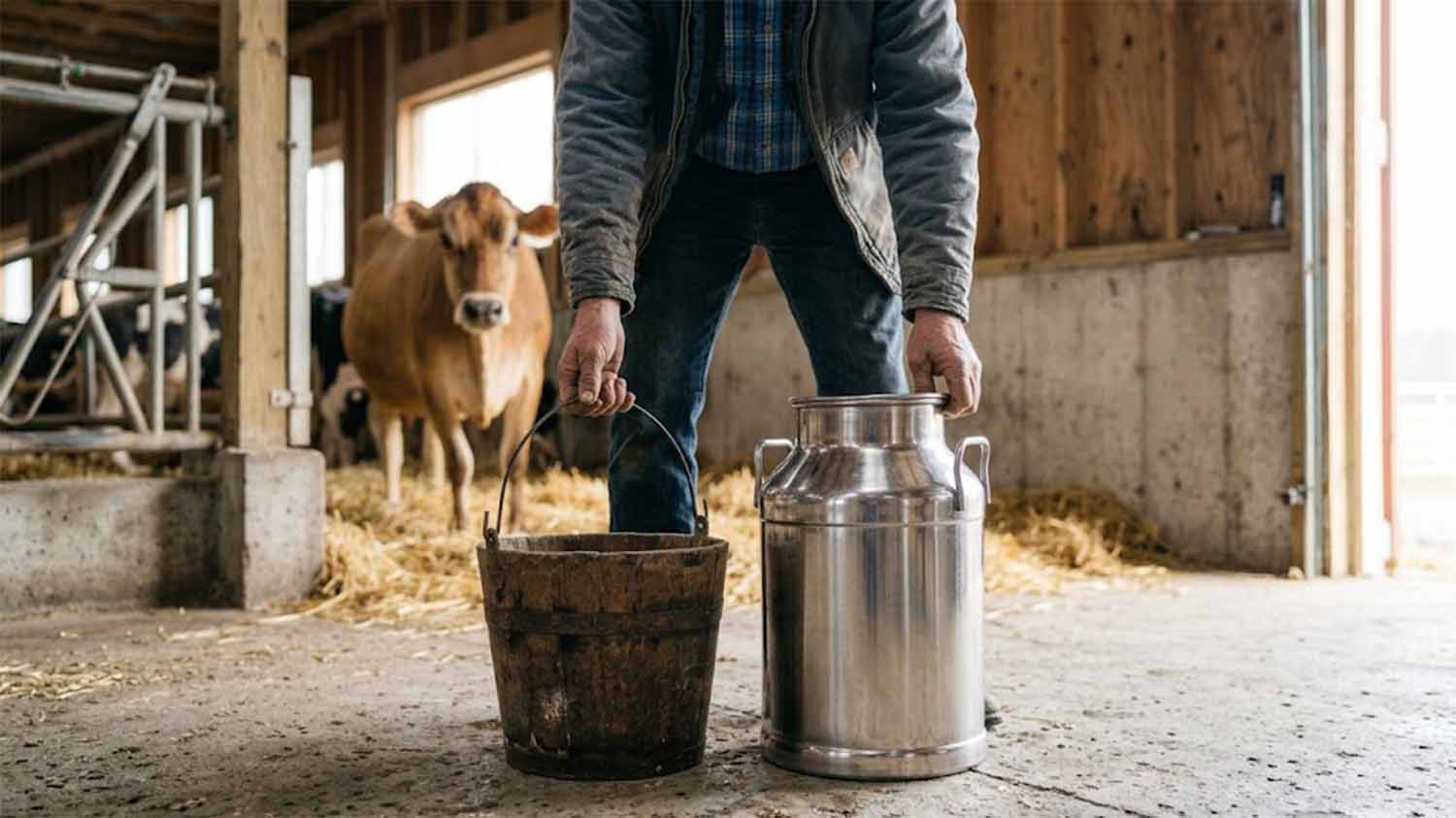
The real winners from compulsory pasteurization were the processors who could afford the equipment. A small farm selling clean raw milk to its neighbors could not justify a pasteurizing plant. A large dealer buying milk from hundreds of farms could, and every new mandate pushed more milk through fewer hands.
New York’s Sheffield Farms brought the first pasteurizing machine to the United States in 1892 and grew into one of the largest dairy companies in the world, selling 20% of the city’s milk. In December 1923, National Dairy Products Corporation was formed with financing from a consortium including Goldman Sachs and Lehman Brothers, and bought more than 55 firms by 1931, among them Sheffield Farms in 1925 and Breakstone Brothers in 1928. National Dairy acquired Kraft-Phenix in 1930. In cities of more than 10,000 people, pasteurized milk went from 6 percent of supply in 1915 to 45.7 percent in 1924 and 90 percent by 1947.
Lists of Rockefeller’s supposed stakes in Borden, Sheffield Farms and other dairies circulate online, but none cite a source, and no record of a Rockefeller holding in a milk company has surfaced. The documented money behind dairy consolidation came from Wall Street investment banks. Borden, the other dairy giant, did move into the Rockefeller orbit, but later and through lawyers rather than shares. Albert G. Milbank, whose family had backed Borden since 1858, became Borden’s first board chairman in 1917. In 1931 his law firm merged with the firm that had represented John D. Rockefeller Sr. since the 1880s, forming Milbank, Tweed, Hope & Webb, which counted Borden among its major clients and later handled Rockefeller’s estate. Rockefeller’s documented role was different and arguably larger: he paid for the science and the institutions that made pasteurization the default answer to the milk question, at the expense of certified raw milk, the farm-level alternative it displaced.
The 1933 Rockefeller meme
A widely shared meme claims that in 1933 Rockefeller patented expensive pasteurizing machinery, lobbied the government to make raw milk sales illegal, and drove 99 percent of small dairy farms out of business. The timeline does not fit. Rockefeller turned 94 in 1933 and had stepped back from business decades earlier. Pasteurizers had been sold commercially since the 1890s, and Chicago had required pasteurization of all milk since 1916. The first statewide ban on raw milk sales, Michigan’s, came in 1948, eleven years after Rockefeller died.
The meme’s closing claim, that the laws will never change, has not held up either. Raw milk sales are legal in most states, and since 2023 states including Georgia, Iowa, West Virginia, Arkansas and Utah have opened or widened legal access.
The grievance underneath the meme has a documented core: pasteurization mandates favored processors who could afford the equipment and pushed milk into fewer hands. The record points to Rockefeller’s institutions and to Wall Street banks, not to a patent or a single lobbying campaign.
Plot twist
A century later, Abby Rockefeller produces raw milk at Churchtown Dairy, her RAWMI-listed biodynamic farm in Hudson, New York. In 2023 she wrote about it for Barn Raiser: Could Raw Milk Reinvent the Future of Dairy?
Raw milk direct-to-consumer sales have returned across much of the country, including from farms around Chicago. Check raw milk laws by state or browse raw milk farms in the United States.