Pajarete: Mexico’s Raw Milk and Tequila Breakfast Drink
Pajarete — also spelled pajerete and known by a small flock of regional nicknames — is one of Mexico’s most enduring and least-exported raw milk traditions. Born on the cattle ranches of Jalisco and Colima, it is a warm, foamy morning drink made from raw milk collected directly during milking, mixed with high-proof spirits, chocolate, coffee, and cinnamon sugar. It has fueled dairy workers for generations, cured countless hangovers, and, in the last decade, crossed the border to become a quietly thriving tradition in agricultural pockets of Southern California.
What Is Pajarete?
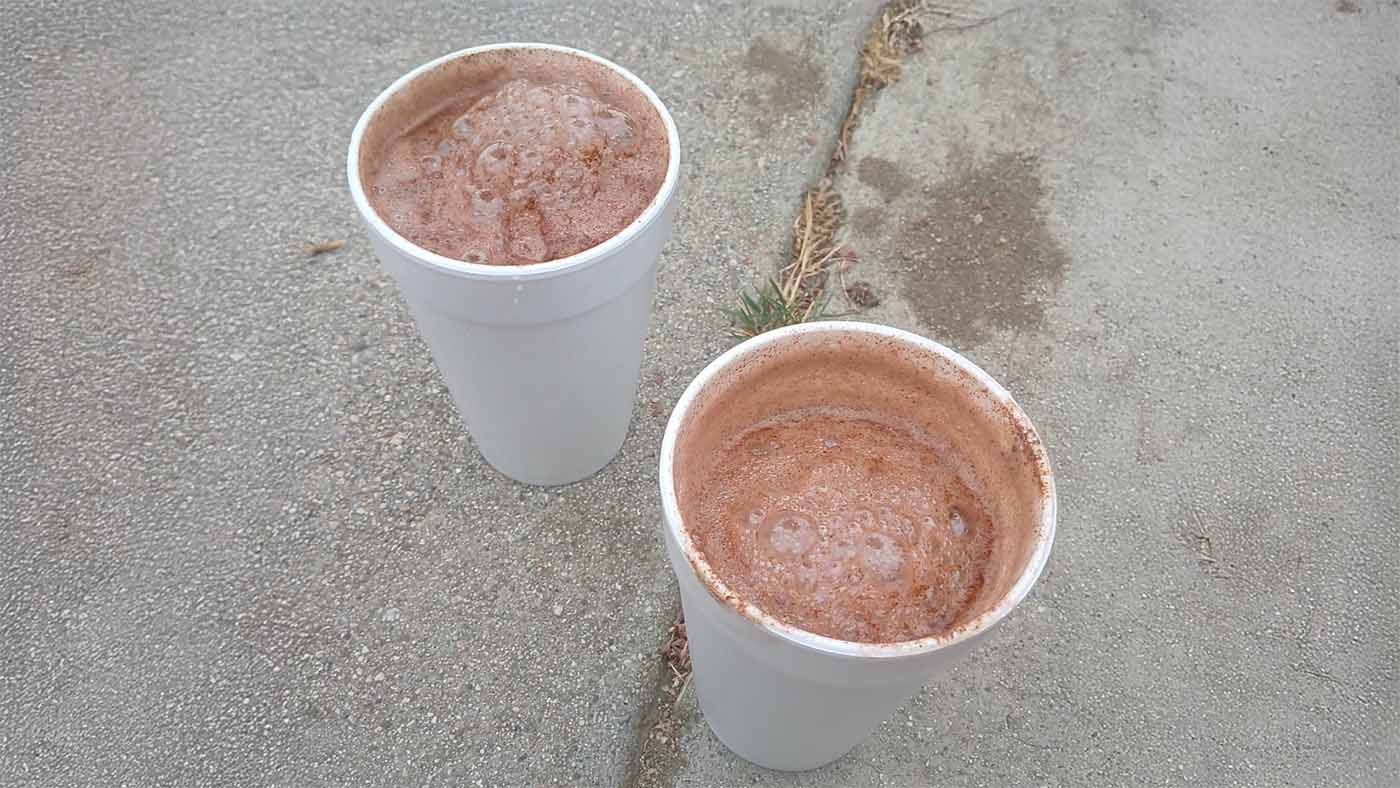
Pajarete is a traditional Mexican ranch drink combining leche bronca (raw, unpasteurized whole milk, straight from the animal) with a shot of high-proof spirit — typically 96-proof cane alcohol (alcohol de caña) or blanco tequila — along with powdered chocolate, instant coffee, cinnamon sugar, and occasionally molasses or piloncillo syrup. The milk is added last, poured or milked directly into the cup, which froths the drink naturally and produces the defining characteristic of an authentic pajarete: a thick, tan foam crown that rises above the cup’s rim.
The drink is served warm — body temperature, ~101°F — because it has just left the animal. It is meant to be consumed immediately.
In flavor, pajarete is silky and subtly complex: the fat of whole raw milk softened by alcohol, sharpened by coffee, and sweetened by chocolate and cinnamon. It is not intended to be an intoxicating beverage, though the 96-proof cane alcohol is unambiguous. The spirit is understood by tradition to serve a practical purpose: cutting the richness of the fat, warming the body in cold early mornings, and — in long-standing folk belief — purifying the raw milk.
The Bird Names of Pajarete
The drink travels under a remarkable collection of regional names, nearly all bird-themed, used across Jalisco and neighboring Colima:
- Pajarete / pajerete / pajarate — from pájaro, bird; the most widely used name. Some say it refers to the drink giving you a lift, like a bird taking flight.
- Leche caliente — “hot milk,” a plain descriptive term used when the others draw blank stares
- Palomazo — “big pigeon”
- Chereca — a Sinaloan blue jay
- Polla — “baby chicken” (used carefully; the word carries other connotations)
- Galletera — likely derived from gallo, rooster
The exact origin of the avian theme is debated. Most probable explanations: the names reference the flutter the drink stirs in an unprepared stomach, or they simply reflect the wordplay common in Jalisciense ranch culture. What is clear is that anyone who grew up in Jalisco knows at least one of these names, and hearing any of them produces immediate recognition.
History and Origins
Pajarete was not invented. It evolved.
The ranching regions of western Mexico — Jalisco, Colima, Michoacán, parts of Nayarit — have been dairy country for centuries. Before mechanized milking, rows of workers milked cows by hand starting before dawn, handling more than a hundred animals per shift in cold, dark conditions. The drink that emerged from this labor was not a recipe invented in a kitchen but a practical habit developed at the trough: warm fresh milk mixed with whatever was available to make the cold and the fatigue bearable. High-proof cane alcohol was cheap and present on every ranch. Chocolate, coffee, and sugar were pantry staples. The combination became ritual.
Agricultural journalist Conrado Vázquez Martínez, who has documented the tradition extensively, traces pajarete’s roots directly to these early milking shifts. Chef Nico Mejia, a Jalisco native, has noted that the drink is essentially confined to the hacienda and ranching culture of western Mexico — it never spread to other regions because it is fundamentally tied to the experience of hand-milking at dawn.
Jalisco’s particular dominance of two industries helps explain why the drink is strongest there. The state produces approximately 90% of Mexico’s tequila and supplies roughly 21% of the country’s cow milk — more than any other state, and nearly double the next highest producer. When two industries intersect that completely in a single landscape, their products inevitably meet. Cows graze between rows of blue agave. Tequila flows where milk flows.
By the late 20th century, pajarete had shed its purely functional character. Working ranches began hosting informal gatherings, charging a small fee for a styrofoam cup and access to the milking corral. Weekend mornings at these operations drew not just workers but families, retirees, hungover young people arriving directly from nightclubs, and everyone in between. The drink became a social institution as much as a ranch necessity — a reason to gather at dawn, to watch animals, to drink something made in front of you by the animal that made it.
The California Diaspora Scene
The pajarete tradition did not stay in Mexico. As Jalisco and Michoacán natives emigrated to California over the past several decades, they carried it with them — and built the conditions to practice it.
Southern California contains large networks of agricultural and equestrian zones — unincorporated communities where residents can legally keep livestock on private property. Communities like Muscoy (San Bernardino County), East Compton, Jurupa Valley, Perris, Avocado Heights, Sylmar, and Chino have become home to informal pajarete operations, run by immigrant ranchers for immigrant communities. The gatherings function the same way they do in Jalisco: dawn start, fresh milking into your cup, banda or norteño music, birria tacos, buckets of beer, families with children drinking the non-alcoholic chocolate milk version alongside adults drinking the full pajarete.
A typical California pajarete runs $10–20 — far more than the dollar or two charged in rural Mexico — reflecting the higher cost of keeping animals and the underground nature of the operation. Signs at many locations read “No alcohol for sale,” meaning the spirit on the table is technically the customer’s own business. The gatherings persist despite periodic attention from county health authorities, protected by the same layered zoning codes and agricultural exemptions that allow the animals to be there in the first place.
The tradition has also spread to Bakersfield, Fresno, Sacramento, and communities in Baja California near Tijuana and Rosarito. In each case, the mechanism is the same: immigrants from pajarete country recreate the practice wherever they can legally keep an animal.
For participants, the gathering is explicitly about connection to place. “Everyone who grew up in Jalisco knows about this. We keep the customs from over there,” one Muscoy rancher told the Los Angeles Times. The drink is not the point so much as what surrounds it — the animals, the music, the dawn, the company, the smell of a barn in the early morning.
Pajarete and Raw Milk
Pajarete is inseparable from raw milk. No authentic version uses pasteurized milk, and none should. The warmth, the froth, the flavor, and the very nature of the experience depend entirely on milk that is alive, whole, and fresh.
Raw whole milk at body temperature has a sweetness, fat richness, and microbiological complexity that pasteurization removes. In the context of pajarete, these qualities are not incidental — they constitute the drink. The fat produces the silky mouthfeel. The natural enzymes interact with the other ingredients. The warmth is literal, coming from a living animal moments before consumption. Locals call it leche bronca — wild milk — as opposed to the commercial, processed product.
Goat milk pajarete is equally traditional and produces a noticeably different experience: richer in cream flavor, slightly funkier, less frothy, and what experienced drinkers describe as more assertive on the stomach. The distinction between cow and goat pajarete is well understood by regulars, and both are offered at established operations.
For raw milk advocates, pajarete represents something important: a living tradition — functioning right now, on working ranches, in California and Mexico — in which raw milk is not a wellness product or a political statement but simply how things have always been done. It is consumed communally, directly from the animal, with knowledge of and trust in the specific cow or goat that produced it.
Traditional drinkers are advised to evaluate the animal before drinking. A healthy, robust, well-cared-for animal gives safer milk. The alcohol is understood to provide additional protection. Whether or not this folk safety framework satisfies a microbiologist, it reflects a form of applied knowledge about animal health and food source quality that resonates with the raw milk community’s broader values.
Recipe: How to Make Pajarete at Home
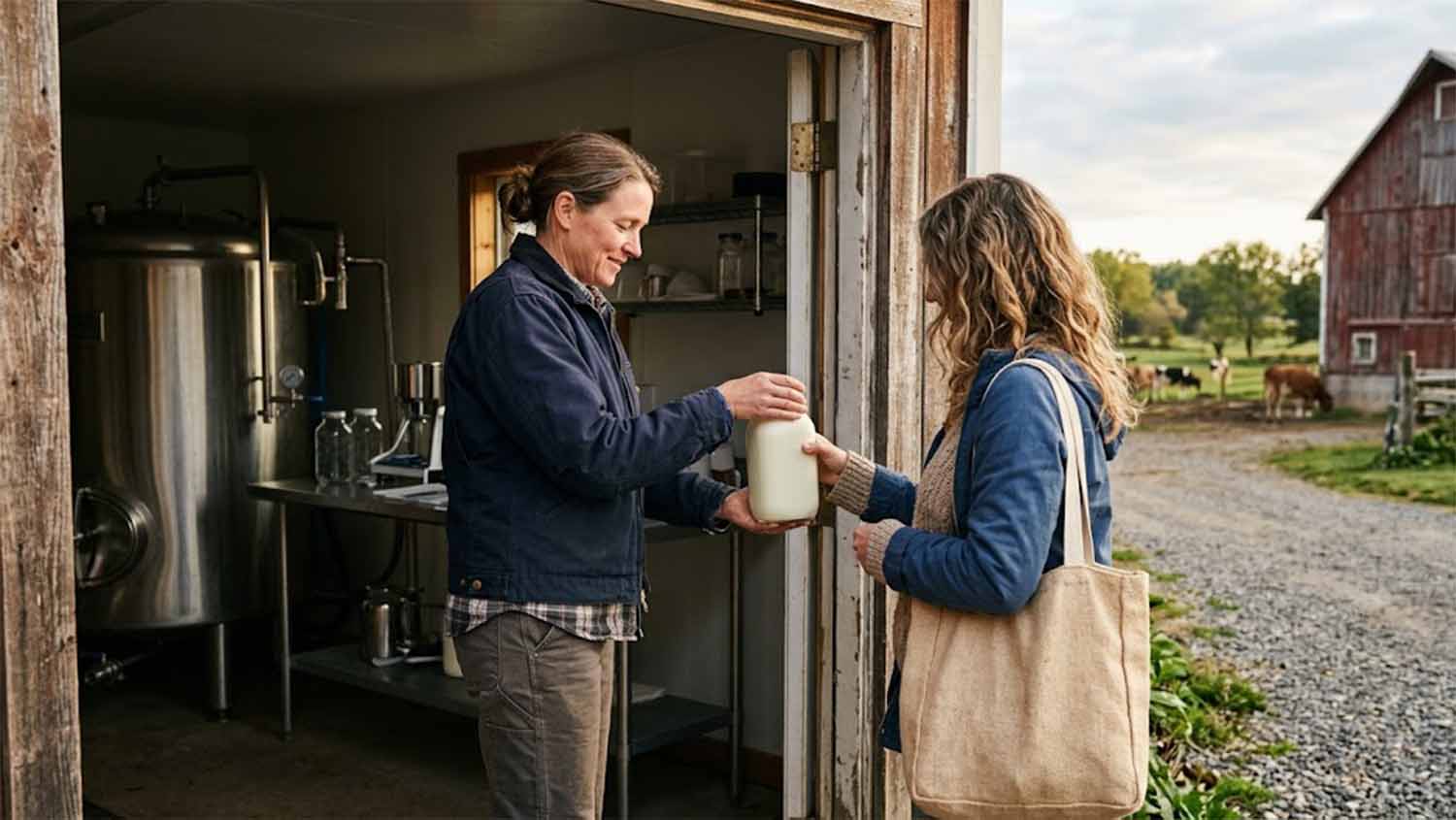
The foundation of an authentic pajarete is raw whole milk, ideally still warm from milking. Source yours from a local farm, raw milk dairy, or farmers market. The closer to milking time, the better. If refrigerated, warm it gently before use.
Yield: 1 large serving (10–14 oz) Time: 5 minutes
Ingredients
- 1–1.5 cups raw whole milk, cow or goat, warmed to ~100–105°F
- 1–1.5 oz blanco tequila or 96-proof cane alcohol (alcohol de caña)
- 1 heaping teaspoon unsweetened cocoa powder or Mexican chocolate powder (Abuelita or Ibarra work well)
- 1 teaspoon instant coffee (Nescafé is traditional)
- 1 teaspoon cinnamon sugar, or plain sugar with a pinch of cinnamon
- 1 teaspoon molasses or piloncillo syrup (optional)
Method
- Combine the spirit, cocoa powder, instant coffee, sugar, and molasses in the bottom of a large, wide-mouthed mug or clay cup. Stir into a thick paste.
- Warm your raw milk to approximately 100–105°F. Do not boil or scald — heat above 117°F begins destroying the enzymes and altering the flavor that make raw milk worth using. A thermometer helps.
- Pour or stream the warm milk into the mug from a height of 8–10 inches, aerating as you pour. Traditional pajarete gets its foam from the turbulence of milking directly into the cup. Replicate this by pouring vigorously, then giving the drink a brief whisk or 10–15 seconds with a small milk frother.
- The drink should have a thick foam crown and be fully mixed throughout. Drink immediately, while warm. Pajarete does not keep.
The Flamed Variant
Some practitioners — particularly in California — flame their pajarete before adding the milk. Pour the spirit into the cup, ignite it briefly with a lighter, then add the chocolate and coffee mixture and extinguish with the milk. The flame slightly caramelizes the spirit and adds a subtle char note to the finished drink. It is dramatic, optional, and very much part of the tradition.
Recipe Notes
On the spirit: 96-proof cane alcohol (alcohol de caña) is the most traditional choice in both Jalisco and California, producing a clean, neutral-flavored drink where milk and chocolate are dominant. Blanco tequila is the Jalisco alternative and adds agave character. Use whatever is authentic to you — but high proof is non-negotiable.
On the milk: Quality determines everything. Use single-source raw milk from a farm with healthy, well-managed animals. Cow milk produces a sweeter, lighter drink; goat milk produces something richer and more assertive. If you are new to raw milk, start with a smaller serving.
On the vessel: Traditional pajaretes are served in large styrofoam cups or personal clay jars (regulars at established ranches bring their own). A wide-mouthed 14-oz mug or a ceramic cup works well at home.
Customization: Pajarete is explicitly personal. Giovanni Dominguez, a regular at a Muscoy ranch, describes it well: “It depends on how you make it, stronger or lighter. You have to keep coming here to get that right mix.” Adjust the chocolate, coffee, and alcohol to taste. There is no wrong answer, only your answer.
Safety and Controversy
Pajarete has attracted controversy in Mexico, where at least one outbreak of illness — attributed to adulterated alcohol de caña, not raw milk — killed dozens and gave rise to the nickname “bebida de la muerte” (drink of death) in some media. This distinction matters: the deaths were caused by methanol contamination in fraudulent cane alcohol, not by the raw milk. The drink’s safety record when made with clean animals and unadulterated spirits is, by all available evidence, strong.
In California, health authorities have periodically attempted to shut down pajarete operations on the grounds that selling raw milk requires licensure. Operators typically navigate this by charging for the cup and not the milk, or by framing the arrangement as private hospitality rather than retail sale.
For first-time raw milk drinkers: start with a small serving. Raw whole milk — especially at body temperature, in larger quantities — can unsettle a digestive system unaccustomed to it. Goat milk is reportedly more aggressive than cow milk in this regard. The avian nicknames of the drink may, as one Jalisco writer noted, refer precisely to the flutter in the stomach of an underprepared drinker.
Frequently Asked Questions
What does pajarete taste like? Warm, silky, and mildly sweet — often described as a boozy latte or hot chocolate with alcohol. The milk’s richness is cut by the spirit; the coffee and chocolate add complexity without overpowering. The foam is a significant part of the experience.
Is pajarete safe to drink? When made with milk from a healthy, well-managed animal and unadulterated high-proof alcohol, pajarete has a strong safety track record. The risk historically associated with the drink in Mexico came from adulterated spirits, not raw milk. As with all raw milk, knowing your source is the most important factor.
What is the difference between pajarete and leche caliente? They are the same drink. Leche caliente (“hot milk”) is a descriptive term; pajarete (and pajerete) is the traditional name. Other regional names include palomazo, chereca, polla, and galletera.
Can you make pajarete without raw milk? Technically, but it is not pajarete in any meaningful sense. The warmth, froth, flavor, and ritual of the drink depend on milk that is fresh, whole, and unprocessed. Pasteurized milk from a grocery store produces an inferior imitation.
Where can you find pajarete in the US? Primarily in agricultural and equestrian zones of Southern California: Muscoy, East Compton, Jurupa Valley, Perris, Chino, Avocado Heights, Sylmar, and Santa Clarita. Also in Bakersfield, Fresno, and Sacramento. These are typically informal, word-of-mouth or social-media-found operations on private ranches. They operate early — arrive before 8 AM.
What is alcohol de caña? Cane alcohol — alcohol de caña — is a distilled spirit made from sugarcane, typically 96 proof (~48% ABV). It is the traditional spirit for pajarete in both Mexico and California, preferred for its neutral flavor and high proof. It is imported from Mexico and available at many Latin grocery stores in the US.
The Bottom Line
Pajarete is one of the world’s genuinely distinctive raw milk traditions: alcoholic, communal, animal-witnessed, and inseparable from the ranching culture that produced it. It is not a trend or a wellness fad. It is what Jalisciense dairy workers have drunk at dawn for as long as anyone can remember — warm, frothy, made from the freshest milk on earth, in the company of the animal that gave it.
For raw milk advocates, pajarete is a reminder that fresh, whole, unprocessed milk has always had a place in human culture — not as medicine or novelty, but as food, ritual, and community. The drink asks one thing of you: know your animal, trust your source, and drink it while it’s warm.
Find raw milk near you at GetRawMilk.com to make your own pajarete at home.