Texas Moves to Shut Down Private Membership Association Dairy — Attack on Food Clubs
A West Texas raw milk farm is fighting for its life in an Austin courtroom, and the case may decide something far larger than one family’s dairy operation: whether Private Membership Associations will be recognized by the state — or if Texas will grant itself the authority to interfere with private food production.
GoFundMe: Support a West Texas Family Farm Facing Legal Action
Private Membership Associations, herdshares, and autonomous food production operations are closed systems. These are grassroots organizations who produce food the way they see fit — under the same legal framework as an individual or family might buy a cow or goat and produce food for themselves — and agreements must be documented to enter into these clubs. Their milk and other food products are not available to the general public and this food does not appear on the open market. There is no chance of somebody haphazardly buying this food.
The Case
The Texas Department of State Health Services (DSHS) has filed suit against Like Wildflowers Homestead, LLC, a raw milk micro-dairy in West Texas owned and operated by Jacy Vaughn, a first-generation farmer and mother of two. The case, Texas DSHS v. Like Wildflowers Homestead, LLC, is before the 200th District Court in Travis County, with temporary injunction under consideration following a hearing that just took place on February 19, 2026.
Farmer explains: Facebook video and Tiktok video
Vaughn operates her dairy exclusively through a Private Membership Association (PMA) — a contractual framework in which consenting buyers voluntarily join a private organization, acknowledge the nature of the products they are receiving, and conduct transactions within that closed, private relationship rather than in open public commerce.
DSHS is not arguing that the milk is unsafe. The state is seeking to shut the farm down on a single, sweeping basis: Like Wildflowers Homestead does not hold a Texas state dairy permit. In other words, this is an attack on the concept of a PMA operating in Texas.
What Texas Law Says
Texas is not a state that bans raw milk outright. Under current law, raw milk may be legally sold — but only by farms holding a Grade A Raw for Retail permit issued by DSHS. Licensed dairies must apply for a permit, meet sanitation standards, and submit to quarterly testing for pathogens and antibiotics. Raw milk cannot be sold at farmers markets or through retail stores in Texas; sales are restricted to on-farm transactions or direct delivery to the consumer.
View the Raw Milk Law Map
Like Wildflowers Homestead operates entirely outside that permit framework, on the grounds that its PMA structure removes its transactions from the category of public retail commerce that the permit system was designed to regulate.
An “Immediate Threat” — Or a Jurisdictional Dispute?
Court records confirm that DSHS characterizes the farm’s unlicensed operation as creating an “immediate threat to the health and safety of the public” — the legal language necessary to justify seeking a temporary injunction, which is not a warning letter or a fine, but an extraordinary remedy that asks a court to halt conduct immediately, before a full trial on the merits.
That framing deserves scrutiny. A temporary injunction represents a high-stakes legal escalation. The state had been sending letters to the farm since June 2025, and according to Vaughn, discussions broke down when DSHS representatives compared her PMA to a gym membership — suggesting that labeling customers as “members” has no bearing on whether a business is subject to state regulation.
Meanwhile, the farm maintains that its milk is tested weekly and that it holds certification from the Raw Milk Institute, the leading third-party organization that provides safety protocols and testing standards for raw milk producers worldwide.
The Gym Membership Analogy
The state’s gym membership analogy reflects a common regulatory instinct: that membership labels are commercial mechanisms, not structural legal distinctions. A gym, after all, is open to anyone willing to pay — its “members” are simply customers, and it operates fully within public commerce subject to all applicable licensing and health laws.
But proponents of the PMA model argue the comparison breaks down under scrutiny. A PMA, properly structured, is not open to the general public. It is a closed, contractual community. Participation requires a voluntary agreement. Members acknowledge the nature of the product, including any associated risks. Transactions occur entirely within that private framework — not on the open market.²
The core legal question is not whether raw milk is safe. It is whether the existence of a genuine private association — with informed, consenting members — removes those transactions from the jurisdiction of retail commerce law. Courts examining similar structures have consistently looked past labels and examined actual function: Is this genuinely a private association, or is “private” simply branding for a retail operation?
That distinction, not milk, is ultimately what this case will turn on.
The Constitutional Stakes
Advocates argue that the state’s police power — its authority to regulate commerce for public health and safety — is strongest when applied to open public markets, where consumers may be uninformed, vulnerable, or unable to assess risk. It is weakest, they argue, when applied to voluntary private relationships between informed adults who have explicitly accepted responsibility for their own choices.
If DSHS prevails and the court holds that a PMA creates no legally meaningful distinction from public retail commerce, the implications extend well beyond raw milk:
- Any private food club could be regulated as a retail establishment.
- Any membership-based farm arrangement could be treated as a storefront subject to full licensing requirements.
- The practical distinction between “private” and “public” commerce in the food system collapses entirely.
Texas has a history of aggressive enforcement in this space. In a prior incident documented by Farm and Ranch Freedom Alliance, DSHS and Austin city health inspectors — accompanied by police — intercepted raw milk customers at a private residence and prevented them from taking possession of milk they had already purchased, while questioning participants and seeking the names of other customers.
A Family Farm in the Crosshairs
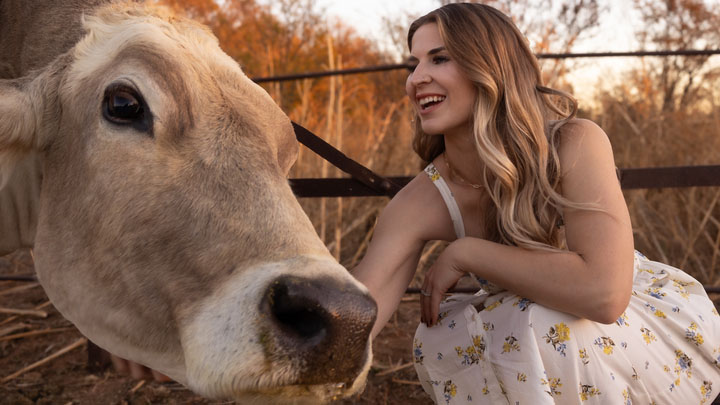
Behind the legal theory is a family. Jacy Vaughn launched Like Wildflowers Homestead to provide real, unprocessed food. It grew into a farm serving hundreds of community members who share those values. Now, with a court date in Austin and attorney retainers, travel costs, and lost farm income mounting, the Vaughns have launched a GoFundMe campaign to cover their legal defense.
Whether or not one agrees with the PMA legal framework, the underlying question this case forces into the open is one every advocate of independent food should care about: Does the government’s duty to protect the public include the power to redefine private, voluntary food relationships as public commerce — simply because the product is scapegoated in the popular discourse?
That is a constitutional question. And it deserves more than administrative convenience as an answer.
Who Benefits? The Industry Backdrop
The DSHS action against Like Wildflowers Homestead may be purely bureaucratic — a regulatory agency enforcing a permit requirement it has always enforced. But the question of who benefits from shutting down unlicensed raw milk operations deserves to be asked.
The Texas Association of Dairymen (TAD) and allied corporate dairy interests have a well-documented history of opposing expanded raw milk access in Texas. Upholding pasteurization requirements is a stated goal. Farm and Ranch Freedom Alliance (FARFA), which has tracked raw milk legislation in Texas for years, has stated plainly that “the real driver in the opposition to raw milk is the corporate dairy lobby” — a handful of large co-ops that control pasteurized dairy processing and distribution and have used significant financial and political resources to kill raw milk bills in multiple legislative sessions. Their frequent legislative partner in this effort has been the Texas Medical Association.
TAD’s public position is that raw milk poses serious health risks and that pasteurization requirements should be maintained. The organization monitors DSHS rulemaking as an explicit watchdog function for the industry. When a raw milk bill comes to hearing, the bigger local industry comes first to oppose it, they bring in health department–not the other way around. The political wings of big industry then swoop in to blame the health department as the primary driver.
None of this establishes that industry actors initiated this case. It is highly possible, and murky in terms of whether or not public records would reveal a tip-off between such deeply integrated organizations. But the pattern is worth understanding: in Texas, the fight over raw milk has never been purely about food safety. It has always also been about market control. A PMA dairy operating outside the permit system is, by design, outside the supply chain that large co-ops dominate. That alone makes it a competitive threat — regardless of whether the milk is tested weekly and certified by the Raw Milk Institute.
Like Wildflowers Homestead social media
For updates as soon as they arrive, follow Like Wildflowers Homestead in Lamesa, TX on Facebook and Tiktok.
Consider contributing to Jacy’s GoFundMe: Support a West Texas Family Farm Facing Legal Action