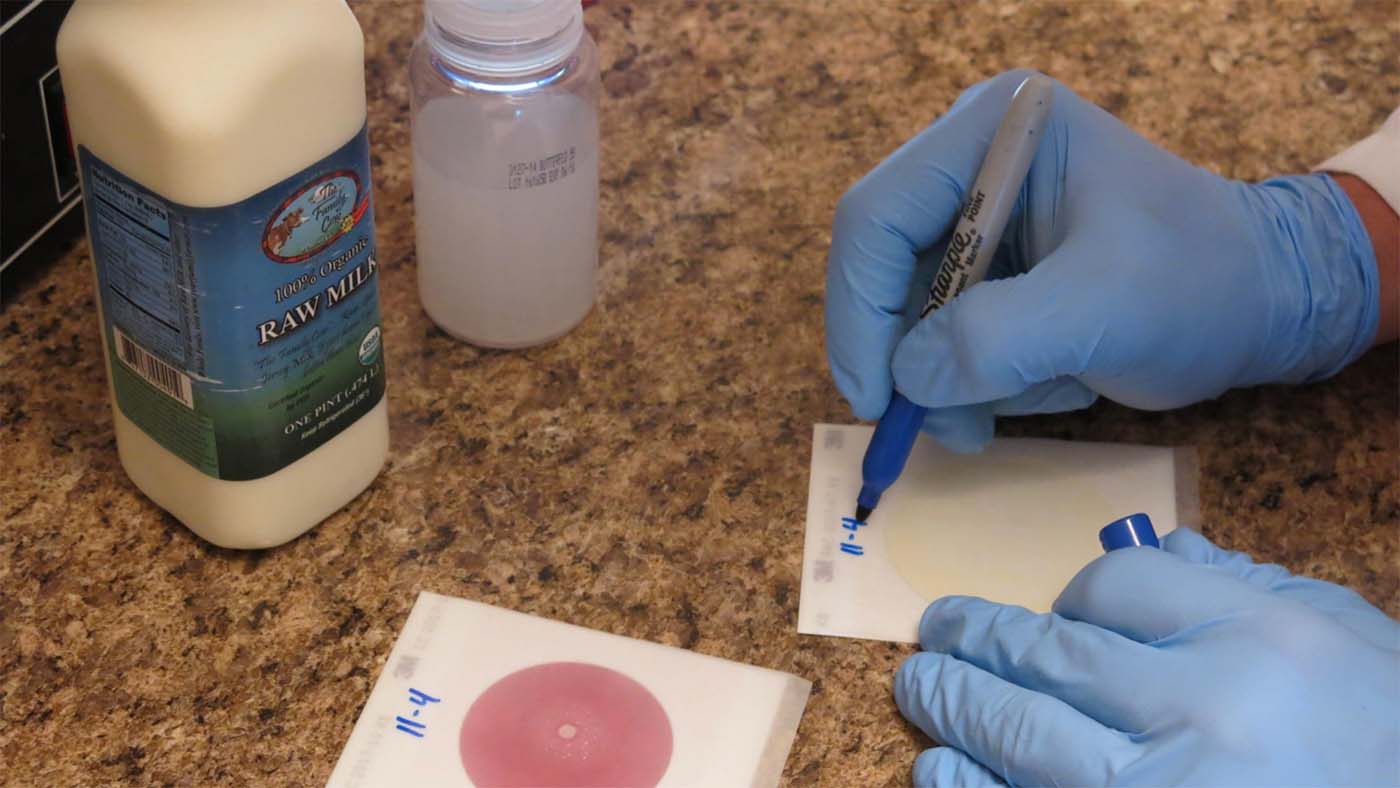
On-farm microbial testing lets producers see results before milk reaches consumers.
How to Test Raw Milk on the Farm: Charm Sciences Peel Plates vs. Neogen Petrifilm
The single most effective thing a raw milk producer can do to prevent a recall is test their own milk before it leaves the farm. On-farm testing catches bacterial problems at the source, before product enters commerce and before regulators get involved. The goal is no surprises.
Two testing systems dominate on-farm raw milk microbial testing in the United States: Charm Sciences peel plates and Neogen (3M) Petrifilm. Both test for the same two key indicators, coliform bacteria and Standard Plate Count (SPC), and both are practical, affordable, and well-documented. This article breaks down the materials, costs, and practical differences to help producers choose the right fit for their operation.
For context on why on-farm testing matters within the broader food safety picture, see raw milk bacterial testing before it leaves the farm and how raw milk recalls work. To see the Charm Sciences peel plate process in action, watch a farmer test raw goat milk on the farm.
What On-Farm Testing Measures and What It Doesn’t
Both systems test for two indicators.
Coliform Count measures coliform bacteria. Coliforms are not themselves typically pathogenic, but elevated counts are strong indicators of fecal or environmental contamination, or sanitation failure. A rising coliform count is a prompt to investigate before the problem worsens.
Standard Plate Count (SPC) / Aerobic Count measures total aerobic bacteria in the milk. A rising SPC over time, even within acceptable limits, signals that something in the milking environment, equipment, or cooling chain is shifting. Tracking trends matters as much as any single result.
Neither system tests for specific pathogens such as Listeria monocytogenes, Salmonella, or E. coli O157:H7. The Charm Sciences EC peel plate differentiates E. coli from other coliforms using color-coded dots, which can help identify the source of contamination, but does not confirm the presence of pathogenic strains. Pathogen testing requires laboratory analysis, handled separately through state requirements or specialized lab submissions.
On-farm testing is a proactive trend-monitoring tool, not a pathogen screen. Its value is catching the conditions that lead to pathogen events before they develop.
Charm Sciences Peel Plates
The Charm Sciences peel plate system is widely used among licensed raw milk producers and is the method featured in the on-farm testing video from R. & M. Speltz Farm. Materials and sourcing below are drawn from the supply list compiled by Kelsey Barefoot, owner of The Barefoot Cow Dairy.
Materials
PeelPlate EC (E. coli and Coliform Count) Tests for total coliforms and E. coli using color-coded colony differentiation. The basic Coliform Count peel plate is also acceptable if EC differentiation is not needed. Coliform tests are performed neat with no dilution. Source: Weber Scientific – Charm Peel Plate Microbial Test
PeelPlate AC (Aerobic Count / Standard Plate Count) Measures total aerobic bacteria. A 1:10 dilution is recommended for clean, well-produced milk to ensure accurate colony counting. A 1:100 dilution can be used if colonies are too numerous to count. No dilution typically results in counts too dense to read. Source: Weber Scientific – Charm Peel Plate Microbial Test
Individually-wrapped sterile pipettes (3ml) Required for transferring milk samples without contamination. Source: Medical and Lab Supplies – Disposable Sterile Transfer Pipettes, pack of 50
Sterile dilution water bottles Pre-filled, sterilized bottles for SPC dilution. Eliminates the need to prepare dilution water on-site. Source: Weber Scientific – DB Sterilized Pre-Filled Dilution Bottles
Sterile mixing container Required when pouring from the dilution water bottle. A glass container boiled before use is acceptable.
Incubator The Quincy Lab 10-140 has performed reliably for many producers. Other incubators are acceptable provided they maintain a stable, readable temperature. Compare prices across suppliers before purchasing. Source: Clarkson Lab – Quincy Lab 10-140
Clean work area Testing must be performed away from the milking barn. A dedicated clean workspace such as a kitchen or office is standard practice.
Setup and Running Costs
Initial setup (incubator): approximately $800–$1,000 depending on supplier. Per-test cost after setup: approximately $1–$3.
Neogen Petrifilm
The Neogen Petrifilm system uses 3M Petrifilm plates and is the method documented by Edwin Shank at The Family Cow Dairy in Pennsylvania. Shank’s materials list includes specific item numbers, sources, and a detailed cost breakdown that makes this system straightforward to replicate.
Materials
Analog Incubator Item #3055-80 Source: Weber Scientific Cost: $705
Mini LED Light Box Item #F37864-3000. Backlights colonies for easier reading. Source: SP Bel-Art Cost: $136
Mini Magnifier Item #3045-33. Used alongside the light box for accurate colony counting. Source: Weber Scientific Cost: $135
Butterfield’s Buffer (99ml buffered dilution water) Item #3127-14. For diluting samples for the SPC test. Source: Weber Scientific Cost: $0.65 each (sold by case of 72)
Transfer Pipets, 3ml Sterile (individually wrapped) Item #3017-18 Source: Weber Scientific Cost: $0.13 per pipette (sold by case of 500)
Coliform Count Petrifilm Item #6410 Source: Nurnberg Scientific or AquaPhoenix Cost: $1.92 each. Check shipping costs and source locally where possible.
SPC Rapid Aerobic Count Petrifilm Item #6478 Source: Nurnberg Scientific or AquaPhoenix Cost: $1.82 each. Check shipping costs and source locally where possible.
Setup and Running Costs
Initial setup (incubator, light box, magnifier): approximately $976. Per-test consumable cost for both coliform and SPC: approximately $4. Amortized over five years at 15 lots tested per month, equipment depreciation adds roughly $1 per test. Total labor per session is approximately 15 minutes.
Benchmarks from The Family Cow
Edwin Shank tests every lot bottled at The Family Cow. His benchmarks for hygienic raw milk production are below 3 coliform CFU/ml and below 2,000 SPC/ml. Results at The Family Cow are often well below half those thresholds. When numbers trend upward, the team investigates and finds a fix before the numbers become a problem.
Charm Sciences vs. Neogen Petrifilm: Key Differences
Both systems test for the same indicators and deliver reliable results for on-farm use. The practical differences are reading method, cost structure, and setup requirements.
The Charm Sciences peel plate system requires no additional reading tools. Colonies are visible to the naked eye on the plate surface. Setup costs are slightly lower, and the EC plate’s color differentiation adds a useful diagnostic layer for producers troubleshooting contamination sources.
The Neogen Petrifilm system requires a light box and magnifier, adding approximately $270 to setup costs but improving precision in colony counting. Per-test consumable cost is slightly higher. The Family Cow’s detailed item numbers and cost-per-test documentation make this system particularly easy to replicate.
Neither system is inherently superior. Both are in active use by experienced, high-performing raw milk producers. The choice often comes down to which system a producer’s network or mentor uses, since hands-on guidance is the fastest path to reliable results.
Why This Testing Matters Beyond Compliance
State testing requirements protect consumers. On-farm testing protects everyone, including the farm’s reputation and the broader raw milk market. A producer who catches a coliform spike internally, holds the lot, finds a cracked gasket in the milk line, fixes it, and retests before releasing product has done something state testing alone cannot do: prevented a problem before it became public.
The raw milk recalls FAQ addresses what happens when a problem does become public. The step-by-step recall guide documents the full process from detection to resuming operations. The farms best positioned to avoid recalls are the ones treating their own data seriously, batch by batch.
Consumers looking for producers who test proactively can find them on the RAWMI Listed Farms Map and the global search for raw milk farms and retailers.