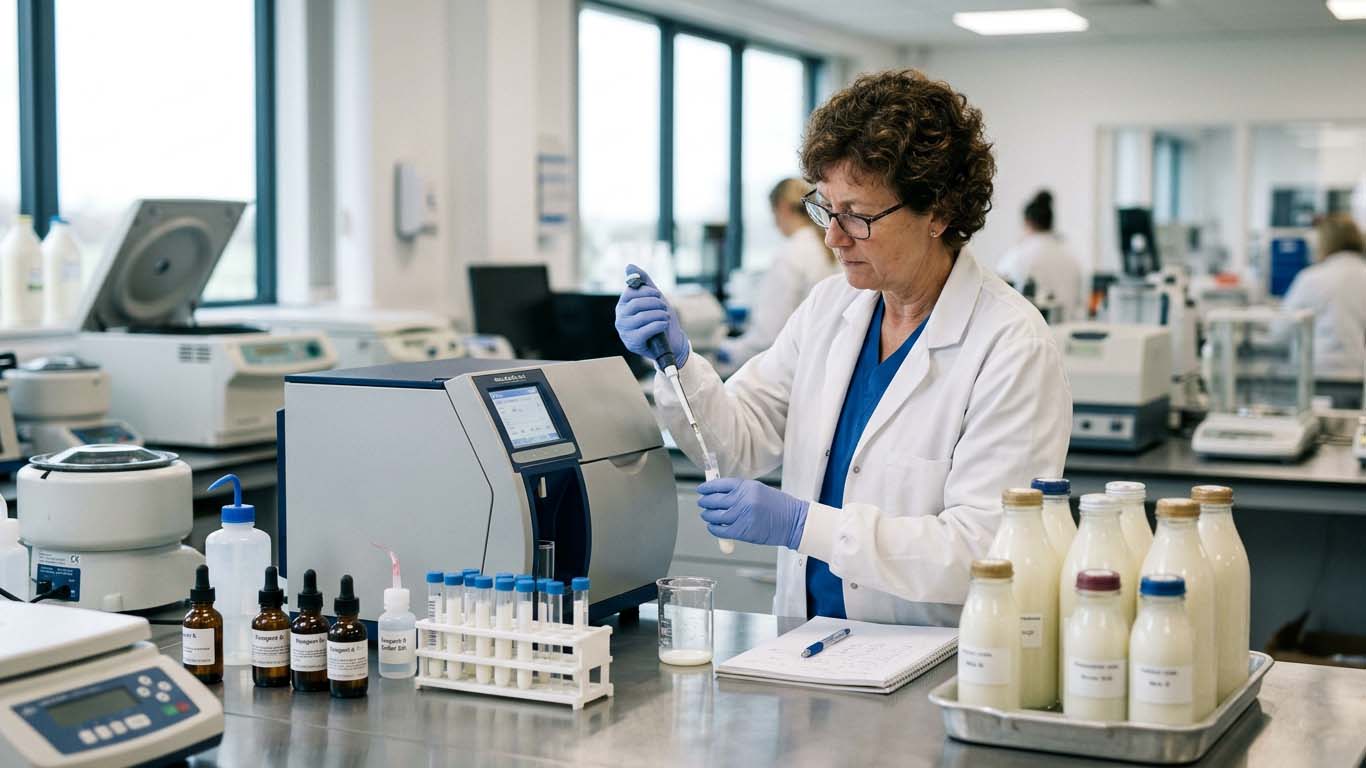
Licensed raw milk producers are among the most frequently tested food producers in the American food supply.
Raw Milk Recalls FAQ: Your Questions Answered
Raw milk recalls generate headlines, social media alarm, and genuine consumer questions. This FAQ addresses the most common questions about how recalls work, what they mean, and what consumers should do – with straight answers grounded in how the food safety system actually functions.
For a full chronological walkthrough of the recall process, see How Raw Milk Recalls Work: A Step-by-Step Guide to Food Safety in Action.
General Questions
Does a raw milk recall mean raw milk is dangerous?
No. A recall means the food safety system is working. Recalls are triggered because routine testing detected a potential hazard — the same testing infrastructure that makes licensed raw milk producers among the most frequently tested food producers in the American food supply. The detection itself is the system functioning as designed.
For context: the Boar’s Head processing facility in Virginia was linked to 9 deaths and 57 hospitalizations in 2024, and its eventual shutdown was described as food safety enforcement functioning as intended. The same logic applies to raw milk recalls. Detection and response are not evidence of failure — they are the definition of a working system.
How common are raw milk recalls?
Recalls are relatively rare given the scale of raw milk consumption. Between 2009 and 2014, more than 10 million Americans consumed raw milk regularly — a number that has likely grown since. Over that period, the CDC attributed roughly 761 illnesses per year to raw milk, with 22 hospitalizations and no deaths attributable to raw milk alone. That is a 0.007% illness rate, lower than the rates associated with leafy greens, chicken, or raw oysters.
Are raw milk recalls different from other food recalls?
Structurally, no — the sequence of detection, notification, product removal, investigation, corrective action, and return to operations follows the same logic as recalls in any other food category. The key difference is jurisdictional: because raw milk cannot legally cross state lines under federal law, raw milk recalls are governed almost entirely at the state level rather than by the FDA. This means the process varies somewhat by state, but licensed raw milk producers in states where retail sales are legal operate under rigorous, ongoing testing requirements that make anomalies detectable quickly.
Is social media coverage of raw milk recalls reliable?
Often not. Social media frequently amplifies recalls beyond their actual scope, and in some cases circulates outright misinformation. One widely shared example is an image falsely depicting politicians sickened by raw milk — an incident that was fact-checked by Snopes and traced to a bout of illness that investigators could not link to raw milk at all. Consumers are best served by checking their state department of agriculture’s official recall notices directly rather than relying on social media for recall information.
Are most raw milk illness outbreaks avoidable?
Yes. Virtually all illnesses related to raw milk are traceable to specific, identifiable failures in biosecurity — contaminated equipment, sick animals, inadequate sanitation, or deliberate negligence — rather than to any inherent property of raw milk itself. Farms that maintain rigorous sanitation protocols and proactive testing programs can reduce their recall risk to near zero.
Questions About the Recall Process
What triggers a raw milk recall?
Recalls are most commonly triggered by one of two things: a positive pathogen test on a milk sample submitted through routine state testing requirements, or an epidemiological investigation that links a cluster of gastrointestinal illnesses to a specific dairy. The pathogens of greatest concern in raw milk recalls are Listeria monocytogenes, Salmonella, E. coliO157:H7, and Campylobacter. A presumptive positive test result is sufficient to initiate precautionary action before confirmatory testing is complete.
What happens immediately after a positive test?
The testing laboratory notifies the state department of agriculture, which contacts the dairy directly. In most cases, the licensed producer cooperates with a voluntary hold on sales and distribution while confirmatory testing is conducted. This hold typically takes effect within hours of the initial notification. In many cases, farms with robust on-farm testing programs have already detected the issue internally before the state makes contact — which is precisely the outcome that proactive testing is designed to produce. See raw milk bacterial testing before it leaves the farm for how this works in practice.
What if the confirmatory test comes back negative?
If confirmatory testing returns a negative result, the voluntary hold is typically lifted and no recall is issued. The process ends there. This outcome — a false positive or a transient anomaly that clears on retest — is not uncommon, and it illustrates why the tiered testing approach exists: preliminary results trigger precaution, confirmatory results determine action.
How long does a raw milk recall take from start to finish?
The timeline depends on the nature and source of the contamination. Confirmatory testing takes 24 to 72 hours. If a formal recall proceeds, the on-farm investigation, corrective action plan development and implementation, environmental clearance testing, and pre-release product testing can collectively take several weeks. Listeria investigations often take longer than others because regulators typically require multiple rounds of negative environmental swabs — sometimes over several weeks — before authorizing a production restart.
Who issues the actual recall order?
The state department of agriculture issues the formal recall order, or works with the producer to coordinate a voluntary recall announcement. Because raw milk cannot legally cross state lines, this is a state-level action. The announcement typically identifies the dairy, the specific products and lot numbers affected, the pathogen detected, and instructions for consumers.
What does a farm have to do before it can sell again?
Before resuming sales, a farm must submit and receive approval for a written corrective action plan (CAP) identifying the probable root cause and the specific steps taken to eliminate it. The farm must then pass environmental clearance testing — often multiple rounds of negative swabs — and submit multiple consecutive production lots that all return negative results. Only after state regulators review and approve this documentation is the farm issued written authorization to resume sales. The farm then enters a period of enhanced monitoring, with more frequent inspections and additional required testing.
Is the farm’s return to operations publicly announced?
In most states, yes. The state department of agriculture announces the farm’s clearance to resume sales through the same channels used to issue the original recall — press releases, the agency website, and increasingly through email and social media alerts. This closes the loop for consumers who had been following the situation.
Questions About Federal Oversight
Does the FDA oversee raw milk recalls?
The FDA’s direct role in raw milk recalls is limited. Because raw milk cannot legally cross state lines under the Federal Food, Drug, and Cosmetic Act, raw milk sold within a state is regulated by that state’s department of agriculture, not the FDA. The FDA may become involved if a raw milk product is suspected of entering interstate commerce illegally, but the core recall process — testing, notification, investigation, corrective action, authorization to resume sales — runs through the states.
Has federal food safety oversight changed recently?
Yes, in ways that are relevant to raw milk consumers. As covered in detail in raw milk testing continues as the FDA shrinks, the Trump administration’s restructuring of the Department of Health and Human Services has reduced the federal food safety apparatus in meaningful ways. In April 2025, the FDA suspended its proficiency testing program for Grade A milk — an internal program that verified lab accuracy for dairy testing — due to workforce cuts. As of July 2025, the CDC reduced its FoodNet active surveillance network from eight pathogens to two, making federal monitoring for Listeria and Campylobacter optional rather than required.
None of these federal changes affect state-level raw milk testing requirements. State laws mandating routine testing remain fully in effect and are enforced by state-approved labs.
What is PulseNet and does it still operate?
PulseNet is the CDC’s national laboratory network that uses whole genome sequencing to link individual illness cases to common sources — a powerful tool for identifying outbreak clusters even before a specific product is definitively implicated. As of early 2026, PulseNet remains operational, though its long-term funding is subject to ongoing federal budget uncertainty. Its capacity to link raw milk illness cases across state lines may be diminished if federal staffing cuts continue.
Questions for Consumers
How do I find out if a raw milk product I purchased has been recalled?
The most reliable source is the official website of the state department of agriculture where the dairy is licensed. Most states maintain a recall and advisory page that is updated in real time. Many state agencies also offer email or text alert subscriptions for food safety recalls — signing up takes minutes and provides direct notification without relying on media coverage. Following the dairy’s own communications channels — email lists, website, social media — is also effective, as licensed producers typically notify customers directly and promptly.
What should I do with recalled raw milk?
Do not consume it. Discard the product or return it to the point of purchase for a refund. Keep the container if possible — the lot number and sell-by date may be needed to confirm whether your specific purchase is included in the recall. Retailers that sold the recalled product are required to pull it from shelves and, in most states, to contact customers directly where purchase records allow.
What if I already consumed the recalled product?
Monitor for symptoms. The most common symptoms of illness from the pathogens associated with raw milk recalls — Listeria, Salmonella, E. coli O157:H7, and Campylobacter — include diarrhea, vomiting, abdominal cramping, and fever, typically appearing within 12 to 72 hours of consumption, though Listeria symptoms can take weeks to appear. Contact a healthcare provider if symptoms develop and mention the potential raw milk exposure. Report the illness to the state health department — individual illness reports are how epidemiologists identify outbreak clusters.
Who is most at risk from a recalled raw milk product?
Regulatory agencies consistently identify pregnant women, newborns, young children, the elderly, and immunocompromised individuals as groups for whom the potential consequences of raw milk-related illness are most serious. Listeria monocytogenes in particular poses elevated risk to pregnant women, as infection can result in miscarriage, stillbirth, or serious illness in newborns. These groups warrant particular consideration when making decisions about raw milk consumption.
Should I stop buying raw milk from a farm that has had a recall?
That is a personal decision, but the recall process itself provides useful information. A farm that detected a problem through testing, cooperated fully with regulators, implemented corrective actions, passed clearance testing, and resumed sales with enhanced monitoring has demonstrated exactly the behavior the food safety system is designed to encourage. The recall record, and the farm’s response to it, is more informative than the absence of a recall history — which may simply reflect less rigorous testing.
How can I reduce my risk before a recall ever happens?
The most effective step is to purchase from farms that conduct proactive, routine on-farm testing — catching potential problems before product ever enters commerce. The Raw Milk Institute (RAWMI) has established a listed producer program whose farms commit to science-based food safety protocols including regular bacterial count monitoring, transparent reporting, and farm-specific risk management plans. RAWMI offers a free online safety course for producers, and publishes resources on on-site testing methods including a video of a farmer testing raw goat milk on the farm. As RAWMI trainer Mark McAfee describes it, the goal of on-farm testing is simple: no surprises.
Beyond sourcing, consumers can keep purchase records including producer name, lot number, and sell-by date; sign up for state ag department recall alerts; and know the symptoms of common foodborne pathogens so that illness can be identified and reported promptly if it occurs.
Questions About Raw Milk Laws
Is raw milk legal where I live?
Raw milk retail sales are legal in roughly 30 states, with significant variation in what is permitted — from full retail availability in grocery stores to farm-direct sales only to herd-share arrangements. The raw milk law map provides a current, state-by-state breakdown of what is and is not permitted where you live.
Does a recall affect the legal status of raw milk sales in a state?
Generally no. A recall is a food safety action directed at a specific producer and specific product lots — it does not change the underlying laws governing raw milk sales in a state. Regulatory agencies in states where raw milk is legal have established recall procedures precisely because they anticipate that recalls may occasionally occur among licensed producers. The existence of a recall process is itself evidence that the regulatory framework treats raw milk as a manageable food safety category, not an inherently prohibited one.
Can raw milk be recalled across state lines?
Raw milk is prohibited from interstate commerce under federal law, so in principle a raw milk recall applies only within the state where the product was legally sold. However, if regulators have reason to believe that raw milk entered interstate commerce illegally — sold or transported across state lines in violation of federal law — the FDA may initiate a broader investigation. In practice, the vast majority of raw milk recalls are entirely state-contained.
Further Reading
- How Raw Milk Recalls Work: A Step-by-Step Guide to Food Safety in Action
- Comparing Raw Milk Illness Data with Other Foods
- Raw Milk and Avoidable Failures in Biosecurity
- Raw Milk Testing Continues as the FDA Shrinks
- Raw Milk Bacterial Testing Before It Leaves the Farm
- RAWMI Listed Producers
- Raw Milk Law Map