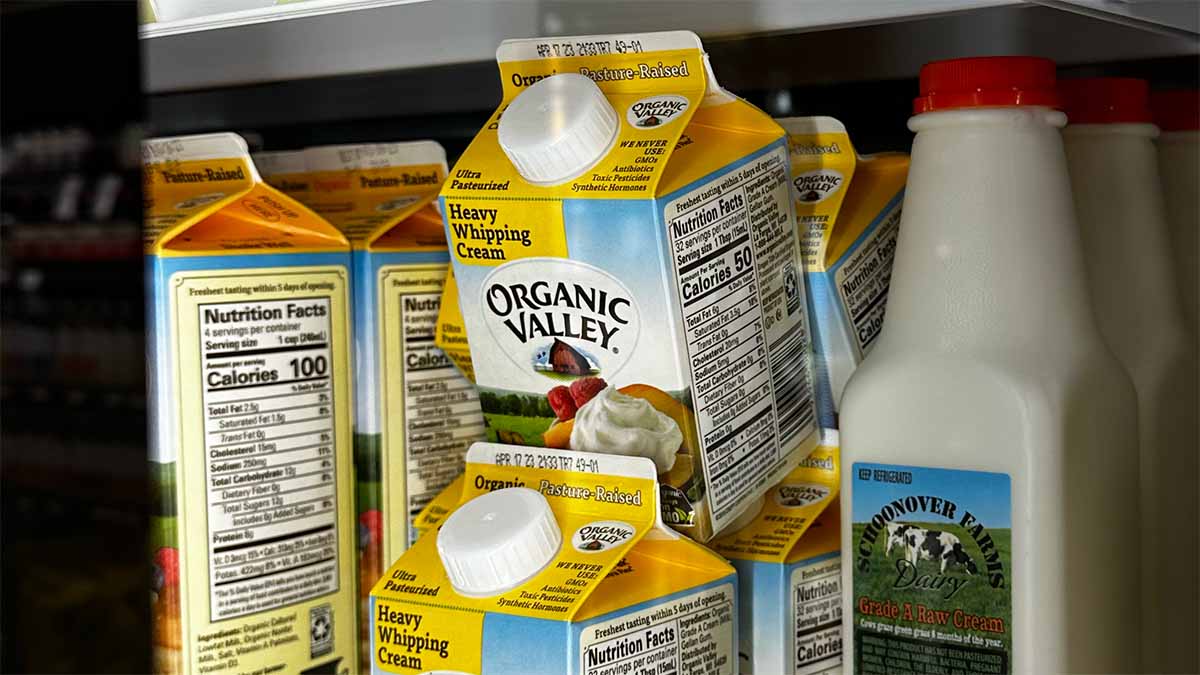
Organic Valley Sues Over Federal Milk Marketing Order Pricing Rules That Favor Conventional Dairy
Three of the largest organic dairy brands in the United States filed federal lawsuits on April 28, 2026 challenging the constitutionality of a Depression-era pricing system that, they argue, has redirected revenue generated by organic milk sales to conventional dairy producers for two decades.
The plaintiffs, Aurora Organic Dairy, Horizon Organic Dairy, and CROPP Cooperative/Organic Valley, formed the Coalition for Organic Dairy Exemption (CODE) and filed three separate constitutional challenges to the Federal Milk Marketing Order (FMMO) program. Seven individual organic dairy farmers filed a related class action claim seeking compensation for six years of payments made into the system.
How the Federal Milk Marketing Order Program Works
The Federal Milk Marketing Order program dates to the Great Depression. It was designed to stabilize dairy markets by setting minimum prices for raw milk based on its end use, a classification system known as milk classes. Class I milk, fluid drinking milk, historically commands the highest price. The program pools revenue and redistributes a portion of Class I proceeds to producers whose milk ends up in manufactured products like cheese and butter.
The intent was to level the playing field between farms near urban markets and those in more rural, processing-oriented regions. For most of its history, the system operated across a dairy industry where conventional fluid milk and commodity cheese were the primary products.
Organic milk was not part of that landscape.
Why Organic Dairy Says the FMMO System Does Not Apply to Them
Organic dairy operations are legally required to participate in the FMMO program. Under the current rules, organic and conventional milk receive the same minimum price, and organic processors contribute to the same revenue pool.
The problem, according to CODE, is structural. Organic dairy’s primary product is fluid drinking milk, Class I milk. That means organic processors consistently contribute to the pool at the higher Class I rate while deriving little benefit from the redistribution mechanism, That redistribution mechanism flows toward cheese and butter producers, a segment that is predominantly conventional.
Adam Warthesen, Vice President of Government and Industry Affairs at Organic Valley, has estimated that since 2006, organic processors have paid more than $400 million into the marketing order system, with the bulk of those funds redistributed to conventional producers. For Organic Valley alone, he says the annual cost runs to tens of millions of dollars per year.
Organic dairy has been federally recognized as a distinct product category since Congress passed the Organic Foods Production Act in 1990, which authorized the creation of the National Organic Program. The FMMO program has never formally accounted for that distinction.
The 2025 FMMO Reform That Increased Organic’s Cost Burden
The FMMO program underwent its most comprehensive reform in more than two decades in 2025, with changes taking effect June 1 of that year. The overhaul followed a national public hearing that ran from August 2023 to January 2024 in Carmel, Indiana.
The reform agenda was substantially shaped by the National Milk Producers Federation (NMPF), the largest lobbying organization representing conventional dairy cooperatives and their producer members. NMPF’s proposals formed the structural basis of the hearing after the organization’s board unanimously approved a modernization package in March 2023 and submitted it to USDA in May 2023. The organization called the result a successful conclusion to a years-long effort.
The organic industry participated in the same process. CODE members submitted organic-specific proposals at the 2023 hearing. USDA declined to consider them. Organic producers filed objections in a post-hearing brief in 2024. Those objections went unaddressed in the final rule. Administrative challenges filed in May 2025 were opposed by USDA.
NMPF’s position on organic carve-outs has been consistent. When a predecessor proposal for a separate organic pool was floated years earlier, NMPF characterized it as an attempt to increase organic processors’ revenues at the expense of conventional producers. The proposal was withdrawn.
The 2025 reforms increased organic processors’ FMMO payment obligations by approximately 60 percent, according to Organic Valley. That increase, applied to a system CODE argues was already drawing revenue from organic dairy without proportional return, is what drove the 2026 litigation.
Even the International Dairy Foods Association (IDFA), which represents dairy processors and supported the broader reform package, acknowledged in its post-announcement statement that the USDA process had not addressed issues specific to Class I and organic milk processors.
The Legal Claims: Constitutional Challenge and Class Action
CODE’s lawsuits argue that mandatory FMMO participation is unconstitutional as applied to organic dairy. The suits do not seek to dismantle the FMMO program for conventional dairy. The requested relief is narrow: an exemption for organic producers and processors, and compensation for the payments organic farmers have been required to make.
The class action, brought by seven Organic Valley farmer-members from across the country, frames the mandatory payments as an unconstitutional taking under the Fifth Amendment. Remington Perkins, a fourth-generation dairy farmer in West Virginia, is among the named plaintiffs. He has described litigation as a last resort, reached only after testimony, petitions, and hearings failed to produce any regulatory response.
Pennsylvania organic farmer Elvin Ranck, also a plaintiff, described the current system as one that “systematically siphons revenue generated from organic dairy sales and redistributes it to non-organic dairy producers and their partners.”
As of late May 2026, the constitutional claims are pending before the federal courts and the administrative claims remain pending before USDA.
A Pricing System Designed for Commodity Milk in a Market That No Longer Is
The FMMO program was built around a uniform commodity. It categorizes milk by use, not by production method, certification status, or consumer market. CODE argues that framework fits poorly in a dairy sector where organic fluid milk commands a distinct price premium, moves through a separate supply chain, and serves consumers who treat it as a categorically different product.
Organic dairy accounts for roughly 3 percent of total U.S. milk production. CODE has argued that exempting that segment would not materially alter the economics of the conventional dairy market. What it would do is stop routing organic beverage milk revenue into a redistribution pool that was designed for a market structure organic producers do not participate in.
The outcome of the organic dairy lawsuit will likely depend on whether federal courts find the Fifth Amendment takings argument sufficient to override a regulatory program with nearly a century of legal precedent behind it. Whatever the result, the litigation has forced a formal reckoning with a question the FMMO process has avoided answering for more than 30 years: whether a pricing system built for commodity milk can equitably govern a market that long ago stopped being uniform.