How Milk Processors Punish Raw Milk Farms That Sell Direct: A Louisiana Case
A Louisiana dairy farm that added direct-to-consumer raw and gently pasteurized milk sales to a decades-old conventional dairy operation was cut off by its bulk milk processors in late May 2026. The cutoff is a useful illustration of how processor dependency persists even after a state legalizes raw milk sales, and why the legal right to sell direct and the practical ability to do so are not yet the same thing in Louisiana.
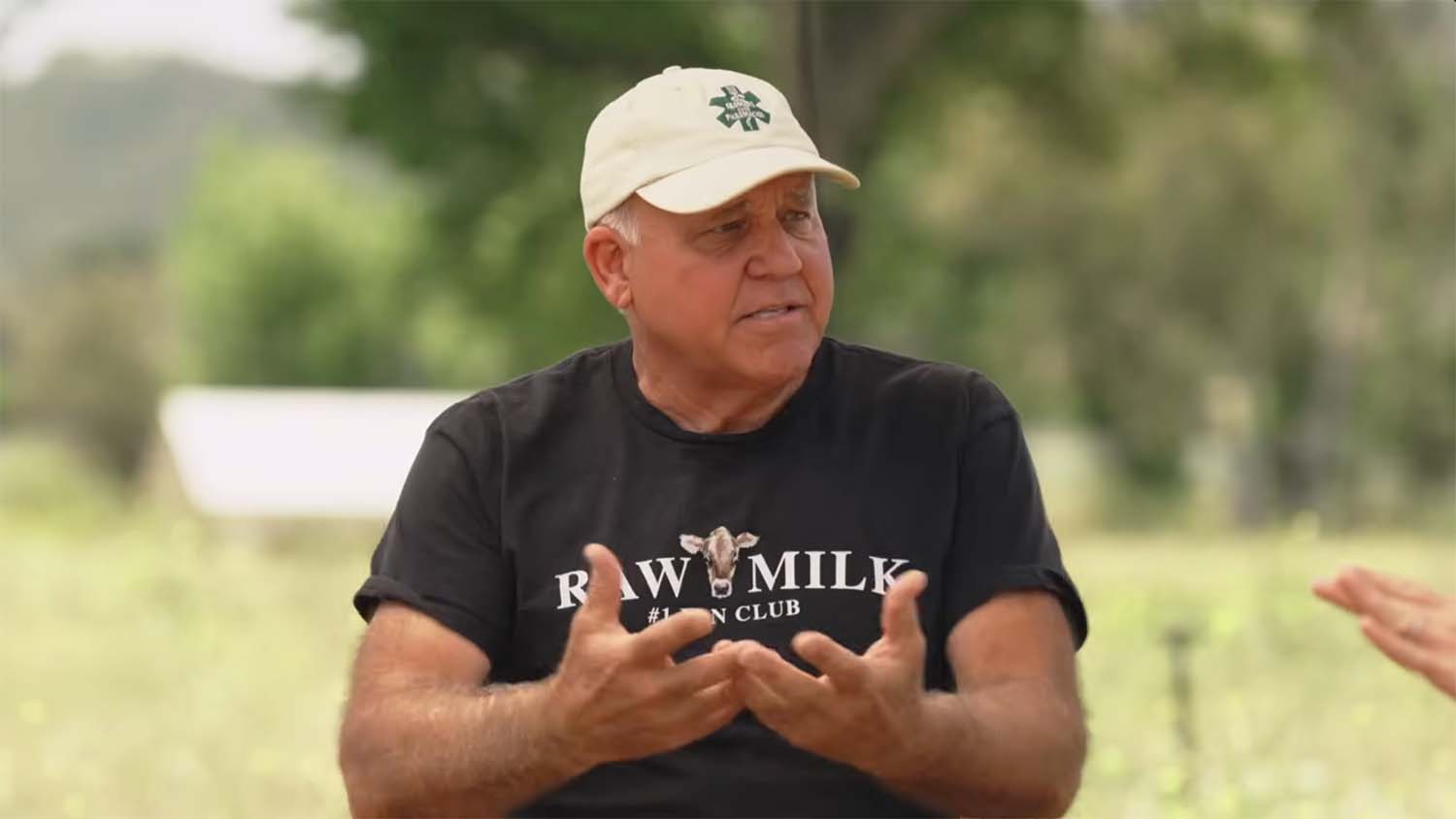
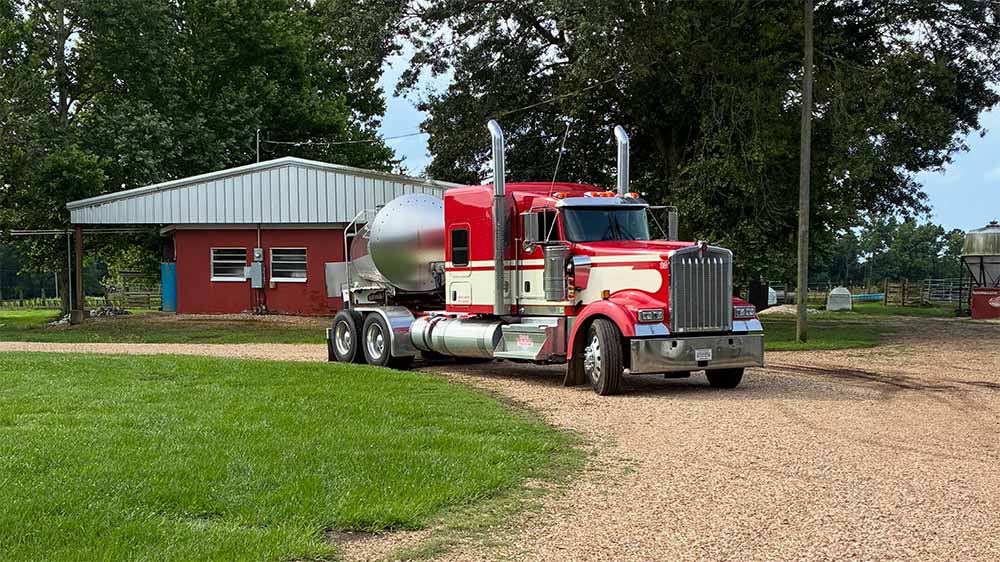
Sinagra Family Dairy in Amite, Louisiana had operated for more than 30 years as a conventional dairy before adding a bottling operation roughly two years ago. Since then, about half the farm’s production went to consumers through its own bottling operation, with the other half moving through 18-wheeler tanker pickups to large processors. On May 31, 2026, the farm was notified that processors would no longer pick up its milk. “They thought we would fold, thought that I would stop bottling milk and that we would go to shipping all of it,” Miles Sinagra, the farm’s CEO, told Unfiltered with Kiran. “We’re really committed to what we’re doing.”
Sinagra said one processor in particular, which he has not named publicly, drove the decision. He described that processor as having been hostile toward the farm since the bottling operation launched, and said the goal was explicit: force the farm to stop bottling by making it financially dependent on wholesale income that could then be withheld. The farm’s revenue was cut in half overnight. The farm is now 100 percent direct-to-consumer, selling through its on-farm store and retail accounts. Louisiana Rep. Kim Coates (R-Ponchatoula), who represents Tangipahoa Parish and authored the state’s raw milk legislation, addressed the Louisiana House in Baton Rouge on the matter the day following the cutoff announcement.
A Law That Opens a Door Without Widening It
Louisiana’s HB 467, introduced by Rep. Coates in 2024, was the product of years of legislative effort, including a prior bill in 2016 that passed the Senate and died in the House without a committee hearing. It passed the House 94-0, was signed by the governor, and took effect August 1, 2024. The law operates on two tracks. Under the first, raw milk may be sold for human consumption with required construction, sanitation, bottling, testing, and labeling standards. Under the second, the same milk may be sold under the state’s commercial feed license as pet food, with a label reading “WARNING: NOT FOR HUMAN CONSUMPTION.” Rep. Coates indicated during the legislative process that off-farm sales, including at farmers markets, are permitted under this framework. Louisiana’s current raw milk regulations sit within a broader national patchwork of state-by-state frameworks that vary widely in what they permit, restrict, and leave unaddressed.
What the law does not account for is that direct-market sales and processor pickup are treated as entirely separate and unrelated activities. A farm can now legally sell raw milk in Louisiana and simultaneously ship bulk milk to a processor, but the law draws no connection between those two activities and places no conditions on either. The processor relationship remains purely a private commercial arrangement, terminable at will, with no reference to what the farm does with the rest of its production.
Louisiana’s dairy industry has contracted sharply over the past three decades. More than 1,200 family-owned dairy farms operated in the state when the Sinagra family began dairying in 1995. Fewer than 45 of those farms remain operating in Louisiana today, according to Rep. Coates. Sinagra has described Louisiana as a “deficit state,” with in-state demand largely supplied by large operations elsewhere. That concentration leaves farms with few alternative buyers for their bulk milk, which is exactly what makes processor pickup a point of leverage when a farm begins building a parallel revenue channel.
A Documented Pattern
The Sinagra situation is not an isolated incident. Processors and cooperatives have applied the same pressure across the country when direct-market or raw milk operations began competing meaningfully with conventional wholesale volume.
The clearest precedent came in 2010, when Organic Valley, the Wisconsin-based organic dairy cooperative, voted to prohibit member farmers from maintaining raw milk side businesses. The policy affected farms that had established raw milk operations before joining the cooperative, in states where raw milk sales were entirely legal. As Grist reported at the time, the cooperative’s Dairy Executive Committee deadlocked 20-20 before the board broke the tie with a narrow 4-3 vote in favor of the ban. The stated rationale centered on competition and legal concerns that the cooperative’s own lawyers acknowledged were minimal. An estimated 10 percent of Organic Valley’s member farms, between 150 and 200 dairies, were selling raw milk for supplemental income when the ban took effect, in many cases at $5 to $10 per gallon versus the roughly $1.50 per gallon the cooperative paid for bulk milk. For those farmers, the choice was to remain in the cooperative or continue selling raw milk, but not both.
The Organic Valley case differs from Sinagra’s in one important respect: Organic Valley is a farmer-owned cooperative, meaning the exclusivity policy was at least nominally a member vote. The Louisiana processor involved in the Sinagra cutoff appears to be a conventional commercial buyer with no ownership relationship to the farm. The leverage is purely economic.
At the national scale, Dairy Farmers of America, the country’s largest dairy cooperative by membership, has faced multiple federal antitrust actions alleging that its control over processing capacity was used to foreclose independent marketing alternatives for producers. The Department of Justice reviewed DFA’s acquisition of Dean Foods processing plants out of bankruptcy in 2020 and required divestitures in several markets before approving the transaction.
The pattern points to the same underlying condition: processor control over bulk milk pickup is the point of leverage, and it will be used when direct-market activity grows large enough to be noticed.
What the Law Has Not Yet Addressed
Louisiana’s HB 467 is a more complete framework than many states have managed. The dual-track structure covering both human consumption and commercial feed sales, with off-farm distribution permitted, gives farms meaningful flexibility. The gap is not in what the law authorizes but in what it leaves unexamined.
California illustrates one direction the framework can develop. Raw milk there is sold in licensed grocery stores statewide under a structure that treats it as a human food product subject to full Grade A sanitation standards. Non-processing distributors can obtain a milk handlers license from CDFA without operating a pasteurization facility, creating a licensed channel for raw milk that runs parallel to, rather than through, the conventional processing infrastructure. Raw milk in California reaches consumers through ordinary retail commerce because the regulatory framework recognized it as a distinct product category and built the licensing structure accordingly.
Louisiana has taken the first step by recognizing the product. The question now before legislators is whether the framework will develop far enough that a farm selling raw milk direct to consumers is operating in a genuine market rather than a legally permitted activity that the existing supply chain can still shut down unilaterally.
Rep. Coates has shown the legislative will to pursue that development. The Sinagra situation, arriving in the House chamber within 24 hours of becoming public, suggests the urgency is not going unnoticed.