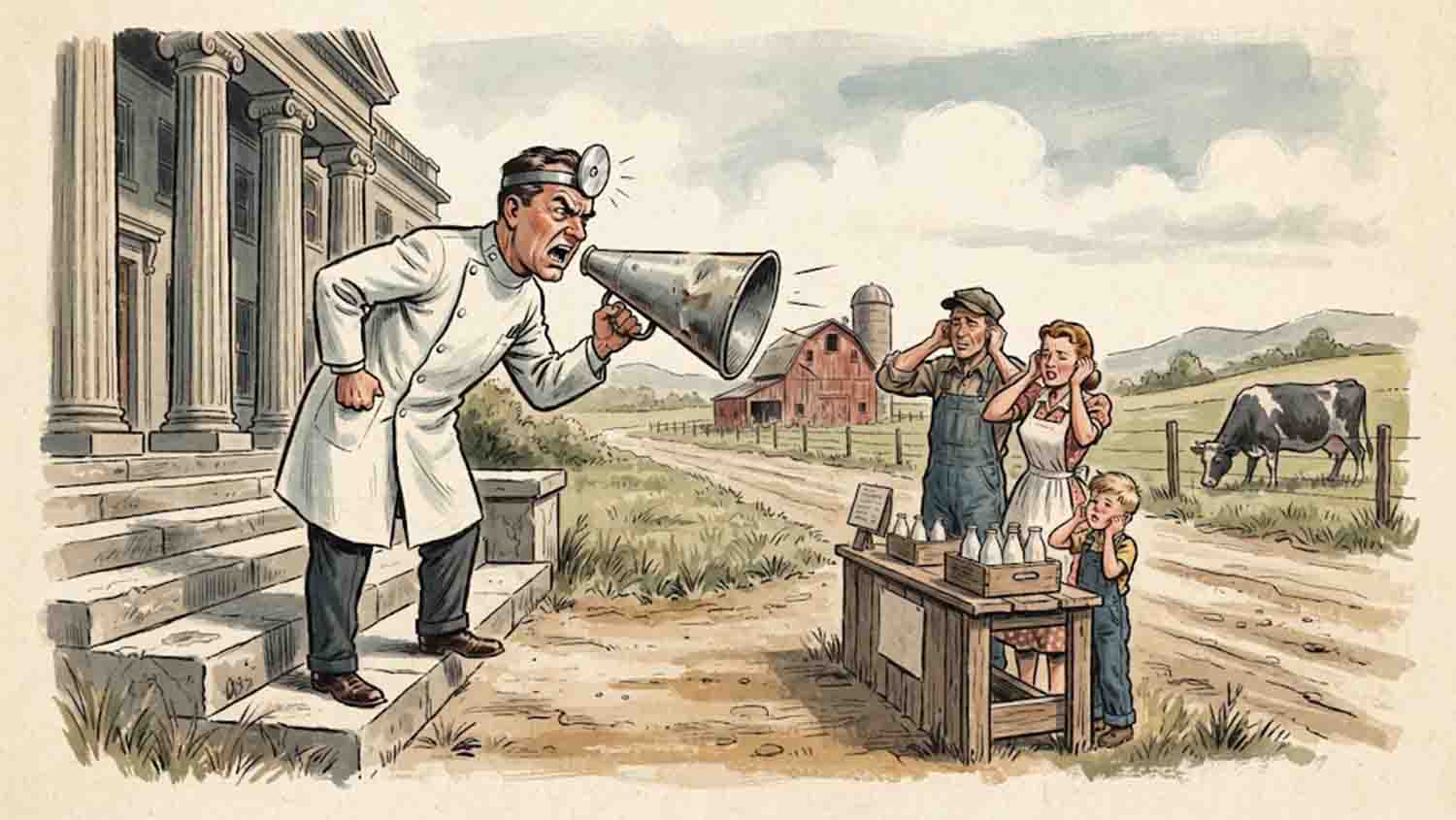

Whole Milk Returns to Schools: Bipartisan Legislation Rolls Back the Low-Fat Era
Policies associated with the low-fat era are rolling back to more balanced recommendations to include whole fat products, which contain nutrients that are simply not found in low-fat foods. Schools across the USA will now be allowed to use funding for (conventional, pasteurized) whole milk.
This does not include raw milk, but is massively impactful and interesting in the greater dairy foods context.
Whole Milk for Healthy Kids Act Restores Full-Fat Dairy Options in National School Lunch Program
After more than a decade of restriction, whole milk is making a comeback in American schools thanks to overwhelming bipartisan support in Congress. The Whole Milk for Healthy Kids Act of 2025, signed into law in January 2026, gives schools across the country the flexibility to once again offer whole and reduced-fat milk options alongside existing low-fat and fat-free varieties.
Bipartisan Coalition Unites Behind School Milk Reform
The legislation represents a rare moment of cross-party unity in Washington, with strong support from both Republicans and Democrats in the Senate and House of Representatives. Senator Roger Marshall (R-KS) and Senator Peter Welch (D-VT) led the Senate effort, while Representative Glenn Thompson (R-PA) and Representative Kim Schrier (D-WA) championed the bill in the House.
The Senate passed the legislation in November 2025 with support from Senate Agriculture Committee Chairman John Boozman (R-AR) and Ranking Member Amy Klobuchar (D-MN). The House followed with overwhelming approval in December, sending the bill forward with broad backing from both sides of the aisle.
What the Law Changes for School Nutrition Programs
The new law modifies regulations from the 2010 Healthy, Hunger-Free Kids Act, which had restricted school meal programs to offering only fat-free or low-fat milk options. Schools may now offer students whole, reduced-fat, low-fat, and fat-free flavored and unflavored milk, whether organic or nonorganic.
Importantly, the legislation doesn’t mandate that schools serve whole milk. As Representative Thompson emphasized during House floor debates, the bill “simply gives schools the flexibility to serve a broader variety of milk in the school lunchroom” rather than requiring any specific choices.
The law also makes a technical but significant change to nutrition calculations: milk fat from fluid milk is excluded from saturated fat content requirements that schools must meet, addressing a regulatory barrier that had prevented whole milk from qualifying under federal meal program standards.
Impact on Students and Dairy Consumption
The National School Lunch Program serves approximately 30 million students daily across more than 90% of public schools, making it a significant driver of dairy consumption. School meals account for roughly 7.5% of U.S. fluid milk sales, giving changes to school beverage policies substantial market impact.
Proponents argue the expanded options align with student preferences and could increase overall milk consumption among children. While overall fluid milk consumption has declined significantly, whole milk sales grew 16% from 2013 to 2024, even as skim and reduced-fat options fell. This consumer trend reflects growing interest in minimally processed foods and protein-rich beverage options.
Dairy industry groups estimate that even partial adoption could meaningfully shift butterfat demand. If between 25% and 75% of schools choose to offer whole milk, annual butterfat demand could increase by 13 million to 55 million pounds, providing new opportunities for dairy producers.
Support from Dairy Farmers and Agricultural Organizations
The legislation received enthusiastic backing from farming organizations nationwide. The American Farm Bureau Federation, National Milk Producers Federation, and International Dairy Foods Association all advocated strongly for passage, viewing the change as beneficial for both student nutrition and agricultural economics.
Pennsylvania Farm Bureau President Chris Hoffman noted that students would gain “more access to important protein and vitamins” while the change represents “a step toward helping the struggling farm economy”. The combination of nutritional and economic benefits created broad appeal across rural and agricultural communities.
Bipartisan Sponsors Highlight Nutrition and Choice
The diverse coalition of sponsors reflected varied regional and ideological perspectives united by common goals. Senator Welch of Vermont, representing a state with strong dairy traditions, emphasized that “dairy is an important part of Vermont’s culture and local economy” and described the legislation as “a win for Vermont’s students and farmers”.
Pennsylvania Senator John Fetterman framed the issue simply, stating that “whole milk is packed with the nutrients they need” and arguing the bill “benefits everyone” by supporting both child health and agricultural livelihoods.
Representative Schrier, a pediatrician, brought medical expertise to the discussion, highlighting how “a balanced and nutritious diet is for children’s health, well-being, and development”. Her professional background added credibility to arguments about nutritional benefits.
Implementation and Next Steps
Following the law’s signing, the U.S. Department of Agriculture began immediate implementation efforts. USDA issued guidance to school nutrition officials and announced forthcoming rulemaking to ensure schools can begin offering expanded milk options as quickly as possible.
The law arrives alongside updated 2025-2030 Dietary Guidelines for Americans that reintroduced full-fat dairy as part of healthy eating patterns, creating policy alignment between school meal standards and national nutrition recommendations.
School districts now have the option—but not the obligation—to add whole and reduced-fat milk to their cafeteria offerings. Implementation is expected to vary based on local preferences, student demand, and budget considerations, with adoption likely occurring gradually across different districts and states.
Broader Context: Shifting Nutrition Science
The policy change reflects evolving understanding of dietary fats and nutrition science. While concerns about saturated fat and cholesterol drove the 2012 restrictions on whole milk in schools, more recent research has prompted reconsideration of blanket restrictions on full-fat dairy products.
The Dietary Guidelines Advisory Committee recently affirmed that “most Americans under-consume nutrient-dense dairy”, with particular shortfalls in calcium and vitamin D intake. Milk provides these nutrients along with protein and other vitamins essential for child growth and development.
By offering students milk options they’re more likely to choose and drink, supporters argue the legislation could help address dairy under-consumption while respecting emerging nutritional science and consumer preferences.