Keely Farms Dairy: Named in a Florida Outbreak, Never Contacted, Tests Negative
In August 2025, the Florida Department of Health publicly named Keely Family Farms, LLC — a small licensed dairy in New Smyrna Beach — as the source of a bacterial outbreak involving 21 reported cases.
What followed over the next six months raised significant questions about the state’s handling of the investigation: the agency never visited the farm, never collected samples there, and never notified the farmer before issuing its statement. Independent tests of the farm’s milk came back negative. A civil lawsuit filed in the wake of the announcement was voluntarily dismissed in February 2026.
The Press Release That Blindsided a Farm
On August 4, 2025, the Florida Department of Health issued a statement reporting a Campylobacter and Shiga toxin-producing E. coli (STEC) outbreak in the northeast/central Florida region. The release cited 21 cases dating back to January 24, 2025, including six children under age 10 and seven hospitalizations, and described the illnesses as “linked to” consumption of raw milk from Keely Farms Dairy.
Standard outbreak investigation protocol calls for the suspected farm to be contacted immediately, samples to be collected and tested on-site, and the source to be identified before any public attribution is made. None of those steps were taken before the DOH named Keely Farms.
On August 7, Keely Farms Dairy published a response on Facebook:
“Keely Farms Dairy has not been informed of any immediate investigation by the Florida Department of Health and will reach out to their agency. We were not contacted by the Department of Health prior to or regarding their statement this morning. The Florida Department of Health has not informed Keely Farms of any investigation or administrative action. The Department of Health has not been to the farm or taken any samples here.”
The DOH’s own press release stated the agency would “continue working with Keely Farms Dairy” — language suggesting an ongoing collaborative process that, according to the farm, had never taken place. The agency did not serve the farm with a notice of violation, issue a shutdown order, or initiate any formal administrative proceeding.
Tests Come Back Negative
Following the announcement, Keely Farms conducted independent laboratory testing of its milk. Results were negative for both Campylobacter and Escherichia coli. The farm published the test documentation publicly on Facebook.
The Florida Department of Agriculture also conducted a routine inspection of the farm during this period. The farm passed.
The Farm-to-Consumer Legal Defense Fund (FTCLDF) submitted public records requests to the DOH seeking the data and evidence underlying the agency’s claims. The DOH did not provide that information in response.
Florida’s Raw Milk Legal Framework
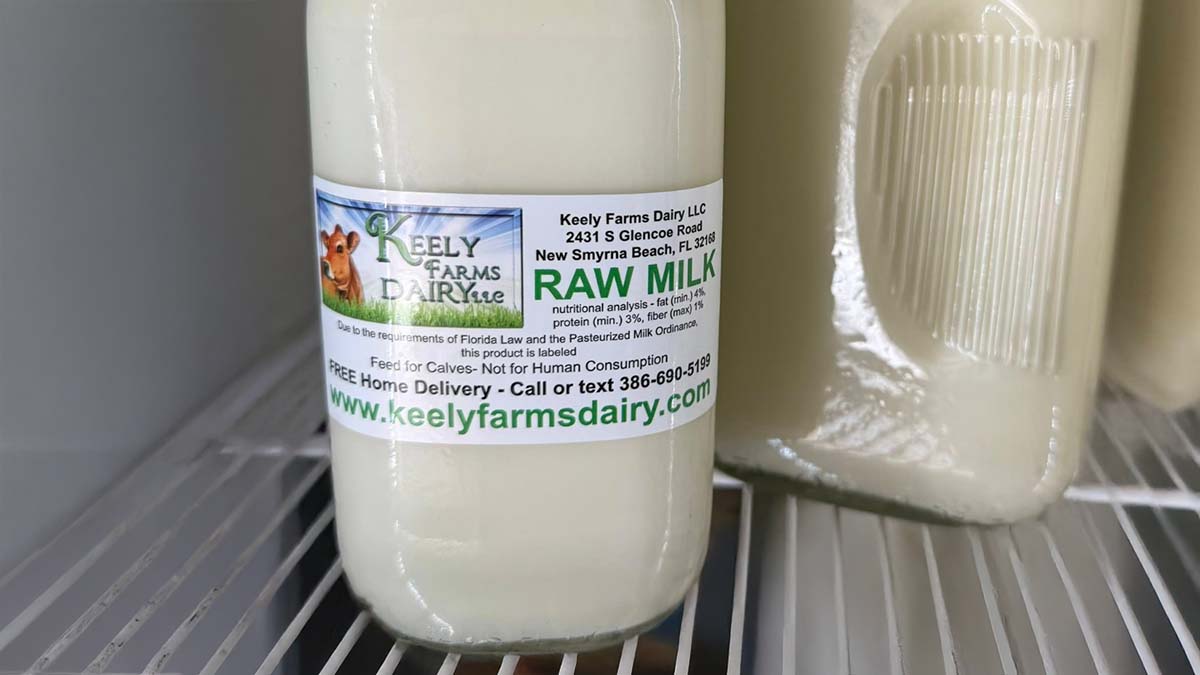
Florida does not permit the retail sale of raw milk for direct human consumption. Under state law, unpasteurized milk may be sold only under an animal feed license and must be labeled “not for human consumption.” Keely Farms held such a license from the Florida Department of Agriculture and labeled its products accordingly. The Department of Agriculture raised no compliance concerns with the farm at any point during this period.
The Lawsuit — and Its Dismissal
In August 2025, a Florida woman filed a personal injury lawsuit against Keely Family Farms. The complaint, brought by a national food poisoning law firm, alleged that the farm’s raw milk caused her two-year-old son to contract a bacterial infection. The plaintiff further alleged that she became ill, developed sepsis, and suffered the loss of her pregnancy. The complaint cited the DOH press release as the basis for its claims.
Although the lawsuit was filed in August, it was not formally served on the farm until just before Christmas 2025 — only after a court order gave the plaintiff 30 days to complete service or face dismissal.
FTCLDF assisted Keely Farms in preparing its legal response. On February 9, 2026, the farm filed a Motion to Dismiss, supported by affidavits from farm owner Keely Exum and microbiologist Peg Coleman. The motion argued that the complaint did not identify facts demonstrating contamination, described no root-cause investigation of illness, and rested entirely on a government press release that was itself issued without an on-farm investigation. The motion further noted that the farm’s labeling met all Florida Department of Agriculture requirements.
On February 13, 2026, the plaintiff voluntarily dismissed the case.
Conflicting Signals From State Officials
Florida’s official response was internally divided. The DOH — the agency that issued the press release naming Keely Farms — is led by Surgeon General Joseph Ladapo, who published a statement during this period expressing support for Floridians’ right to make informed choices about raw milk consumption. Meanwhile, Florida Agriculture Commissioner Wilton Simpson, whose agency licenses and inspects farms such as Keely’s, publicly advised Floridians to drink only pasteurized milk.
The result was that the agency whose leadership supported raw milk consumption was the one that publicly accused Keely Farms without conducting a site investigation, while the agency whose leadership opposed raw milk was the one that inspected and cleared the farm.
The Bigger Problem: Due Process
The DOH’s approach in this case departed from the standard that public health enforcement is supposed to follow. Naming a specific farm as the source of a disease outbreak — without a site visit, without on-farm sampling, without a formal notice of violation, and without notifying the farmer — bypassed the investigative process that exists precisely to ensure such attributions are accurate before they are made public.
That process matters for two reasons. It protects the public by confirming the actual source of illness before a response is issued. And it protects producers from reputational and financial harm based on claims that have not been substantiated. In this case, the DOH’s press release triggered media coverage, a civil lawsuit, and significant damage to a family farm’s operations — all before any on-farm evidence had been gathered. The farm’s independent tests were negative. The Department of Agriculture inspection cleared it. The lawsuit, when ultimately challenged on its merits, was dropped.
FTCLDF Executive Director Alexia Kulwiec stated: “Public health decisions must be based on evidence, investigation, and procedure. If the DOH truly believed there was a public health threat, it would act with urgency to test, investigate, and, if necessary, take lawful measures. That has not happened.”
FTCLDF has noted similar patterns in other states. In Idaho, a state Department of Agriculture alleged that a member farm’s milk was linked to local illnesses, despite negative test results from both the farm and the state Department of Health. The Idaho Department of Health subsequently issued a recall of thousands of pounds of beef found to be tainted with E. coli. FTCLDF has indicated it is exploring further actions to address what it describes as improper regulatory conduct toward small food producers.
Frequently Asked Questions
Did the Florida Department of Health contact Keely Farms before naming them in the outbreak?
No. Keely Farms Dairy stated publicly that it was not contacted by the Florida Department of Health prior to the agency’s August 4, 2025 press release naming the farm as the source of the outbreak. The DOH did not visit the farm, collect samples, or serve any notice of investigation before making its public statement.
Did Keely Farms’ milk test positive for Campylobacter or E. coli?
No. Following the DOH announcement, Keely Farms conducted independent laboratory testing of its milk. Results were negative for both Campylobacter and Escherichia coli. The farm published the test documentation publicly on Facebook.
Was Keely Farms found in violation of any regulation?
No. The Florida Department of Agriculture conducted a routine inspection of the farm during this period and the farm passed. The DOH did not serve Keely Farms with a notice of violation, issue a shutdown order, or initiate any formal administrative proceeding against it.
What happened to the lawsuit against Keely Farms?
A Florida woman filed a personal injury lawsuit against Keely Family Farms in August 2025, alleging that the farm’s raw milk caused illness resulting in the loss of her pregnancy. The complaint relied solely on the DOH press release as its evidentiary basis. On February 13, 2026, the plaintiff voluntarily dismissed the case, four days after Keely Farms filed a Motion to Dismiss supported by affidavits from the farm owner and a microbiologist.
Is raw milk legal in Florida?
Florida does not permit the retail sale of raw milk for direct human consumption. Under state law, unpasteurized milk may be sold only under an animal feed license and must be labeled “not for human consumption.” Keely Farms held such a license from the Florida Department of Agriculture and labeled its products accordingly.
Links
Support Keely Family Farms’ ongoing legal defense: GoFundMe.
For more on Florida’s raw milk laws, visit the Florida raw milk law page.
Related reading: Comparing raw milk foodborne illness data with other foods