
North Carolina’s Republican Agriculture Commissioner Fails to Ban Raw Milk, Again
A push by North Carolina’s agriculture commissioner to ban the sale of raw milk has failed for the second year in a row. The state legislature passed its 2026 Farm Act without any provision restricting raw milk, closing out a saga that began with a controversial proposal in 2025.
The Original Proposal
The effort started with Senate Bill 639, the North Carolina Farm Act of 2025. At the request of Agriculture Commissioner Steve Troxler, a Republican, the bill’s original Senate version included language eliminating the legal pathway that allows raw milk to be sold in the state when labeled as pet food, a longstanding workaround since unpasteurized milk cannot otherwise be sold for human consumption in North Carolina.
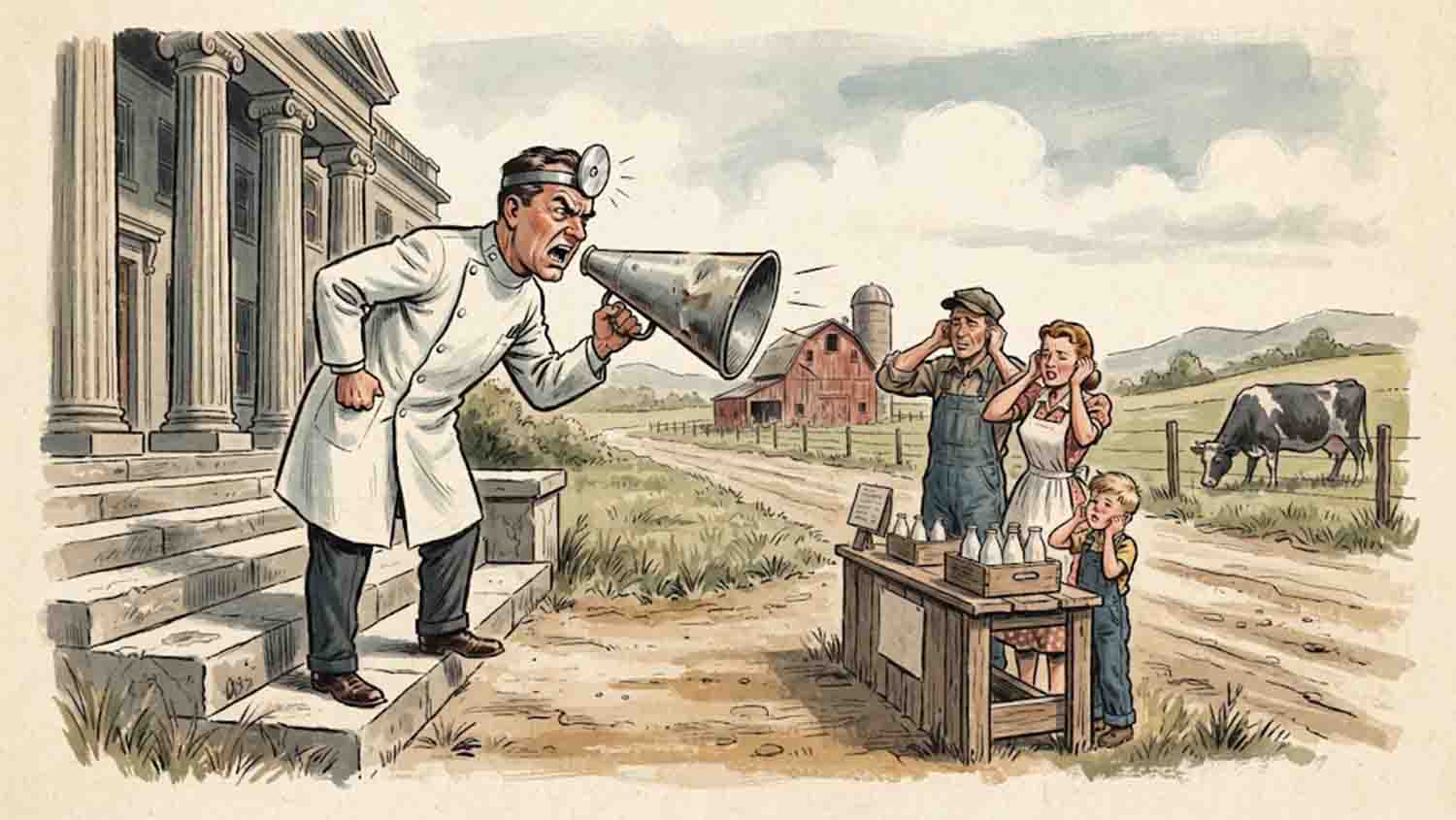
Troxler, a longtime critic of raw milk, framed the proposal around the discovery of highly pathogenic avian influenza in dairy herds, including one North Carolina herd that contracted the virus after cows were brought in from Texas. He argued that continued raw milk sales gave the virus additional opportunities to spread and potentially adapt to humans, comparing the risk to “playing Russian Roulette” with public health.
The Bird Flu Backdrop
By the time Troxler made this case, highly pathogenic avian influenza (H5N1) had been circulating in U.S. dairy herds for roughly a year, and the public health picture that had emerged was considerably milder than the initial outbreak reporting suggested. Infected cattle typically showed mild symptoms, such as reduced milk production and a brief loss of appetite, and recovered within a week to ten days. Human cases remained rare and were confined to farm workers with direct animal contact, nearly all presenting with conjunctivitis that resolved quickly. No human-to-human transmission had been documented, and no case of a person contracting H5N1 from drinking raw milk had been confirmed.
Surveillance programs were also returning reassuring results around the same period. Canadian inspectors tested nearly 2,000 raw milk samples nationwide with zero positive results, and by the fall of 2025 Minnesota’s dairy herds were declared free of the virus after four consecutive months of clean testing. The most serious documented harm tied to H5N1 and raw milk involved cats that died after drinking infected milk on individual farms, a real but narrow risk distinct from the human-transmission concern Troxler’s proposal was built around. By the time the Farm Act reached the Senate floor, the surge that had prompted his framing was already cooling.
When a high-profile warning like this fails to materialize, the cost is not limited to the specific proposal that gets dropped. Public health agencies depend on credibility built up over many such warnings, and each one that turns out to be overstated makes the next one easier to dismiss, regardless of whether that next warning is justified.
Bipartisan Pushback
The proposal moved through the Senate Agriculture Committee with initial Republican support, but the public response was immediate and intense. Raw milk advocates and dairy farmers flooded the state capitol, and the Senate Judiciary Committee meeting where the bill was discussed turned unusually raucous, with the crowd cheering and booing throughout the proceedings.
The opposition crossed party lines. Facing the backlash, the bill’s own primary sponsor introduced an amendment, adopted June 17, 2025, striking the raw milk language entirely. In its place, the Farm Act was revised to direct a legislative study commission to examine herd-share arrangements and retail raw milk sales, rather than restrict them outright. That was the first defeat for Troxler’s proposal.
Troxler did not back down even as the language was removed, telling reporters that the science supported restricting access regardless of the political reaction.
The 2026 Resolution
The Farm Act then sat dormant for roughly a year. When a new version of the bill resurfaced in June 2026, it contained no raw milk provision at all. The North Carolina House approved the slimmed-down package by a vote of 110 to 2, and the Senate passed it with similarly broad support. The bill now heads to Governor Josh Stein for signature.
The final version focuses on other agricultural priorities, including water-use studies, penalties for crop theft, and changes to hog farm enforcement rules. Raw milk is no longer part of the conversation: the pet-food labeling pathway that Troxler sought to close remains in place, herd-share arrangements continue to operate as before, and sales for human consumption remain illegal, exactly as they were before the 2025 Farm Act was introduced.