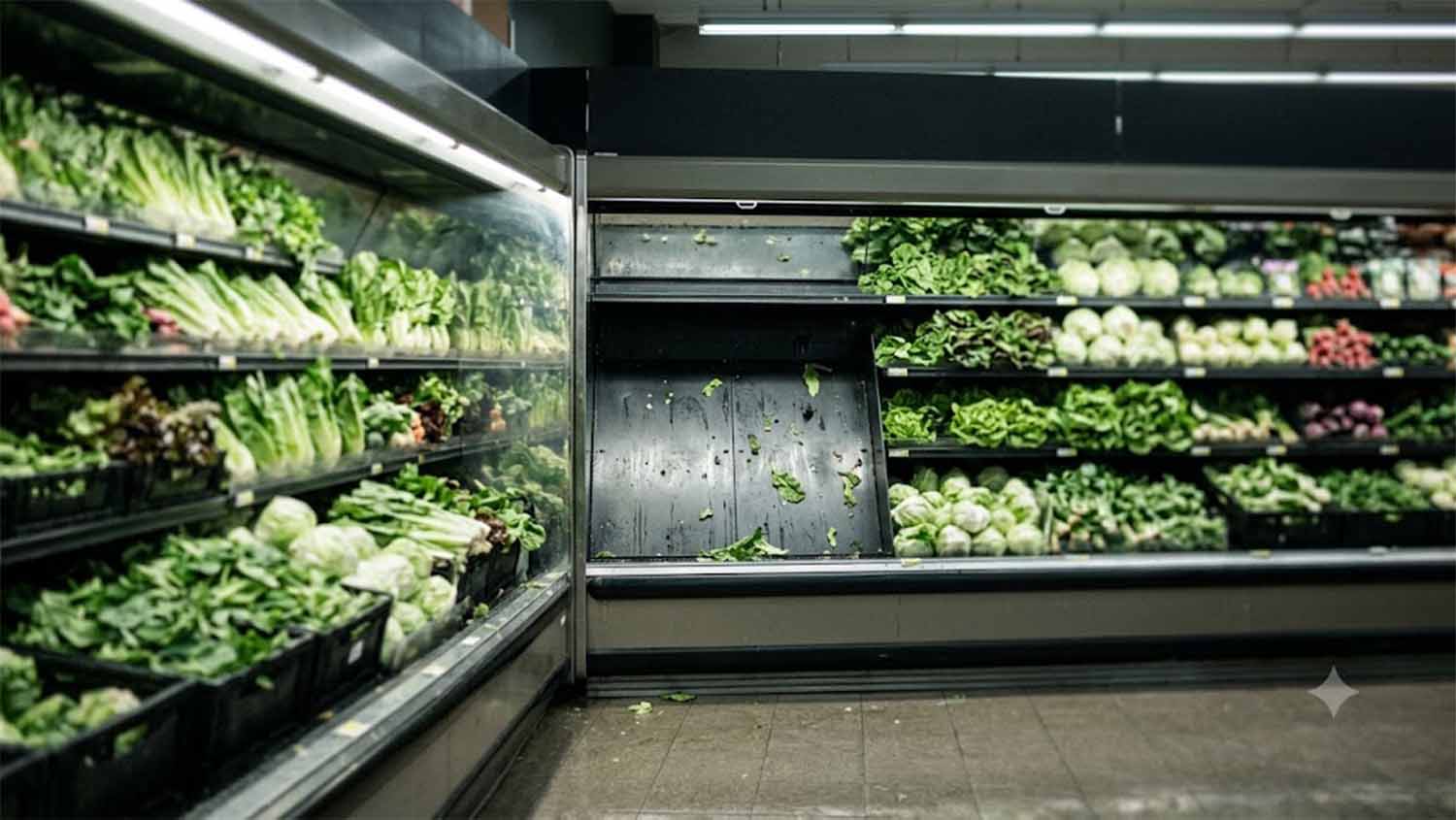
One narrow slice of this summer's cyclospora outbreak has a named source and a recall. Most of it still doesn't.
2026 Cyclospora Outbreak: 12,883 Sick From Taylor Farms Lettuce
The 2026 Cyclospora outbreak linked to Taylor Farms de Mexico iceberg lettuce sickened 12,883 people in 21 states, according to CDC’s final update on September 11, 2026. At least 570 people were hospitalized, and two deaths were reported in Michigan. FDA closed its investigation on October 2. In July, at the height of the outbreak, federal investigators were tracking several Cyclospora clusters at once, and only one had a named supplier. How that played out says a lot about why produce outbreaks are so much harder to trace than raw milk outbreaks.
Key facts
| Question | Answer |
|---|---|
| Illnesses | 12,883 lab-confirmed, in 21 states |
| Hospitalizations | At least 570 |
| Deaths | 2, both in Michigan |
| Illness onset | June 14 to August 17, 2026 |
| Source | Iceberg lettuce from Taylor Farms de Mexico, a central Mexico processor |
| Recall | Voluntary recall by Taylor Farms de Mexico on July 17, 2026, including Marketside lettuce sold at Walmart and foodservice products |
| Product samples | None confirmed positive; a July 18 result was ruled a false positive |
| Environmental samples | Two positive, from wastewater at the processing facility and a drainage ditch at a grower |
| Status | CDC declared the outbreak over September 11; FDA closed its investigation October 2 |
The 21 states were Arkansas, Georgia, Illinois, Indiana, Iowa, Kansas, Kentucky, Maine, Massachusetts, Michigan, Missouri, Nebraska, New Hampshire, North Carolina, Ohio, Oklahoma, Pennsylvania, Tennessee, Texas, Virginia and West Virginia. Taco Bell was among the places where sick people ate the lettuce. CDC called the outbreak “a major driver of the increase of Cyclospora cases this year.”
Several clusters, one named supplier
In mid-July, FDA’s outbreak investigation table listed multiple Cyclospora investigations running at the same time. Only one, the cluster tied to Taco Bell, converged on a supplier. By July 24 it counted 1,947 cases in 9 states. As investigators matched more illnesses to the lettuce, the total grew more than sixfold to its final 12,883.
Two other 2026 Cyclospora investigations ended with no food identified: one with 235 cases and one with 22. That is typical for this parasite. Cyclospora outbreaks are often never resolved to a specific food.
How the source was identified
The supplier was named on epidemiologic and traceback evidence: sick people’s food histories pointed to iceberg lettuce, and supply records led back to Taylor Farms de Mexico. Taylor Farms de Mexico recalled the lettuce on July 17.
The product itself never tested positive. FDA reported a positive lettuce sample on July 18, then concluded after re-review that the result “does not represent true amplification and should be considered a false positive.” During inspections in Mexico, FDA did find Cyclospora in two environmental samples, one from wastewater at the processing facility and one from a drainage ditch at a grower. Those findings place the parasite in the growing and processing environment, but no sample of the recalled lettuce was ever confirmed positive.
How this compares to a raw milk outbreak
One of the largest raw milk outbreaks in recent US history offers a direct contrast. In late 2023 and early 2024, Salmonella linked to Raw Farm in California caused 171 cases, 22 hospitalizations and no deaths, according to CDC’s report. Investigators found the outbreak strain in raw milk and cheese samples, the farm’s own testing traced Salmonella to a recently purchased cow, and the dairy recalled its products one week after the outbreak was identified. Once the cow was removed and the herd tested clear, production resumed on October 31, 2023.
| Measure | Taylor Farms lettuce, 2026 | Raw Farm raw milk, 2023 to 2024 |
|---|---|---|
| Illnesses | 12,883 | 171 |
| Hospitalizations | At least 570 | 22 |
| Deaths | 2 | 0 |
| Product tested positive | No | Yes |
| Source pinpointed | Processor and growers in central Mexico | One cow on one farm |
This single lettuce outbreak caused nearly five times as many illnesses as every raw milk outbreak recorded in CDC data from 1998 to 2018 combined (2,645), and more than twice as many hospitalizations (228). Raw milk outbreaks are typically traced to a named farm within days, following a recall process that starts from a small, identifiable set of buyers rather than a national supply chain.
Health and Human Services Secretary Robert F. Kennedy Jr. said the outbreak was “under control” in a July 21 briefing. The final count was more than six times the number reported at that point.
Political access
Reporting also raised questions about who gets heard during an investigation. According to Bloomberg reporting, Taylor Farms spoke directly to the White House, after which FDA and CDC were asked to defend their evidence. An unnamed official said the company “effectively delayed a recall” by “challenging the science privately and obfuscating it publicly.” Taylor Farms said it met with FDA and White House officials “to discuss the best approach to ensure public health.” A Snopes fact-check confirmed that the meetings took place and that Taylor Farms’ CEO donated $1 million to a pro-Trump super PAC in March 2025. On July 27, the ranking member of the House Oversight Committee demanded answers from the company about whether it used political access to influence the FDA investigation.
Raw milk producers have not had that kind of access. During Raw Farm’s early 2026 E. coli cheese dispute, founder Mark McAfee said he texted Kennedy, a longtime customer and raw milk advocate, asking him to intervene, and got no response. Raw Farm initially declined to recall, arguing FDA had never produced a positive test on its own product, then recalled under protest in April, and FDA closed the case in May.
The public reaction
The outbreak changed shopping habits. A CBS News/YouGov poll conducted July 22 to 24 found that 40% of US adults were eating or buying less produce because of it, while 4% reported buying more. Food safety experts pushed back on broad avoidance. Susan Mayne, former director of FDA’s Center for Food Safety and Applied Nutrition, argued against a forced tradeoff between nutrition and food safety, and Consumer Reports said no data supported avoiding fruits and vegetables generally.
No one called for banning lettuce. The response targeted the source: a recall, an investigation and inspections of the farms and processor involved. Raw milk, with a fraction of the illness, is still the subject of calls for a nationwide ban.
Why produce outbreaks are harder to trace
Produce outbreaks often follow this pattern: a large surge in illness, a long supply chain that mixes product from many farms, and a source identified by epidemiology rather than a positive product test, if it is identified at all. Raw milk’s per-consumer illness rate runs about 1 in 13,000 to 1 in 15,000 a year on outbreak data, and its short supply chain is why its outbreaks resolve so much faster.