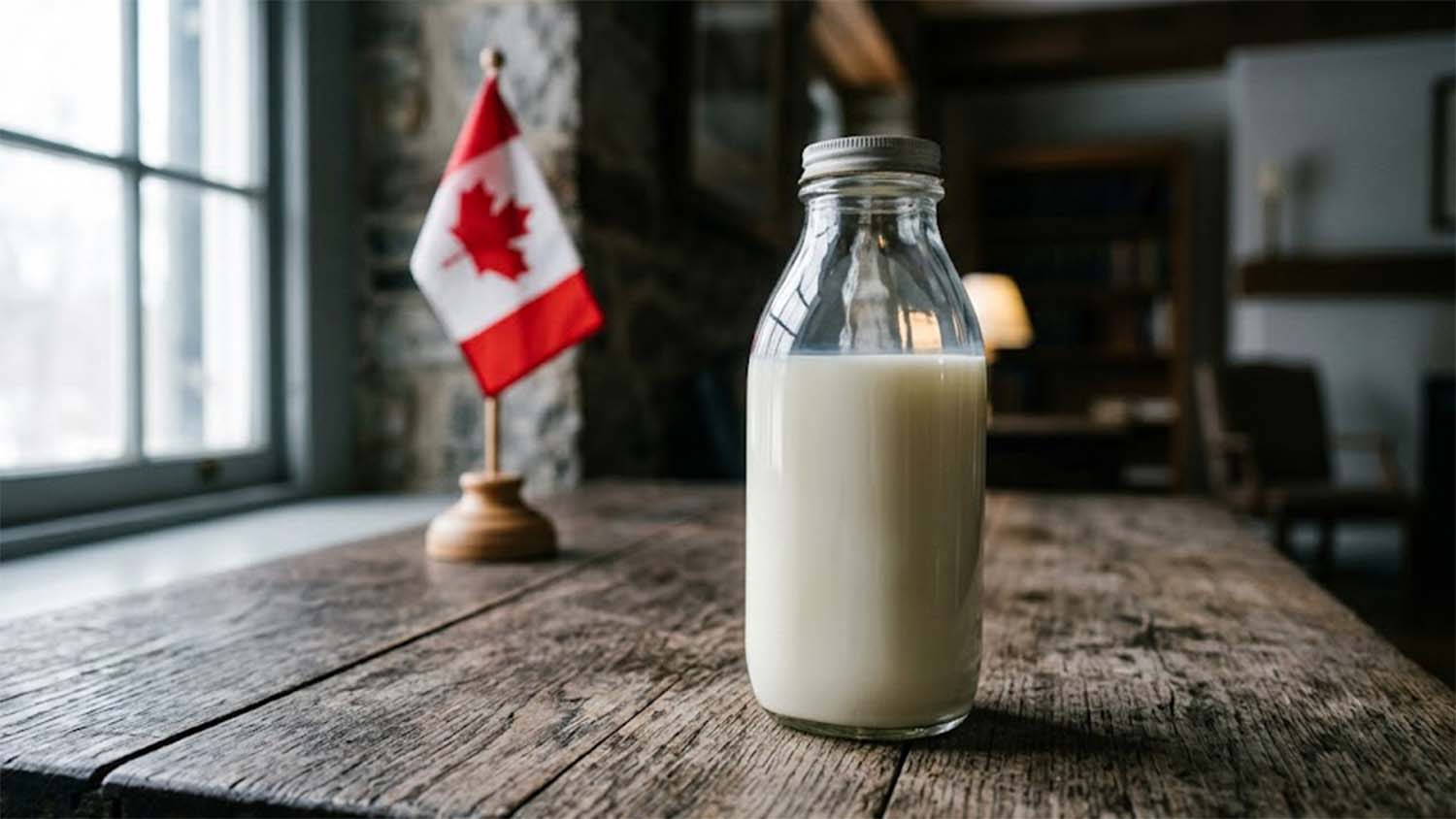
Canada remains the only G7 country with a nationwide ban on raw milk sale.
Canada’s Raw Milk Legalization Push Builds Toward October 2026 Review
Raw milk sale remains illegal everywhere in Canada, and that hasn’t changed. What has changed is the shape of the advocacy pushing against it: a federally incorporated nonprofit, the Canadian Artisan Dairy Alliance (CADA), has spent the past several years building a more organized case for legalization, with a formal peer-reviewed case study now heading toward independent review this October.
Key facts:
- Canada has banned the sale and distribution of raw milk nationwide since 1991 under the Food and Drug Regulations, and remains the only G7 country with a total ban.
- The federal government reaffirmed the ban as recently as late 2025, stating in response to a formal resolution from Rural Municipalities of Alberta that current prohibitions are “necessary to protect the Canadian population.”
- CADA, incorporated federally as a nonprofit in 2021, is pushing for a licensed, regulated legal pathway rather than the current all-or-nothing prohibition.
- Ontario farmer Michael Schmidt’s decades-long legal fight over cow-share access, dating to 1994, saw its most recent prosecution dropped by the government in 2023 amid allegations of investigator misconduct, though the underlying ban remains unchanged.
- An independent panel peer-review of a raw milk case study connected to CADA’s advocacy is expected in October 2026.
Where the Ban Stands
The current prohibition traces to 1991, when raw milk sale and distribution were banned nationwide under the Food and Drug Regulations. Provinces layer their own enforcement on top of the federal ban; Ontario’s Health Protection and Promotion Act, for instance, gives medical officers of health broad investigative and enforcement authority specifically over raw milk distribution. A full legal status breakdown by country, including Canada specifically, is available separately.
The federal position hasn’t moved. In a formal response to a 2025 resolution from Rural Municipalities of Alberta requesting regulated on-farm raw milk sales, the Government of Canada stated that existing prohibitions “are necessary to protect the Canadian population.” That mirrors the position Health Canada has held publicly for decades: drinking raw milk increases the risk of serious foodborne illness. Despite the ban, research on raw milk consumption estimates that 2% to 4% of Canadians drink it anyway, primarily through informal, closed-membership herdshare arrangements that operate outside retail channels.
What CADA Is Asking For
CADA isn’t arguing for an unregulated market. The organization’s stated position calls for a licensed, inspected system similar to the retail models already operating in roughly a dozen US states, rather than the current outright prohibition. The group points out that most of the world has never banned raw milk sale outright, and that a handful of countries maintaining a total ban, Canada among them, represent a small fraction of global population.
CADA has pursued this through direct government outreach rather than public pressure alone. In July 2024, representatives from the organization met with British Columbia’s Ministry of Health food safety team to present research on raw milk risk data from the United States. Medical microbiologist and risk analyst Peg Coleman, an unpaid advisor to CADA, joined that meeting to present findings from research she co-authored.
The October Panel Review
CADA’s current advocacy effort centers on an independent panel peer-review of a raw milk case study, expected in October 2026. Panel peer-review is a distinct process from standard academic journal review: rather than anonymous reviewers evaluating a manuscript for a single publication, a panel of experts publicly deliberates a case study’s evidence in a structured session, a process CADA’s supporting materials describe as having informed more than 60 prior public health case studies. The review is being funded through a public campaign specifically raising money to cover the panel’s fee and related costs, rather than through a research institution or government body.
Whatever the panel concludes, the review itself is a genuine, citable event, distinct from advocacy statements alone. Its outcome will be worth covering directly once it’s public.
Why the Ban Has Persisted
Raw milk legalization efforts in Canada run into a well-resourced opponent. Canada’s dairy industry was directly consulted when the 1991 ban was drafted, and it operates today under a supply management system with a national advocacy body representing thousands of dairy farm owners and substantial lobbying resources in Ottawa. That industry position, combined with Health Canada’s consistent public health stance, has kept the federal ban in place through multiple rounds of citizen petitions, parliamentary inquiries, and now provincial-level requests for exemptions.
The clearest individual legal test of an alternative access model is also the clearest illustration of how long and unresolved this fight has been. Ontario dairy farmer Michael Schmidt has operated a cow-share program since the 1990s, built on the fact that drinking your own animal’s milk isn’t illegal in Canada, only selling or distributing it is. The first legal proceeding against Schmidt’s farm began in 1994, and the farm was raided at least four times over the following 27 years, most recently in 2021. The core constitutional question was tested directly: after a 2006 raid and a 2010 trial, the Ontario Court of Appeal ruled unanimously that cow-share members don’t have a constitutionally protected right to raw milk access, a decision that closed cow-sharing as a legal path in Ontario and carries persuasive weight in other provinces.
That ruling didn’t end the enforcement activity against the farm specifically. A more recent investigation, running from 2019 to 2021, led to charges that Ontario prosecutors ultimately declined to pursue. According to reporting by longtime food safety journalist David Gumpert, the case was dropped in 2023 after Schmidt presented evidence suggesting the investigator leading the case had personally originated complaints he then presented to authorities as coming from concerned members of the public. That specific prosecution’s outcome doesn’t change the underlying law, which remains fully in place, but it illustrates how contested and unresolved individual enforcement has been even after the core constitutional question was settled at the appellate level.
Frequently Asked Questions
Is raw milk legal anywhere in Canada? No. Sale and distribution are banned nationwide under federal regulations dating to 1991, and no province currently offers a legal retail or on-farm sale pathway. Raw milk access in Canada happens through informal herdshare arrangements that operate outside legal retail channels.
What is CADA advocating for specifically? A licensed, regulated legal pathway for raw milk sale, similar to models already in place in some US states, rather than either the status quo ban or an unregulated market.
Has the Canadian government shown any sign of changing its position? Not as of late 2025. The federal government explicitly reaffirmed the ban in response to a provincial-level request for exemptions, citing public protection.
Has anyone successfully challenged the ban in court? Not the underlying law itself. Ontario farmer Michael Schmidt’s cow-share program, dating to the 1990s, was tested directly after a 2006 raid: the Ontario Court of Appeal ruled in 2010 that cow-share members don’t have a constitutionally protected right to raw milk access. A separate, more recent enforcement case against Schmidt’s farm was dropped by prosecutors in 2023 amid allegations of investigator misconduct, though that outcome didn’t change the underlying ban.
What is the October panel review, and what will it decide? It’s an independent panel peer-review of a raw milk case study connected to CADA’s advocacy work, a public, structured evidence review distinct from standard journal peer review. Its conclusions weren’t available at the time of this article’s publication.