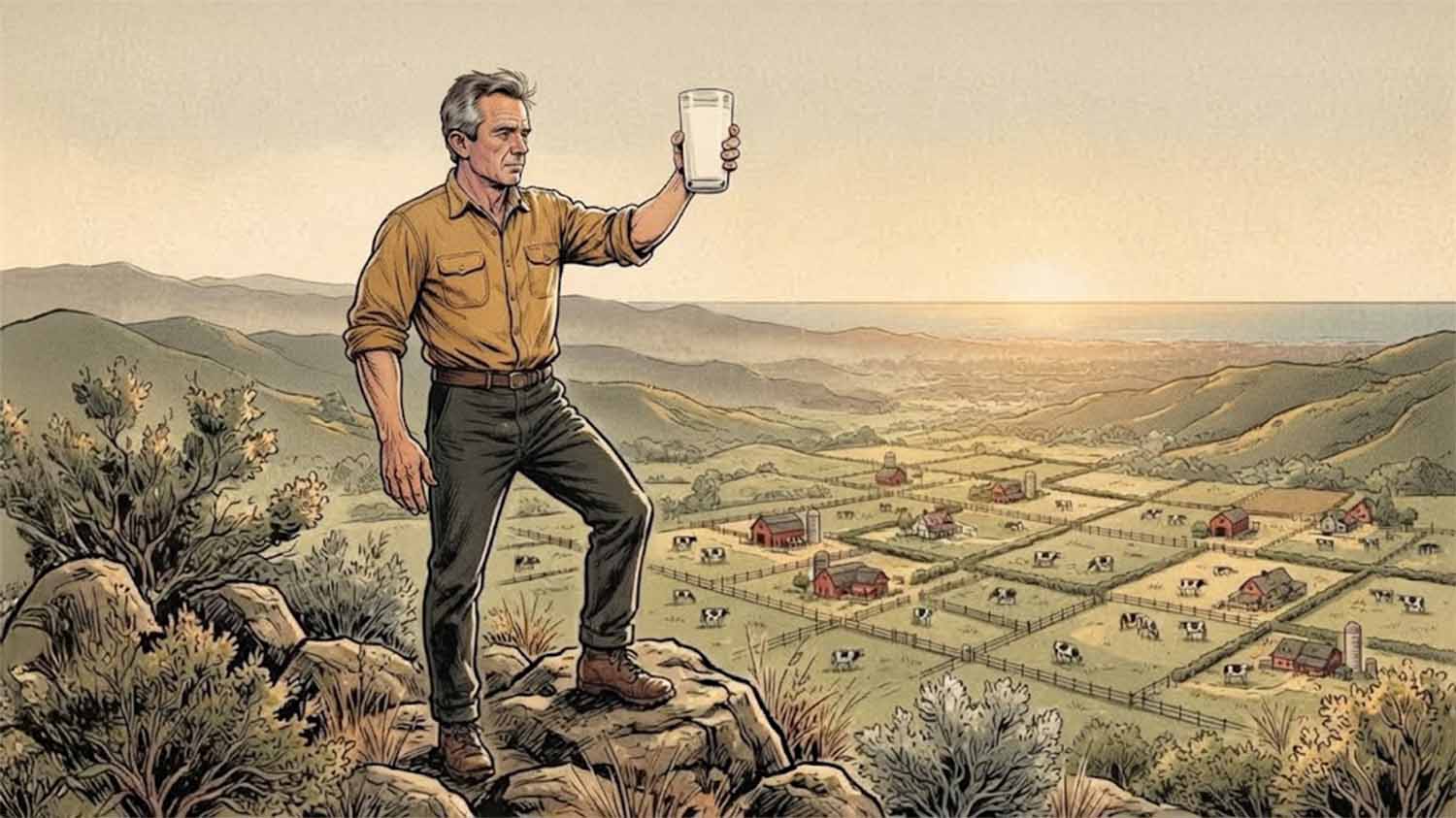
RFK Jr. raised a glass to raw milk on his way to the top of HHS. Nearly two years in, the view hasn't changed much.
What Can RFK Jr. Actually Do for Raw Milk?
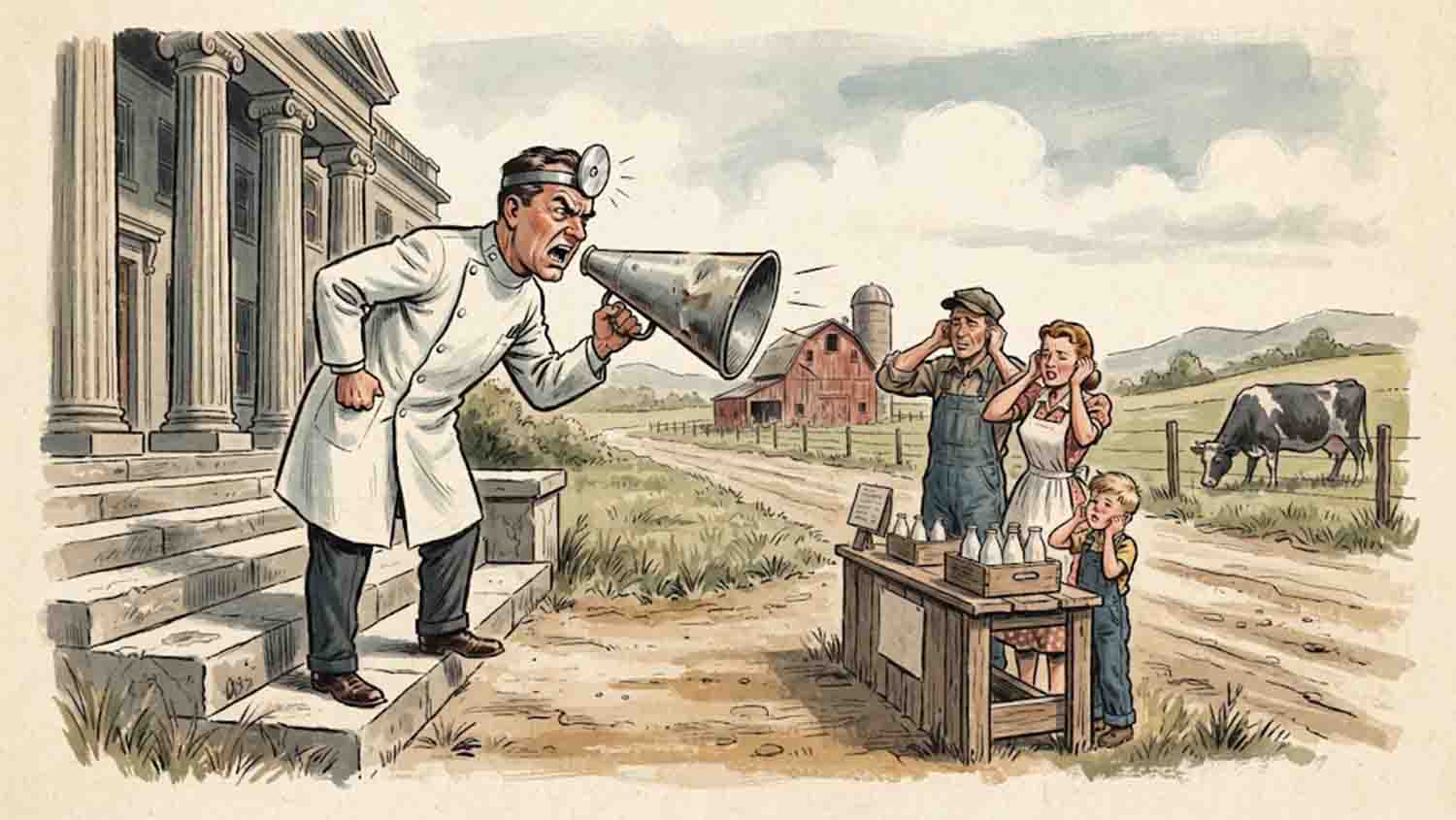
Robert F. Kennedy Jr. is the most openly pro-raw-milk official ever to run the Department of Health and Human Services. He has said he drinks it, he toasted the release of the MAHA Report with it at the White House, and in October 2024 he wrote that the FDA’s “aggressive suppression” of raw milk was about to end. Many people expect him to deliver on that, and he has real tools to do it.
As Health Secretary, Kennedy could open interstate shipping, correct how the FDA and CDC describe raw milk, ease federal enforcement against farms and fund the research raw milk drinkers have long asked for. Each of those is within his reach, and some need nothing more than a directive. What a Health Secretary can’t do is decide whether raw milk is sold in a particular state. That decision belongs to the state legislature and state agriculture or health department, which is why understanding the federal side, and exactly where it ends, matters.
Who decides raw milk law
The US splits power two ways. Congress writes federal laws, and the executive branch carries them out, partly by writing regulations under authority Congress gave it. Separately, the states keep broad power over commerce and health inside their own borders.
Raw milk sits almost entirely on the state side. Each state decides whether raw milk can be sold at the farm, in stores, through herdshares, or only as pet food, and each state runs its own licensing and testing. State agencies, not the FDA, handle routine testing of raw milk sold within a state. The raw milk laws map shows the result: fifty sets of rules, written by fifty legislatures.
The Health Secretary sits at the top of HHS, which includes the FDA, the CDC and the National Institutes of Health. The FDA commissioner reports to the Secretary, and FDA regulations are issued under authority Congress gave the Secretary. That chain of command is where all of Kennedy’s raw milk power comes from, and it stops at the state line.
The federal interstate raw milk ban
The federal government’s main raw milk rule is a single sentence: 21 CFR 1240.61, which bars delivering unpasteurized milk or milk products “in final package form for direct human consumption” into interstate commerce. It took effect September 9, 1987. Congress never voted on it, and the regulation’s own history shows the FDA didn’t want it either.
According to the 1987 Federal Register notice, Public Citizen’s Health Research Group petitioned in April 1984 for a ban on all raw milk sales, interstate and intrastate. In March 1985 the FDA commissioner said no. The agency’s denial letter concluded that a federal interstate ban “would not be the most appropriate means” of addressing the risks and “would have minimal public health benefit.” It added that the FDA’s authority over sales within a state was “at least questionable” and that states could act on their own if they chose.
Public Citizen took the denial to court. In Public Citizen v. Heckler (1986), a federal judge ruled the denial arbitrary and capricious and gave the agency 180 days to write an interstate ban. The court saw no sign that an intrastate ban was needed to make the interstate one work. The FDA finished the rule under the court’s deadline, with a 30-day comment period. Comments supporting the rule came from the CDC, state health departments, the American Academy of Pediatrics and the National Milk Producers Federation. The AAP renewed its own call for a nationwide ban this month. The 1987 rule also ended a 13-year exception: a pasteurization requirement in the federal milk standards had been on hold for certified raw milk since 1974.
The legal basis is the Public Health Service Act’s communicable disease provisions, including 42 U.S.C. 264, which lets HHS make rules “necessary to prevent the introduction, transmission, or spread of communicable diseases” between states.
Because 1240.61 is a regulation and not a statute, the executive branch that wrote it can rewrite it. That is the single biggest thing a Health Secretary could do for raw milk.
What RFK Jr. can do for raw milk
The options, roughly from easiest to hardest:
| Action | What it takes | Effect on your state’s law |
|---|---|---|
| Correct federal web pages and fact sheets | A directive from the Secretary | None |
| Fund raw milk research | NIH priorities and grant decisions | None |
| Ease enforcement of the interstate rule | An FDA enforcement policy or a petition response | None |
| Publish a model raw milk ordinance | FDA drafting, then voluntary state adoption | Only if a state adopts it |
| Replace the interstate ban with a warning label, or repeal it | Notice-and-comment rulemaking, likely a lawsuit | None |
| Revisit the 60-day raw cheese rule | Rulemaking on the federal cheese standards | None |
| Have HHS endorse raw milk | A policy reversal | None |
Correct the language
This one requires no rulemaking, no Congress and no endorsement. FDA’s raw milk page, last updated March 2024, says “the perceived nutritional and health benefits of raw milk consumption have not been scientifically substantiated” and cites “143 reported outbreaks of illness” since 1987, a count spanning decades with no rate or comparison attached. CDC’s raw milk page says pasteurized milk “offers the same nutritional benefits,” a claim research on vitamin loss and heat-sensitive proteins complicates.
Accurate language would not mean recommending raw milk. It would mean putting the risk in proportion: about 730 outbreak illnesses a year from raw milk and cheese after adjusting for underreporting, a per-consumer rate below leafy greens and chicken, and context for the 840x statistic that dominates raw milk coverage. The farm-milk allergy and asthma research is real enough to describe (allergy studies, Dutch research) even if agencies stop short of endorsing it.
Kennedy knows how to do this. In November 2025 he personally directed the CDC to rewrite a page on vaccines and autism, and an FDA warning page that listed raw camel milk among unproven autism treatments came down the same year. The raw milk pages haven’t changed.
Fund research
NIH decides which questions get studied. Most evidence linking farm milk to fewer childhood allergies and less asthma comes from European studies, while US research on raw milk centers on outbreaks. A Secretary could steer funding toward controlled studies of raw milk’s effect on allergies, asthma and lactose tolerance. Better data serves both sides, and it’s the kind of “gold-standard science” an HHS spokesperson says it wants its decisions grounded in.
Ease enforcement
Agencies choose where to spend enforcement resources. The FDA already says it does not take action against individuals carrying raw milk across state lines for their own use. It has enforced the rule against farms, including a 2023 consent decree with Raw Farm over interstate shipments.
A 2017 citizen petition asked the FDA to formally stop enforcing the interstate ban against raw milk that carries a warning label and safe handling instructions. The FDA denied it in October 2019 without weighing the merits, writing that requests for enforcement discretion “are not within the scope of FDA’s citizen petition procedures.” In other words, enforcement priorities aren’t something the public can petition for. They’re set by agency leadership, which is exactly where a Health Secretary has influence. Easing enforcement would be a real change without a new rule, though a future administration could reverse an enforcement policy as easily as this one set it.
Publish a model ordinance
Every state regulates pasteurized milk using the FDA’s model Pasteurized Milk Ordinance, adopted state by state. In late 2024, Raw Farm founder Mark McAfee, who said Kennedy had asked him to advise on raw milk standards, pitched a matching Raw Milk Ordinance: federal standards for testing and farm practices that states could adopt. It would give legislatures a ready-made framework. It would not legalize anything until each state voted to use it.
Rewrite or repeal the interstate rule
This is the big one, and the hardest. Changing a regulation takes notice-and-comment rulemaking: publishing a proposal, taking public comment, answering the comments and issuing a final rule with a reasoned explanation. The 1987 rule came from a court order, so a rollback would likely be challenged in court, and the agency would have to show its reasons hold up.
There is a middle path. In 1987 the FDA considered warning labels and rejected them, arguing that raw milk’s risk comes from ordinary use and that consumers can’t easily judge it. The FDA has since adopted that approach for another unpasteurized food: juice that hasn’t been treated to kill pathogens carries a required federal warning that it “has not been pasteurized and, therefore, may contain harmful bacteria.” A rule allowing labeled raw milk to move between states where it is already legal would follow that model. Many states already require their own raw milk labels.
Revisit the cheese rule
Raw milk cheese crossing state lines must be aged at least 60 days, a 1949 standard built around tuberculosis and brucellosis. The FDA’s own later risk work found the aging period gives no reliable protection against Listeria in soft cheeses. The interstate rule itself points to those cheese standards as its exception, which is why aged raw milk cheese can cross state lines and fluid raw milk can’t. Updating the 60-day standard to test-based rules would also take rulemaking.
Endorse raw milk
HHS could, in theory, adopt a pro-raw-milk position. It’s the least likely item on this list, and none of the others depend on it. It would also change the least. An endorsement changes no law, raw milk drinkers have already made their choice, and opponents would dismiss it as Kennedy’s personal cause. The practical gains are in the items above.
What RFK Jr. can’t do
- Legalize raw milk in any state. Sales within a state are state law. The FDA itself said in 1985 its authority there was “at least questionable.”
- Ban raw milk in any state, for the same reason. That cuts both ways.
- Pass a law. Only Congress can write raw milk access into statute, where a future Secretary couldn’t undo it.
- Make states adopt standards. A federal ordinance is a model, not a mandate.
What RFK Jr. has done on raw milk so far
Not much. A timeline:
- October 2024: Kennedy posts that the FDA’s suppression of raw milk is about to end.
- Early 2025: He texts McAfee that they’ll talk about raw milk once FDA commissioner Marty Makary is confirmed. Makary is confirmed. The conversation never happens, and the FDA’s food program declines a meeting with McAfee.
- May 2025: The MAHA Report comes out without mentioning raw milk.
- January 2026: Whole milk returns to school cafeterias under a bipartisan law, and the administration launches a whole milk campaign. Raw milk isn’t part of either.
- April 2026: Under FDA pressure, Raw Farm recalls its cheese under protest over an E. coli investigation, citing its own negative tests.
- May 2026: Makary resigns. Deputy commissioner for food Kyle Diamantas becomes acting commissioner.
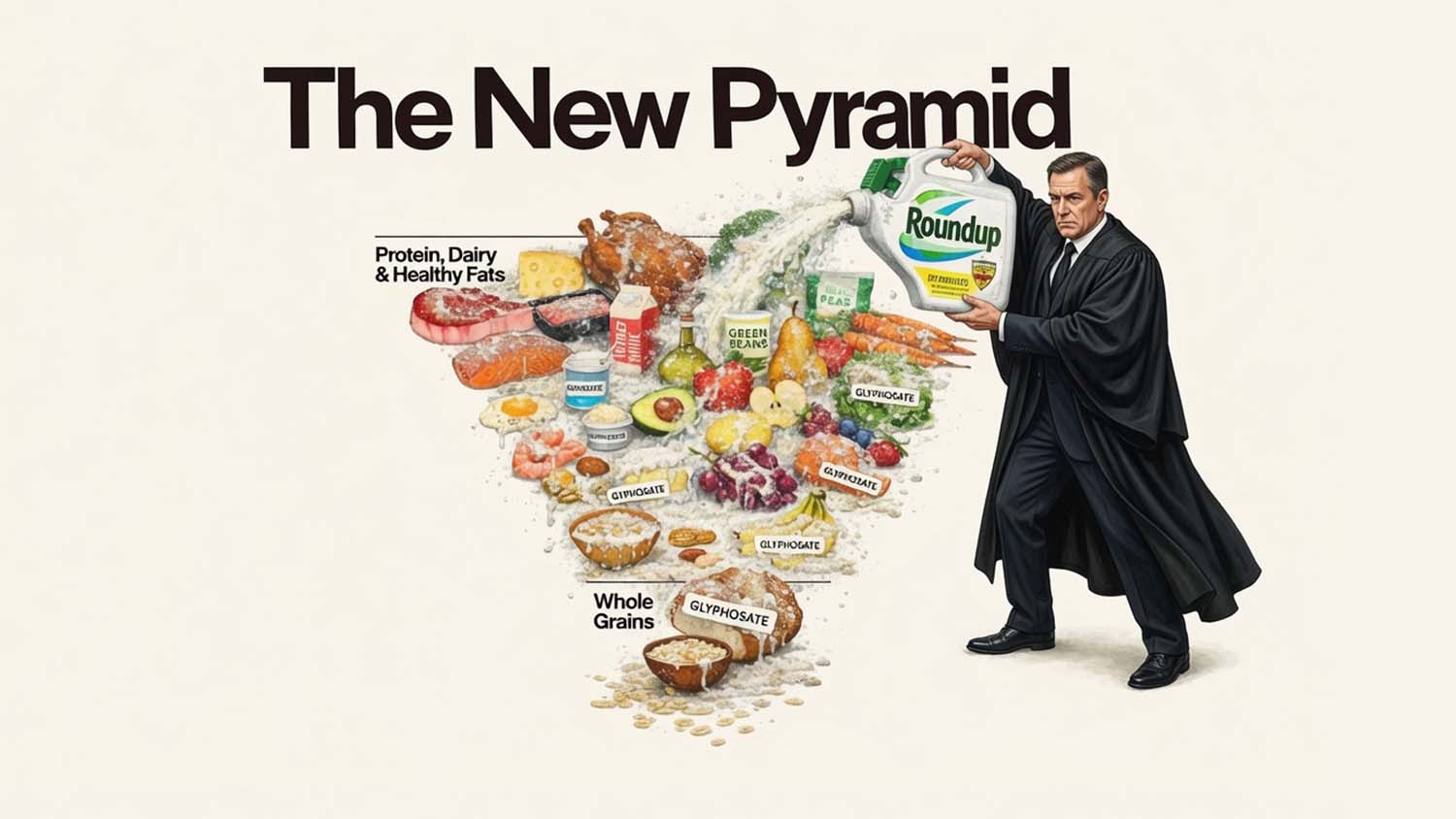
Other MAHA priorities have run into the same headwinds: food dye announcements that outpaced enforcement, and a reversal on glyphosate after the White House sided with farm groups. The dairy trade groups that helped defeat a 2018 interstate raw milk amendment 331 to 79 still carry more weight in Washington than raw milk farmers do. The options above remain available for as long as he holds the office.
The same limits apply to his critics
Kennedy’s critics want the opposite: more federal enforcement, not less. On October 1, food safety attorney Bill Marler listed “enforce the existing ban on interstate sale of raw milk” among the additions he would make to House Democrats’ health agenda. Kennedy’s FDA hasn’t been hands-off either: it pressed Raw Farm into this spring’s cheese recall. A future Secretary eager for a crackdown would hit the same wall Kennedy does. HHS can tighten enforcement at the state line, but it can’t ban raw milk within a state.
Some public health voices who dislike raw milk argue against escalating anyway. Former Baltimore health commissioner Leana Wen wrote an April column for The Washington Post headlined “The raw milk movement is dumb and dangerous, but don’t overreact,” arguing that heavy-handed campaigns cost public health trust it needs for bigger fights.
Where raw milk access is decided
The durable federal fix is legislation. The Interstate Milk Freedom Act (H.R. 7880), introduced in March 2026 by Reps. Thomas Massie and Chellie Pingree, would stop federal agencies from blocking raw milk shipments between states where it’s legal, while leaving state bans in place. Massie lost his primary in May, so the bill will need a new lead sponsor in the next Congress. Kennedy could endorse it at no cost. He has not publicly backed it.
Most access is won in statehouses. Since 2019, Georgia, Iowa, West Virginia, Louisiana and Delaware legalized sales, and North Dakota, Arkansas, Utah, Oklahoma and Alaska expanded access. None of that waited on Washington. If you want raw milk where you live, your state legislator can do more for you than the Health Secretary can. To find raw milk now, check the map or read how to get raw milk in your state.