Why Many Dairy-Intolerant People Report Tolerating Raw Milk
Many people cannot tolerate dairy and avoid foods like milk and cheese for much of their lives. Some of them try raw milk and find they can drink it without problems. For a few, that turns out to be a door into dairy more broadly. After weeks or months of drinking raw milk, they find themselves tolerating pasteurized cheese, butter, and ice cream that had always caused them problems before. Suddenly, the vast world of dairy is back on the table.
The reported experience doesn’t map onto the existing framework for understanding dairy intolerance. And the research needed to explain it has not been conducted.
The Only Controlled Study and Its Limits
The most frequently cited study is a 2014 pilot trial out of Stanford University, published in the Annals of Family Medicine, which tested whether raw milk reduced lactose malabsorption or intolerance symptoms compared with pasteurized milk in adults with confirmed lactose malabsorption. The trial enrolled 16 participants across three eight-day milk phases (raw, pasteurized, and soy) and concluded that raw milk produced no significant difference in malabsorption or symptom scores.
That finding is frequently cited as settling the question. It doesn’t come close.
Of the 63 volunteers screened by hydrogen breath test, 57 percent tested negative for lactose malabsorption despite considering themselves lactose intolerant. The 16 enrolled participants were drawn from the remaining 27 who tested positive, 11 of whom declined to continue. The study therefore enrolled only people with clinically confirmed malabsorption, excluding the majority of self-identified lactose intolerant individuals and, by extension, the broader population reporting tolerance to raw milk.
The authors themselves noted a borderline significant reduction in hydrogen production by day 8 of the raw milk phase (p=.05) that was not observed for pasteurized milk, consistent with early gut adaptation. They acknowledged the eight-day window may have been too short to capture the effect fully. Consumer reports consistently describe benefits emerging over one to two months of sustained consumption, a timeline the study never attempted to test.
The study is a pilot by its own description, with provisional results. No adequately powered follow-up has been conducted in the decade since.
Lactose Intolerance Is Not the Whole Picture
“Lactose intolerance” is being applied too broadly as a diagnostic category. Many people who self-identify as lactose intolerant and experience genuine digestive distress from conventional milk may not have clinically measurable lactose malabsorption at all.
The 2010 NIH Consensus Development Conference on Lactose Intolerance and Health concluded that many individuals who self-report lactose intolerance show no evidence of lactose malabsorption, and that their gastrointestinal symptoms are therefore unlikely to be related to lactose. A 2015 review in Nutrients drawing on that consensus noted that true lactose intolerance is less common than widely perceived and should be viewed as just one potential cause of dairy-related symptoms, alongside A1 beta-casein as an increasingly studied alternative.
Conventional milk is a complex food with multiple distinct mechanisms through which it can cause symptoms. A broad population of “dairy intolerant” people may be reacting to entirely different mechanisms, which is why an intervention’s effect across that population can appear inconsistent even when it is working for a meaningful subset. The sections below address the most plausible mechanisms.
How Pasteurization Changes Milk Proteins
Pasteurization applies heat (typically 72°C for 15 seconds) sufficient to eliminate pathogenic bacteria. That heat also alters protein structure. A 2020 study in the Journal of Dairy Research found that denaturation of bioactive whey proteins including immunoglobulin G, lactoferrin, and bovine serum albumin occurs at 72°C and progresses with increasing temperature and holding time, with lactoferrin losing roughly 59 percent of its native form under standard high-temperature short-time pasteurization conditions.
A study published in Food & Function found that immunologically active whey proteins denaturing around 65°C were the primary candidates responsible for raw milk’s allergy-protective capacity in a murine model. When those proteins were inactivated by heat, the protective effect was lost. Adding alkaline phosphatase, a heat-sensitive enzyme present in raw milk, back to pasteurized milk partially restored both the allergy protection and the favorable microbial shifts associated with raw milk exposure.
Separate research found that pasteurization caused aggregation of beta-lactoglobulin and alpha-lactalbumin, redirecting how these proteins are taken up from intestinal epithelial cells toward Peyer’s patches, with the aggregated form promoting significantly higher Th2-associated antibody and cytokine production than the native form. This is a plausible basis for why some individuals tolerate the native protein and react to the heat-altered form.
The full mechanistic picture is not yet established. What the evidence indicates is that the proteins in raw and pasteurized milk are not structurally identical, and those differences may have immunological consequences for sensitive individuals.
Whole Milk, Slower Digestion
Raw milk is whole milk by default, while most commercial milk has been standardized to reduced-fat specifications. Fat delays gastric emptying, reducing the rate at which lactose reaches the small intestine and the concentration of undigested lactose delivered to the colon. Clinical guidance on managing lactose intolerance consistently cites this effect. Whether it translates to meaningfully fewer symptoms from whole milk specifically is less clear. A 1997 controlled study published in the European Journal of Clinical Nutrition found no significant difference in symptom severity between fat-free and high-fat milk in diagnosed lactose intolerant patients. Fat content is a plausible contributing variable, but not an established primary mechanism.
The A2 Beta-Casein Factor
One complicating variable is breed. Most commercial milk comes from Holstein cattle, which produce predominantly A1 beta-casein. Raw milk more commonly comes from heritage breeds like Jersey and Guernsey, which carry higher frequencies of the A2 variant. A1 beta-casein releases a peptide called BCM-7 during digestion that has been associated with digestive discomfort; A2 does not cleave at the same site.
Importantly, research on BCM-7 expression found that A1 and A2 raw milk produce essentially equivalent BCM-7 levels before heat treatment, but diverge significantly after pasteurization, with A1 milk expressing substantially higher BCM-7 once heated. This suggests the A1/A2 distinction may matter primarily in the context of pasteurized dairy, not raw milk itself, which adds another layer to why raw milk specifically might be better tolerated regardless of breed.
Someone attributing their improved tolerance to “raw milk” may also be partly benefiting from drinking A2-predominant milk for the first time, without knowing it. The two factors are difficult to separate in practice. For a detailed treatment of the A1/A2 mechanism and the research behind it, see A1 and A2 β-Casein: The Amino Acid Difference Behind BCM-7.
Microbiome Adaptation and the Gateway Effect
The hardest part of the consumer experience to explain through compositional differences alone is the gateway effect. Raw milk is not only tolerated, but apparently opens tolerance for other dairy products, including pasteurized ones, over time. This points toward an adaptive mechanism, and the most plausible candidate is the gut microbiome.
A 2021 study published in the International Journal of Molecular Sciences found that raw milk exposure in mice increased the relative abundance of butyrate-producing bacteria from the Lachnospiraceae family while decreasing pro-inflammatory Proteobacterial genera. This microbial shift persisted for weeks after raw milk exposure ended. Pasteurized milk was associated with patterns consistent with dysbiosis and loss of allergy protection.
Parallel research on cow’s milk allergy in infants found that tolerance acquisition was strongly associated with elevated levels of the same butyrate-producing bacteria. Butyrate and related short-chain fatty acids play a documented role in maintaining intestinal barrier integrity and regulating immune tolerance to dietary antigens.
The implication is that sustained raw milk consumption may shift gut bacterial composition in ways that progressively improve tolerance to dairy proteins broadly, including in pasteurized form, which would account for both the gradual onset of reported benefits and their generalization beyond raw milk itself.
See also: She simply tolerated the lactose.
In fact, all humans started out unable to digest lactose in adulthood. Lactase persistence emerged in populations that kept consuming milk across generations, tolerating the discomfort until the trait became common. Whether sustained exposure can drive a meaningful shift within a single lifetime is the question posed here, but it is not without precedent. This is how humans originally gained access to milk as a staple food.
A Note on Enzymes and Probiotics
Two other mechanisms appear regularly in raw milk discussions and are worth addressing briefly.
Raw milk contains enzymes, including lactase, that pasteurization inactivates. If intact lactase survived to the small intestine, it could theoretically aid lactose digestion. The problem is that orally consumed enzymes encounter the stomach’s highly acidic environment first and are substantially denatured before reaching the site where lactose digestion occurs. The evidence does not support native milk enzymes functioning as meaningful digestive aids in humans.
Raw milk’s probiotic content faces the same limitation. Probiotic bacteria are present but at levels well below those in fermented dairy, and the acid-transit challenge applies equally.
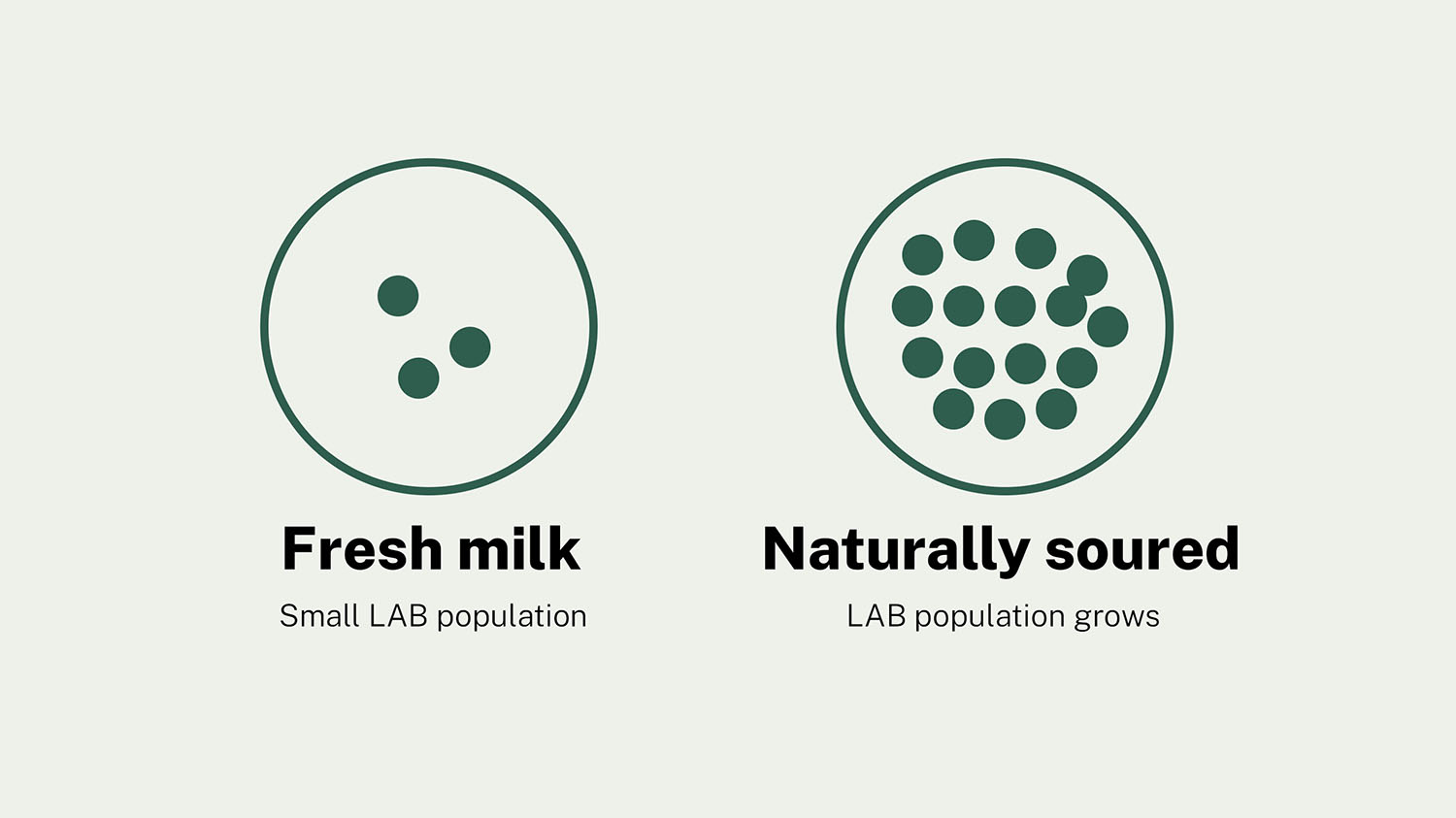
For people whose primary issue is lactose digestion, fermented dairy is the more reliable solution. Lactic acid bacteria in yogurt and kefir convert lactose during fermentation, before consumption, reducing its content substantially. This is why many people who cannot tolerate fluid milk have always been able to eat yogurt and aged cheese. The lactose load is reduced directly by the fermentation process, not by any microbial effect after the fact.
The Research Gap
The consumer reports are numerous, geographically distributed, demographically varied, and consistent. The controlled research is a single underpowered pilot study that excluded the vast majority of the people making the claims. Several plausible mechanisms (microbiome adaptation, native protein structure, A2 beta-casein composition) are each supported by adjacent research but have never been adequately tested in this specific population.
The question is answerable. No adequately powered or sufficiently long trial has been attempted in the decade since the Stanford pilot. The people who have found their way back to dairy through raw milk are not waiting for it, and their experience stands as a consistent, widespread, and so far inadequately examined phenomenon. “Why” remains an open question.