
A1 and A2 β-Casein: The Amino Acid Difference Behind BCM-7
The difference between A1 and A2 milk begins with a single nucleotide substitution in the bovine β-casein gene. A cytosine replaced by adenine at one position in the CSN2 gene swaps one amino acid for another at position 67 of the resulting protein. That substitution determines which peptides are released during digestion and how those peptides interact with receptors throughout the body.
The Genetic Origin of A1 and A2 β-Casein
β-casein is one of the primary proteins in cow’s milk, accounting for roughly 25 to 35 percent of total casein content. It exists in multiple genetic variants, of which A1 and A2 are by far the most prevalent in commercial dairy herds. The two variants differ at a single point: position 67 in the 209-amino-acid β-casein protein chain.
In the A2 variant, that position is occupied by proline. In the A1 variant, proline has been replaced by histidine. Research consistently identifies A2 as the ancestral form, with the A1 mutation arising later through a point mutation on exon VII of the bovine β-casein gene (CSN2) on chromosome 6. The mutation spread through European high-production breeds, particularly Holstein-Friesian cattle, as selective pressure favored yield over other characteristics.
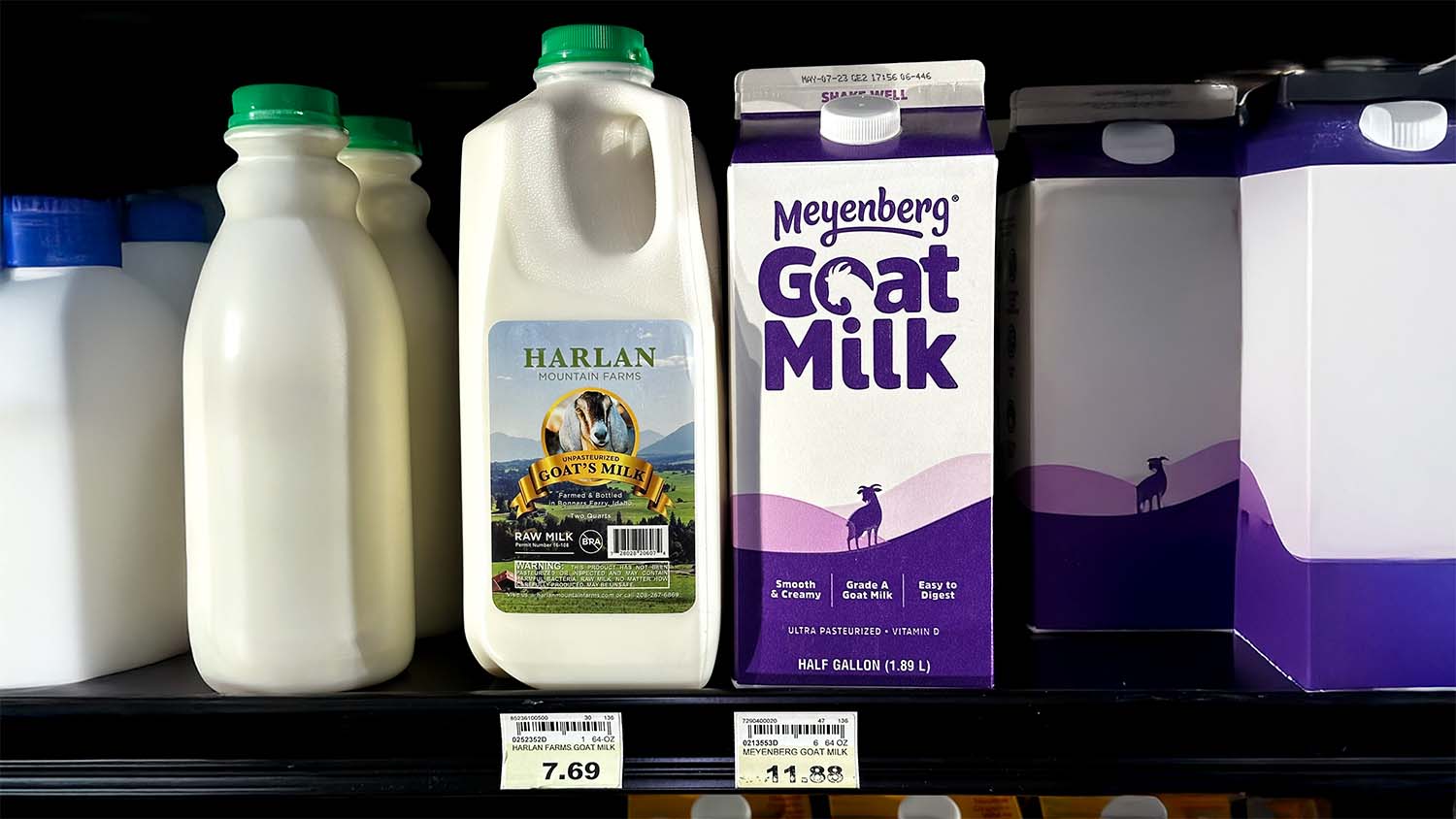
Bos indicus cattle (zebu breeds native to South Asia and Africa) retain the A2 configuration at very high frequency. Non-bovine dairy species, including goats, sheep, camels, and buffalo, also carry proline at position 67, making their milk structurally equivalent to A2 cow milk in this respect. The A1 mutation is largely a product of European cattle breeding history.
Fifteen β-casein variants have been identified in total. Variants carrying histidine at position 67 (A1, B, C, F, G, H1) behave like A1 for the purposes of this discussion. Variants carrying proline at position 67 (A2, A3, D, E, H2, I) behave like A2. In practice, A1 and A2 dominate European-origin commercial dairy herds, and the distinction between the two groups is primarily what the research addresses.
The BCM-7 Pathway: How Digestion Differs
The functional difference between A1 and A2 β-casein becomes apparent during proteolytic digestion. In the stomach and small intestine, digestive enzymes including pepsin and pancreatin cleave the β-casein chain at specific sites. The amino acid at position 67 determines whether a particular cleavage occurs.
In A1 β-casein, histidine at position 67 creates a structurally accessible bond between isoleucine (position 66) and histidine (position 67). Digestive enzymes cleave that bond, releasing a seven-amino-acid peptide: Tyr-Pro-Phe-Pro-Gly-Pro-Ile. That peptide is β-casomorphin-7, abbreviated BCM-7.
In A2 β-casein, proline occupies position 67. Proline’s cyclic ring structure creates steric hindrance at that site, physically blocking the same enzymatic cleavage. BCM-7 is not released, or is released at a negligible rate. Instead, A2 digestion produces BCM-9, a nine-amino-acid peptide (Tyr-Pro-Phe-Pro-Gly-Pro-Ile-Pro-Asn) that carries different biological properties, including reported antihypertensive and antioxidant activity.
BCM-7 is a bioactive opioid peptide with high affinity for μ-opioid receptors, which are distributed throughout the gastrointestinal tract, the immune system, and the central nervous system. Its opioid activity is the mechanism through which most of the downstream effects observed in research are hypothesized to operate.
What BCM-7 Does: Established Mechanisms and Active Research
Gastrointestinal Motility
BCM-7 binds μ-opioid receptors in the gut wall, and animal studies have shown this binding slows motility, reduces the frequency and amplitude of intestinal contractions, and increases mucus secretion. In neonatal dairy calves fed A1 milk, plasma BCM-7 was nearly five times higher than in calves fed A2 milk. Multiple human trials have observed harder stool consistency, measured on the Bristol Stool Scale, in participants consuming A1-containing milk compared to A2-only milk.
Intestinal Barrier Integrity
A 2025 scoping review of human studies found that consumption of A1 β-casein was associated with altered gut microbial composition, reduced intestinal motility, and increased colonic fermentation resulting in elevated gas production and modified short-chain fatty acid (SCFA) profiles. The review noted evidence suggesting BCM-7 may compromise tight junctions in the gut epithelium, potentially exacerbating symptoms in individuals with irritable bowel syndrome or functional gastrointestinal disorders.
Glutathione and Oxidative Stress
μ-opioid receptor agonists, including BCM-7, inhibit cysteine uptake in gastrointestinal and neural epithelial cells. Cysteine is the rate-limiting substrate for glutathione synthesis, and glutathione is the body’s primary intracellular antioxidant. In a 2016 randomized crossover clinical trial (NCT02406469), participants who consumed A2-only milk showed a greater increase in plasma glutathione compared to those consuming mixed A1/A2 milk. Plasma BCM-7 was not elevated in the A2 arm of the trial. The study concluded that A2-only milk has the potential to promote glutathione production in humans, while A1-containing milk does not.
Neurological Associations
BCM-7 can cross the intestinal wall and enter circulation, where it may interact with opioid receptors beyond the gut, potentially including the central nervous system. A narrative review on the gut-brain axis notes that reduced glutathione levels are observed in a range of neurological conditions, including Alzheimer’s disease, Parkinson’s disease, amyotrophic lateral sclerosis, and autism spectrum disorder, and that BCM-7’s suppression of glutathione synthesis may represent a plausible upstream contributor.
However, in 2009 the European Food Safety Authority (EFSA) concluded that no direct causal link between BCM-7 and non-communicable diseases, including cardiovascular disease, autism, or insulin-dependent diabetes, had been established. The neurological and systemic disease associations remain an area of active hypothesis and research, not settled science.
The Pasteurization Variable
A 2007 study by Polish researchers, published and available through the Raw Milk Institute, found that BCM-7 levels in raw A1 and raw A2 milk were essentially equivalent before heat treatment. After pasteurization, BCM-7 concentration in A1 milk rose substantially, while A2 milk remained comparatively stable.
A 2024 review in Food Chemistry examined BCM-7 release from processed dairy products and confirmed that industrial processes including pasteurization influence BCM-7 formation, with A1 β-casein demonstrating significantly greater BCM-7 yield under heat treatment. The structural difference between A1 and A2 at position 67 is amplified by processing, not simply expressed through it.
This finding carries a specific implication for interpreting the raw milk conversation. Many consumers who report that raw milk resolved their dairy intolerance symptoms cannot confirm whether that milk was A2. The Polish study suggests that in raw milk, the BCM-7 load from A1 and A2 cows may be similar enough that the distinction becomes secondary to whether the milk was processed at all. By that measure, the A1/A2 issue is substantially a pasteurization-era phenomenon.
Clinical Trial Evidence
The human clinical literature on A1 versus A2 milk has grown considerably since 2014. The following trials represent the core of the published record.
Ho et al. (2014), published in the European Journal of Clinical Nutrition, conducted a blinded randomized crossover pilot study comparing A1 and A2 β-casein on gastrointestinal measures. Results favored A2 across GI outcomes, though the study was small and explicitly a pilot.
Jianqin et al. (2016), a randomized study of Chinese children, found that participants consuming A2-only milk had significantly fewer GI symptoms, improved stool consistency, and reduced stool frequency compared to those consuming conventional A1/A2 milk. A 2019 follow-up with Chinese children replicated similar findings.
Deth et al. (2016), the glutathione RCT described above (NCT02406469), provided the most direct biochemical evidence. A2-only milk raised plasma glutathione and did not raise plasma BCM-7, while mixed A1/A2 milk produced neither effect.
Milan et al. (2020), published in the American Journal of Clinical Nutrition, conducted a randomized controlled trial in women self-reporting dairy intolerance. A2-only milk produced significantly better digestive comfort outcomes compared to conventional milk.
Ramakrishnan et al. (2020), published in Nutrients, found that lactose maldigesters consuming A2-only milk as a single meal experienced fewer symptoms of lactose intolerance compared to A1/A2 milk, suggesting BCM-7-mediated motility effects may confound symptom attribution to lactose.
Choi et al. (2024), a single-center double-blind randomized crossover trial conducted in Korea with 50 subjects, found that A2 milk reduced gastrointestinal discomfort compared to conventional A1/A2 milk in individuals reporting milk-related GI symptoms.
Robinson et al. (2025), a five-week double-blind double-crossover trial from Auburn University, compared lactose-free conventional milk, A2 milk, and lactose-free A2 milk in milk-avoiding participants. A2 milk produced lower ratings of bloating relative to conventional milk on initial exposure days.
Across these trials, the direction of evidence is consistent. A2-only milk produces fewer gastrointestinal symptoms and measurably different biochemical outcomes than milk containing A1 β-casein. The cautions are equally consistent. Most trials are funded or supported by A2 dairy interests, sample sizes are modest, and no trial has established a causal link between A1 milk and systemic disease in otherwise healthy adults.
Which Animals Naturally Produce A2 Milk
Goats, sheep, camels, buffalo, and donkeys all carry proline at position 67 of their β-casein proteins. Their milk does not produce BCM-7 through the A1 cleavage mechanism, making them structurally distinct from A1 cow milk in this respect without requiring individual animal testing.
For dairy cows, A2 status is determined by genetics and requires verification. A cow can carry two copies of the A2 allele (homozygous A2/A2), producing exclusively A2 milk, or one copy of each (heterozygous A1/A2), producing mixed milk. Breed tendencies exist. Jersey cattle test A2 homozygous at higher rates than Holsteins, and Bos indicus breeds carry the A2 allele at very high population frequency. Breed alone is not a guarantee. Only DNA testing, typically conducted via hair or blood sample, confirms a cow’s β-casein genotype.
A2 raw cow milk listings are mapped globally here, and all A2 protein raw milk by species is mapped here.
How A2 Status Is Verified
A hair or blood DNA test identifies the codon at position 67 of the β-casein gene. A proline codon (CCT) at that position confirms the A2 allele. A histidine codon (CAT) confirms the A1 allele. A homozygous A2/A2 animal carries the proline codon on both alleles and will not pass the A1 allele to offspring or express A1 β-casein in milk.
The trademarked “a2®” brand (lowercase) is a commercial entity, originating in Australia, that licenses A2-tested dairy products under its own certification program. The genetic trait itself is not proprietary. Any farm can have its animals tested and accurately represent the results to consumers. The distinction between a commercially certified a2® product and a farm-tested A2/A2 herd is procedural and marketing-related, not genetic.
Veterinary clinics, university animal science laboratories, and commercial livestock genetics services offer β-casein genotyping. Testing is typically conducted once per animal, as the genotype is fixed at birth.
What the Evidence Supports and Where It Ends
The molecular mechanism is well-established. A1 β-casein releases BCM-7 during digestion, A2 does not, and BCM-7 binds μ-opioid receptors with downstream effects on gut motility, barrier function, and antioxidant metabolism. The human clinical evidence consistently supports fewer gastrointestinal symptoms with A2-only milk across multiple independent trial designs and populations.
What the evidence does not support is a causal link between A1 milk and systemic or neurological disease in healthy adults. The EFSA’s assessment remains the appropriate marker for that boundary. The research on BCM-7’s potential role in neurological conditions is ongoing and hypothesis-generating, not conclusive.
The pasteurization finding is perhaps the most underappreciated variable in this discussion. If BCM-7 expression from A1 milk is substantially a heat-treatment artifact, the A1/A2 distinction matters most in the context of processed dairy. That framing is consistent with the observation, common among raw milk consumers, that many people who cannot tolerate conventional milk tolerate raw milk without knowing its β-casein genotype.
For further reading on the pasteurization and BCM-7 connection, see the 2007 Polish study on how A1 and A2 milk respond differently to heat treatment. For an introduction to A2 raw milk sources and verification, see what A2 raw milk is and where to find it.