
Cows Kill 22 Americans a Year. Raw Milk Claimed One Death in 15 Years
Cattle are responsible for approximately 22 deaths in the United States every year. That figure comes from CDC surveillance data covering 2003 through 2007, which recorded 108 occupational deaths in which cattle were the primary or secondary cause. That is 21.6 deaths per year, averaged across the country, in agricultural settings alone. A 2025 peer-reviewed forensic overview published in PMC confirmed the figure independently, placing the national annual estimate at 20 to 22 deaths.
Over the same period that cattle were killing roughly two dozen Americans a year, the most comprehensive federal analysis of fluid raw milk found just one confirmed death across 15 years of surveillance. The broadest available dataset, covering all raw milk products over 20 years, recorded three deaths total.
The Cattle Fatality Record
The CDC Morbidity and Mortality Weekly Report (MMWR) published in July 2009 analyzed cattle-caused deaths across Iowa, Kansas, Missouri, and Nebraska from 2003 through 2008. Those four states represented 16 percent of U.S. cattle operations and 21 percent of the national cattle herd. Investigators identified 21 deaths in that region alone over the six-year window.
The cause of death in all but one case was blunt force trauma to the head or chest. Victims were most often older male farm workers, with a median age of 65. The circumstances included working cattle in enclosed pens and chutes, herding and sorting, loading, and feeding. One-third of the deaths involved animals with a documented history of aggressive behavior.
Nationally, applying the MMWR’s own five-year dataset, cattle killed an average of 21.6 people per year in crop and livestock production settings. The PMC forensic literature rounds this to 20 to 22 annually.
The Raw Milk Mortality Record
Two peer-reviewed analyses of federal surveillance data define what is known about raw milk deaths per year in the United States.
Stephenson, Coleman, and Azzolina (2024), published in the Journal of Epidemiology and Global Health, analyzed CDC National Outbreak Reporting System (NORS) data from 2005 through 2020. The finding for fluid raw milk over that 15-year window: one confirmed death, in an adult with serious underlying chronic illness. No child death was attributed to raw milk consumption. No confirmed cases of listeriosis were linked to raw milk in the dataset, despite listeria being among the pathogens most frequently cited in federal warnings about unpasteurized dairy. Reported illnesses totaled 1,696 over the 15 years, roughly 113 per year nationally.
Koski et al. (2022), published in Epidemiology and Infection, analyzed the CDC Foodborne Disease Outbreak Surveillance System (FDOSS) from 1998 through 2018. That dataset covers all raw milk products, including fluid raw milk, raw milk cheeses, and other processed products, and recorded three deaths over 20 years. Two of those three deaths occurred in the 2013 to 2018 window alone.
The difference between the two figures is methodological. FDOSS captures any outbreak in which raw milk or a raw milk product was the confirmed or suspected vehicle. Stephenson applies stricter attribution standards to fluid raw milk specifically. Neither figure is disputed. Together they bracket the raw milk mortality record: 1 confirmed death over 15 years for fluid raw milk, and 3 deaths over 20 years when all raw milk products are included. Averaged across either dataset, the annual death toll is a fraction of a single life: 0.07 deaths per year under Stephenson’s analysis, 0.15 deaths per year under the FDOSS record, or between 1 death every 6 to 15 years depending on which products and methodology are applied.
Stephenson et al. identified 78 listeriosis deaths in the CDC NORS dataset across 2005 to 2020. The breakdown by food source:
| Food Source | Listeriosis Deaths (2005–2020) |
|---|---|
| Cantaloupe | 33 |
| Caramel apples | 7 |
| Leafy greens | 6 |
| Ricotta salata cheese | 5 |
| Enoki mushrooms | 4 |
| Pasteurized milk | 3 |
| Pasteurized ice cream | 3 |
| Raw milk | 0 |
Pasteurized milk and pasteurized ice cream appear in that table because pasteurization is a single step in a supply chain that includes farms, tanker transport, processing facilities, and value-added manufacturers. Contamination can enter before or after the heat treatment occurs. The 2007 Whittier Farms outbreak, which killed three people in Massachusetts, traced to Listeria found at the pasteurization facility itself, not on the farms supplying the raw milk. The 2015 Blue Bell Creameries outbreak, which also killed three people, traced to Listeria persisting across two ice cream manufacturing facilities for at least five years, in products made entirely from pasteurized milk. Pasteurization reduces risk at one point in a complex system, but it does not make that system failure-proof.
The Gap Between Perception and the Record
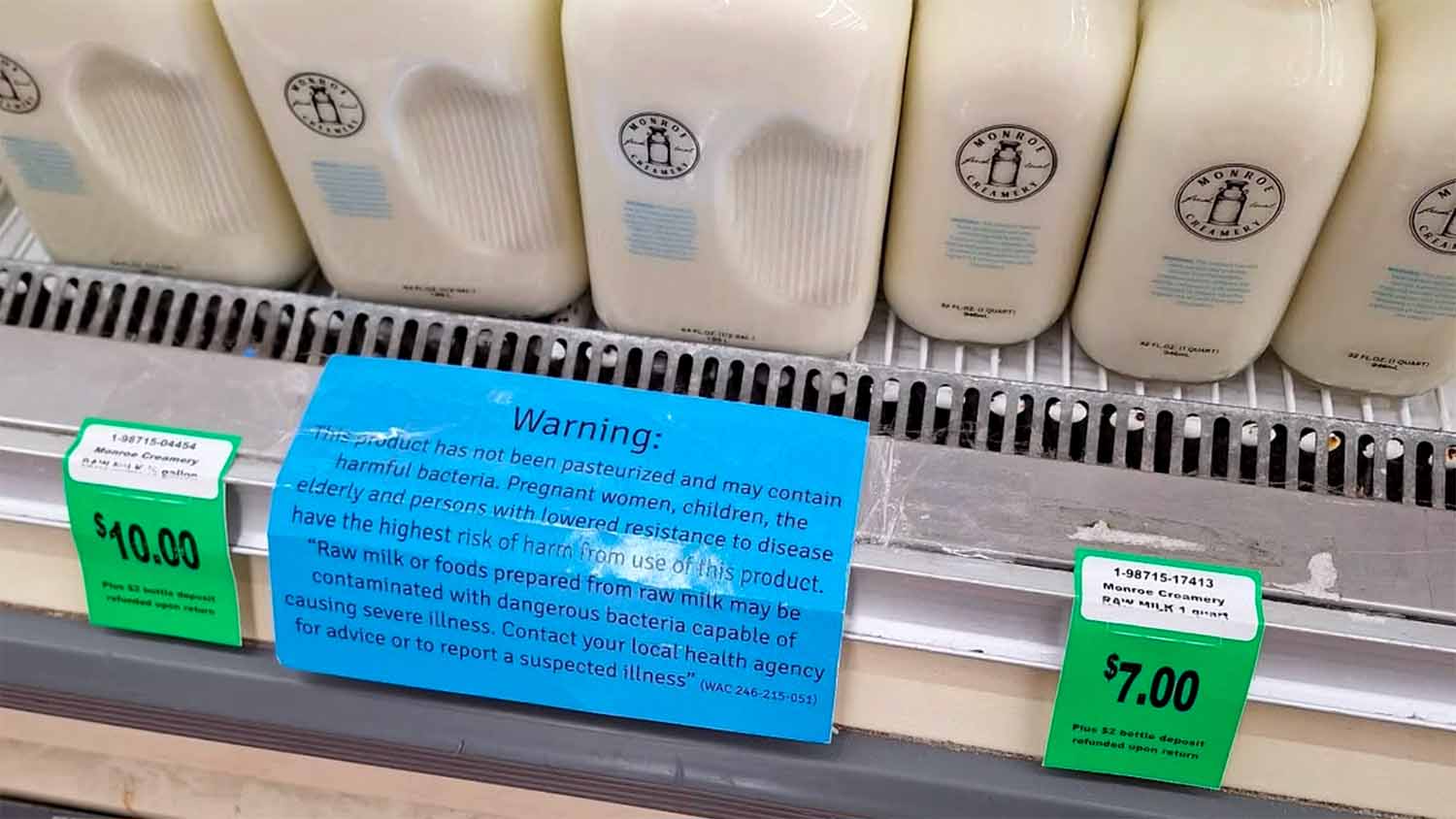
Raw milk is the subject of a federal interstate ban, criminal penalties in some states, and sustained public alarm across media and social platforms.
Cattle contact, which kills approximately 22 Americans a year, has attracted none of this attention.
That gap is not a product of the mortality record. It is a product of how each hazard is culturally understood. Cattle are familiar. Raw milk, after a century of mandatory pasteurization and the public health messaging built around it, has become cultural shorthand for recklessness. People who would walk through a cattle pen without a second thought will forward a CDC raw milk warning to a family member who mentioned buying a gallon from a local farm. The numbers behind both decisions rarely enter the conversation.
The Foods That Kill More People Than Raw Milk
Raw milk is not a uniquely dangerous food. The mortality comparison extends well beyond cattle. Drawing from the same CDC NORS dataset analyzed by Stephenson et al., leafy greens, cantaloupe, caramel apples, pasteurized milk, and pasteurized ice cream all killed more Americans over the 2005 to 2020 surveillance window than raw milk did. None of those foods are subject to federal interstate bans.
Raw oysters are the primary foodborne vehicle for Vibrio vulnificus, which accounts for the majority of the roughly 100 deaths the CDC attributes to Vibrio infections each year. Oysters are sold legally in every state, served in restaurants without prescription, and marketed without mandatory consumer warnings on menus. Leafy greens are responsible for more listeriosis deaths in the federal dataset than any dairy product, pasteurized or otherwise.
The pattern is consistent: raw milk receives a level of regulatory attention that corresponds to its cultural positioning, not its statistical contribution to American mortality.
A Sense of Proportion
Cattle kill approximately 22 Americans a year. Raw milk has been linked to between one confirmed death over 15 years for fluid raw milk and three deaths over 20 years across all raw milk products. All of those figures come from the same federal surveillance infrastructure. None of them are contested.
Raw milk carries real pathogen risks that the mortality record does not eliminate. What the record does is place them on a scale. Fewer than one death per year, occurring in people with serious underlying illness, is a mortality profile that belongs alongside caramel apples and ricotta salata cheese in a listeriosis table. It does not belong at the center of a national food safety conversation that treats it as uniquely dangerous.
The cattle comparison is not a case for alarm about cows. It is a prompt to ask whether the alarm about raw milk has ever been proportionate to what the numbers show. For most people who have absorbed years of public health messaging on the subject, the answer requires a closer look at the data than the messaging has typically invited. Raw milk is not just comparable to, but less risky per consumer than most commonly eaten foods.