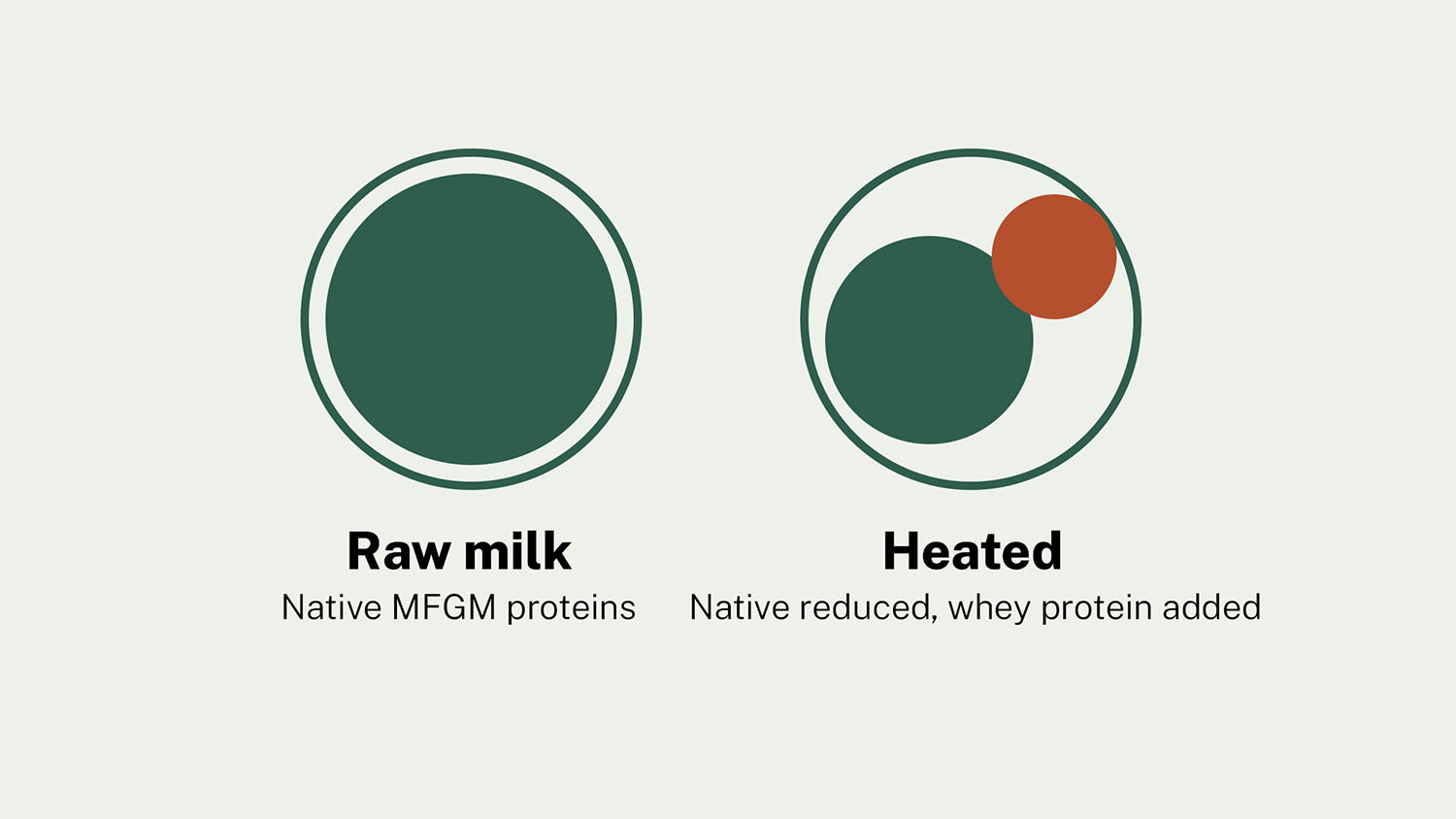
Heat treatment doesn't just reduce native milk fat globule membrane proteins, it can also add unrelated denatured whey protein into the membrane, changing its composition in more than one direction at once.
Beyond Fat: What Heat Does to MFGM Proteins
The milk fat globule membrane isn’t just a fatty wrapper around milk fat. It’s studded with a specific set of proteins, xanthine oxidase among them, that carry out distinct biological functions and respond to heat in ways that don’t always track with what happens to the membrane’s fat or overall structure. Looking at these proteins specifically, rather than the membrane as a whole, turns up findings that complicate any simple “heat destroys it” story.
Key facts:
- Commercial-scale HTST pasteurization significantly reduced xanthine dehydrogenase/oxidase activity, lactadherin, and fatty acid-binding protein levels in the same study that measured whey protein losses covered elsewhere in this cluster.
- A differential scanning calorimetry study found butyrophilin’s own heat-denaturation signature sits around 58°C, and standard pasteurization (63°C for 30 minutes) had minimal effect on that denaturation temperature, while more intensive heat (90°C for 15 minutes) actually raised it, a counterintuitive stabilization effect rather than further breakdown.
- A proteomics comparison found xanthine dehydrogenase/oxidase and lactadherin picked up fewer heat-induced chemical modifications than milk’s more dominant proteins, α-S1-casein and β-lactoglobulin specifically, and the same study found that denatured β-lactoglobulin can migrate into the fat globule membrane fraction under heat rather than simply disappearing from milk.
- A separate study comparing human, bovine, and caprine milk found bovine MFGM proteins were less heat-sensitive to pasteurization than either human or caprine MFGM proteins, suggesting the more heat-sensitive caprine findings discussed later in this article may somewhat overstate what happens in cow’s milk specifically.
What the MFGM’s Proteins Actually Are
The milk fat globule membrane wraps every fat droplet in milk in a structure built from more than 200 distinct proteins alongside its lipid components, and a handful of those proteins have been studied closely enough to have well-defined roles. Lactadherin, also called PAS6/7, and xanthine dehydrogenase/oxidase are two of the better-characterized ones, alongside butyrophilin, fatty acid-binding protein (FABP), mucin-1, PAS III, acidophilin, and CD36. Xanthine oxidase specifically is the subject of its own mythbusting article elsewhere on this site, since a specific hypothesis once linked it to heart disease; that hypothesis didn’t hold up under formal review, but XO’s basic presence and function as an MFGM protein is a separate, uncontested fact from that debunked claim.
Butyrophilin is worth singling out because it’s one of the more structurally significant MFGM proteins, thought to play a role in how the membrane itself assembles around fat during milk secretion. Understanding what heat does to butyrophilin specifically, rather than just to the membrane’s fat content, is where some of the more detailed and more surprising research has focused.
Butyrophilin’s Nuanced Heat Signature
A study using differential scanning calorimetry, a technique that directly measures the temperature at which a protein’s structure breaks down, isolated butyrophilin’s own denaturation signature and found it centered around 58°C. Standard pasteurization, 63°C for 30 minutes, had only a minimal effect on that denaturation temperature. What’s genuinely counterintuitive is what happened at more intensive heat: treatment at 90°C for 15 minutes actually raised the measured denaturation temperature rather than pushing it lower, a stabilization effect rather than the straightforward further breakdown a simple “more heat, more damage” model would predict. The same body of literature notes that whey proteins generally remain largely undenatured at standard pasteurization intensity, consistent with findings covered in more depth elsewhere in this cluster.
This is a useful corrective to an assumption that’s easy to make by default: that a protein’s structural stability declines in a straight line as heat increases. Butyrophilin’s behavior here doesn’t follow that pattern cleanly, and the DSC method used to measure it is specific and direct enough that this isn’t a case of noisy or indirect data.
Resistance and Migration Under Heat
A proteomics study comparing milk’s whey, casein, and cream fractions before and after heat treatment found that xanthine dehydrogenase/oxidase and lactadherin picked up fewer heat-induced chemical modifications than milk’s more abundant proteins, specifically α-S1-casein and β-lactoglobulin. That’s a genuine “this one holds up comparatively well” finding, though it’s worth being precise about what it measures: chemical modification (oxidative and Maillard-type changes to the protein’s structure) is a different measurement than denaturation or loss of activity, and the two don’t always move together.
The same study turned up something that complicates the picture of heat simply stripping proteins away from the membrane: denatured β-lactoglobulin, normally a whey protein rather than an MFGM component, was found migrating into the cream fraction under heat treatment, likely through thiol-disulfide chemical interactions with membrane components. In other words, heat treatment doesn’t just potentially remove native MFGM proteins, it can also introduce unrelated, denatured proteins into the membrane fraction that weren’t there in raw milk. A milk fat globule membrane sampled after heat treatment isn’t simply a depleted version of the raw membrane; its actual protein composition has shifted in more than one direction at once.
A Detailed Cross-Species Comparison Across Four Processing Methods
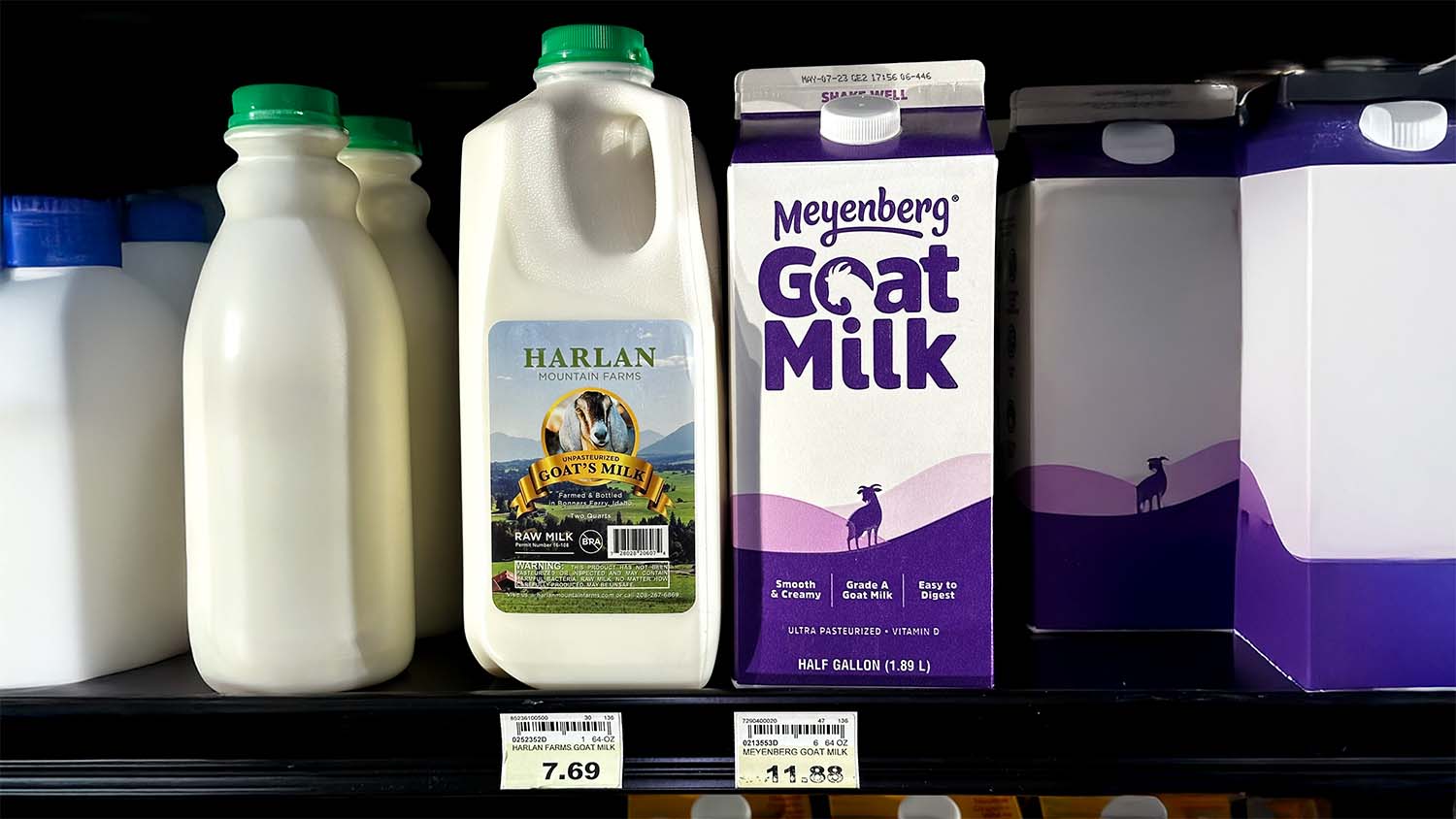
The most granular head-to-head comparison of MFGM proteins across processing intensities, three heat treatments plus spray-drying, comes from a study on goat milk rather than cow’s milk. That caprine study compared raw milk against ultra-pasteurization (85°C for 30 minutes), UHT (135°C for 5 seconds), and spray-drying, and found significant reductions in xanthine dehydrogenase/oxidase, butyrophilin, stomatin, and a SEA-domain protein specifically under ultra-pasteurization and UHT, with the total count of identified MFGM proteins dropping from 1,015 in raw milk to 637 after ultra-pasteurization and 508 after UHT.
The counterintuitive result in that same study is worth calling out directly: spray-drying, despite being a more processing-intensive method overall, caused the least reduction in MFGM protein count of any method tested. And consistent with the migration finding described above, the same caprine study found casein, β-lactoglobulin, and a protein called osteopontin all increased within the MFGM fraction after heat treatment, independently corroborating that heat-driven protein migration into the membrane isn’t a one-off finding from a single lab.
A separate study fills in some of the bovine comparison this article’s earlier sections were missing. Ma, Zhang, Wu, and Zhou directly compared human, bovine, and caprine MFGM proteins specifically under pasteurization, rather than the full range of processing intensities the caprine-only study covered. Their protein counts landed at just over 1,100 for human milk, a little over 600 for bovine, and well under 150 for caprine, a species gap in raw complexity that’s worth knowing about on its own. The genuinely useful finding here is comparative: bovine MFGM proteins showed lower thermo-sensitivity to pasteurization than either human or caprine MFGM proteins in that same study, meaning the goat-milk-based findings elsewhere in this article, drawn from a more heat-sensitive species, likely represent something of an upper bound on how much heat-related change cow’s milk MFGM proteins experience at comparable temperatures, rather than a direct stand-in for what happens in cow’s milk specifically.
What This Research Does Not Show
The data reviewed here is specific and, in places, genuinely surprising: some MFGM proteins resist certain kinds of heat-induced modification better than milk’s more abundant proteins, one structurally important protein shows a stabilization rather than further breakdown at high heat, and heat treatment measurably adds unrelated proteins to the membrane rather than simply subtracting native ones.
What this research does not show is a single, unified answer to “what heat does to MFGM proteins” that applies equally across every protein, every species, and every processing intensity. Specifically:
- The most detailed multi-method comparison here, covering ultra-pasteurization, UHT, and spray-drying together, used goat milk, not cow’s milk; a separate three-species study covering pasteurization specifically found bovine MFGM proteins less heat-sensitive than caprine ones, but that comparison doesn’t extend to the UHT and spray-drying conditions the caprine-only study tested.
- “Fewer heat-induced modifications” and “resistant to denaturation” are measuring different things; a protein can pick up fewer chemical modifications while still losing biological activity, and this article’s sources don’t fully resolve that distinction for every protein discussed.
- None of the studies reviewed here measured a nutritional or health outcome tied to MFGM protein levels specifically; the findings are compositional and structural measurements of milk itself, not evidence about what reduced or altered MFGM protein content means for anyone consuming the milk.
- The counterintuitive findings here, butyrophilin’s heat-stabilization effect and spray-drying’s comparatively mild impact, come from single studies each; independent replication specifically for these two findings hasn’t been identified in the sources reviewed for this article.
Key Terms
- Milk fat globule membrane (MFGM): the structure surrounding fat droplets in milk, composed of over 200 distinct proteins alongside phospholipids and other lipid components.
- Lactadherin (PAS6/7): one of the MFGM’s major proteins, involved in fat globule secretion and membrane structure.
- Butyrophilin: a structurally significant MFGM protein thought to play a role in how the membrane assembles around milk fat during secretion.
- Differential scanning calorimetry (DSC): a laboratory technique that directly measures the temperature at which a protein’s structure breaks down, used to pinpoint specific denaturation signatures.
- Thiol-disulfide interaction: a type of chemical bond exchange between protein molecules that can allow one protein to attach to or migrate into a different structure, such as denatured whey protein binding into the fat globule membrane under heat.
Frequently Asked Questions
Does pasteurization destroy the proteins in milk’s fat globule membrane? Partially, and unevenly. Commercial HTST pasteurization measurably reduced xanthine dehydrogenase/oxidase, lactadherin, and fatty acid-binding protein levels in one bovine study, but other MFGM proteins picked up comparatively few heat-induced chemical modifications in a separate study, and heat treatment doesn’t uniformly strip the membrane of protein content.
Does heat always denature MFGM proteins further as temperature increases? Not always. A study using differential scanning calorimetry found that butyrophilin’s denaturation temperature actually increased after intensive heat treatment (90°C for 15 minutes) compared to standard pasteurization, a stabilization effect rather than continued breakdown.
Can heat treatment add proteins to the milk fat globule membrane rather than just removing them? Yes. Multiple studies found that denatured whey proteins, particularly β-lactoglobulin, can migrate into the MFGM fraction under heat, meaning the membrane’s protein composition after heat treatment isn’t simply a smaller version of its raw-milk composition.
Is the most detailed research on this topic based on cow’s milk? Not entirely. The most granular comparison across ultra-pasteurization, UHT, and spray-drying together used goat milk. A separate study comparing human, bovine, and caprine MFGM proteins under standard pasteurization found bovine proteins less heat-sensitive than caprine or human ones, but that study didn’t test the fuller range of processing intensities the caprine-only study covered.
Does spray-drying destroy more MFGM protein than liquid heat treatments? Not according to one caprine study, where spray-drying caused the least reduction in total MFGM protein count of the processing methods tested, less than either ultra-pasteurization or UHT.