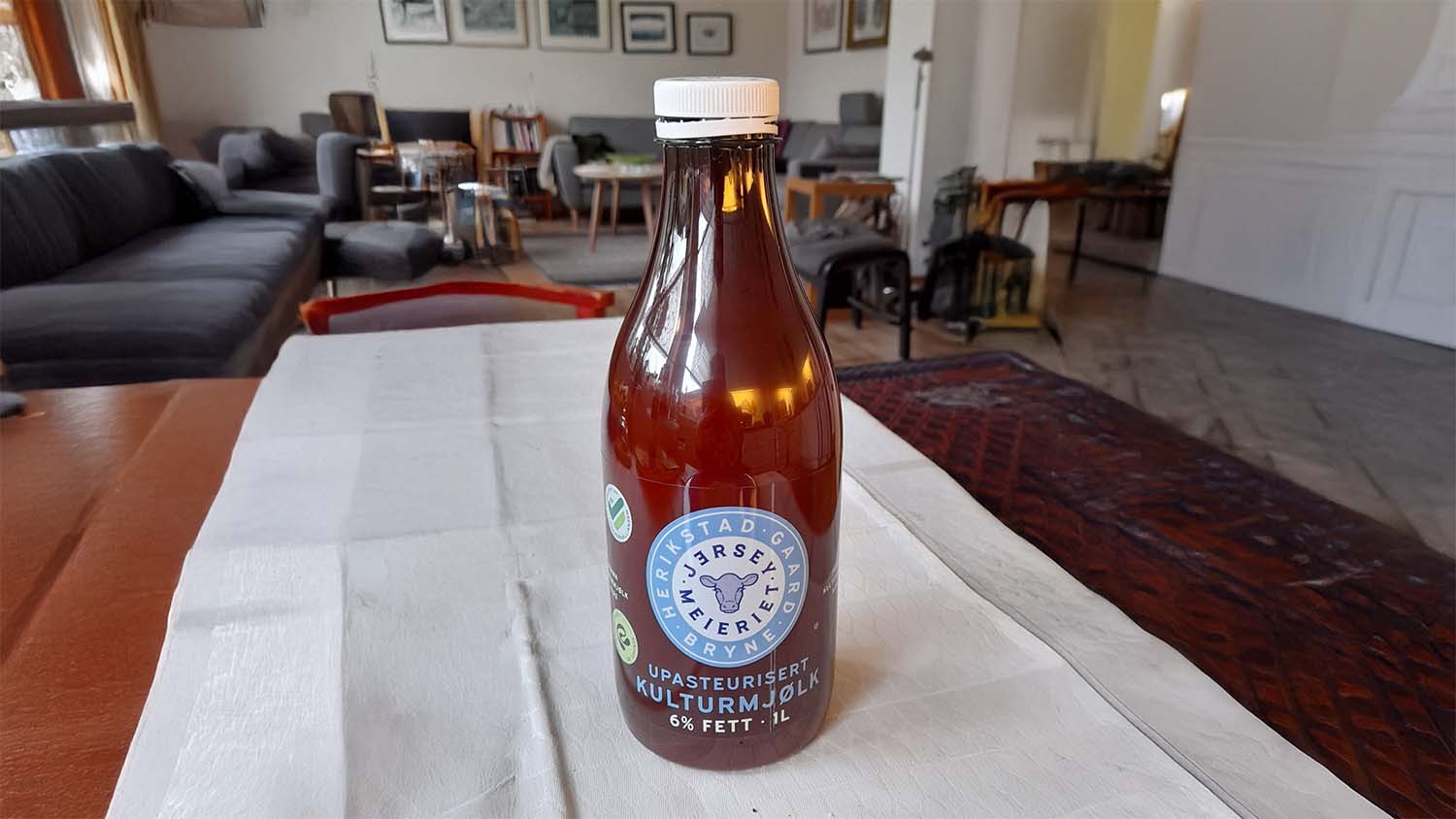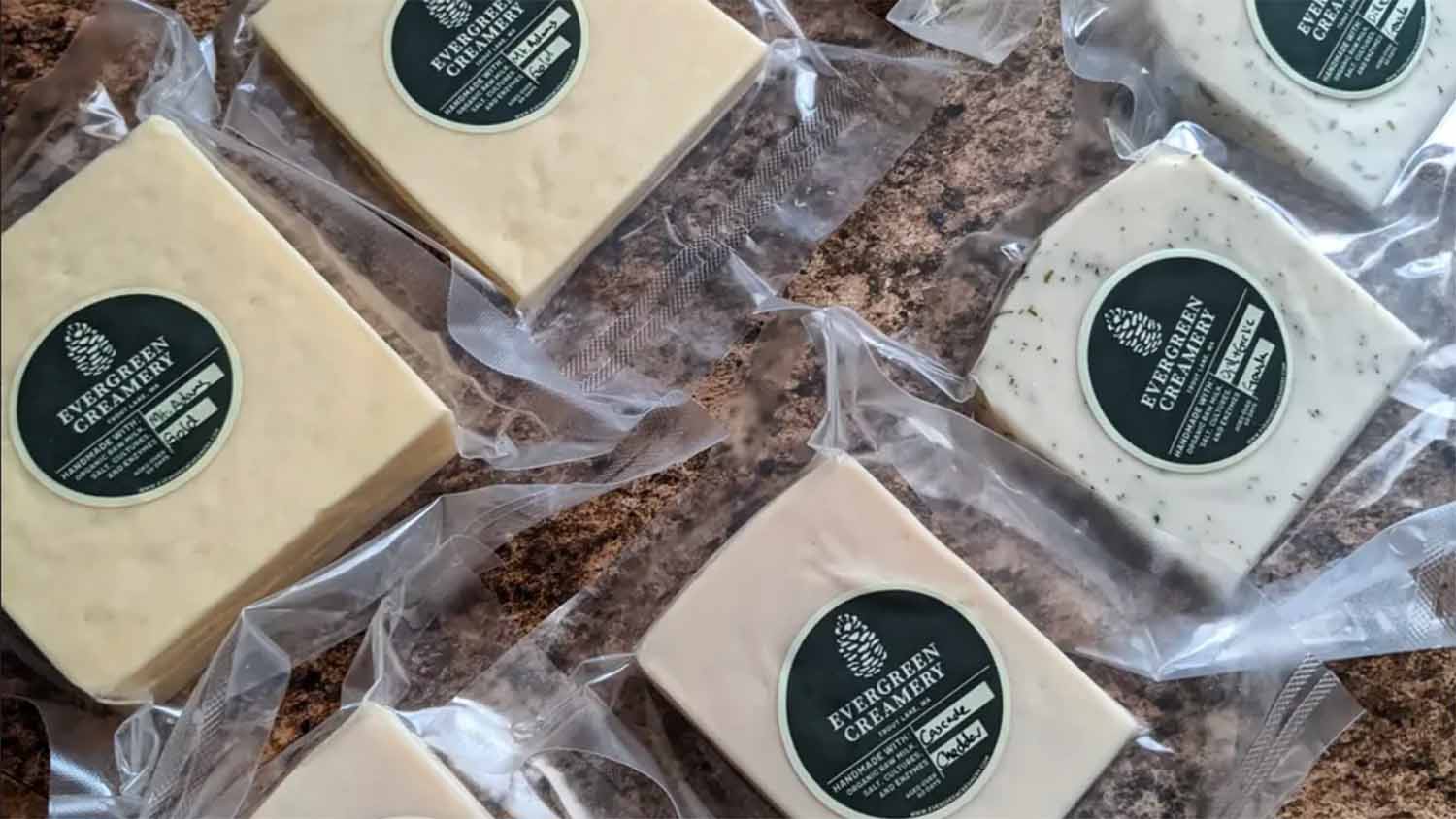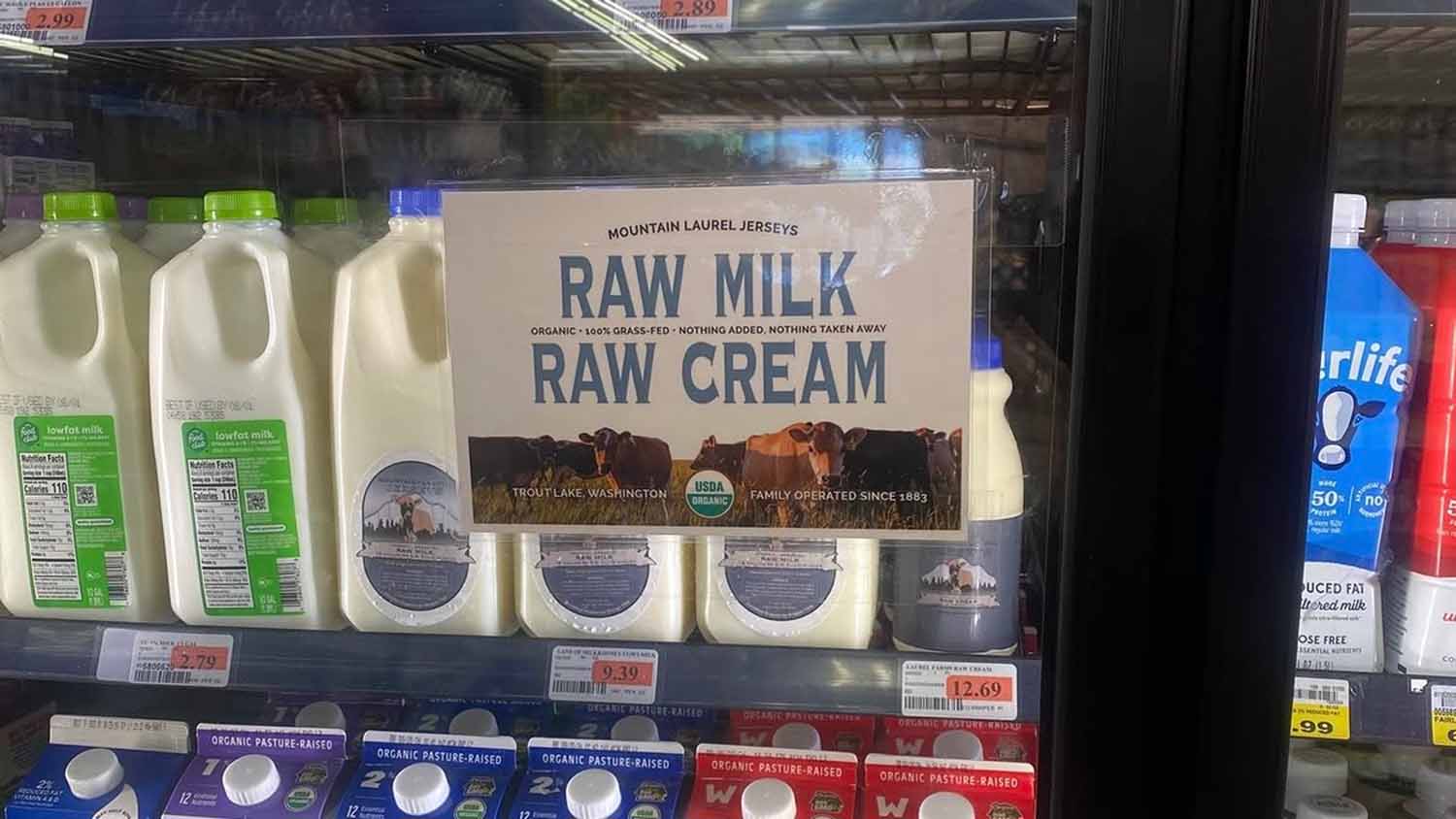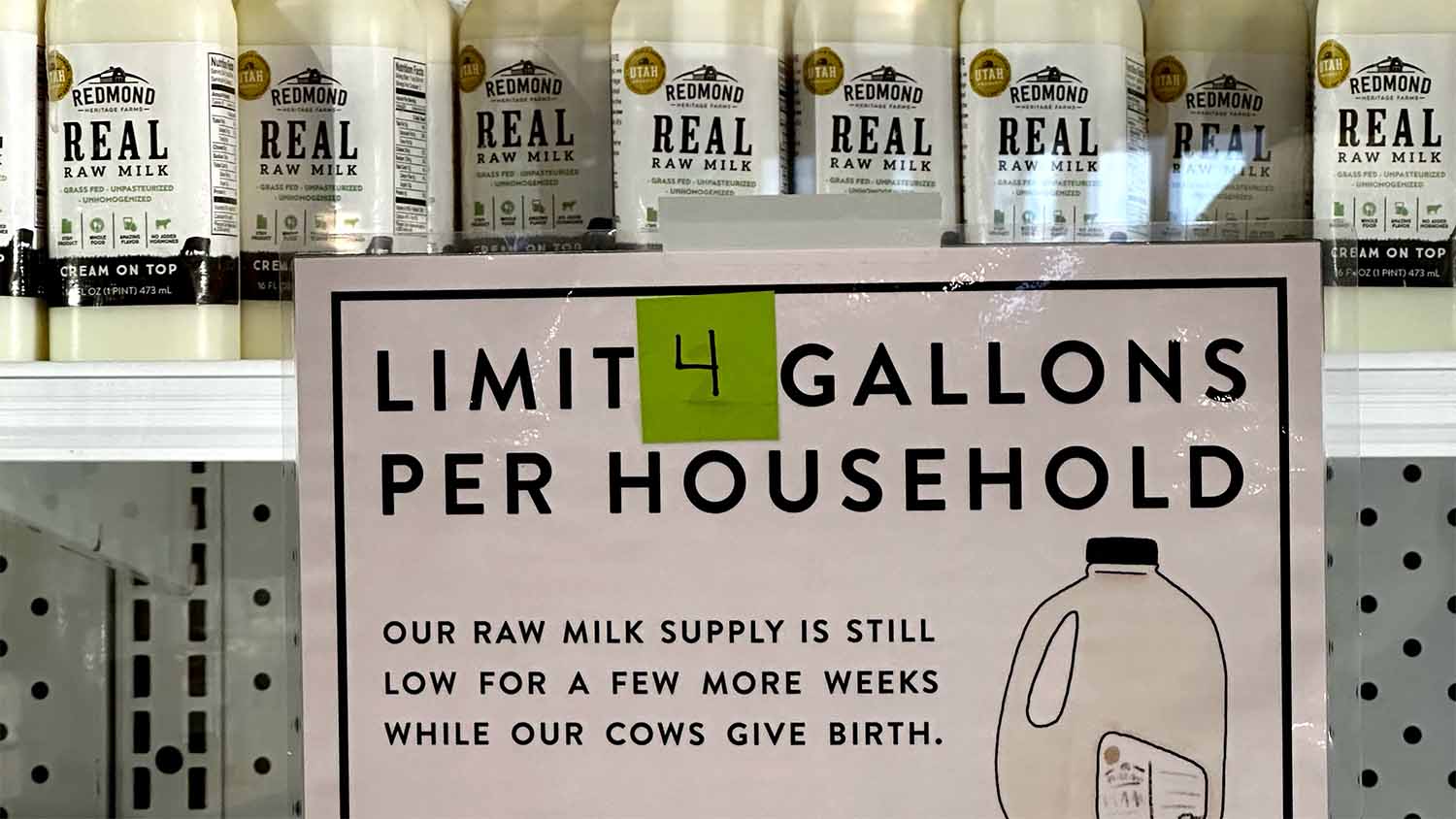
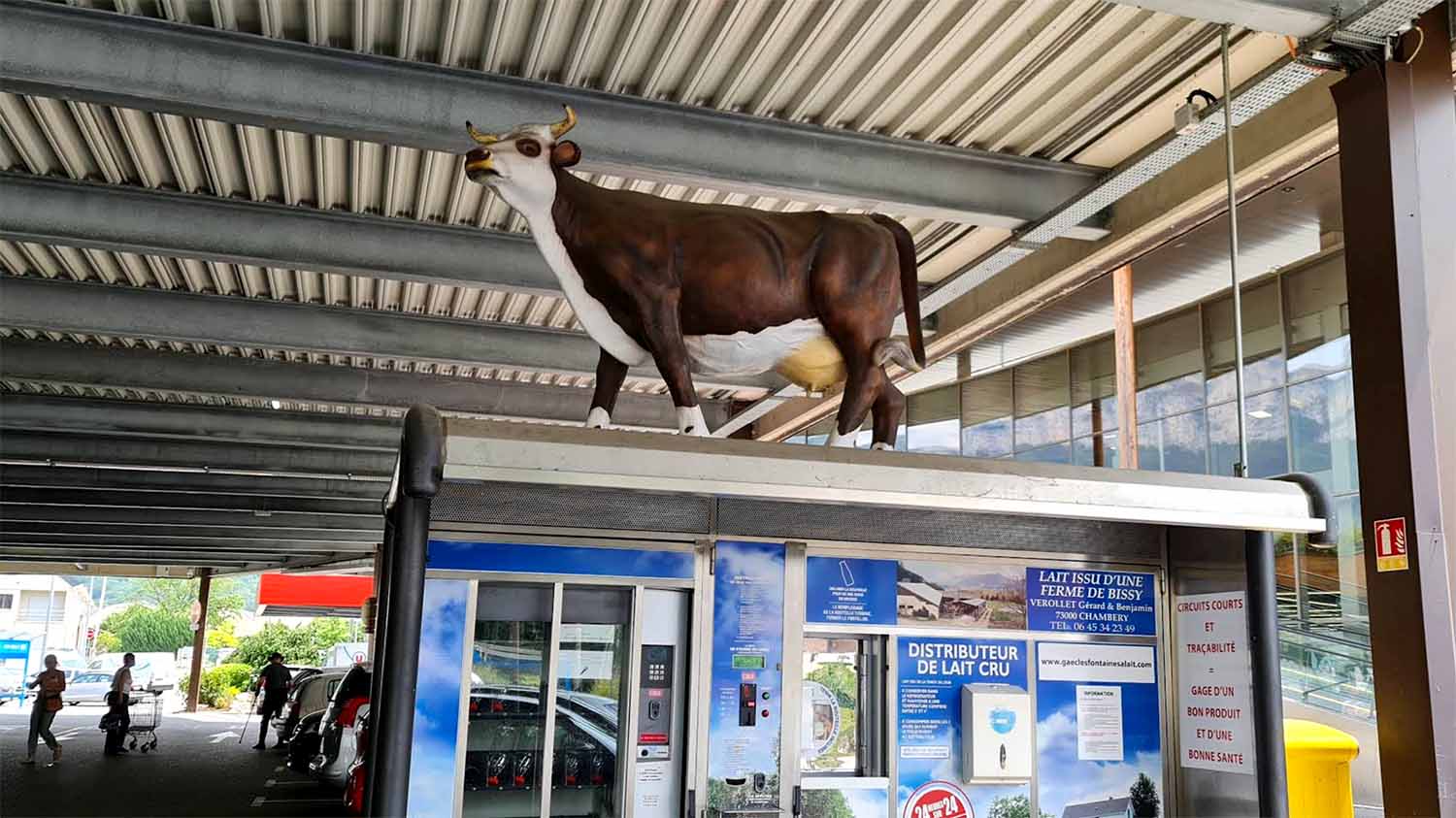
A distributeur de lait cru at a supermarket car park in La Ravoire, Savoie, supplied by Verollet farm in Bissy, Chambéry — demonstrating France's no-distance-limit placement rules.
Lait Cru in France: Raw Milk at the Farm Gate, the Vending Machine, and the Supermarket
Raw milk reaches French consumers through three legally distinct channels: direct farm gate sales, automated vending machines (distributeurs automatiques de lait cru), and packaged retail distribution in organic and specialist grocery stores. All three channels operate under the same governing regulation and share a single authorization requirement through the local préfecture.
Legal Framework: The Arrêté du 13 juillet 2012
France’s current raw milk framework took effect on October 1, 2012, when the Arrêté du 13 juillet 2012 entered into force. The regulation covers direct-to-consumer sales of raw milk from cattle (bovinés), small ruminants including goats and sheep (petits ruminants), and domestic equids including mares and donkeys (solipèdes domestiques). It replaced the older patente sanitaire (sanitary permit) system established by ministerial orders in August 1984 and August 1985, which were formally abolished by decree n°2012-842 of June 30, 2012.
Any producer wishing to sell raw milk directly to consumers must first obtain authorization from the préfet of their department using CERFA form n°14788. Authorization is granted without limitation on duration, volume sold, or distance from the producing farm (Mes Démarches / Ministère de l’Agriculture). This distinguishes France’s framework from Italy’s, which restricts machine placement to the same province or a neighboring province. A French machine can legally be installed at any distance from its farm of origin, provided the operator declares its location to the préfet of the département where it sits.
The arrêté requires producers to conduct regular microbiological self-monitoring. Article 8 sets a minimum sampling frequency of two tests per month for aerobic bacteria at 30°C when the farm also sells milk through conventional collection channels. Bulk raw milk, dispensed loose, may only be sold directly by the producer at the point of delivery, either in the consumer’s presence or through an automatic dispenser. Since 2012, bulk raw milk cannot be sold in retail shops. Packaged raw milk, sealed and labeled at the farm, may reach retailers under Article 6 of the arrêté. Vending machines are governed by Article 7.
Article 7 sets specific requirements for machines. Milk must be maintained between 0 and 4°C, with a documented exception permitting up to 6°C for a maximum of six hours under approved hygiene guidance. The milk in a machine must come from a maximum of two successive milkings. Each machine must display the operator’s contact details, conform to metrological and machine safety regulations, and carry a carnet métrologique (metrological record book) obtained from the manufacturer. Unsold milk remaining in the machine at end of day must be removed; it cannot be re-dispensed to consumers, but may be redirected to conventional dairy collection for industrial processing, subject to conformity verification (Coordination Rurale).
Packaged raw milk sold in retail carries a maximum shelf life (date limite de consommation) of J+3 days, where J is the date of the oldest milking included in the batch. Required label elements include: “Lait cru, à conserver à +4°C maximum,” the DLC, the producer’s prefectural authorization number, and the advisory: “faire bouillir avant consommation pour les personnes sensibles (jeunes enfants, femmes enceintes et personnes dont le système immunitaire est affaibli).”
Automated Dispensers: Types and Economics
French raw milk vending machines operate under several names: distributeur automatique de lait cru, fontaine à lait, or simply distributeur de lait. Government guidance accompanying the 2012 arrêté identifies three formats in use:
The fontaine à lait is the simplest format: a stainless steel container shaped like a traditional milk churn, filled at the farm with refrigerated milk and placed in a refrigerated display. Capacity is a few liters. The bag-in-box format uses disposable flexible pouches of 10 or 20 liters with a tap, enclosed in a cardboard casing for self-service display. Fully automated dispensers, produced by manufacturers including DF Italia, Brunimat, and the imported brand Lazzaroni, are the most capital-intensive format and the standard for permanent installation.
Michel Besnard, importer of the Lazzaroni brand, was the first to develop the French market for automated raw milk dispensers. By the time the French market entered a corrective phase following its 2009–2010 peak, he had sold 127 machines (web-agri.fr). The initial boom coincided with a severe European milk price crisis in which French farm-gate cooperative prices fell sharply. The French average conventional farm-gate price was approximately €0.47 per liter in 2024 (Agreste / FranceAgriMer, via Pleinchamp, February 2025). At the standard vending machine price of €1.00 per liter, direct sales return roughly double the cooperative rate per liter.
No aggregate national machine count has been published by any French government or industry body.
Price at French automated dispensers is approximately €1.00 per liter. Some operators offer rechargeable loyalty cards that reduce the unit price to approximately €0.86–0.91 per liter (web-agri.fr). For context, 90% of French liquid milk consumption is UHT semi-skimmed, which sells at substantially lower unit prices.
Packaged Retail: Lait Cru in Stores
The most widely distributed packaged lait cru in France is produced by La Maison Bernard Gaborit, a family dairy in Maulévrier, Maine-et-Loire, founded in 1979 by Bernard and Geneviève Gaborit. The operation combines its own organic farm with a network of local partner farmers across Maine-et-Loire, Vendée, and neighboring departments, all raising Jersey cows (vaches Jersiaises) under Bio Cohérence certification. The lait cru entier specifically comes from the Maulévrier farm; the broader 70-product range including yogurts and cheeses draws on partner milk as well. After milking, raw milk is cooled to 3°C and packaged without homogenization or heat treatment.
Bernard Gaborit distributes packaged lait cru entier through Biocoop, France’s leading organic grocery chain, and other specialist retailers, under the packaged retail channel authorized by Article 6 of the 2012 arrêté.
Vending machine locations, farm-gate sources, and retail stockists across France are mapped at raw milk in France. For terminology and label reading guidance, see Raw milk is lait cru in France.
For the regulatory contrast between France’s no-distance authorization and Italy’s province-restricted framework, see Italy’s Raw Milk Vending Machines: The Distributori di Latte Crudo. For a broader overview of raw milk vending across Europe, see Raw Milk Vending Machines in Europe.