Raw Milk Vending Machines in Europe: How Automated Farm Access Works
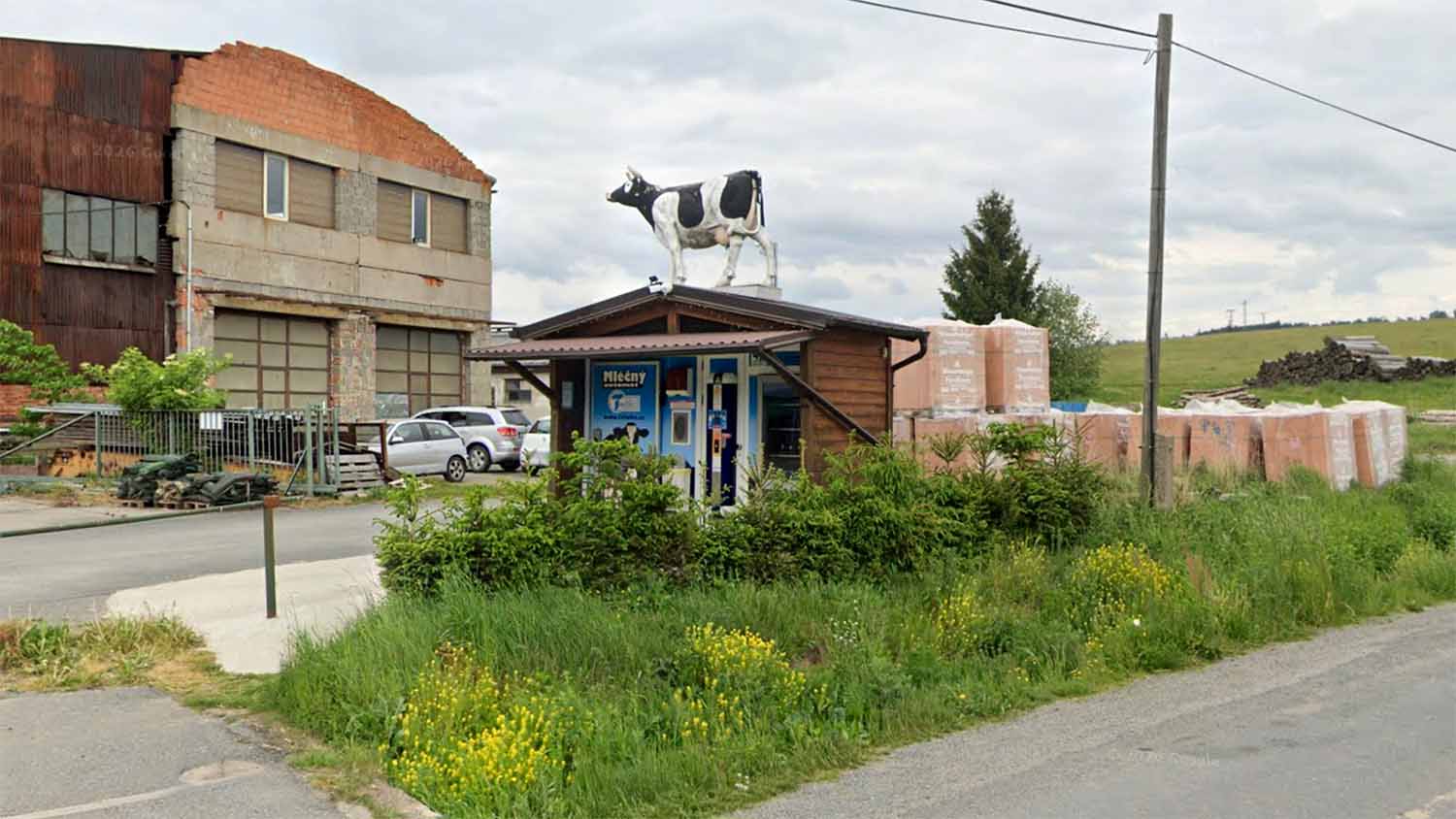
Raw milk vending machines have been operating across Europe for more than two decades, dispensing unpasteurized milk from farm tanks directly into the consumer’s container at farm gates, markets, petrol stations, and town squares. Most fully automated machines run 24 hours. All are attributed to a single named farm. Italy alone operated more than 1,000 as of 2017. Slovenia had approximately 70 by 2019. France, Switzerland, Austria, and the Netherlands each run networks of varying density. The regulatory frameworks governing them differ by country: some have detailed machine-specific legislation, others have no formal framework at all. The underlying principle is consistent: direct, traceable, unprocessed milk from producer to consumer without intermediary handling.
The EU Regulatory Framework
EU Regulation (EC) No 853/2004 establishes hygiene standards for food of animal origin across all member states but does not mandate pasteurization of milk sold for direct consumption. Article 10(8) of that regulation explicitly permits member states to maintain or establish national raw milk frameworks beyond the EU hygiene floor. No EU-level prohibition on raw milk vending machines exists. Each country writes its own rules, or chooses not to.
That flexibility has produced distinct national approaches. Italy created a detailed national machine framework in 2007. France legislated three distinct distribution channels in 2012 and specifies machine requirements in a dedicated article of its ministerial order. Switzerland operates approximately 400 machines with no specific regulatory authorization. The machines exist because the government holds authority to impose danger labeling and has simply not done so. Slovenia runs its mlekomat network with no specific national legislation at all, under general food safety responsibility principles.
| Country | Local name | Regulatory basis | Key distinction |
|---|---|---|---|
| Italy | Distributore di latte crudo | Intesa Stato-Regioni 2007 + Legge Balduzzi 2013 | Province placement restriction; red boiling advisory required |
| France | Fontaine à lait / distributeur automatique de lait cru | Arrêté du 13 juillet 2012, Article 7 | No distance limit; three legally distinct channels |
| Slovenia | Mlekomat | No specific legislation | General food safety principles; non-binding NIPH guidance |
| Switzerland | Milchautomat | No specific authorization | ~400 machines; government authority not invoked |
| Austria | Milchautomat / Rohmilchautomat | AGES inspection framework | 50,000 CFU/mL limit; stricter than Italy |
| Netherlands | Melktap | National framework | Monthly salmonella, campylobacter, STEC testing required from January 2025 |
| Germany | Milchautomat (mostly pasteurized) | State-level; Vorzugsmilchfor packaged retail | Most machines dispense pasteurized milk; search Rohmilch |
| England/Wales | Raw drinking milk (sealed bottles) | FSA registration | Predominantly sealed bottle sales; on-farm machines less common |
Italy
Italy’s raw milk vending machine network is the largest in Europe. Authorization came through the Intesa Stato-Regioniof January 25, 2007, codified permanently by the Legge Balduzzi implementing decree of January 29, 2013. The framework requires machines to maintain milk at 0–4°C, replace unsold milk within 24 hours, UV-sterilize or steam-jet the nozzle after each dispense, and display the warning “prodotto da consumarsi solo dopo bollitura” in red text at minimum 4cm height. Machines can be placed within the same province or a neighboring province from the producing farm. The network peaked above 1,400 machines in 2012 and stood at more than 1,000 as of 2017, concentrated in the Po Valley provinces but present throughout the country including Sicily and Sardinia.
Italy’s Raw Milk Vending Machines: The Distributori di Latte Crudo covers the full regulatory history, machine requirements, farm economics, and manufacturer context. Find raw milk sources in Italy at raw milk in Italy.
France
France is the only country in this cluster where raw milk reaches consumers through three legally distinct channels: farm gate sales, vending machines, and packaged retail distribution in organic and specialist grocery stores. All three operate under the Arrêté du 13 juillet 2012, which replaced a sanitary permit system dating to 1984. France imposes no distance limitation on machine placement. A machine can legally be installed at any distance from the producing farm, in contrast to Italy’s province restriction. Machine-specific requirements are in Article 7 of the arrêté; packaged retail in Article 6.
Lait Cru in France: Raw Milk at the Farm Gate, the Vending Machine, and the Supermarket covers the regulatory framework, machine types, and retail distribution in detail. Find raw milk sources in France at raw milk in France.
Slovenia
Slovenia’s mlekomati (singular: mlekomat) have attracted academic attention in European food safety research. A 2017 study in the British Food Journal sampled 17 machines across the country. The network began around 2009 and grew to approximately 70 machines by 2019. No specific national legislation governs them; machines operate under general food safety responsibility principles, with the National Institute of Public Health issuing a non-binding recommendation that consumers heat-treat the milk. The economic driver is direct: farmers receive 100% of the machine price per liter versus approximately 30% of the consumer price through conventional merchant channels. Three mlekomats operate 24/7 in Ljubljana: at Tržnica, Šmartinska c. 45, and Dolnice.
How Slovenia’s Dairy Farmers Cut Out the Middleman With Raw Milk Vending Machines covers the economics, regulation, and current Ljubljana machine locations. Find raw milk in Slovenia at raw milk in Slovenia.
Switzerland and Austria
Switzerland operates approximately 400 raw milk vending machines despite federal food law technically requiring pasteurization of all milk sold for consumption. The machines exist through a regulatory absence: Article 13 of Switzerland’s Federal Law on Foodstuffs gives the government authority to impose danger labeling on specific food products, but that provision has never been invoked for raw milk. Machines operate by informing consumers of storage conditions and heating requirements. The Swiss market is served primarily by Brunimat GmbH, the St. Gallen manufacturer founded in 1994 that was the first European producer of raw milk vending machines.
Austria regulates machines through AGES (the Austrian Agency for Health and Food Safety), requires the label “Raw milk, boil before consumption,” and sets a bacterial limit of 50,000 CFU/mL, stricter than Italy’s 100,000 CFU/mL threshold. Austrian machines operate 24 hours, typically at farm gates and in Hofläden alongside eggs, cheese, and seasonal produce.
Raw Milk by the Liter: Switzerland and Austria’s Vending Machine Culture covers both countries’ regulatory approaches and machine economics. Find raw milk in Switzerland at raw milk in Switzerland and in Austria at raw milk in Austria.
The Netherlands
Dutch raw milk dispensers are called melktaps (milk taps) and are widespread at farm gates and village outskirts. From January 2025, producers must test raw milk monthly for salmonella, campylobacter, and STEC, an increase from the previous quarterly salmonella and twice-yearly Staphylococcus aureus requirements (Netherlands begins monthly testing of raw milk). Some operators are weighing a shift toward sealed bottled sales to reduce food loss from the open-dispenser format. Consumers bring reusable glass bottles and dispense on demand. Find raw milk in the Netherlands at raw milk in the Netherlands.
Germany, England, and Other Markets
Germany has raw milk vending machines, but most Milchautomaten in Germany dispense pasteurized fresh milk rather than raw. Germany’s raw milk retail channel operates primarily through Vorzugsmilch (certified raw milk), a packaged product sold in licensed stores after monthly veterinary inspection, not through bulk dispensers. Raw milk bulk dispensers exist on some German farms but are a small subset of the country’s Milchautomat infrastructure. Search terms for raw milk specifically: Rohmilch alongside Milchautomat or hofverkauf. Find raw milk in Germany at raw milk in Germany.
England and Wales permit raw milk sales from FSA-registered producers. Unlike the continental dispenser model, UK raw milk is predominantly sold in sealed bottles at farm gates, farm shops, farmers’ markets, and via farm delivery rounds. On-farm vending machines exist but are not the primary format. Off-farm machine placement remains legally uncertain. Scotland bans raw milk sales entirely. Find raw milk in the UK at raw milk in the UK.
Other European markets with documented raw milk machine presence include Croatia, the Czech Republic, Slovakia, Romania, Belgium, and Ireland, each operating under country-specific frameworks of varying formality. Availability and specific requirements vary by country.
No raw milk machines: Scotland (banned since 1983), Norway (farm dispensers exist but dispense pasteurized milk only). Spain: Spain’s national framework (Real Decreto 1086/2020) authorizes packaged raw milk direct sales but does not authorize automated machine dispensing. Catalonia’s Decreto 163/2018 specifically authorizes automated machines alongside farm gate and retail channels. Raw milk cheeses are available across Spain regardless of region. For a full account of how the Spanish and Catalan frameworks differ, see Raw Milk in Spain: Leche Cruda, the National Framework, and the Catalan Exception.
Manufacturers
The two dominant European manufacturers are DF Italia S.r.l., founded in 2004 in Sandrigo, Vicenza, and Brunimat GmbH, founded in 1994 in St. Gallen. Brunimat was the first European manufacturer of raw milk vending machines and produces exclusively in Switzerland. DF Italia machines are installed across Italy, Slovenia, Ireland, New Zealand, and dozens of other markets; their range runs from 100-liter starter units to modular systems exceeding 1,800 liters. Both manufacturers supply machines for cow, goat, sheep, and buffalo milk.
Further Reading
For a detailed explanation of how the machines function mechanically, see How a Raw Milk Vending Machine Works.
For practical guidance on finding machines while traveling across Europe, see How to Find a Raw Milk Vending Machine in Europe.
For the structural reasons why no equivalent network exists in the United States, see Why Europe Has Raw Milk Vending Machines and the US Doesn’t.