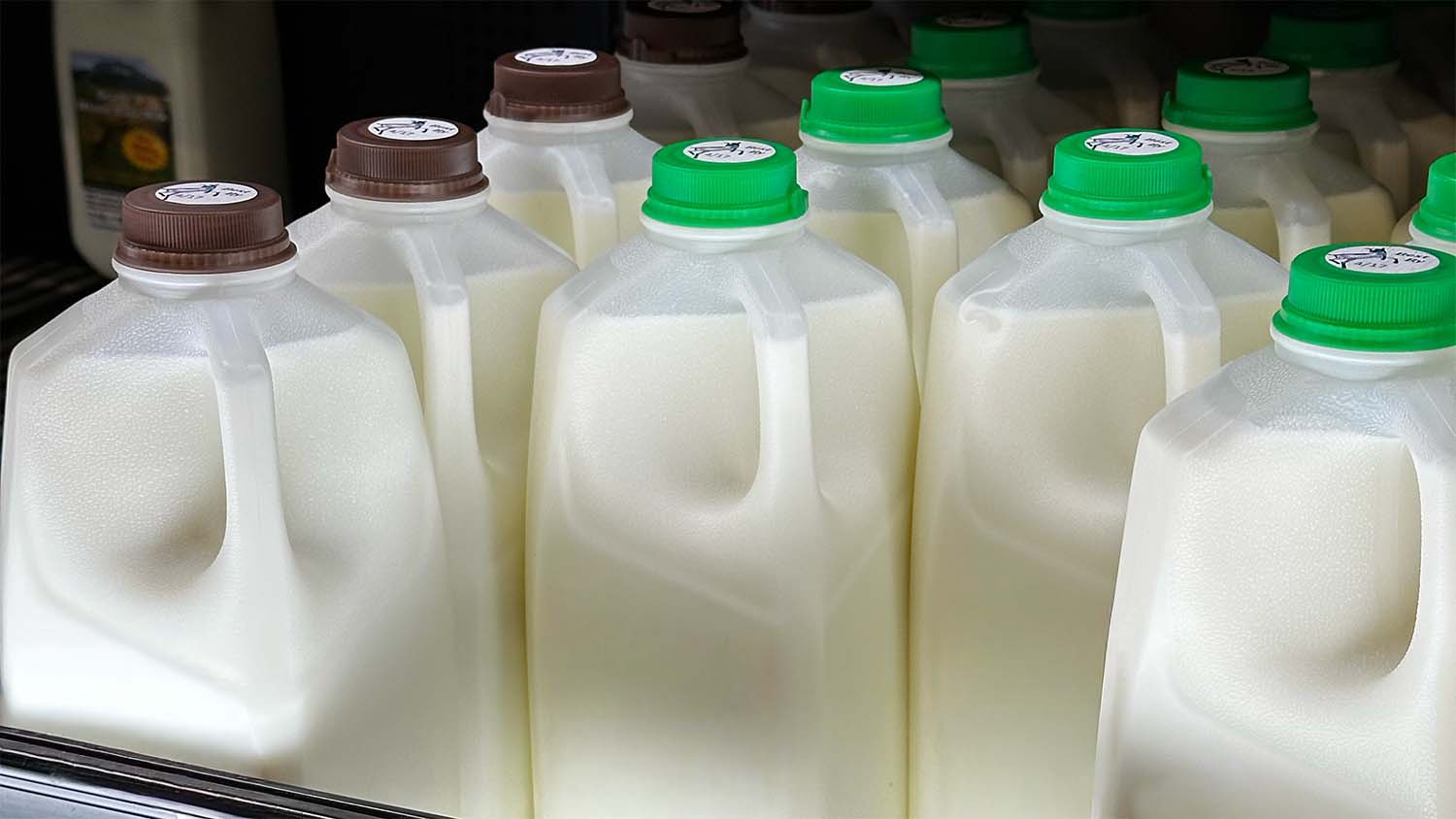
Getting raw milk cold quickly and keeping it consistently refrigerated are two of the most controllable factors in how long it stays at its best.
How Long Does Raw Milk Last? A Complete Storage Guide
There’s no single number that answers this honestly. How long raw milk stays at its best depends on how it started, how it’s been handled, and what temperature it’s been living at since it left the farm. What follows pulls together the research on all three of those factors into one practical reference, so you can store your milk well and know what you’re actually looking at when it starts to change.
The Quick Answer
- Raw milk of high starting quality can hold up for as long as 17 days under proper refrigeration before noticeable quality decline sets in. Lower-quality milk, or milk that’s already had a rough handling history, will turn faster than that.
- Quality decline isn’t a switch that flips on a fixed day. Cold-tolerant bacteria continue growing slowly even in a properly maintained refrigerator, so milk is always somewhere on a gradual curve, not sitting still until a deadline.
- Fast cream separation in the fridge is normal, not a warning sign. It’s driven by a specific, well-documented immune mechanism, not spoilage.
- A rancid or “off” smell and a sour, thickening smell are two different things with two different causes: rancidity comes from fat breakdown, souring comes from natural fermentation, and only one of them means something has gone wrong. More detail on telling these apart is below.
- An unusual, garlicky, or oniony flavor present right from the start of a fresh container usually isn’t a storage issue at all, it traces back to what the cow ate before milking.
- Setting your fridge just above freezing, rather than standard refrigerator temperature, measurably slows structural degradation compared to typical refrigeration.
- Freezing works for long-term storage but changes the milk’s structure in ways that don’t reverse on thawing.
What Determines How Long Your Milk Lasts
Starting quality is the single biggest variable, and it’s mostly set before the milk ever reaches your fridge. Research on refrigerated raw milk found that milk starting with a low initial load of spoilage microorganisms can hold up for as long as 17 days before quality noticeably declines, while lower-quality milk degrades much faster on the same refrigerator shelf. This comes down to a specific group of cold-tolerant bacteria, called psychrotrophic bacteria, that are capable of slowly growing even at refrigerator temperatures. A four-farm study found their populations increased within just 24 hours of refrigeration, and the enzymes they produce along the way are frequently heat-stable enough to matter even after any later heat treatment. The practical upshot: two jugs of milk sitting at the identical fridge temperature can age at meaningfully different rates depending on what was already present in the milk on day one.
Storage temperature is the second major lever, and it’s the one you actually control. Refrigeration slows psychrotrophic bacterial growth without stopping it, and that holds true even in a properly maintained cold chain with no temperature breaks. Colder settings within a safe range consistently correspond to slower decline across the research this site has reviewed.
How quickly the milk was chilled after milking, before it ever reached you, also plays a real role. The Raw Milk Institute recommends chilling raw milk to 35-40°F within one hour of milking, specifically to limit how much time any bacteria present have to multiply before the cold slows them down. This is a farm-side practice rather than something you can control after purchase, but it’s part of why milk from different sources, or even different batches from the same source, can start its shelf-life clock in noticeably different places.
How to Store Raw Milk for Maximum Freshness
- Keep it cold, consistently. Standard refrigeration (roughly 35-40°F) is the baseline, but going slightly colder helps. Research on milk storage temperatures found that conditions just above freezing preserved structural integrity better than standard refrigeration, without the damage that comes from milk actually reaching a hard freeze. If your fridge has adjustable zones or a dedicated coldest shelf, that’s the spot for raw milk.
- Minimize time outside the fridge. This isn’t unique to raw milk, it’s standard food safety guidance for any dairy product: the USDA defines 40°F to 140°F as the “danger zone” where bacteria can double in as little as 20 minutes, and recommends not leaving perishable dairy out for more than 2 hours (1 hour if the room is above 90°F). Every trip to the counter for a pour adds up.
- Avoid unnecessary agitation. Raw milk’s own native fat-digesting enzyme is normally kept away from the fat it would otherwise break down by an intact membrane around each fat globule. Heavy shaking or aggressive pumping damages that membrane and can trigger faster fat breakdown. A gentle pour or swirl to redistribute settled cream is fine; vigorous shaking isn’t necessary and doesn’t help.
- Get it cold quickly after pickup. Since psychrotrophic bacterial growth measurably accelerates within the first 24 hours of refrigeration, minimizing the time between leaving the farm or store and getting the milk properly cold is one of the more controllable variables in the whole process.
- Store it toward the back of the fridge, not the door. The door is the warmest, most temperature-variable part of most refrigerators, exactly the opposite of what raw milk benefits from.
Signs Your Milk Is Changing
Not every change in raw milk means something has gone wrong. A few things worth being able to tell apart:
Fast cream separation is normal, and it’s actually a sign of an intact, functioning immune mechanism, not a problem. Raw milk contains an antibody, IgM, that forms a complex with lipoproteins at cold temperatures and clusters fat globules together, causing cream to rise noticeably faster than simple density differences would explain on their own. Cold agglutination has been directly visualized in laboratory research and is sharply temperature-dependent, most active in the same range as a typical refrigerator. Seeing cream separate within 20 to 30 minutes of refrigeration is expected behavior, not spoilage.
A rancid, soapy, or bitter off-flavor points to fat breakdown, either from the milk’s own native enzyme or from bacterial activity. Cooling alone can trigger this in individual cows’ milk that happens to be prone to it, without any bacterial involvement or physical damage, a phenomenon called spontaneous lipolysis. Separately, cold-tolerant bacteria produce their own heat-stable enzymes during storage that can cause similar bitterness or off-flavor over time. Either way, this is a genuine quality issue, not something to work around.
Sour taste and thickening, souring or clabbering, is a different process entirely: natural fermentation. Lactic acid bacteria already present in the milk multiply and produce lactic acid, which is what causes the sour taste and thicker texture. This is documented, measurable microbiology, not simple decay, and some people intentionally let milk reach this stage rather than treating it as waste (more on that below). Natural souring is not, however, a guaranteed safety mechanism. Research on this exact question found real, specific limits, and this article is not a substitute for reading that research directly if you want the full picture before deciding what to do with soured milk.
A garlicky, onion-like, or otherwise unusual flavor present from the moment you open a fresh container isn’t a storage issue at all, it’s a feed-related flavor. Strong-flavored plants a cow eats can transfer directly into milk through the animal’s bloodstream, particularly wild onion, garlic, and certain weeds, and can be detectable within 15 to 30 minutes of the cow eating them. This is why farms commonly hold cows off pasture for several hours before milking. If a fresh batch tastes unusual right out of the gate rather than developing that flavor over days in your fridge, feed is a more likely explanation than anything covered above.
Extending Shelf Life Beyond the Fridge
When you’re not going to use milk before quality starts to decline, there are a few directions to go instead of letting it sit.
Freezing is the most straightforward option, and it does work for extending storage time, but it isn’t a neutral pause button. Ice crystal formation damages the fat globule membrane during freezing, and how much damage occurs depends heavily on freezer temperature and thawing method. If you’re considering this route, a dedicated guide on freezing raw milk covers the specifics, along with alternatives for situations like an inconsistent supply schedule or a seasonal dry spell from your farm.
Intentional fermentation turns the natural souring process described above into a feature rather than something to avoid. Raw milk kefir, in particular, can be kept in the fridge for months once started, far longer than fluid milk, and some people prefer it more sour rather than less. The same freezing guide above covers kefir, along with soft cheese and butter as traditional, non-freezing ways to preserve raw milk’s benefits over a period of months.
Cooking with milk that’s started to sour is another straightforward option that doesn’t require starting a new fermentation project. Soured milk works in place of buttermilk in most recipes, pancakes, biscuits, and quick breads among them, so milk that’s past its best for drinking still has a clear use rather than going to waste.
Using it while it’s still at its best is, of course, the option that requires no extra process at all. Matching how much you buy to how much you’ll realistically use before quality starts shifting avoids the question altogether.
Frequently Asked Questions
How long does raw milk last in the fridge? It depends heavily on starting quality, but research on refrigerated raw milk found that high-quality milk can maintain good sensory quality for as long as 17 days, while lower-quality milk will decline faster on the same timeline. There’s no single fixed expiration point that applies to all raw milk equally.
Why does the cream separate so fast in my raw milk? This is a normal, well-documented immune mechanism called cold agglutination, not a sign of spoilage. An antibody naturally present in milk clusters fat globules together at cold temperatures, causing visibly faster creaming than density alone would explain.
Is it normal for raw milk to smell or taste different after a week or two? Some gradual change is expected and doesn’t necessarily mean the milk is unsafe or unusable; it’s a sign that cold-tolerant bacteria and native enzymes have continued their slow activity even under refrigeration. A genuinely rancid or bitter off-flavor, though, is a real quality issue worth taking seriously rather than ignoring.
What’s the difference between milk going bad and milk souring naturally? Rancidity, from fat breakdown, is generally considered a quality defect. Souring or clabbering, from natural lactic acid fermentation, is a different, well-documented process that some people intentionally use rather than avoid, though it isn’t a guaranteed safety mechanism on its own.
Does the temperature I set my fridge to actually matter? Yes, meaningfully. Research found that storage conditions just above freezing preserved milk’s structural integrity better than standard refrigerator temperatures, without the damage that comes from an actual hard freeze.
Should I shake raw milk to remix the cream? A gentle swirl or pour is fine. Avoid vigorous, prolonged shaking specifically, since physically agitating raw milk can damage the fat globule membrane and trigger faster fat breakdown through the same mechanism responsible for some cases of rancidity.
Can I freeze raw milk to make it last longer? Yes, and it’s a workable option, but freezing causes real, measurable structural changes from ice crystal formation. If freezing regularly, colder freezer temperatures and slower, controlled thawing both help minimize the damage.
Is soured raw milk safe to drink? This site has a dedicated article specifically on that question, since the honest answer is more nuanced than a simple yes or no, and depends on specifics this guide doesn’t cover in full. Worth reading directly rather than assuming either way.
Why does my raw milk sometimes taste like garlic or onion? This is almost always a feed-related flavor, not a storage or spoilage issue. Strong-flavored plants a cow eats can transfer directly into milk within 15 to 30 minutes, which is why the flavor tends to show up right away in a fresh container rather than developing gradually in the fridge.