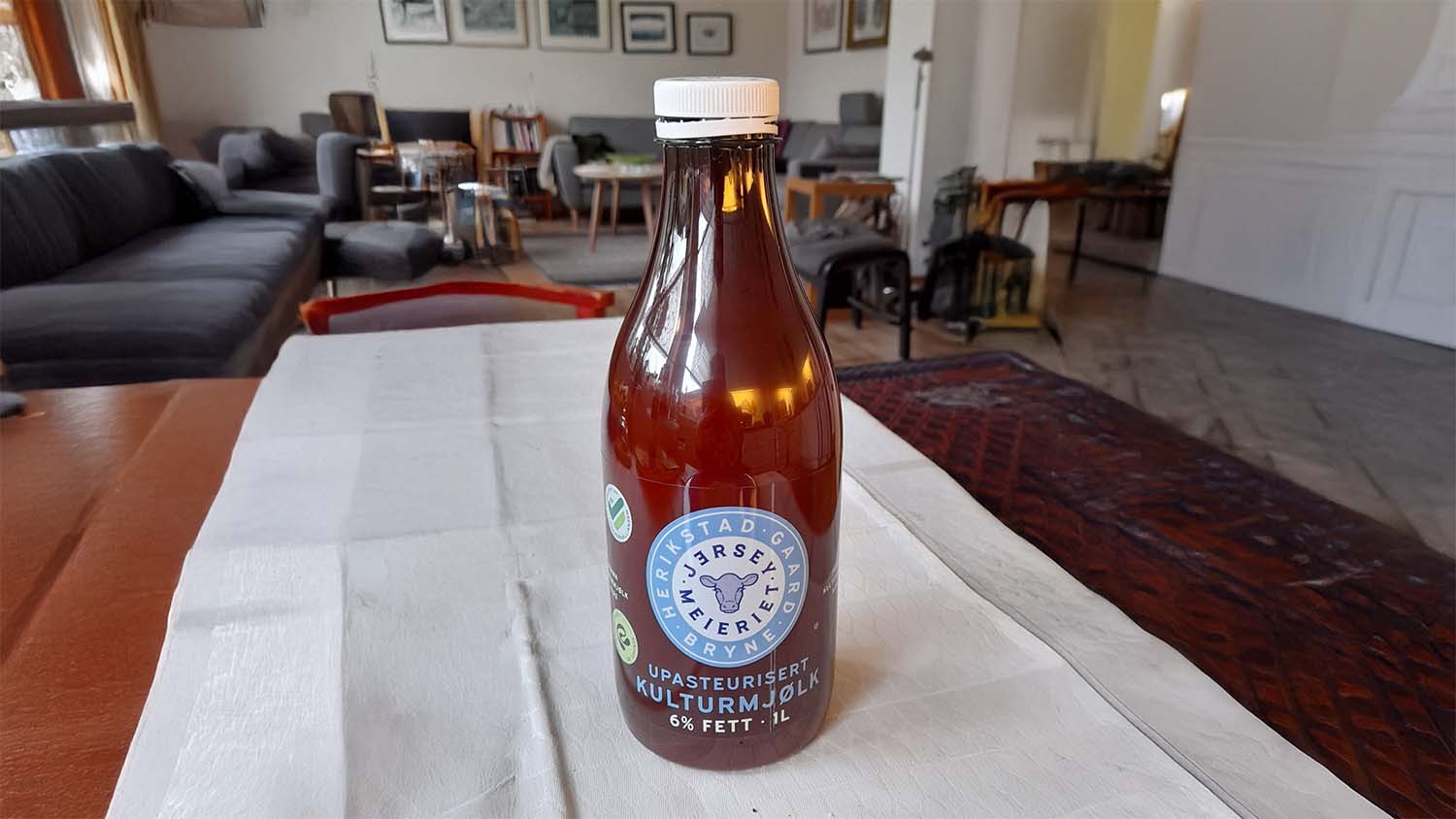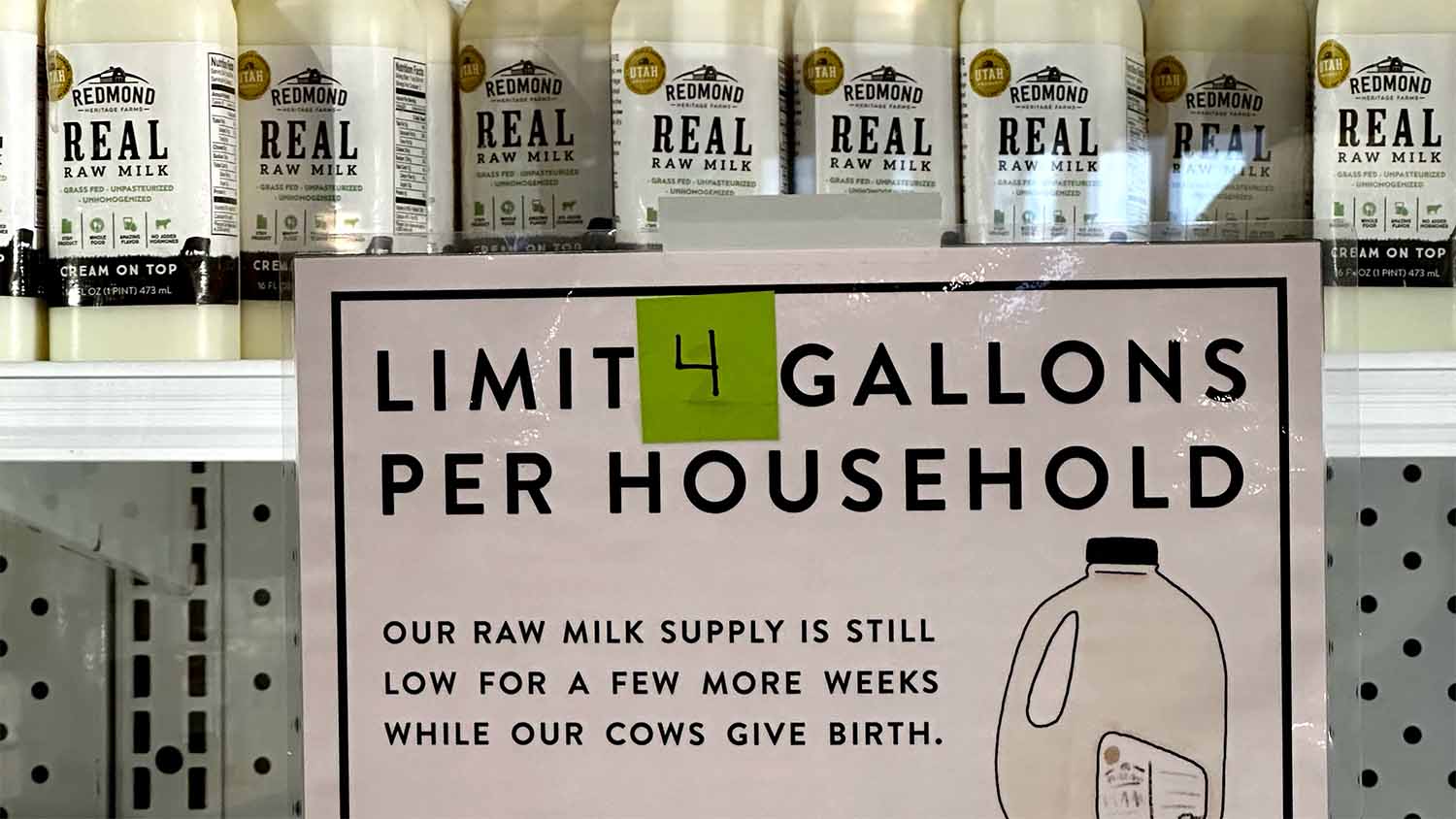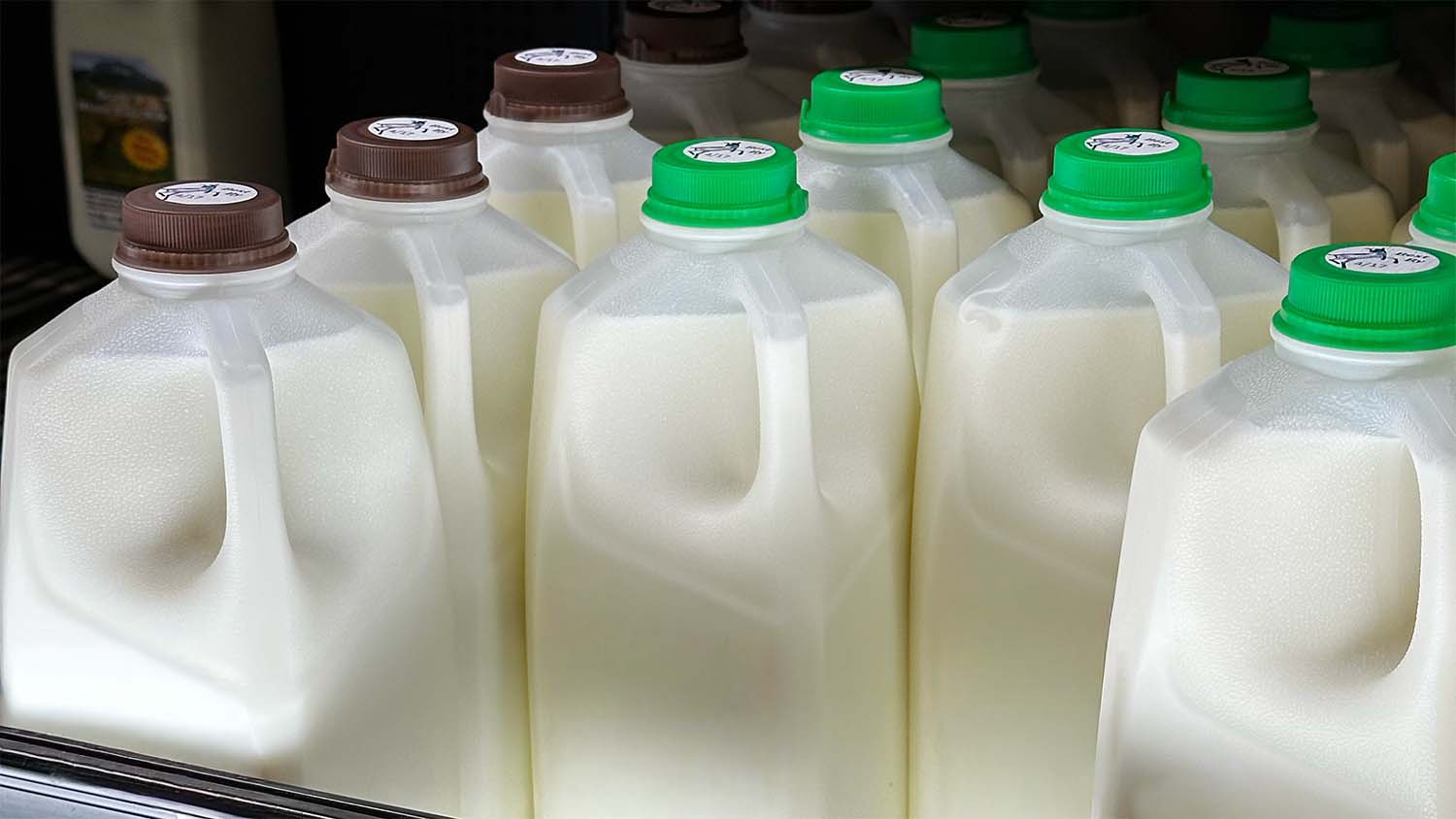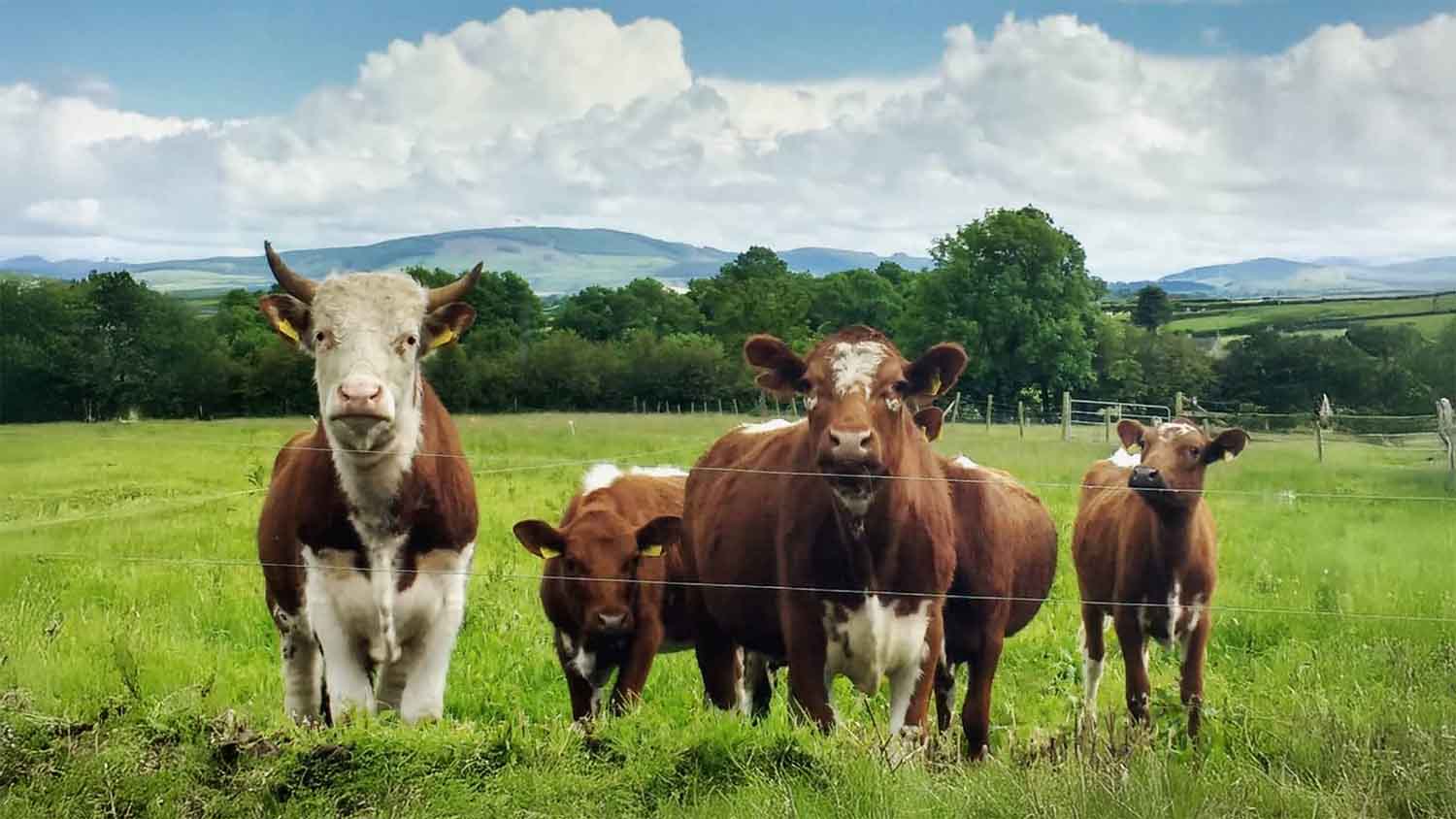
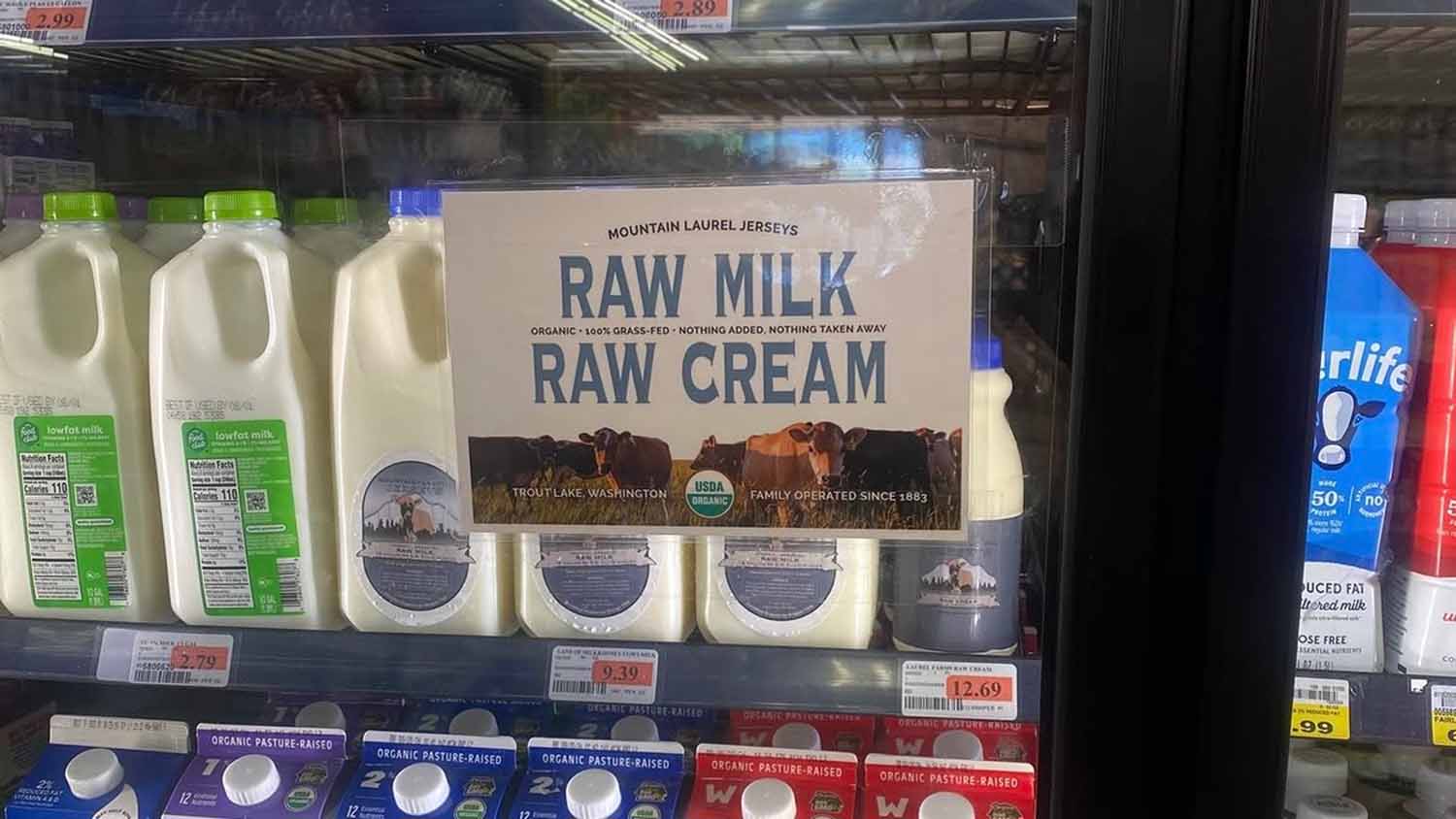
Raw milk and raw cream from a single farm, sold side by side in a licensed retail dairy case.
What Is Raw Milk? A Complete Beginner’s Guide
Raw milk is milk that hasn’t been pasteurized, homogenized, or otherwise processed to alter its composition or eliminate its natural microbial content. It comes directly from a dairy animal, gets filtered and cooled, and reaches the consumer without undergoing any of the treatments applied to the milk sold in most grocery stores. This guide covers what that actually means, where raw milk comes from, how it’s typically sold, and where to go on this site for a deeper answer to any specific question.
What “Raw” Actually Means
The defining line isn’t heat specifically, it’s any deliberate process aimed at chemically altering the milk or eliminating its natural biological content. Raw milk hasn’t undergone:
- Pasteurization, heating to a specific temperature for a set time to kill pathogens and inactivate certain native enzymes
- Homogenization, mechanically forcing milk through small openings under high pressure to break up and evenly disperse fat globules
- High-pressure processing (HPP), a non-thermal method that uses extreme pressure rather than heat to reduce microbial content
- UV treatment or any other method specifically designed to reduce pathogen load or otherwise change the milk’s composition
Any one of these takes milk out of the “raw” category, regardless of how mild or “natural” the specific method is marketed as being.
Simple handling doesn’t cross that line, even though handling isn’t perfectly neutral either. Milking, filtering to remove physical debris, and cooling for storage are all standard parts of getting raw milk from the animal to the consumer, and none of them are considered processing in the sense that disqualifies milk from being raw. Cooling raw milk does cause real, measurable changes, though, just not the kind that define “raw” versus “not raw.”
Research on this site documents several of these changes directly. Cold temperatures cause a specific antibody-lipoprotein complex to cluster milk fat globules together, which is why cream separates faster in a cold refrigerator than simple physics alone would predict. One of milk’s major casein proteins physically leaves its usual position within the casein micelle structure when milk drops below about 10°C, a change that’s fully reversible once the milk warms back up. In some individual cows’ milk, simply cooling it can activate a native enzyme and begin breaking down fat, without any bacteria or physical damage involved.
None of this makes cooled milk “not raw.” The distinction isn’t whether anything has changed, since milk is a biologically active fluid and something is always in motion at a molecular level, even sitting in a refrigerator. The distinction is whether a process was deliberately applied to alter the milk’s composition or eliminate its microbial content the way pasteurization, homogenization, and HPP specifically are designed to do. Cooling is passive handling that happens to have measurable side effects; pasteurization is an intentional treatment built specifically to change what’s in the milk.
Where Raw Milk Comes From
Raw milk is most commonly associated with cows, but a range of other dairy animals are milked for raw consumption as well, each with a somewhat different market and, in some cases, different regulatory treatment. Cow milk is by far the most widely available, followed by goat milk and sheep milk. Less commonly, donkey milk, camel milk, and buffalo milk are also sought out, often for specific culinary uses or because of interest in their distinct compositions.
Within cow milk specifically, A2 milk has become a notable subcategory. This refers to milk from cows that produce only the A2 form of beta-casein protein, rather than the more common A1 form found in most conventional dairy herds. The distinction between A1 and A2 beta-casein is a real, measurable genetic difference in the protein itself, and it’s a separate question from whether milk is raw or pasteurized; A2 milk can be either.
Common Forms Beyond Fluid Milk
Raw milk isn’t only sold as fluid milk in a bottle. A range of traditional dairy products are made from raw milk using processes that don’t involve pasteurization, and each has its own market and, often, its own specific regulatory treatment.
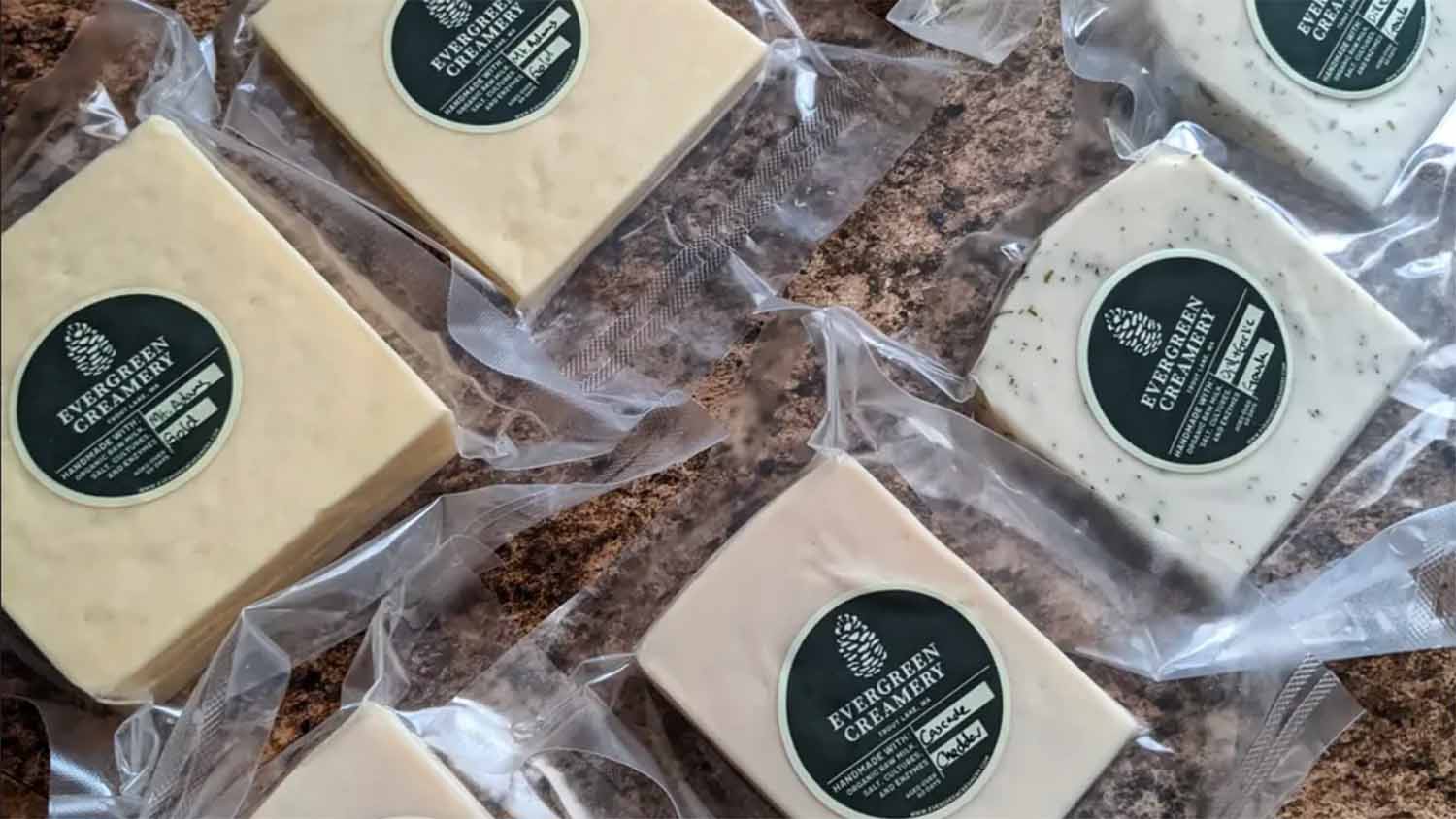
Raw cheese is one of the most established categories; in the United States, cheese made from unpasteurized milk and aged at least 60 days at a specific temperature is legally distinct from fluid raw milk and more widely available across state lines under federal rules. Raw butter and raw cream are made by separating and churning fat from raw milk without a heat step. Raw kefir, a fermented milk drink, uses live cultures to sour and thicken raw milk deliberately, distinct from the unwanted spontaneous fermentation of milk sold as fluid milk that’s simply been left to sit. Raw milk ice cream exists in a smaller specialty market. Some farms selling raw milk also sell farm fresh eggs as a related product line.
How Raw Milk Compares to Pasteurized Milk
Pasteurization changes some components of milk measurably and leaves others essentially unaffected; there isn’t one single answer that applies across the board. A complete, component-by-component comparison covering 14 separately researched findings, enzymes, proteins, vitamins, minerals, and more, walks through exactly what changes and what doesn’t, with each finding linked to its own dedicated research article. One common claim deserves a direct correction here: some official sources describe pasteurization as having no meaningful effect on milk’s nutrient content, but the underlying vitamin research doesn’t fully support that as a blanket statement, several vitamins show statistically significant decreases while others are unaffected or even increase slightly. That nuance is covered in full in the comparison piece rather than repeated here.
Storage and Shelf Life
Raw milk doesn’t have a single fixed shelf life; it depends heavily on starting quality and how it’s stored. A complete guide to how long raw milk actually lasts, how to store it well, and how to tell normal changes apart from real spoilage, covers this in depth, including the counterintuitive finding that fast cream separation in the fridge is a normal immune-related process, not a sign anything has gone wrong. Freezing is also an option for longer-term storage, though it causes its own distinct structural changes worth understanding before relying on it regularly.
Is Raw Milk Safe?
This is a genuinely nuanced question with real data on both sides, not a simple yes or no. A full treatment of the safety question covers illness and hospitalization rates, what’s actually known about deaths, current public health guidance stated directly, and how outbreak risk tends to concentrate at specific sources rather than being spread evenly across all raw milk everywhere. That article is the right place to go for a complete picture; this guide won’t attempt to compress it into a paragraph.
Is Raw Milk Legal?
Legal status varies significantly by country and, within the US, by state. In the United States specifically, federal law prohibits interstate sale of raw milk for direct human consumption, but individual states set their own rules for sales within their borders, and roughly three in five currently allow some form of legal access. A complete breakdown of the specific legal pathways, licensed retail sale, sale labeled for pet consumption, and herdshare or cowshare arrangements, along with an interactive map of legal status by state and by country worldwide, covers this territory in full.
How People Actually Access Raw Milk
Depending on where you live, raw milk might be available directly on a store shelf, or it might require a different kind of arrangement entirely.
Licensed retail sale is the most straightforward model where it’s legal: raw milk is sold in stores or directly by the farm the same way any other product would be, under a state license and testing regime.
Herdshares and cowshares are a legal workaround used in some states where direct retail sale isn’t permitted. Under this model, a consumer buys partial ownership of a specific dairy animal or herd, and what they receive isn’t technically a sale of milk, it’s their own animal’s milk, which they already own a share of.
Farm-direct arrangements, sometimes called “farm gate” sales, involve buying directly from the farm rather than through any retail intermediary, which is the primary legal access model in some states.
The specific rules governing which of these are available, and under what conditions, vary enough by location that the dedicated legal guide is a better resource than a general summary here.
Where to Start Looking
Once the basics make sense, finding an actual source is the next step. Search by location to find farms and retailers near you, or use the interactive world map to explore what’s available more broadly. Browsing by country is useful for travelers or anyone researching access outside their home country specifically. A dedicated guide to evaluating any specific farm or source covers what to actually look for once you’ve found some options.
Frequently Asked Questions
What exactly makes milk “raw”? Raw milk hasn’t undergone pasteurization, homogenization, high-pressure processing, UV treatment, or any other process specifically designed to alter its composition or reduce its microbial content. Standard handling like filtering and cooling doesn’t disqualify it, even though cooling alone does cause some measurable structural changes.
Does cooling raw milk make it not raw anymore? No. Cooling causes real, documented changes, faster cream separation, a shift in where one casein protein sits within its structure, and in some cows’ milk, the start of a native enzyme’s activity, but these are passive responses to temperature, not a deliberate process aimed at altering the milk’s composition the way pasteurization or homogenization are.
What animals produce raw milk? Cows are the most common source, followed by goats and sheep. Donkey, camel, and buffalo milk are also available in smaller, more specialized markets.
Is raw milk cheese the same as raw fluid milk, legally? No. In the United States, cheese made from raw milk and aged at least 60 days is treated differently under federal law than fluid raw milk, and can legally cross state lines in a way fluid raw milk cannot.
What’s the difference between A2 milk and raw milk? They’re separate categories that can overlap. A2 refers to a specific form of beta-casein protein some cows produce exclusively; raw refers to processing status. Milk can be A2 and raw, A2 and pasteurized, conventional (A1/A2 mixed) and raw, or conventional and pasteurized.
How do I know if raw milk is legal where I live? Legal status varies by country and, within the US, by state, and depends on the specific access model (retail sale, herdshare, farm-direct). A dedicated legal guide and an interactive map covering worldwide legal status are the best places to check current rules for a specific location.
Is raw milk nutritionally different from pasteurized milk? In some specific, measurable ways, yes; in others, no meaningful difference has been found. A full component-by-component comparison covers exactly which nutrients and compounds are affected by pasteurization and which aren’t.