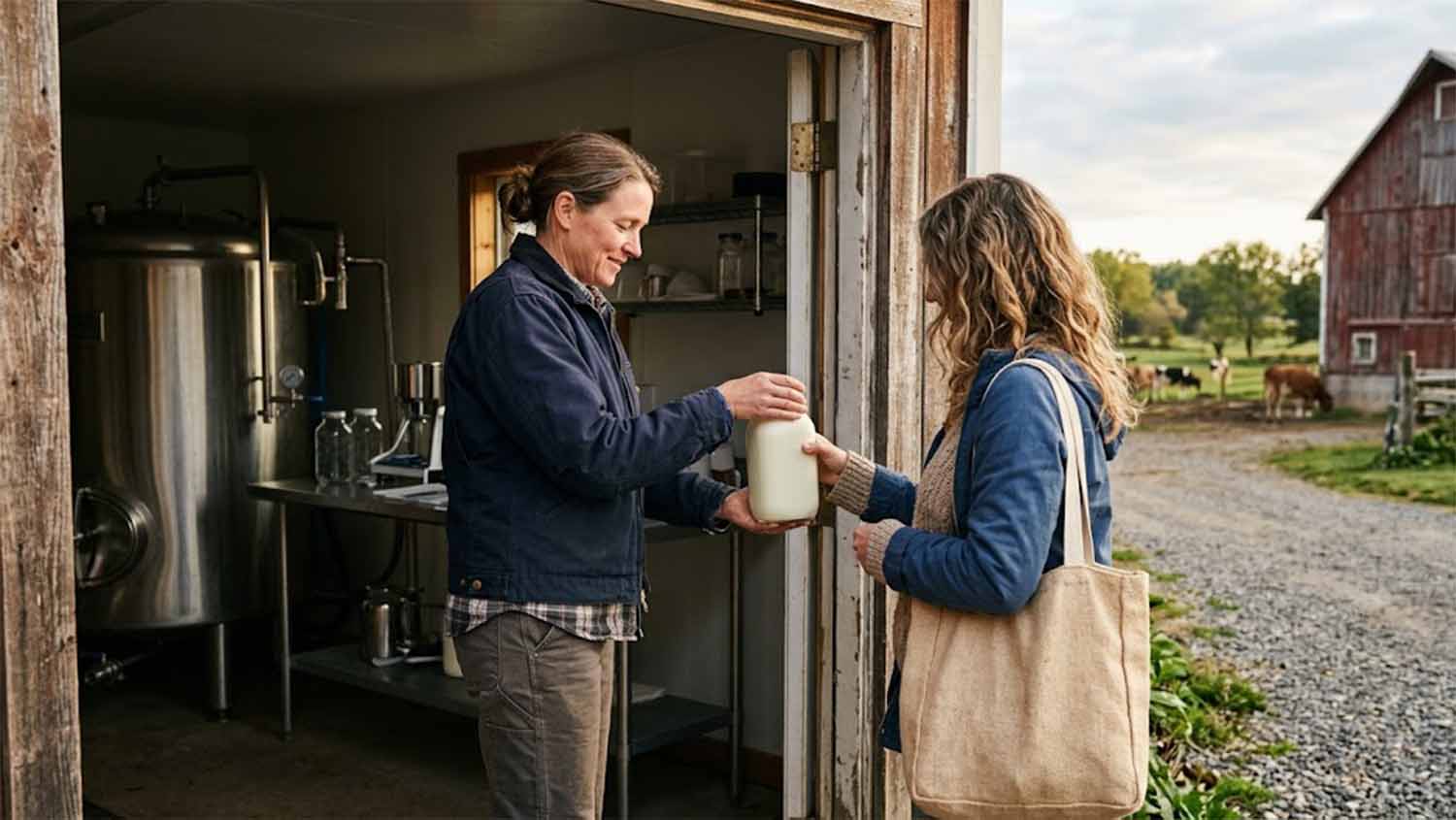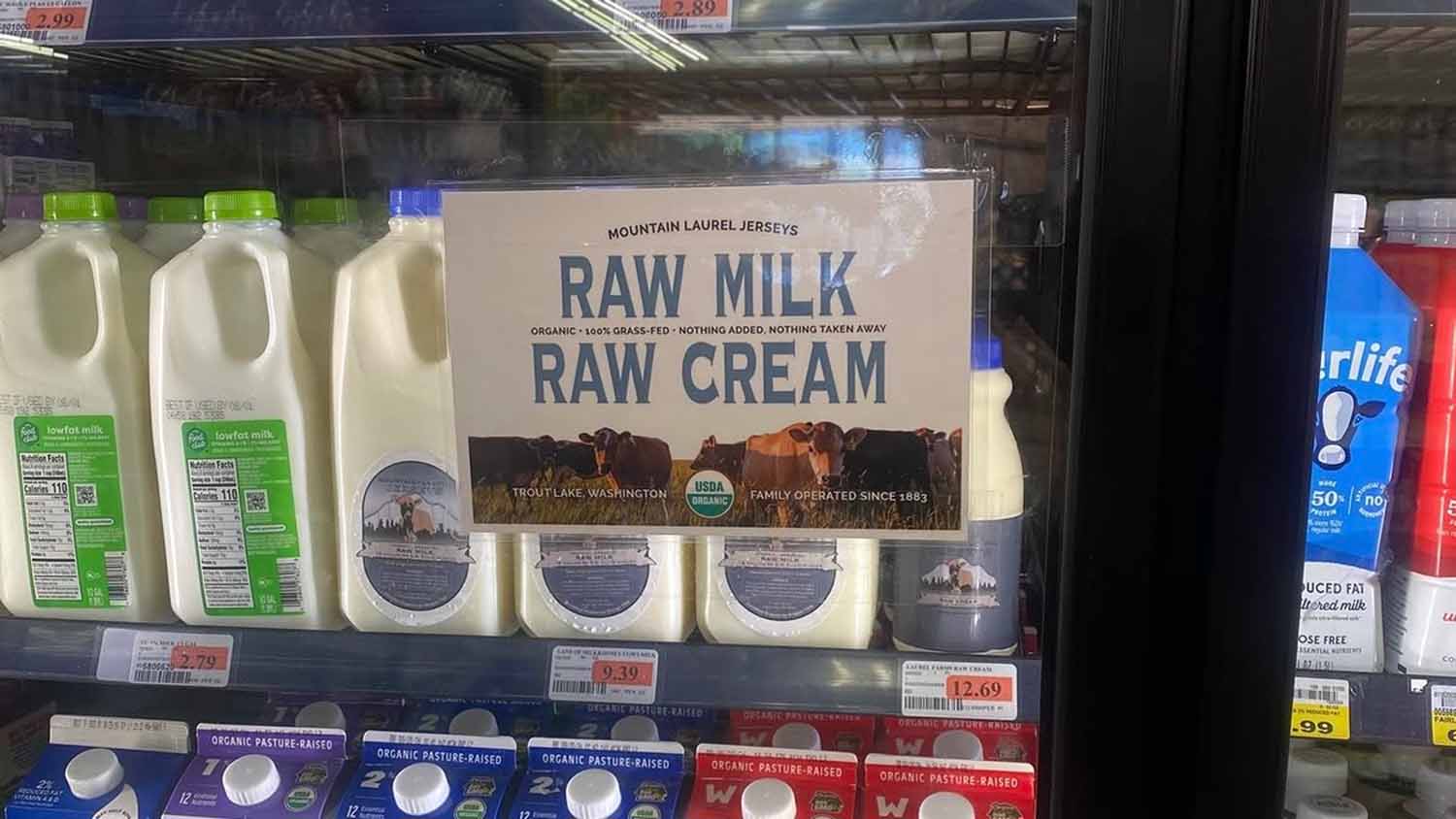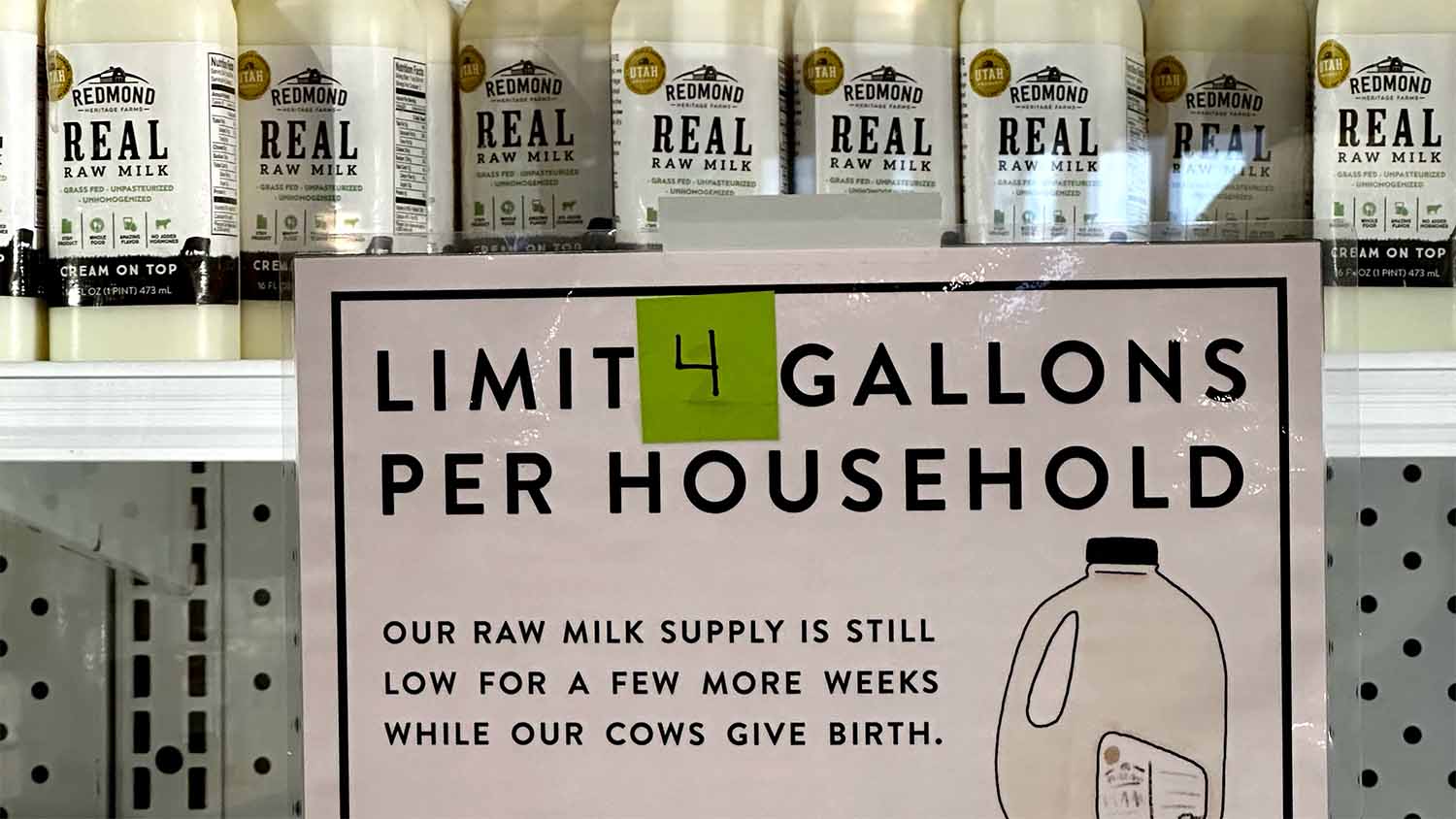
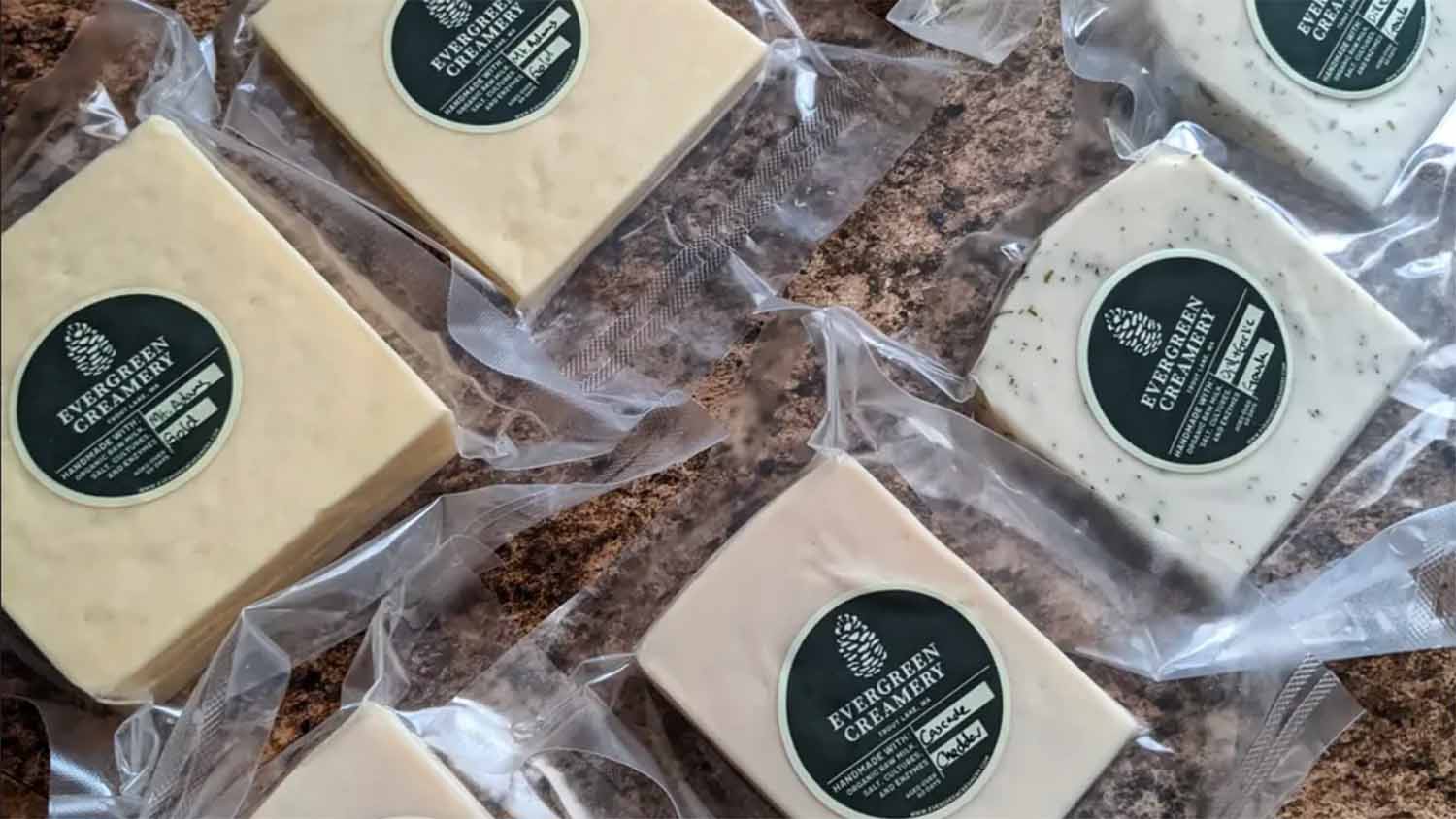
Raw milk cheeses from Evergreen Creamery in Trout Lake, Washington. Ingredient labels like these list what goes into a cheese, not how warm the milk got along the way.
Is Raw Cheese Really Raw? The Heat the Label May Not Mention
Raw milk cheese is often understood to mean cheese made from milk never heated beyond the warmth it had coming out of the cow. For some cheeses on store shelves, that is not the case. Under US rules, milk can be heated to just below pasteurization and the cheese made from it can still be sold as raw milk cheese.
The September 2026 E. coli outbreak linked to Graziers raw milk cheese brought this into view. According to a retailer’s product listing, the milk behind that cheese is heated to 135°F before cheesemaking starts. That is legal, and Graziers is not the only brand sold as raw that heats its milk. What varies is whether anyone tells the buyer.
Raw cheese heat treatment: key facts
| Question | Answer |
|---|---|
| Can cheese labeled raw milk be made from heated milk? | Yes, in the US. Federal rules allow milk “heated at temperatures below pasteurization” in cheese labeled raw milk, unpasteurized or heat treated. |
| How warm does traditional raw cheddar get? | Just above 100°F, close to a dairy cow’s body temperature of 100.4 to 102.8°F. |
| What is thermization? | A sub-pasteurization heat treatment, 57 to 68°C (about 135 to 154°F) for at least 15 seconds under EU rules. |
| Does the label have to disclose heat treatment? | No. The federal cheddar standard does not require “raw milk” or “heat treated” on the label. |
| How does the EU define raw milk? | Milk not heated above 40°C (104°F). Cheese from heat-treated milk cannot be labeled “made with raw milk.” |
| What minimum aging applies? | At least 60 days at 35°F or above for any cheese made from unpasteurized milk, heated or not. |
How hot does milk get when making raw cheese?
Cheese needs some warmth. Starter cultures and rennet work best within a certain temperature range, so every cheesemaker warms the milk to some degree. The question is how far.
Shelburne Farms in Vermont makes raw milk cheddar nearly every day and publishes each step. Hot water circulating in the vat walls “gently warm[s] the milk,” then starter culture goes in. About an hour later, rennet is added to set the curd. The curds are then stirred in the whey and heated “to just above 100°F, the ideal temperature for the starter culture to grow.” That is the highest temperature in its published process. The blocks then age for six months to four years.
A dairy cow’s normal body temperature runs 100.4 to 102.8°F, according to the Merck Veterinary Manual. A traditional cheddar cook stays within a few degrees of the temperature milk has when it leaves the udder. Heating well past that is a separate heat treatment, not part of a traditional cheddar make.
Raw cheese temperature chart
| Temperature | What it represents |
|---|---|
| 100.4 to 102.8°F | Normal body temperature of a dairy cow |
| Just above 100°F | Peak curd cook for Shelburne Farms raw milk cheddar |
| 104°F (40°C) | Highest temperature milk can reach and still be “raw milk” under EU law |
| 135°F | Graziers milk heat treatment, per a retailer listing |
| 135 to 154°F for at least 15 seconds | Thermization under EU rules |
| 145°F for 30 minutes | Vat pasteurization, the lowest temperature on the federal pasteurization list |
| 155°F for 16 seconds | Organic Valley raw cheddars, per the company’s product pages |
| 161°F for 15 seconds | High temperature, short time (HTST) pasteurization |
Time matters as much as temperature. At 145°F, milk counts as pasteurized only when held for a full 30 minutes. At 161°F, it takes 15 seconds. Organic Valley’s 155°F for 16 seconds is hotter than vat pasteurization, but the hold is too short to meet any federal pasteurization standard, so the cheese is legally unpasteurized.
There is also no single temperature at which milk stops being raw in a biological sense. Milk carries many enzymes and microbes, and each responds differently to both temperature and time. The cow’s body temperature is the clearest benchmark a shopper can use.
What US law allows in raw milk cheese
Three federal rules shape what a cheese labeled raw can be.
- 7 CFR 58.439, part of USDA’s standards for dairy plants: “If the cheese is labeled as ‘heat treated’, ‘unpasteurized,’ ‘raw milk’, or ‘for manufacturing’ the milk may be raw or heated at temperatures below pasteurization.” The cheese must then be cured at least 60 days at no less than 35°F.
- 21 CFR 133.113, the FDA standard of identity for cheddar: when the dairy ingredients are not pasteurized, the cheese must be cured at no less than 35°F for at least 60 days. The standard does not require the words “raw milk” or “heat treated” on the label.
- 21 CFR 1240.61 lists the time and temperature combinations that count as pasteurization. Anything short of them is unpasteurized, whether the milk was warmed to 90°F or heated to 155°F.
In practice, federal rules sort cheese into two groups: pasteurized and everything else. A cheese made from milk that never went past 100°F and one made from milk heated to 155°F share the same legal category, the same 60-day aging requirement and, often, the same word on the front of the package.
How the EU defines raw milk cheese
The European Union draws the line far lower. Regulation (EC) No 853/2004 defines raw milk as milk “that has not been heated to more than 40°C or undergone any treatment that has an equivalent effect.” 40°C is 104°F, just above a cow’s body temperature.
The same regulation reserves the label “made with raw milk” for products whose manufacturing process “does not include any heat treatment or any physical or chemical treatment,” as the Food Safety Authority of Ireland summarizes it. Cheese made from thermized milk cannot carry that label.
| United States | European Union | |
|---|---|---|
| Highest milk temperature for “raw” | Anything below pasteurization | 40°C (104°F) |
| Thermized milk cheese | Can be sold as raw milk cheese | Cannot be labeled “made with raw milk” |
| Raw milk on the label | Not required by the cheddar standard | “Made with raw milk” required on products made without heat treatment |
Under the EU definition, neither milk heated to 135°F nor milk heated to 155°F would count as raw.
Shelburne Farms, Organic Valley and Graziers compared
Shelburne Farms publishes its full process. Its peak temperature is just above 100°F, below the EU’s 104°F limit for raw milk.
Organic Valley sells cheddars named “Organic Raw Sharp Cheddar,” “Organic Raw Mild Cheddar” and “Organic Grassmilk Raw Cheddar.” Each product page states the heat treatment in a footnote: “Made with milk that has been heated at 155°F for 16 seconds.”
Graziers, from Sierra Nevada Cheese Company, has its heat step stated in a retailer listing rather than on the company’s product page. Azure Standard’s listing for Graziers medium cheddar states: “The Raw milk is heated to 135°.” The company’s own product page lists “Certified Graziers Raw Cultured Whole Milk” and does not mention heat. Neither source gives a hold time.
What is thermized cheese, and why heat the milk?
Thermized cheese is made from milk given a mild heat treatment below pasteurization. A 2023 study in the journal Foods by researchers at the University of Bari describes the EU version as 57 to 68°C for no less than 15 seconds, and reports that the treatment “always causes the elimination of psychrotrophic bacteria and the reduction of total bacterial count.” Psychrotrophic bacteria are the cold-tolerant kind that multiply in refrigerated milk and cause spoilage.
That gives a cheesemaker a practical reason to use it: milk keeps longer before it goes into the vat.
The same study, which compared raw and thermized versions of an Italian sheep milk cheese, also found the trade-offs. The raw milk cheese carried higher levels of native bacteria such as mesophilic lactobacilli, and the thermized cheeses “lost some typical sensory characteristics, probably as a consequence of the reduced indigenous microbiota populations.”
“Not pasteurized” is literally true of thermized cheese. The gap is between what the label legally means and what shoppers take it to mean. A buyer choosing raw milk cheese for its native cultures or flavor has no way to tell a 100°F cheddar from a 155°F one when the label is silent.
Heat below pasteurization reduces bacteria, and how much depends on how long the milk is held at temperature. It is not a pasteurization equivalent, and cheese can also pick up contamination after the milk is heated. Whether the milk was heated tells a buyer how the cheese was made, not whether a given batch is safe.
How to tell if raw cheese is really raw
Labels often don’t answer this, so ask the cheesemaker directly:
- What is the highest temperature the milk reaches at any point?
- How long is it held at that temperature?
- Is there a heat step before the cultures go in, separate from the curd cook?
- When did that step begin, and does it apply to every batch and every cheese in the line?
- How long is the cheese aged?
An answer at or near 100°F means the milk stayed close to body temperature. An answer of 135°F or higher, short of pasteurization, means the milk was heat treated.
Buying from a farm or small creamery makes these conversations easier. Check what your state allows on the raw milk laws map, then find raw milk cheese near you and ask how it is made.