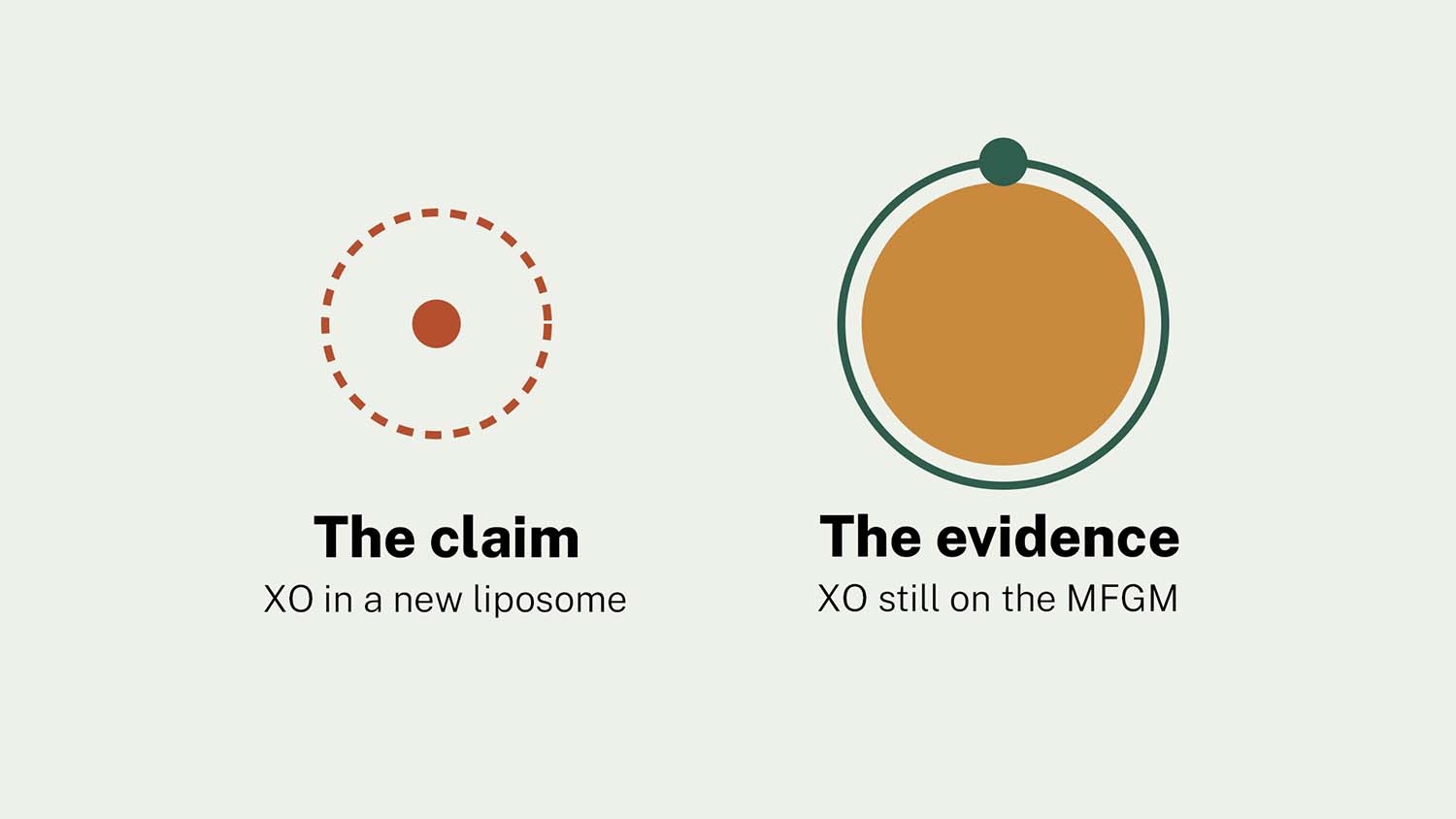
Kurt Oster's hypothesis proposed xanthine oxidase gets trapped in a new absorbable liposome during homogenization, but the evidence shows the enzyme remains bound to the milk fat globule membrane, with no separate liposome ever demonstrated.
Does Homogenized Milk Cause Heart Disease? The Oster Hypothesis
A specific claim circulates persistently in discussions of milk homogenization: that the process traps an enzyme called xanthine oxidase in a form the body can absorb intact, and that this absorbed enzyme damages arterial tissue and drives heart disease. The claim has a name, a specific proposed mechanism, and a specific origin point in the scientific literature, which makes it unusually well suited to a direct check against the record. Three independent formal reviews, including one commissioned by the FDA, examined the hypothesis and found the supporting evidence absent at nearly every step, one of them even after granting the hypothesis’s most contested premise.
Key facts:
- The hypothesis originated with cardiologist Kurt Oster starting in 1971, proposing that xanthine oxidase (XO) absorbed intact from homogenized milk depletes plasmalogens in cardiovascular tissue, initiating the atherosclerotic changes that lead to heart disease.
- A formal 1983 critique published in the American Journal of Clinical Nutrition checked each step of the hypothesis against the available evidence and came up empty at nearly every one: no demonstrated absorption of dietary XO, no established link between homogenized milk intake and serum XO levels, and no evidence that homogenization actually produces the absorbable liposomes the theory depends on.
- An earlier, independent review commissioned directly by the FDA reached a comparable conclusion: a 1975 report prepared by the Life Sciences Research Office of the Federation of American Societies for Experimental Biology under FDA contract, documented in the bibliography of the 1983 critique, predates that critique and represents a separate government-commissioned assessment of the same evidentiary gaps.
- A third, entirely independent review, published the same year in the Journal of Dairy Science by an Australian dairy researcher, took a more concessive starting point, granting that some XO absorption might occur, and still turned up nothing tying the absorbed enzyme to any actual disease process.
- Xanthine oxidase is a real, well-characterized enzyme naturally present in bovine milk, most closely associated with the milk fat globule membrane, and is one of the earliest indigenous milk enzymes identified, dating to research in the late 19th and early 20th centuries.
- A separate, legitimate, and still-active area of modern cardiovascular research examines a related enzyme system, xanthine oxidoreductase, but investigates its endogenous upregulation within human cardiac and vascular tissue itself, an entirely different mechanism from Oster’s claim about an externally absorbed dietary enzyme.
What Xanthine Oxidase Actually Is
Xanthine oxidase (XO) is a real, well-studied molybdenum-containing enzyme that catalyzes the conversion of hypoxanthine and xanthine into uric acid, the terminal step of purine metabolism. It is naturally present in several human and animal tissues, including the liver, kidney, blood, and intestinal mucosa, and it was first identified in milk in 1902, making it one of the earliest-characterized indigenous milk enzymes alongside lactoperoxidase and catalase. In bovine milk specifically, the majority of xanthine oxidase is closely associated with the milk fat globule membrane (MFGM), the same structure responsible for many of milk fat’s other functional properties.
None of this background is disputed. What became contested was a specific causal claim built on top of these real facts: that homogenization changes XO’s physical presentation in a way that allows it to survive digestion intact and enter systemic circulation, where it was proposed to damage arterial tissue.
The Oster Hypothesis: What Was Actually Claimed
Kurt Oster, a cardiologist, began publishing this hypothesis in 1971, proposing a specific multi-step mechanism connecting milk homogenization to atherosclerosis. The proposed chain of events ran roughly as follows: homogenization breaks milk fat globules into much smaller particles and, in doing so, was theorized to encapsulate xanthine oxidase within newly formed, absorbable liposomes; these liposomes were proposed to survive digestion and deliver intact, active XO into the bloodstream; circulating XO was then proposed to oxidize plasmalogens, a class of phospholipids normally present in the cell membranes lining arteries and heart tissue; and the resulting plasmalogen depletion was proposed to create the initial arterial lesions that develop into atherosclerotic plaque.
Oster’s evidentiary basis included immunological findings: research from his own lab reported that antibodies against xanthine oxidase were measurably higher in patients with myocardial infarction than in healthy controls, which he interpreted as evidence the body was mounting an immune response to circulating, absorbed milk-derived XO. Oster later administered very high daily doses of folic acid, under the belief that folate inhibited xanthine oxidase activity, to patients with symptomatic atherosclerosis, reporting improvements in angina and other symptoms.
The Formal Critique: What a Point-by-Point Analysis Found
In 1983, researchers Clifford, Ho, and Swenerton published a formal critique in the American Journal of Clinical Nutrition that examined each link in Oster’s proposed chain individually. Rather than treating the hypothesis as one claim, they broke it into its component parts and checked each against the available evidence separately. On the question of whether dietary XO actually gets absorbed at all, they found nothing demonstrating it does. On whether people who drink more homogenized milk show higher serum XO levels as a result, no such relationship had been established. On whether XO specifically drives plasmalogen loss, that causal link hadn’t been shown either. On the physical mechanism itself, homogenization producing absorbable liposomes carrying intact XO, neither the liposome formation nor its passage through the gut wall had been demonstrated. And on Oster’s folate treatment, the evidence didn’t support the idea that high-dose folic acid actually inhibits XO in a living body, let alone treats heart disease by doing so. Taken together, the paper’s own summary is blunt about it: the experimental record failed to back up the hypothesis, and in some places actively contradicted it.
This was not a dismissal of Oster’s underlying observations. The elevated anti-XO antibody findings, for instance, were real measurements; what the critique found lacking was evidence for the specific causal pathway Oster proposed to explain them, particularly the claim that intact bovine XO was crossing into human circulation in meaningful quantities via homogenized milk.
Two More Independent Reviews Reached the Same Wall
The 1983 critique was not the only formal look at this question, and it wasn’t even the only one published that same year. An earlier report, prepared in 1975 by the Life Sciences Research Office of the Federation of American Societies for Experimental Biology under a direct FDA contract, independently reviewed the significance of bovine milk xanthine oxidase in the etiology of atherosclerosis.
A third review, published in 1983 in the Journal of Dairy Science by Australian dairy researcher H.C. Deeth, took a notably different approach. Rather than disputing whether XO gets absorbed at all, the same sticking point Clifford’s team had identified as unproven, Deeth’s review conceded the more generous premise for the sake of argument: assume, for a moment, that some of the enzyme really does make it from the gut into a person’s bloodstream. Even granting that, the review turned up nothing connecting the circulating enzyme to actual arterial damage or disease progression. That’s a meaningfully different, and in some ways more damaging, angle of attack: it shows the hypothesis doesn’t just fail on the absorption question, it fails even for a reviewer willing to assume absorption happens.
Three separate reviews, produced within an eight-year span by different research groups in different countries, one of them commissioned directly by a federal regulatory agency specifically to evaluate this question and another willing to grant Oster’s most contested premise before still finding no supporting evidence, arriving at the same skeptical conclusion adds considerably more weight than any single paper considered alone.
The High-Dose Folate Therapy: A Curious Postscript
One later development is worth noting for its own sake, since it complicates a purely dismissive reading of Oster’s work. A 2007 paper revisiting Oster’s high-dose folate regimen noted that while the xanthine oxidase mechanism Oster proposed to explain folate’s apparent benefit had not held up, more recent research had identified a separate, legitimate way folic acid can reduce cardiovascular oxidative stress: by improving the function of endothelial nitric oxide synthase (eNOS) when it is deficient in a cofactor called tetrahydrobiopterin, an entirely different biochemical pathway than XO inhibition. The paper’s author suggested that if Oster’s patients did experience genuine symptomatic improvement, it may have occurred through this unrelated mechanism rather than the one Oster believed was responsible. This is a useful illustration of how a specific mechanistic hypothesis can be wrong while an associated clinical observation still points toward something real, just not the thing originally proposed.
A Different, Legitimate Line of Xanthine Oxidoreductase Research
Being precise here matters, because a related but distinct research area is sometimes conflated with Oster’s claim. A substantial and still-active body of modern cardiovascular research examines xanthine oxidoreductase (XOR) as a contributor to oxidative stress in heart failure and cardiovascular disease. Research in this area has found that XOR is measurably upregulated in the hearts of patients with dilated cardiomyopathy and heart failure compared to those with normal cardiac function, and ongoing research continues to investigate XOR inhibitors like allopurinol as a potential therapeutic approach in heart failure management.
This research is legitimate and current, but it describes an entirely different mechanism than Oster’s hypothesis. It concerns endogenous XOR, meaning the enzyme the body’s own cardiac and vascular tissue produces and upregulates internally in response to disease processes, not an externally absorbed enzyme delivered intact through homogenized dairy fat. Citing modern XOR-and-heart-failure research as vindication of Oster’s specific dietary-absorption hypothesis would be a mismatch between two genuinely different scientific questions that happen to share a common enzyme name.
What the Record Actually Shows
Three independent, formally published reviews, produced within an eight-year span by different research groups in different countries, one directly commissioned by the FDA and another willing to grant Oster’s most contested premise before still finding no supporting evidence, examined Oster’s xanthine oxidase hypothesis and found the evidence for its core causal claims absent or unsubstantiated at multiple specific points: dietary absorption, liposome formation, plasmalogen depletion by XO specifically, and the proposed folate mechanism.
This is one of the more clearly resolved questions in this cluster, but it’s still worth being precise about what “resolved” means here. Specifically:
- A failure to demonstrate a mechanism is not the same as active, ongoing research proving the opposite; all three reviews identified gaps in the evidence supporting Oster’s specific claims rather than presenting new data disproving every element of milk homogenization’s biological effects generally.
- The reviews are decades old (1975 and 1983); a systematic modern re-examination using current analytical techniques does not appear to be part of the record reviewed here.
- Legitimate, current research on xanthine oxidoreductase and cardiovascular disease exists and should not be dismissed, but it addresses a different biological question (endogenous enzyme activity in diseased heart tissue) than the one Oster’s hypothesis was built around (exogenous dietary enzyme absorption).
- None of the sources here directly address whether homogenization has other, unrelated effects on milk fat structure worth separate investigation; the critiques are specific to the xanthine oxidase/plasmalogen mechanism, not a general verdict on homogenization as a process.
Key Terms
- Xanthine oxidase (XO): an enzyme that converts hypoxanthine and xanthine into uric acid, naturally present in milk and several human tissues, most closely associated with the milk fat globule membrane in bovine milk.
- Plasmalogen: a class of phospholipid found in cell membranes, including those lining heart and artery tissue, central to Oster’s proposed injury mechanism.
- Xanthine oxidoreductase (XOR): a broader term for the enzyme family that includes xanthine oxidase; modern cardiovascular research on XOR concerns its endogenous activity within diseased heart and vascular tissue, a distinct question from Oster’s dietary-absorption hypothesis.
- Liposome: a microscopic, membrane-bound vesicle; Oster proposed that homogenization encapsulates XO within absorbable liposomes, a step the 1983 critique found unsubstantiated.
Frequently Asked Questions
Is the xanthine oxidase heart disease theory scientifically supported? No. Three independent formal reviews, an FDA-commissioned 1975 report and two separate 1983 reviews (one in the American Journal of Clinical Nutrition, one in the Journal of Dairy Science), examined the hypothesis and found the evidence for its core claims unsubstantiated. One of the 1983 reviews even granted that XO absorption might occur and still found no evidence it causes any disease effect.
Was Kurt Oster’s underlying research fabricated? No, and the critiques did not characterize it that way. Oster’s measurements, such as elevated anti-xanthine oxidase antibodies in heart disease patients, were real findings. What the formal critiques found lacking was evidence for the specific causal mechanism Oster proposed to explain those findings.
Does modern research on xanthine oxidoreductase support Oster’s theory? No, and conflating the two is a common source of confusion. Modern XOR research concerns enzyme activity generated internally by diseased heart and vascular tissue, not an enzyme absorbed intact from homogenized dairy fat, which was the specific mechanism Oster proposed.
Did Oster’s high-dose folate treatment for heart disease work? The mechanism Oster proposed for why it might work, xanthine oxidase inhibition, was not supported by later evidence. A 2007 paper noted that if patients experienced genuine benefit, it may be explained by a separate, legitimate pathway involving nitric oxide synthase function, unrelated to Oster’s original xanthine oxidase theory.
Does pasteurization destroy the xanthine oxidase in milk? Pasteurization reduces but does not fully eliminate XO activity in milk. This detail is separate from the homogenization-liposome mechanism at the center of Oster’s hypothesis, which concerned homogenization specifically, not pasteurization.