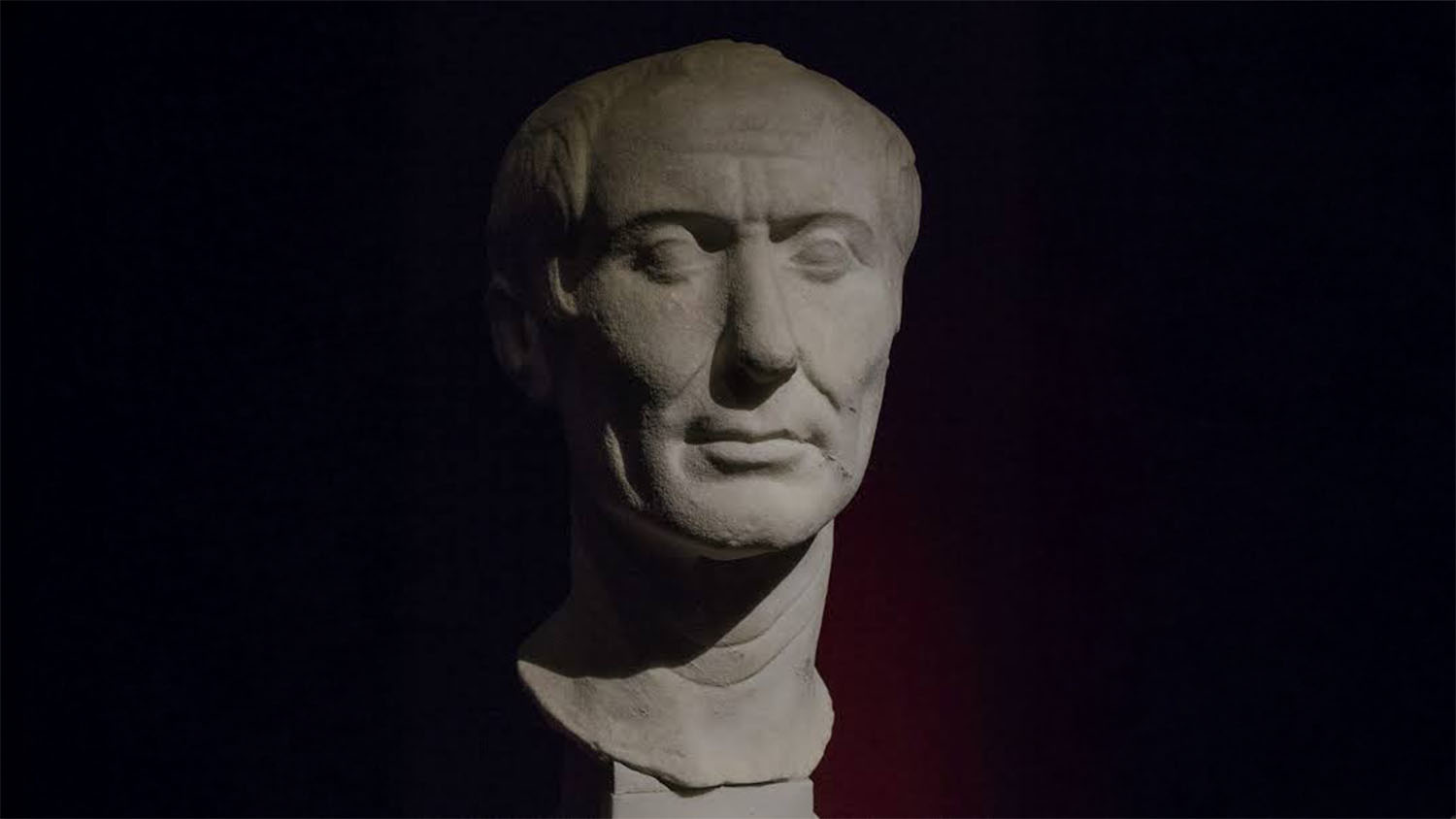
The Tusculum portrait, a marble bust of Julius Caesar in the Museum of Antiquities, Turin, widely regarded as the only surviving sculpture of Caesar that may have been made during his lifetime.
What Julius Caesar Wrote About the Aurochs in the Gallic Wars
While campaigning in Gaul, Julius Caesar paused his military narrative to describe the wildlife of the Hercynian Forest, a vast wooded region east of the Rhine in what is now Germany. Tucked into the sixth book of his Commentarii de Bello Gallico is a short passage on an animal the Romans called the urus, known today as the aurochs, wild ancestor of every domesticated cow alive. It is among the earliest surviving written descriptions of the species. Few other accounts were left by anyone who could have seen the animal, or spoken to someone who had, while it still roamed freely across Europe.
Quick facts: Book VI covers the campaigning season of 53 BC and was likely written that same year or the following winter. Describes the aurochs as “a little below the elephant in size.” Credited by historians as the earliest surviving historical (non-archaeological) evidence of the aurochs in western Europe. Confirmed independently about a century later by Pliny the Elder, who distinguished the aurochs from the European bison in Natural History. The oldest surviving manuscript copies date only to the ninth century AD.
The passage, in Latin and in translation
Caesar’s account appears in Book VI, Chapter 28. The original Latin reads:
Tertium est genus eorum, qui uri appellantur. Hi sunt magnitudine paulo infra elephantos, specie et colore et figura tauri. Magna vis eorum est et magna velocitas, neque homini neque ferae quam conspexerunt parcunt. Hos studiose foveis captos interficiunt. Hoc se labore durant adulescentes atque hoc genere venationis exercent, et qui plurimos ex his interfecerunt, relatis in publicum cornibus, quae sint testimonio, magnam ferunt laudem. Sed adsuescere ad homines et mansuefieri ne parvuli quidem excepti possunt. Amplitudo cornuum et figura et species multum a nostrorum boum cornibus differt. Ea studiose conquisita ab labris argento circumcludunt atque in amplissimis epulis pro poculis utuntur.
In the widely circulated 1869 English translation by W. A. McDevitte, published in Harper’s New Classical Library, the passage reads:
“There is a third kind, consisting of those animals which are called uri. These are a little below the elephant in size, and of the appearance, colour, and shape of a bull. Their strength and speed are extraordinary; they spare neither man nor wild beast which they have espied. These the Germans take with much pains in pits and kill them. The young men harden themselves with this exercise, and practice themselves in this kind of hunting, and those who have slain the greatest number of them, having produced the horns in public, to serve as evidence, receive great praise. But not even when taken very young can they be rendered familiar to men and tamed. The size, shape, and appearance of their horns differ much from the horns of our oxen. These they anxiously seek after, and bind at the tips with silver, and use as cups at their most sumptuous entertainments.”
When the passage was written, and how it survives
Each book of De Bello Gallico documents a single campaigning season, published as something close to an annual field report. Book VI covers the events of 53 BC, a year Caesar spent largely putting down the aftermath of the Eburones’ destruction of an entire Roman legion and five additional cohorts under Sabinus and Cotta the previous winter. That places the composition of the aurochs passage within a fairly narrow window: written either during or shortly after the 53 BC campaigning season, likely in the following winter before Caesar moved on to the events that would become Book VII.
No copy from anywhere near that period survives. The oldest surviving manuscripts of De Bello Gallico date only to the later ninth century AD, roughly 900 years after Caesar wrote the aurochs passage, and they come from two separate manuscript traditions copied at two different French Benedictine monasteries: one at Fleury Abbey, now held in Amsterdam as one of the two oldest surviving copies of the text, and another at Corbie Abbey. Every modern edition, translation, and Latin text used by classicists today, including the passage quoted above, descends from that narrow, centuries-later point of transmission. Nothing closer to Caesar’s own hand has survived.
A description Caesar likely never saw firsthand
The aurochs passage sits inside a longer digression on Hercynian Forest fauna, spanning Chapters 25 through 28, alongside an animal resembling an elk that Caesar claims has no knee joints and sleeps standing propped against trees, and an ox with a single horn growing from the middle of its forehead. Set beside those two, the aurochs account is the one modern scholars treat as broadly credible zoology rather than secondhand traveler’s lore. Caesar was a general, not a trained observer of wildlife, and he almost certainly never personally entered the forest he was describing. The material likely reached him through Germanic informants or earlier Roman sources, filtered through the kind of exaggeration that tends to accumulate around dangerous, unfamiliar animals at the edge of the known world.
Some modern classicists have gone further, suggesting the entire menagerie of Chapters 25 through 28, aurochs included, may have been inserted into the text by a later editor rather than written by Caesar himself. The passage’s tone and its heavy reliance on secondhand report do read differently from the surrounding military narrative. That said, the great majority of editions, translations, and citing scholarship still treat the chapter as authentically Caesar’s, and it is cited under his name in essentially every historical survey of the aurochs.
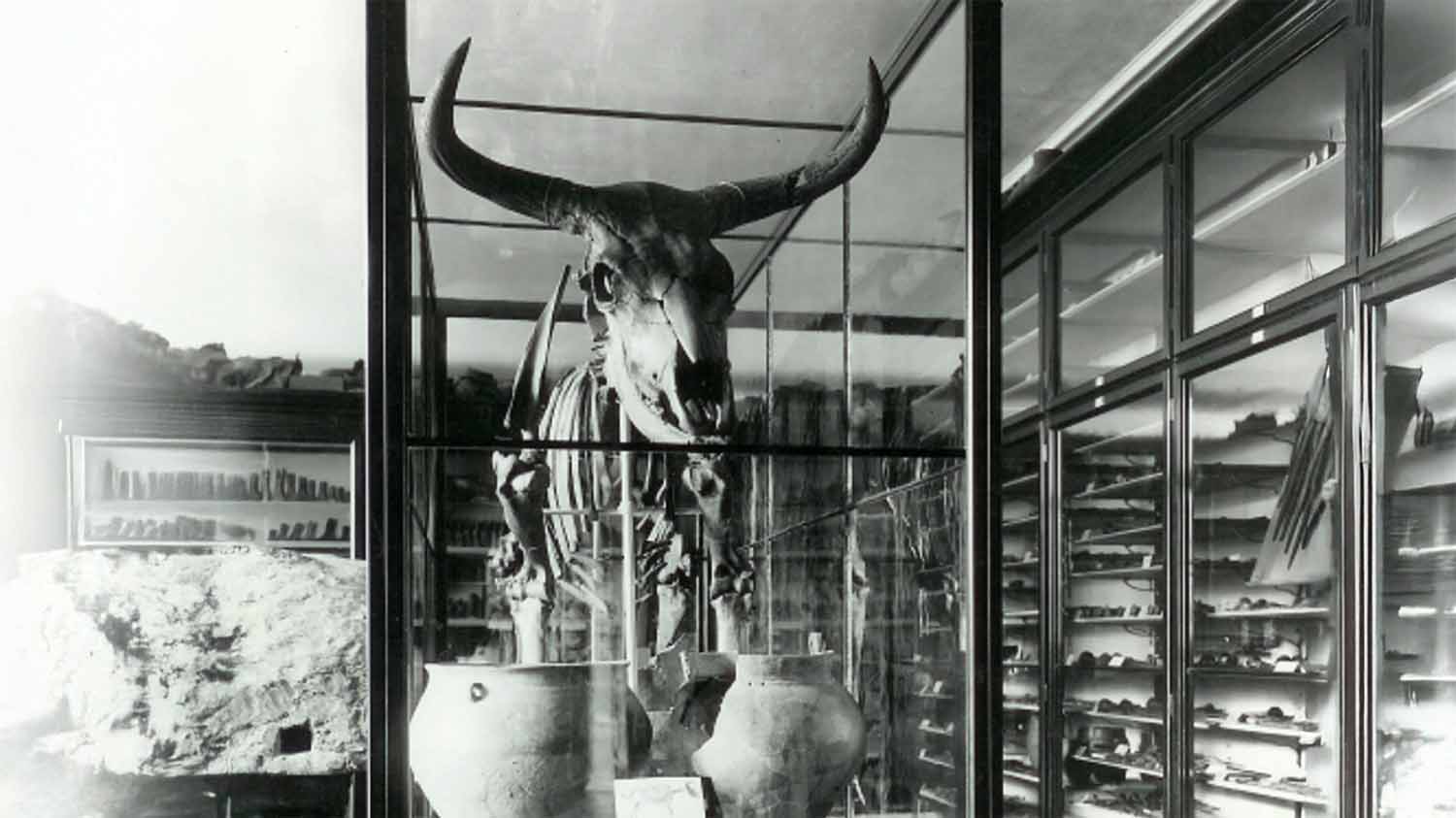
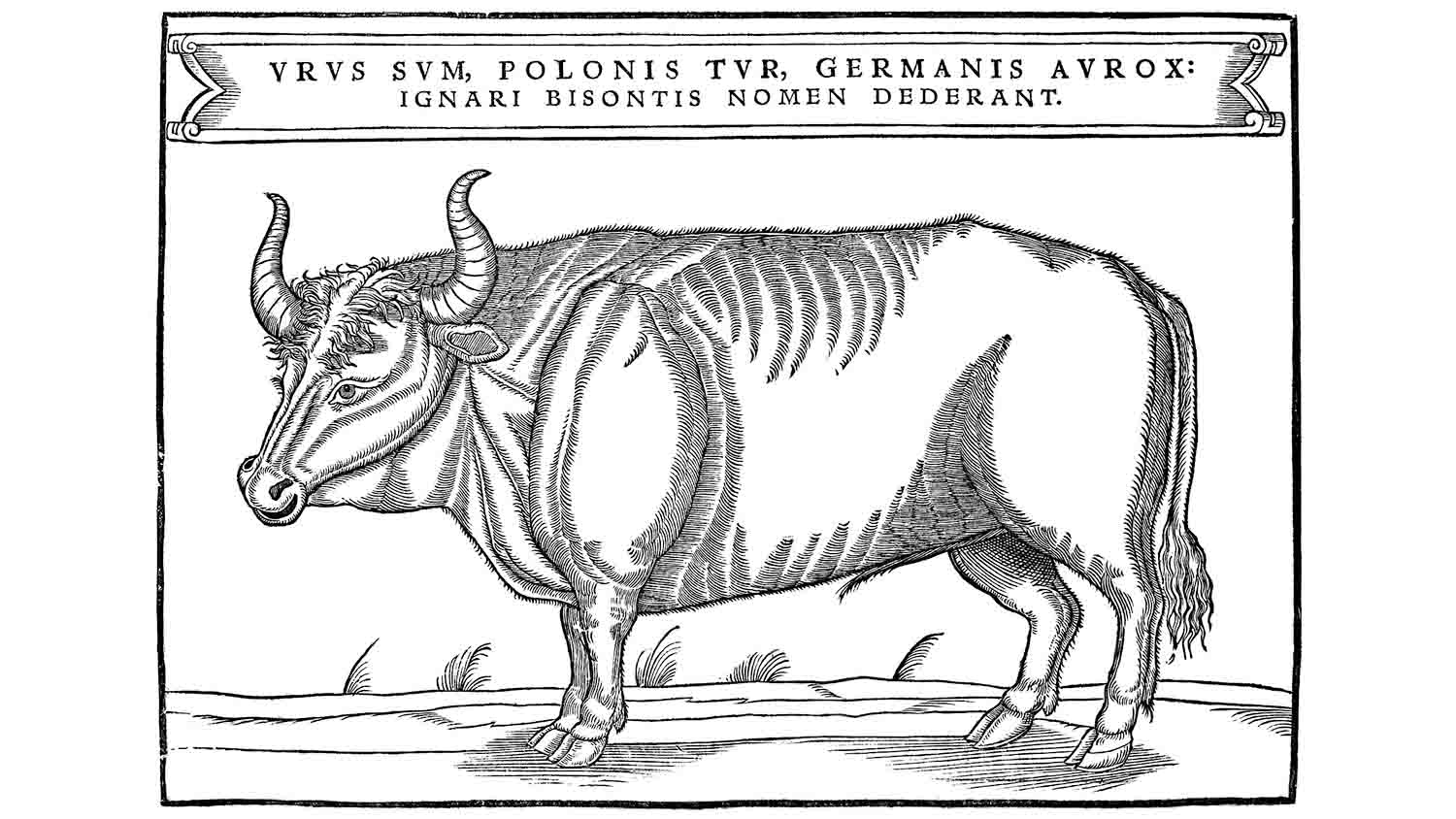
Even so, the specifics hold up surprisingly well. The comparison to an elephant “a little below” it in size is not the wild overstatement it might first appear. A large bull aurochs could stand roughly six feet at the shoulder, and Caesar was almost certainly picturing the North African elephant, a subspecies considerably smaller than the elephants of sub-Saharan Africa and now extinct in its own right. Scaled against that animal rather than a modern African bush elephant, the comparison lands close to accurate. Roughly a century later, the Roman writer Pliny the Elder corroborated the underlying zoology in his Natural History, drawing a clear distinction between the maned bison of Scythia and Germania (iubatos bisontes) and the aurochs he credited with exceptional strength and speed (velocitate uros). Pliny’s separate treatment of the two species confirms that Caesar’s account was not an isolated or garbled report; educated Romans a century later still understood the aurochs and the bison as two distinct animals.
Pit hunting and the proof of the kill
Caesar describes a hunting method built around pits rather than direct pursuit. This approach is consistent with an animal he also describes as too fast and too aggressive to safely confront in the open, sparing “neither man nor wild beast which they have espied.” Young Germanic men, in his account, used aurochs hunting as a rite of physical toughening, and standing was earned by the count of kills, proven by publicly displaying the horns as evidence. The verification detail matters here: it suggests a hunting culture organized enough to require proof of a claim, not simply boastful storytelling passed back to a Roman general secondhand.
Caesar adds one more note on temperament that later observers would echo for centuries: aurochs captured even as calves could not be tamed or made familiar with people. This claim recurs, largely unchanged, in accounts written more than 1,600 years later, suggesting either a genuinely consistent trait across the species or a description that simply got copied forward from writer to writer.
Horns as trophies and drinking vessels
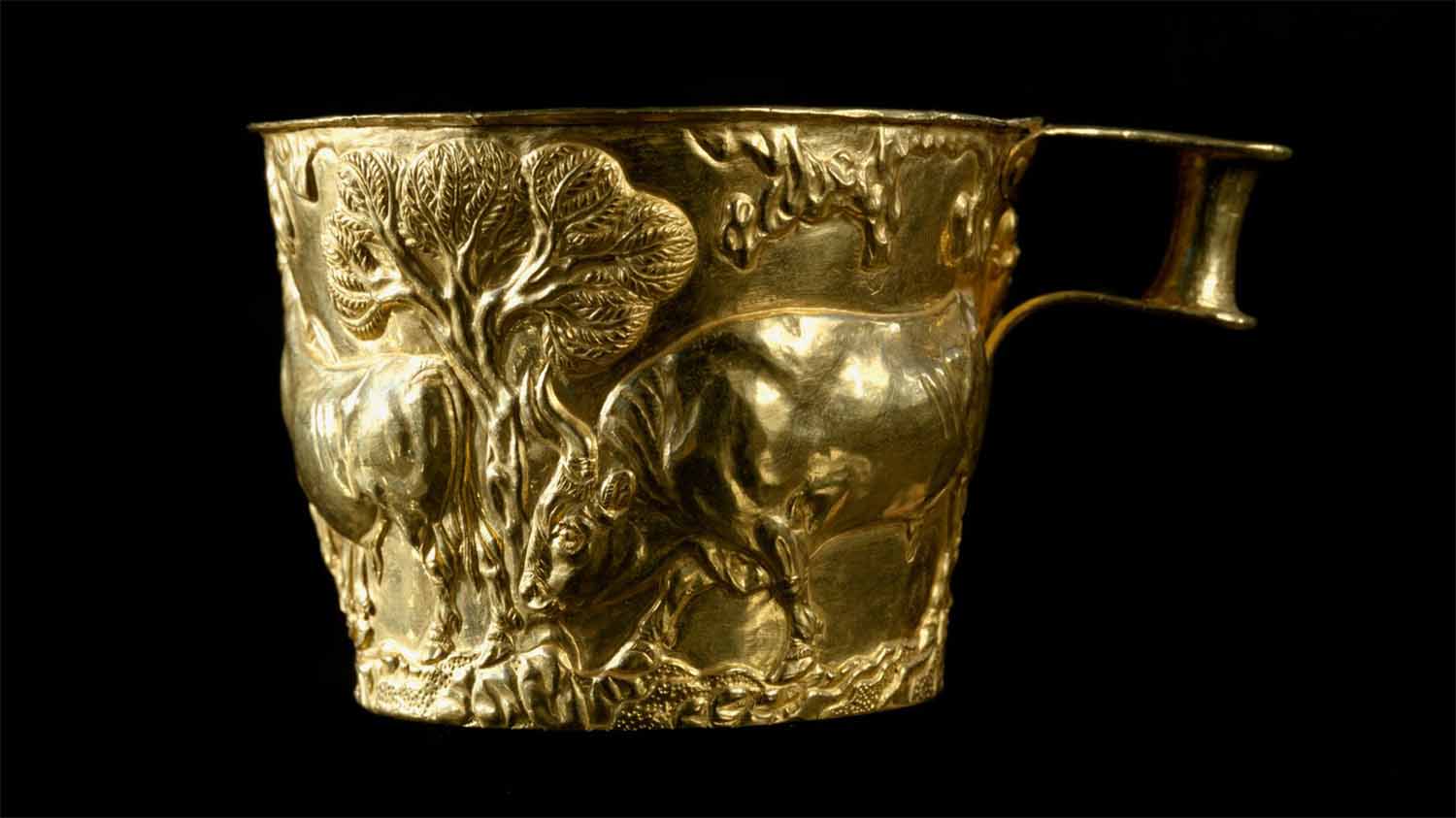
The last element in Caesar’s passage concerns the horns themselves, which he notes differ considerably in size, shape, and appearance from those of domesticated cattle. Rather than discarding them, Caesar reports that Germanic peoples sought the horns out deliberately, rimmed the tips in silver, and used them as drinking vessels at their most lavish feasts. This custom is corroborated well beyond Caesar and well before him: a Greek epigram describes a hunter named Peucestes keeping the horns of a wild bull he killed near Doberus, in the southern Balkans, and drinking wine from them, a Hellenistic-era practice that predates Caesar’s account. Aurochs horns mounted or plated in precious metal also survive in museum collections, suggesting the custom of turning the horns into cups was not unique to one region, one era, or one observer’s imagination.
The claim took on a life of its own in later centuries. Medieval writers built on Caesar’s brief note about horn size until it grew into something far more dramatic. Isidore of Seville, writing in his seventh-century encyclopedia Etymologiae, described the uri of Germania as having horns so large that vessels of remarkable capacity were made from them for royal tables (“habentes cornua in tantum protensa ut regiis mensis insigni capacitate ex eis gerulae fiant“). Separately, other later medieval sources pushed the image further still, describing horns large enough to seat three grown men between them. Historians researching aurochs in medieval Bohemia and Moravia have traced that escalating legend directly back to Caesar’s original, comparatively modest, description.
Where the historical record begins
Modern scholars and historians researching the aurochs’ European range consistently point to this chapter as the earliest surviving historical evidence that the species still lived in western Europe in the first century BC, as distinct from the archaeological and fossil evidence that predates it. Researchers of the nineteenth and early twentieth century, cataloguing the aurochs’ decline toward extinction, cited Caesar directly as their starting point before moving on to medieval and early modern sources. The species would survive for more than sixteen centuries after Caesar wrote this passage. The last individuals died out in a royal hunting reserve in Poland in 1627, described in detail by the last eyewitnesses to see the species alive, and in the sixteen centuries between, almost everything written about the aurochs by a named, datable author built directly on this account or existed in conversation with it. A broader look at what other ancient and historical writers said about the aurochs traces that fuller record from Bronze Age Greece through the species’ extinction.