Who Named Pasteurization? The Coinage and Spread of a Scientific Eponym
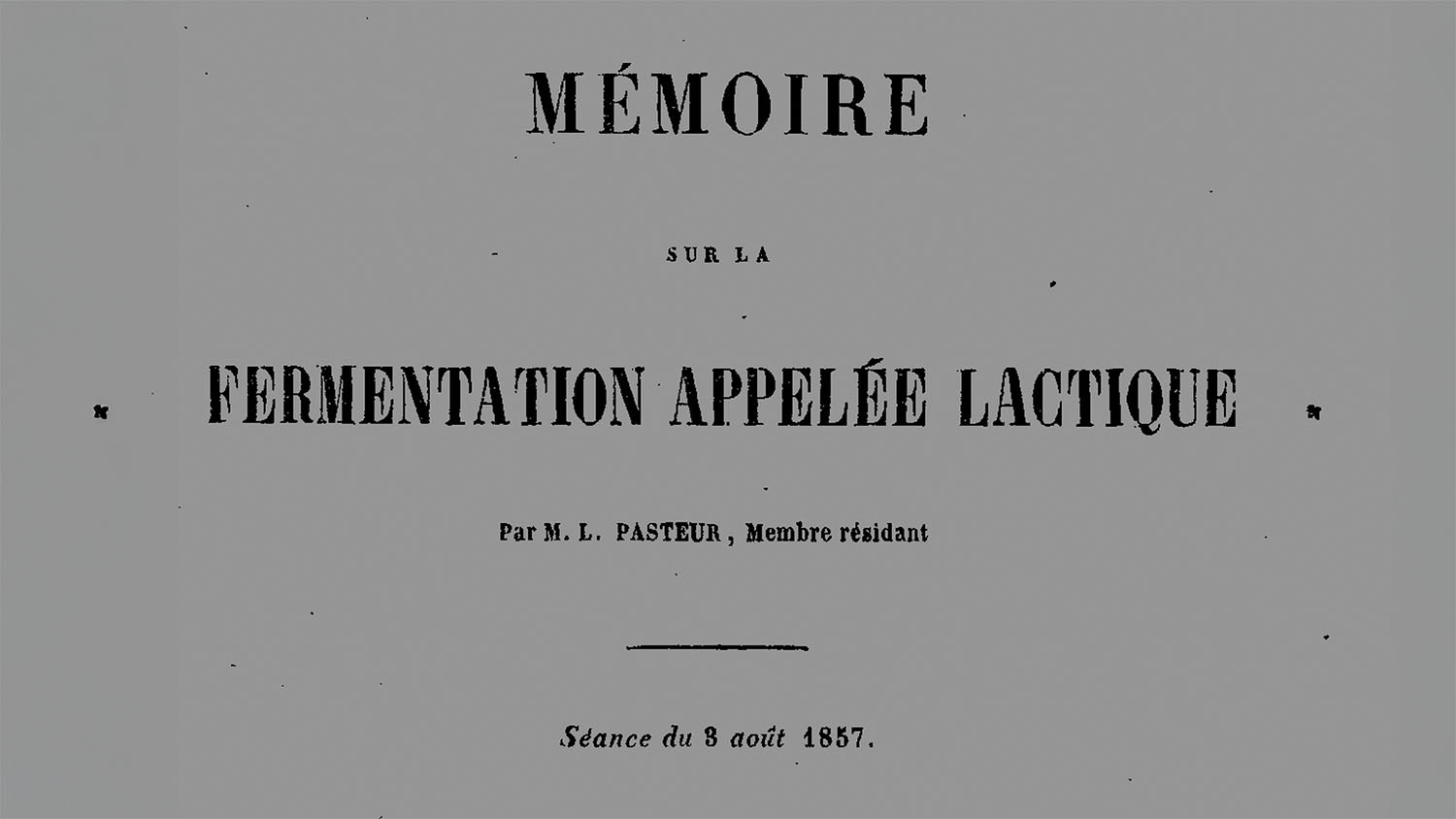
Louis Pasteur patented his heat-treatment process for wine on April 11, 1865, describing it as a method for the preservation of wine. He wrote two books covering fermentation and heating, Études sur le vin (1866) and Études sur la Bière (1876), and in neither did he use the word “pasteurization.” The name by which the world now knows his process was coined by others, in his lifetime, as an honorific.
The Earliest Documented Use
The Oxford English Dictionary records its earliest evidence for the verb “pasteurize” from 1881, in the Pharmaceutical Journal & Transactions, a British trade and scientific publication. The OED’s entry for the noun “pasteurization” records a later first appearance, from 1886, in The Times of London.
The Online Etymology Dictionary independently dates “pasteurize” to 1881, defining it as “to perform pasteurization, sterilize by heat,” formed with the suffix “-ize” after Pasteur’s name. Its earliest definition of the noun, from 1885, refers specifically to “the preserving of wines, etc., by destroying fungi and spores by heating to at least 140 degrees Fahrenheit.” The verb arrived in English first, and the noun defined it in terms of wine. Merriam-Webster corroborates 1881 as the first known use.
The Pharmaceutical Journal and Transactions had published a review of Pasteur’s Études sur la Bière in 1877. The same journal is cited for the first documented use of “pasteurize” four years later. The publication regularly covered applied chemistry, brewing science, and new developments in European food technology, and its readership of pharmacists, chemists, and food scientists was well positioned to adopt a new technical verb.
Where Was “Pasteurize” First Coined?
Though Pasteur never used the term himself, the English “pasteurize” was borrowed from the French pasteuriser. French had developed the term earlier than English: Pasteur’s work was conducted in France, reported in French, and adopted first by French wine producers.
A 2023 article by historian Anne-Marie Moulin examining Pasteur’s wine research notes that the term “pasteurisation” had already entered the German language by 1871, citing a French source that observed this adoption (Moulin, médecine/sciences, 2023). If German had the word by 1871, French almost certainly had it earlier. The commercial adoption of Pasteur’s heating method by French vintners began within years of his 1865 patent, and the industry would not have waited for a formal print coinage before naming the practice.
No published record shows Pasteur introducing or endorsing the term “pasteurisation.” The naming arose from the scientific and trade communities that adopted his method.
Wine First, Milk Later
Pasteur’s patent concerned wine. His 1866 book dealt with wine diseases. His 1876 book dealt with beer. The process was widely applied across France’s wine industry and subsequently in European brewing throughout the 1860s and 1870s. The word “pasteurize” emerged as a shorthand for what the industry was already doing, naming the practice after the chemist who had given it a scientific foundation.
The application of the term to milk came a full decade after its first documented English use. In 1886, Franz von Soxhlet, an agricultural chemist at the Technical University of Munich, published a paper in the Münchener Medizinische Wochenschrift proposing that milk sold for infant nutrition be subjected to the same heat-treatment process already in use for wine and beer (Über Kindermilch und Säuglings-Ernährung, Münchener medizinische Wochenschrift, 1886, 33: 253, 276). Soxhlet was not describing a new process. He was arguing that an existing one should be applied to a different product to address a specific public health problem: the high rate of infant mortality from contaminated milk in urban Germany. A fuller account of that argument appears in the piece on Franz von Soxhlet and milk pasteurization.
The OED’s first evidence for the noun “pasteurization” in The Times of London also dates to 1886, almost certainly reflecting British awareness of Soxhlet’s proposal or closely contemporaneous German reporting. By this point the term had enough currency in European scientific discourse that The Times could use it without defining it.
How the Term Reached Milk in America
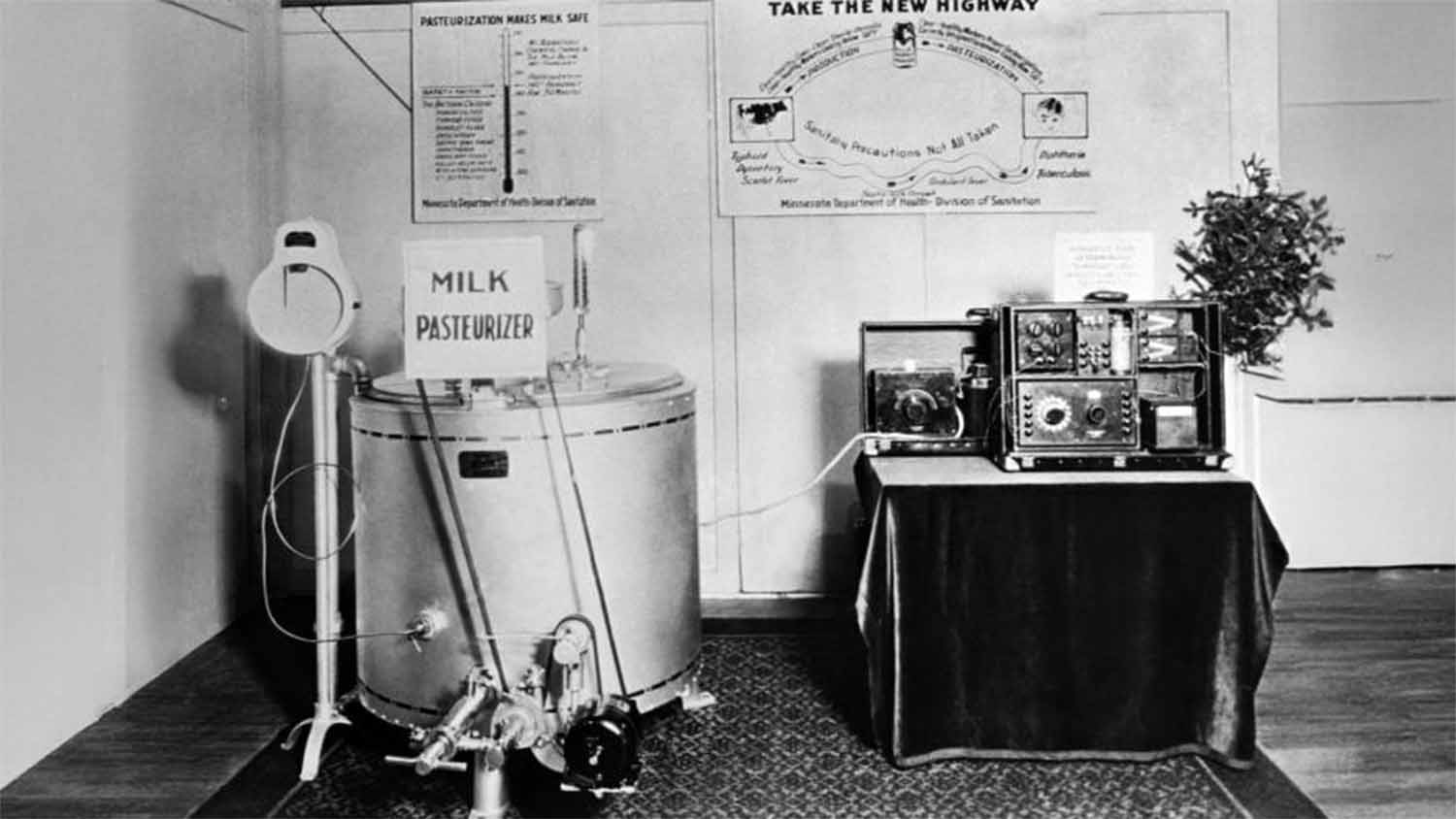
The spread of “pasteurization” as a term applied to milk required not just Soxhlet’s 1886 proposal but a sustained public health campaign. The first commercial pasteurization machines for milk came into use in the mid-1890s.
In the United States, key advocacy came from German-born pediatrician Abraham Jacobi and from New York philanthropist Nathan Straus. Straus, co-owner of Macy’s, became an advocate for pasteurized milk beginning in 1892 after a tuberculosis diagnosis in a cow on his farm drew his attention to milk safety. In 1892 he opened the Nathan Straus Pasteurized Milk Laboratory, and starting in 1893 he established a series of low-cost milk depots across lower Manhattan, distributing bottles of heated milk to poor families for a penny a glass or free with a voucher (Science History Institute). Public health officers in Rochester, New York, established similar infant milk depots by 1897.
By 1893, “pasteurization” was appearing in American newspapers in connection with milk, a product Pasteur never worked with and never mentioned in any of his published research. A 1913 paper on milk pasteurization in an American public health journal acknowledged the etymology directly, stating that the term derived from Pasteur’s experiments with wine and beer and that subsequent researchers had demonstrated it could destroy disease-causing organisms in milk.
Did Pasteur Ever Use the Term?
No published record documents Pasteur using “pasteurisation” or “pasteuriser” in his own writings. His 1865 patent used the language of industrial preservation. His books on wine and beer described the heating method in functional, experimental terms without applying an eponym derived from his own surname.
Scientists rarely name their own processes after themselves; the naming convention is an act of tribute by the field. What is notable in Pasteur’s case is how thoroughly the eponym migrated away from the original product. The word “pasteurization” today is almost universally associated with milk, but the earliest documentary evidence places it in the wine trade, in British pharmaceutical chemistry journalism, in 1881. That is sixteen years after Pasteur’s wine patent and five years before anyone proposed applying the method to milk.
Pasteur died on September 28, 1895. The term had been in English use for fourteen years by then, and in German for roughly twenty-four. No record shows him objecting to it, endorsing it, or remarking on it.
A Name Applied by Others
The naming of pasteurization followed the standard pattern of honorific eponyms in nineteenth-century science. A researcher solves a practical problem and publishes the method. The scientific and trade communities that adopt the method give it a name that credits the original work. The researcher does not participate in that naming. Later writers accept the eponym without examining whether the credited figure ever used it.
In Pasteur’s case, the eponym proved durable because it was accurate about the thing that mattered: the germ-theory understanding that made his heat-treatment approach scientifically coherent was genuinely his. Wine had been heated for preservation empirically long before Pasteur, including in China as early as AD 1117 and in Japan between the fifteenth and seventeenth centuries, where sake brewers at Tamon-in temple documented the practice in the diary now known as the Tamon-in Nikki. Nicolas Appert’s heat-preservation method for sealed glass jars, published in 1810, predated Pasteur by more than fifty years. What Pasteur contributed was the explanation: spoilage was caused by living microorganisms, and moderate heat killed them. That mechanistic insight was new, and it was worth naming.
The word “pasteurize” carries that insight. It does not carry the product Pasteur worked on. Every carton of pasteurized milk sold today bears the name of a man who spent his career on wine, beer, silkworm disease, anthrax, and rabies, and who never once wrote about heating milk.
For a full account of Pasteur’s life and research, see the Louis Pasteur biography.