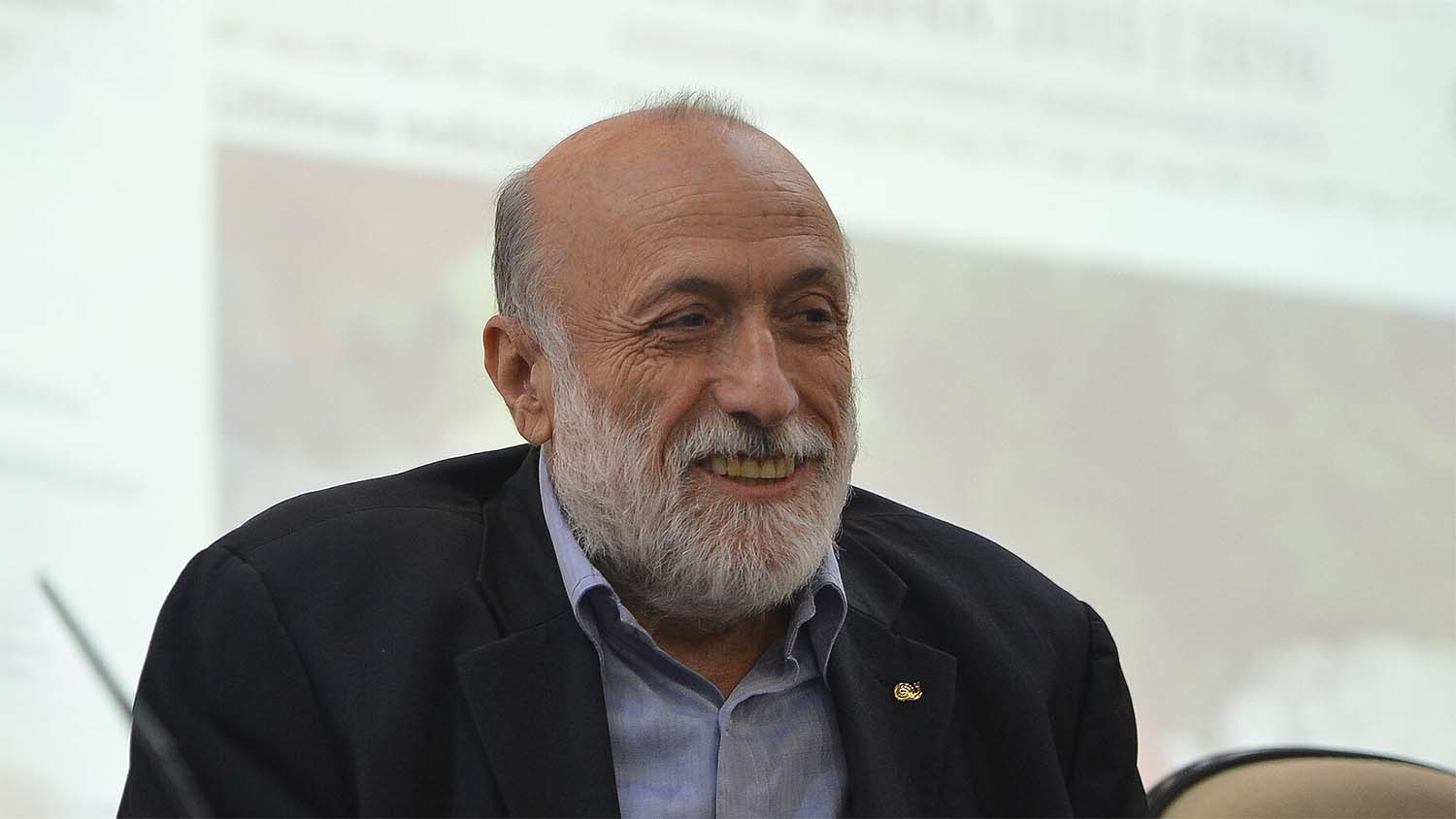
Carlo Petrini signing a cooperation agreement between the Brazilian government and Slow Food, July 2015. Photo: Marcello Casal Jr / Agência Brasil, CC BY 3.0 BR
Carlo Petrini (1949–2026): Slow Food Founder Dies at 76
The Man Who Taught the World to Eat Slowly
Carlo Petrini, the Italian activist, writer, and gastronome who founded the international Slow Food movement and spent four decades reshaping how billions of people think about food, agriculture, and pleasure, died on May 21, 2026, in Bra, Italy, the small Piedmont town where he was born and where his revolution began. He was 76. The organization he built is now active in more than 160 countries. Slow Food announced the cause as prostate cancer.
Early Life in Bra, Piedmont
Carlo Petrini was born on June 22, 1949, in Bra, a modest market town in the Province of Cuneo in northern Italy’s Piedmont region. The town lends its name to Bra Tenero and Bra Duro, two PDO raw milk cheeses produced in the surrounding countryside that would later appear among the Ark of Taste entries Petrini helped establish. His father, Giuseppe, was a railway worker who had fought as an anti-fascist partisan during World War II. His mother, Maria (Garombo) Petrini, worked in a grocery. The working-class household left its mark: Petrini would spend his entire life insisting that good food was not a privilege for the wealthy but a right for every person, everywhere.
He studied sociology at the University of Trento, where he became active in left-wing politics as a member of the communist Proletarian Unity Party (Partito di Unità Proletaria). In 1977, he began contributing culinary articles to the communist daily newspapers Il Manifesto and L’Unità, combining radical politics and serious food writing in a pairing that would define his career.
Cultural Activism and Political Roots
Long before Slow Food had a name, Petrini was using culture as an instrument of politics. Beginning on June 17, 1975, he and a small group of collaborators broadcast Radio Bra Onde Rosse (Red Waves) from the top floor of a building in central Bra. It was one of Italy’s earliest unlicensed radio stations, assembled from a CB set purchased at a Livorno market. The station ran without a broadcasting license and was seized repeatedly by authorities, drawing solidarity from figures including playwright Dario Fo, before closing in 1978. They participated in Club Tenco, a group of left-leaning musicians, at the famous Sanremo music festival. They organized the Cantè j’Euv international festival, reviving a centuries-old folk tradition of singing for eggs outside farmhouses in the Langhe hills near Bra.
They also established the “Free and Meritorious Association of the Friends of Barolo,” a tongue-in-cheek but serious effort to democratize one of Italy’s most expensive wines. Petrini himself was elected to the Bra town council. His circle sometimes called themselves the “philoridiculous” bunch, bringing heresy and humor to their politics, though the underlying seriousness was never in doubt. His great gift, as would become apparent in the years ahead, was an ability to carry radical arguments from the margins into the mainstream without blunting them.
He was a journalist first. Over his lifetime he regularly contributed to La Stampa, La Repubblica, Il Manifesto, and Il Fatto Quotidiano, writing about sustainable development, culture, gastronomy, and the relationship between food and the environment. All revenue from those journalistic activities was reinvested into Slow Food and its affiliated institutions.
The 1986 McDonald’s Protest and the Birth of Slow Food
On July 26, 1986, news broke that a McDonald’s was to replace a beloved coffee shop in the Piazza di Spagna, at the foot of Rome’s Spanish Steps and one of the country’s most culturally charged public spaces. Petrini treated it as a provocation that demanded a response in kind. He organized a gathering of friends outside the location, distributing penne and delivering speeches against fast food and the broader industrial food system. It was a protest that could only have happened in Italy: equal parts political demonstration and communal meal.
That gathering was the seed of what became Arcigola, a name blending Arci, a type of Italian cultural club, and gola, the Italian word for throat (with a nod, perhaps, to agricola, Latin for farmer). Within three years, Arcigola had spread beyond Italy’s borders, and Petrini recognized that the idea was bigger than any single country’s politics.
In December 1989, the bicentenary of the French Revolution, delegates representing fifteen countries gathered at the Opéra Comique in Paris to sign the Slow Food Manifesto. Its language was deliberately provocative: “We are enslaved by speed and have all succumbed to the same insidious virus: Fast Life.” The remedy was the recovery of simple pleasures: local food, communal eating, and respect for the knowledge and labor of producers. The manifesto proclaimed a “universal right to pleasure.” Petrini was elected the organization’s first president, a role he would hold for 33 years, until 2022.
The name Arcigola gave way to Slow Food as the movement gained international traction. It was more direct, more portable across languages, and it captured the essential confrontation in two syllables.
Slow Food’s Global Projects and Initiatives
What separated Slow Food from other food advocacy organizations was its insistence on turning philosophy into infrastructure. Under Petrini’s leadership, the movement did not merely argue for a better food system; it built institutions designed to outlast any single leader or political moment.
The Salone del Gusto (1996): Turin hosted the first edition of this biennial international fair dedicated to small-scale food producers. It became one of the most significant food events in the world, a marketplace and festival where traditional producers could find audiences, sell their products, and hear their work described as cultural heritage rather than mere commodity.
The Ark of Taste (1996): The Ark of Taste is a global catalog of food biodiversity facing extinction under pressure from the industrial food system and standardized diets. Launched alongside the first Salone del Gusto, the Ark grew to include more than 6,000 crops, livestock breeds, and prepared foods from around the world. In Scotland alone, fifty products were listed, from Isle of Skye sea salt to Hebridean sheep to the Selkirk bannock. In the United States, Slow Food members placed more than 400 items on the register. Italy holds more Ark listings than any other country, with Petrini’s home Province of Cuneo among the most densely represented regions. Castelmagno, Murazzano, Raschera, and the raw milk cheeses bearing Bra’s own name are all Cuneo entries, each one a dairy tradition the Ark helped insulate from standardization pressure. Globally, the project’s existence helped sustain nearly all of the foods it identified as threatened, by building markets and encouraging producers to continue.
The Slow Food Presidia: An extension of the Ark, the Presidia went further by directly supporting the food communities who produced at-risk foods: farmers, shepherds, winemakers, and artisans. Raw milk cheeses are among the most symbolically significant categories in the Presidia network, embodying the program’s central argument that traditional production methods are worth defending on their own terms. The program put Slow Food philosophy into direct agricultural practice.
Terra Madre (2004): Terra Madre is a biennial global gathering of food communities, launched in Turin at the former Fiat plant at Lingotto. The first Terra Madre brought 5,000 delegates together from 130 countries, including farmers, fishers, artisans, chefs, and academics, in a setting that deliberately placed small-scale producers at the center. Terra Madre has since expanded to regional editions on every continent; the inaugural full-scale Terra Madre Americas event, held in Sacramento, California in September 2025, drew approximately 140,000 attendees.
The University of Gastronomic Sciences (2004): Founded in Pollenzo, near Bra, in the former palace of the last King of Italy, the University of Gastronomic Sciences was the first accredited institution to offer an interdisciplinary approach to food studies encompassing culture, history, ecology, and agriculture. Since its founding, approximately 4,000 gastronomes from 100 countries have trained there. In 2017, the Italian government formally established a Bachelor’s Degree Program in Gastronomic Sciences, a recognition that would not have been possible without Petrini’s decades of insistence that gastronomy was a legitimate field of inquiry.
The Slow Food Philosophy: Good, Clean, and Fair
Petrini distilled his vision into three words that needed no translation: food should be good, meaning it should taste right and be of genuine quality; clean, meaning it should be produced in ways that do not damage the environment; and fair, meaning producers should be paid justly for their work.
The framework maps with particular clarity onto raw dairy. A raw milk cheese produced on a small pasture farm and sold directly to consumers satisfies all three criteria at once: good in the fullest sense Petrini intended, produced cleanly without industrial shortcuts, and priced within a supply chain direct enough to return meaningful value to the producer.
He rejected the word “consumer,” preferring “co-producer,” his argument being that when a person chooses food with knowledge of its origins, its ecological impact, and its role in a local economy, that person is participating in the production system, not merely receiving its output.
He was equally critical of the celebrity chef culture that had come to dominate food media. One of his most repeated lines, loosely translated from French, held that you cannot change the world with sad people. But he was equally impatient with the spectacle of cooking television and the elevation of male chefs into philosophical authorities, while the women who had fed humanity for millennia with far fewer resources remained invisible. He insisted gastronomy be understood as Brillat-Savarin had originally conceived it: as a holistic science connecting chemistry, physics, biology, anthropology, economics, and politics.
His dialogue with Pope Francis, documented in the 2020 book Terrafutura, reflected how far Petrini’s thinking had traveled from its origins in the Italian communist left toward something more ecumenical. In 2017, together with the Bishop of Verona, he founded the Laudato Si’ Communities, a network of approximately 80 local groups operating in the spirit of Pope Francis’s encyclical on the environment, uniting people of different faiths around a shared commitment to ecological care.
Books and International Recognition
Petrini was a prolific and influential author. The Reasons for Taste (2001) introduced his philosophical framework to a global audience. Slow Food Revolution (2005), co-written with journalist Gigi Padovani, recounted the movement’s origins. Good, Clean, and Fair: Principles of a New Gastronomy (2005) laid out the foundations of what he called “eco-gastronomy,” translated into numerous languages and resonant far beyond food advocacy circles. Terra Madre: How Not to Let Food Eat Us (2009) and Food and Freedom (2013) explored how food sovereignty could address hunger, inequality, and cultural homogenization. His final major work, A Taste for Change (2023), written in conversation with French economist Gaël Giraud, mapped the ecological transition as a path toward a more just society.
In 2004, Time magazine named him a European Hero and included him among its “Heroes of the Year.” In 2008, the Guardian placed him on its list of “50 People Who Could Save the Planet.” In 2013, he received the United Nations Environment Programme’s Champions of the Earth award in the Inspiration and Action category. He received honorary degrees from the University of New Hampshire, the University of Palermo, and the Istituto Universitario Suor Orsola Benincasa of Naples. In 2024, he was honored at the Italian Cultural Society’s gala in Washington, D.C.
In one of his final public appearances, at the Cheese 2025 event in Bra, he warned about proposed European regulations that threatened raw milk cheese production in Italy, a cause connected to his core belief that artisanal food traditions deserve protection from industrial standardization. Italy’s raw milk tradition, from aged farmhouse wheels to the raw milk vending machines that supply fresh milk directly from local farms, represents precisely the kind of living food culture Slow Food was built to defend.
Stepping Down: Succession and Final Years
After 33 years as Slow Food’s president, Petrini stepped down in 2022 at the movement’s 8th International Congress in Italy. His successor was Edward Mukiibi, an agronomist from Uganda who had been born, by coincidence, in 1986, the same year Slow Food was founded. Petrini had planned the succession carefully. He remained on Slow Food’s board and continued as president of the University of Gastronomic Sciences until his death.
He continued writing, speaking, and advocating. Those who knew him described a man whose energy and appetite for ideas did not diminish with age. Alice Waters, the founder of Chez Panisse and a close friend, put it simply: “Carlo was always not just speaking forth, but he was connecting with the person who is on the ground.”
Death of Carlo Petrini: May 21, 2026
Carlo Petrini died at his home in Bra, Italy, on May 21, 2026. He was 76. The cause was prostate cancer. Slow Food announced his death, and tributes arrived from across the globe, from New York, Rome, Uganda, Uruguay, Edinburgh, and Paris. Among them, the French organic cooperative Biocoop republished a 2018 interview with Petrini as a tribute, a reflection of how thoroughly his ideas had shaped European organic food culture.
Fred Plotkin, a food and culture writer and longtime friend, called it “an irreplaceable loss to the food movement, to humanity.” Plotkin remembered him as “the Noah who built the Ark of Taste that saved thousands of plants, fruits, vegetables, herbs, cheeses, meats, wines and so much more from the scourge of standardization.”
Marion Nestle, the Paulette Goddard Professor of Nutrition, Food Studies, and Public Health Emerita at New York University, noted: “Much has and will be written about his monumental importance to the Slow Food movement and to the food movement in general. His story about its founding is legendary.”
Carlo Petrini’s Legacy and Slow Food Today
It is difficult, four decades on, to reconstruct how strange and fringe Petrini’s ideas once seemed. Organic food sections in supermarkets, farmers’ markets as standard urban infrastructure, restaurants that proudly list their local suppliers, menus organized by season, the language of biodiversity and food sovereignty in mainstream policy conversations: none of this was inevitable. Petrini and the movement he built gave these ideas institutional form, intellectual scaffolding, and global reach, while remaining rooted in the pleasures of a shared meal.
He was, in the end, a man who believed that gastronomy and ecology were not merely compatible but inseparable. A world of good food and a healthy planet were, in his view, the same project, and pursuing them could be joyful. His great argument was that slowness was not passivity but self-determination: “Being slow means that you control the rhythms of your own life.”
Slow Food is now active in more than 160 countries. The Ark of Taste catalogs more than 6,000 endangered foods. The University of Gastronomic Sciences continues to train food professionals from across the world. Terra Madre will reconvene in Turin in the fall of 2026, as it has every two years, bringing together the farmers and food communities whose work Petrini spent his life defending.
He spent his life building a movement designed to endure, and endure it will.