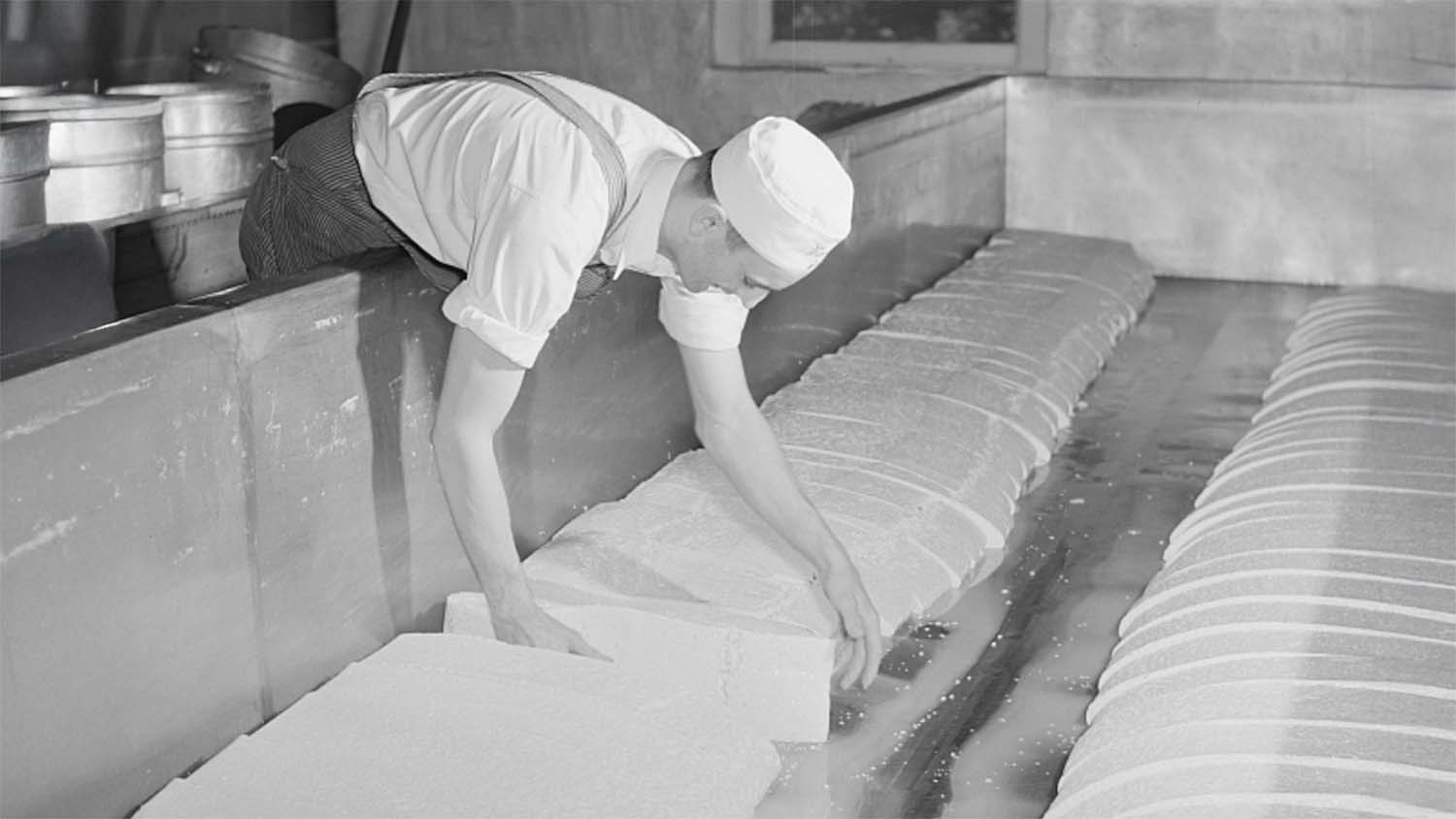
Library of Congress, Prints & Photographs Division, Farm Security Administration/Office of War Information Black-and-White Negatives.
Why Campylobacter Rarely Survives the Cheesemaking Process
Campylobacter jejuni is the most common bacterial cause of foodborne illness in the United States, responsible for an estimated 1.5 million infections per year. Raw milk is a documented transmission vehicle for the organism. Raw milk cheese is not. The explanation is biological: Campylobacter has growth requirements so narrow that the standard conditions of cheesemaking eliminate it before the product reaches the consumer.
Why Campylobacter’s Growth Requirements Make It Uniquely Fragile
Campylobacter jejuni belongs to a group of bacteria that have evolved to thrive in the intestinal tracts of warm-blooded animals, where temperatures are high, oxygen is low, and moisture is abundant. Those three conditions, warmth, low oxygen, and high moisture, define the organism’s narrow livable range. When any one of them falls outside its tolerance, the organism cannot grow. When all three are violated simultaneously, as they are during cheesemaking, survival becomes very unlikely.
The growth requirements of C. jejuni distinguish it sharply from the pathogens that do survive cheese aging.
Its minimum growth temperature is 30°C (86°F), and its optimal growth temperature is 42°C (108°F). This thermophilic profile means the organism cannot reproduce at any temperature typical of cheese aging, cheese storage, or even most ambient environments. Unlike Listeria monocytogenes, which grows at 0°C, Campylobacter requires conditions closer to a living animal’s body temperature than to a refrigerator or aging cave.
Its minimum water activity requirement is approximately 0.99, among the highest of any significant foodborne pathogen. This means it requires nearly pure free water to sustain itself. Even modest reductions in available moisture are inhibitory.
Its minimum growth pH is approximately 4.9, and it lacks the acid tolerance response mechanism present in E. coliO157:H7. When exposed to acidic conditions, C. jejuni does not adapt. It declines.
Most significantly for cheesemaking, C. jejuni is a microaerophile. It requires an atmospheric oxygen concentration of approximately 3 to 5% for growth. The standard atmosphere contains approximately 21% oxygen. That level is not merely above the organism’s optimum; in most circumstances it is inhibitory or lethal.
Why Atmospheric Oxygen During Cheesemaking Is Lethal to Campylobacter
During cheesemaking, the milk, curd, and early-stage cheese are exposed to atmospheric conditions at multiple points. Whey drainage, curd cutting, stirring, pressing, and salting all involve contact with ambient air. For most pathogens of food safety concern, this is a manageable or irrelevant condition. For Campylobacter, it represents repeated exposure to oxygen concentrations several times higher than the maximum it tolerates.
Mature cheese develops a more anaerobic interior as the aging process progresses, and some researchers have suggested that deep interior zones of large cheese wheels could theoretically provide microaerophilic conditions. However, the cheesemaking stages that precede that interior environment, and the surface exposure throughout aging, involve extensive oxygen contact that is incompatible with Campylobacter survival.
The organism is also highly sensitive to desiccation. Even mild surface drying, which occurs naturally during the early stages of rind formation, dramatically reduces Campylobacter viability. The combination of oxygen exposure and desiccation during the transition from fresh curd to developing cheese represents conditions under which C. jejunipopulations decline rapidly.
Salt, Water Activity, and pH
The salt applied to cheese, whether by direct incorporation into the curd or through brining, reduces water activity below the organism’s minimum requirement within the first days of production. Even relatively mild cheeses with salt concentrations of 1.5 to 2.0% bring water activity down from the 0.99 or higher that Campylobacter requires for growth.
The lactic acid fermentation that follows cheesemaking drops the curd pH from the near-neutral range of fresh milk (pH 6.5 to 6.7) toward the acidic range of aged cheese (pH 4.5 to 5.2). Campylobacter has a minimum growth pH of approximately 4.9 and no adaptive mechanism for surviving sustained acid exposure. As the curd acidifies, conditions for C. jejuni become progressively untenable.
The table below summarizes how C. jejuni‘s growth requirements compare to what standard cheesemaking delivers.
| Growth Factor | C. jejuni Requirement | What Cheesemaking Delivers | Outcome |
|---|---|---|---|
| Temperature | 30°C minimum (86°F) | 10-15°C during aging | Cannot grow |
| Oxygen | 3-5% O2 | ~21% atmospheric during processing | Inhibitory to lethal |
| Water activity | 0.99 minimum | 0.82-0.97 depending on style | Growth impossible |
| pH | 4.9 minimum | 4.5-5.2 in aged cheese | Below minimum |
| Salt tolerance | Very low | 1.5-8.0% NaCl | Effectively inhibited |
No single one of these conditions is sufficient to eliminate Campylobacter on its own. Together, they constitute overlapping barriers that the organism cannot navigate.
The Contrast with Fluid Raw Milk
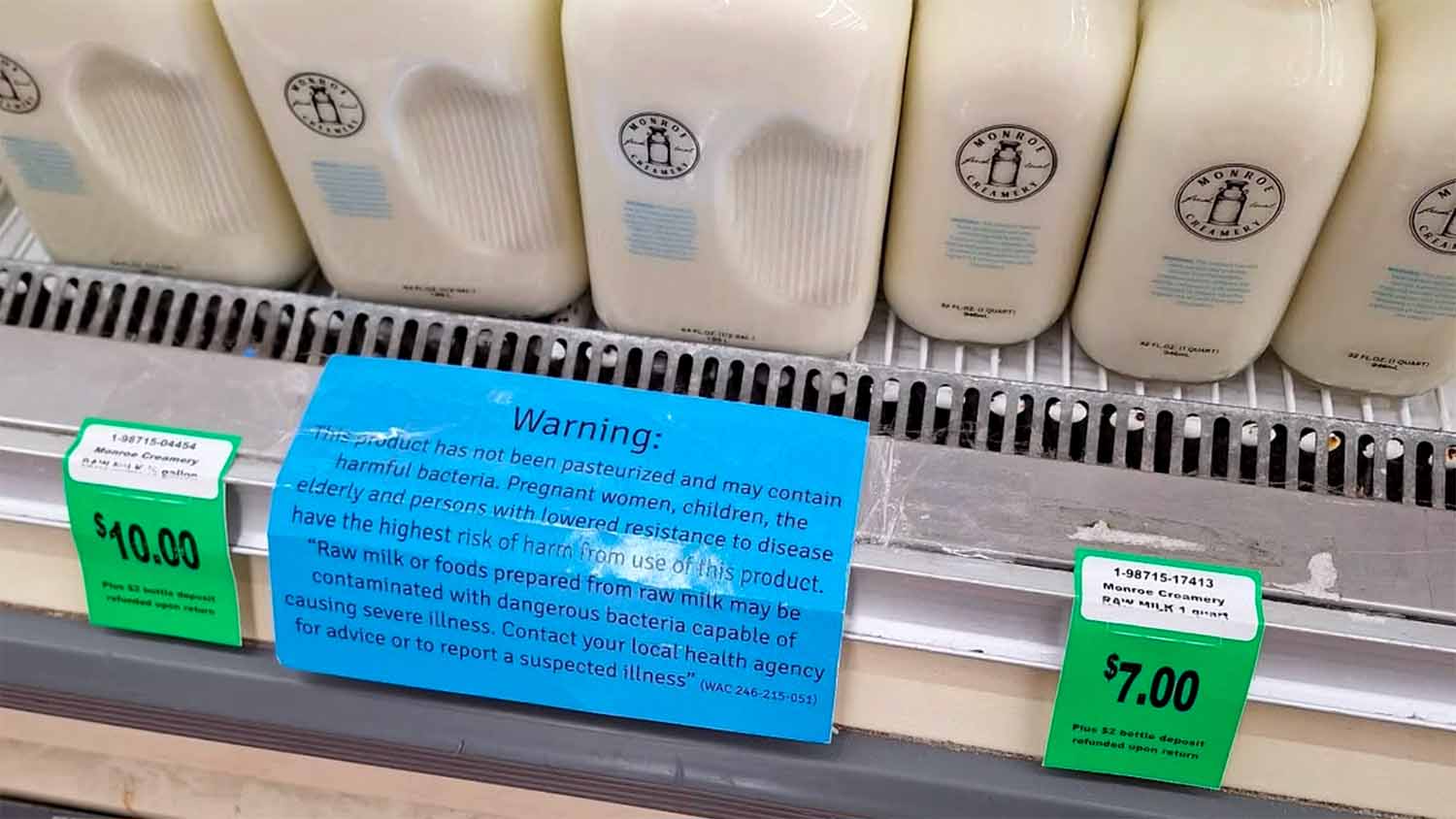
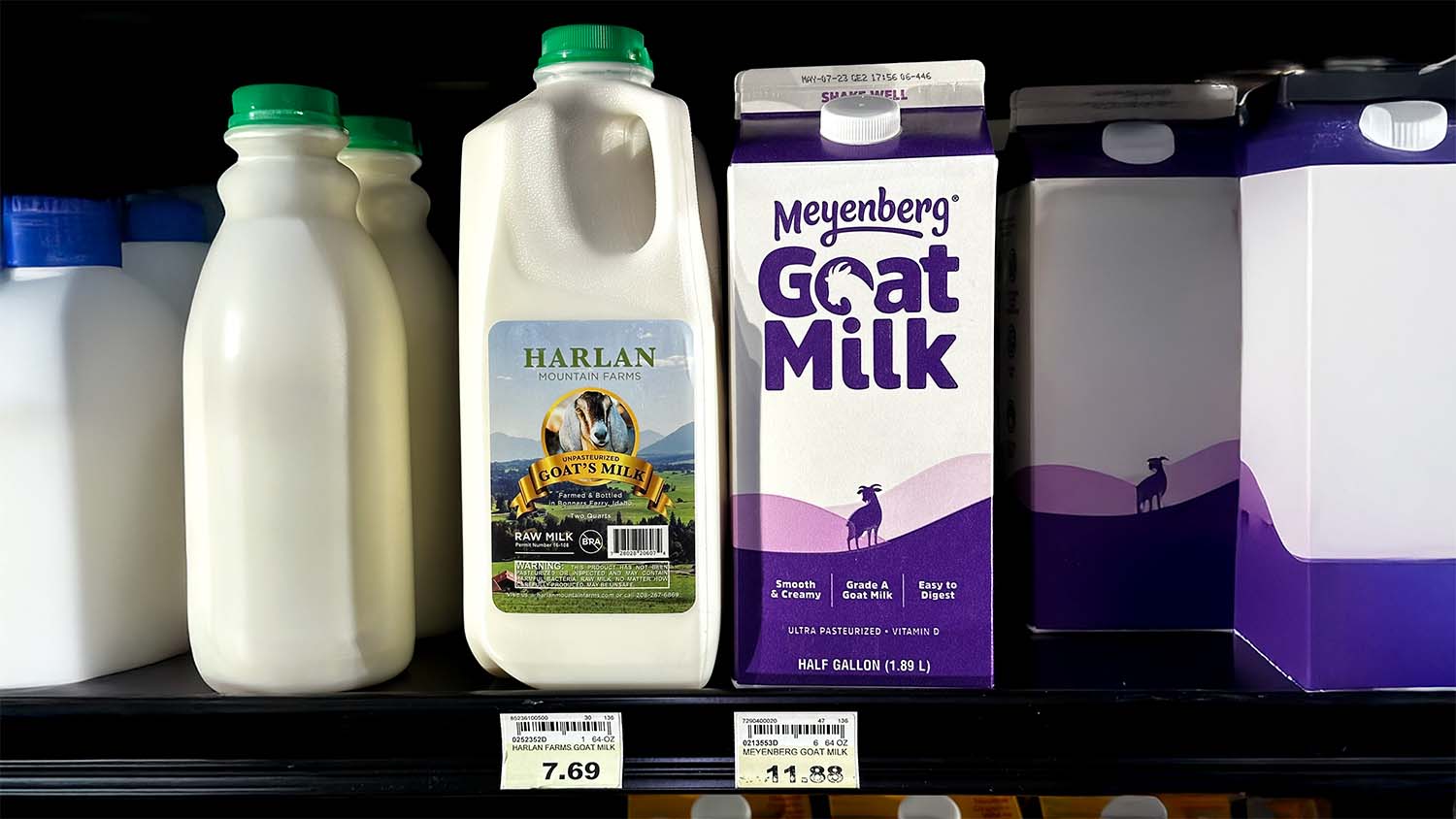
The reason Campylobacter remains a significant raw milk concern, despite being rare in raw milk cheese, is that fluid milk bypasses every one of those barriers. Fresh raw milk maintains near-neutral pH, high water activity, no added salt, and refrigeration temperatures. Campylobacter cannot grow at 4°C, but it can survive there long enough to cause illness upon consumption. The time between milking and drinking is often short enough that even populations present at low initial levels can reach infectious doses without any growth at all.
The infectious dose for C. jejuni is estimated at approximately 500 to 800 cells for most individuals, among the lower thresholds of the common foodborne pathogens. This means that survival in fluid milk without any multiplication is sufficient to present a risk, whereas the extended multi-stage process of cheesemaking systematically eliminates the organism before the product reaches the consumer.
What Surveillance Data Shows
Federal and state outbreak surveillance data consistently reflect the biological picture. Campylobacter outbreaks attributed to raw dairy are documented in the epidemiological record, but they overwhelmingly involve fluid raw milk rather than raw milk cheese. The CDC’s foodborne outbreak data show Campylobacter as one of the leading pathogens in fluid raw milk outbreaks, while its presence in raw cheese outbreaks is rare enough to be essentially absent from the literature as a recurring concern.
This surveillance pattern aligns precisely with what the biology predicts. The pathogens that cause raw milk cheese outbreaks, principally E. coli O157:H7, Listeria monocytogenes, and Salmonella spp., are those with the salt tolerance, acid resistance, or cold-growth capacity to survive or persist through the cheesemaking process. Campylobacter has none of those adaptations.
How Campylobacter Compares to Other Dairy Pathogens
The contrast between Campylobacter and the pathogens that do survive aging is instructive. E. coli O157:H7 survives cheese aging specifically because it possesses an acid tolerance response that allows it to adapt to the pH drop of early-stage curd and persist through conditions that would kill less-adapted cells. Listeria monocytogenes survives because it tolerates salt concentrations up to 10%, grows at refrigeration temperatures, and forms biofilms resistant to sanitizers. Campylobacter has no equivalent adaptive mechanism for any of the conditions cheesemaking imposes.
| Pathogen | Acid Tolerance | Salt Tolerance | Cold Growth | Survives Cheesemaking |
|---|---|---|---|---|
| E. coli O157:H7 | High (ATR mechanism) | Moderate | No | Yes, documented beyond 270 days |
| Listeria monocytogenes | Moderate | High (up to 10% NaCl) | Yes, to 0°C | Yes, especially soft styles |
| Salmonella spp. | Moderate | Moderate | No | Variable, load-dependent |
| Campylobacter jejuni | Low (no ATR) | Very low | No (minimum 30°C) | No, reliably eliminated |
The pattern explains why Campylobacter, despite its outsized role in overall foodborne illness, does not define the microbiological risk profile of aged cheese the way it defines that of fluid raw milk.
What Cheesemaking Accomplishes for Campylobacter
The cheesemaking process eliminates Campylobacter jejuni through the simultaneous application of conditions the organism cannot tolerate: oxygen exposure during curd handling, salt-driven water activity reduction, lactic acid fermentation, low aging temperatures, and surface desiccation during rind development. None of these conditions are designed with Campylobacter in mind. They are the inherent features of traditional cheese production, and they collectively constitute an effective multi-barrier elimination system for this particular organism.
The 60-day aging requirement codified in 21 CFR Part 133 was not necessary to address Campylobacter. The organism is eliminated well before any mandatory aging period is reached. This is one of the clearer illustrations of the principle that different pathogens respond differently to the same set of cheesemaking conditions, and that the question of which organisms cheese aging reliably addresses depends entirely on the biology of each organism involved.