Built to Drink Milk: The Evolutionary History of Lactase Persistence
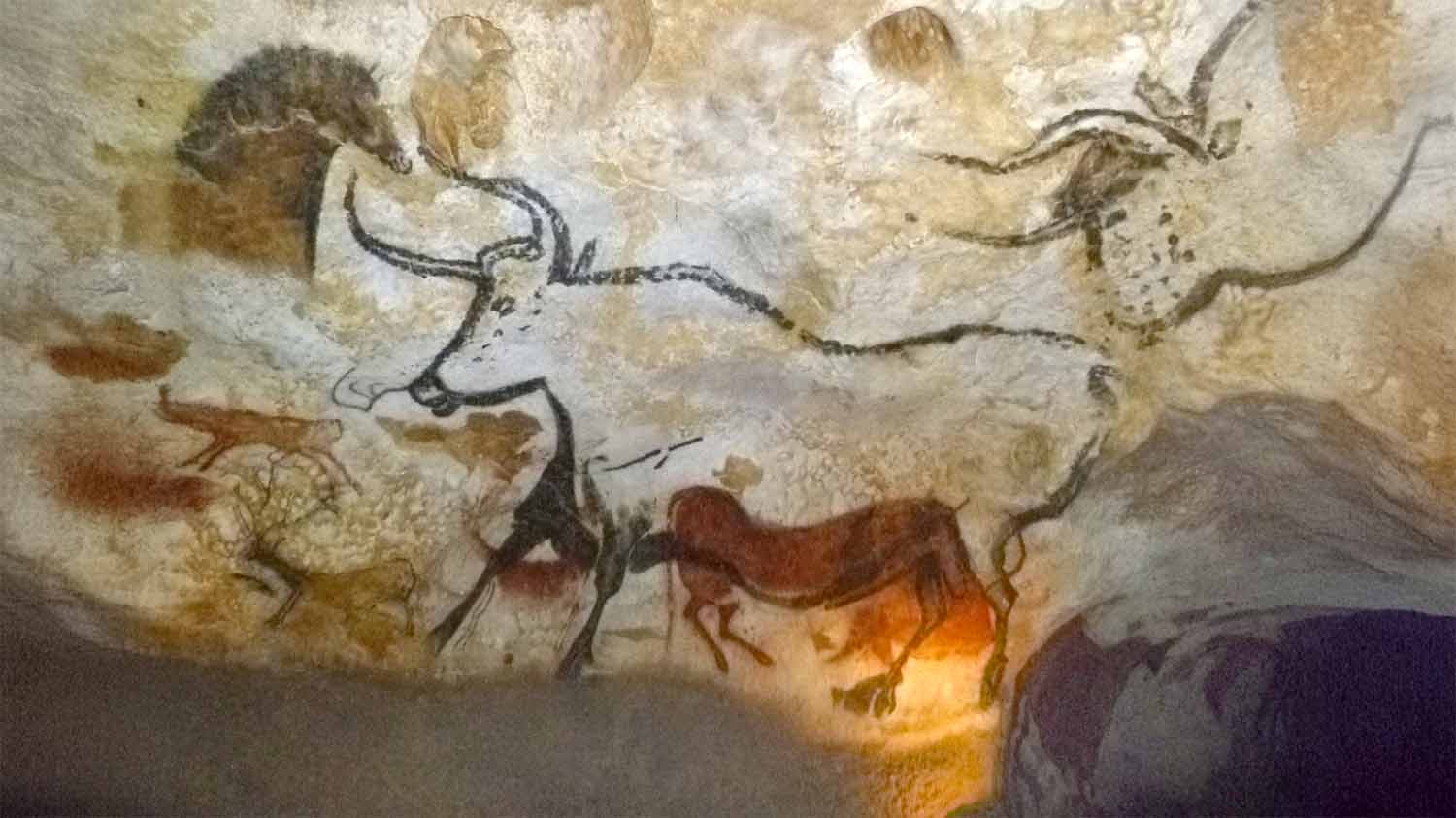
Dairy runs through some of the most nutritionally dense and culturally embedded food traditions in human history. Cheese aged in mountain caves, butter churned from cream in wooden barrels, fermented milk carried across steppe grasslands in animal-hide pouches. The list of foods that depend on milk is enormous, and the civilizations that built their diets around it are among the most historically influential on Earth.
What makes this hard to explain is that the default human condition is an inability to digest milk’s primary sugar past infancy.
Every mammal on the planet is born producing lactase, the intestinal enzyme that breaks down lactose. In nearly all of them, including the overwhelming majority of ancestral humans, that production winds down after weaning and does not return. Consuming fresh milk as an adult meant bloating, cramping, gas, and diarrhea. For populations already weakened by famine or disease, it meant something worse.
The populations that today drink fresh milk without incident got there through one of the more costly evolutionary journeys in the human record. Their ancestors kept drinking milk anyway, processed it into forms they could survive, and in doing so created both the cultural infrastructure and the selective pressure that gradually rewrote a corner of the human genome. The dairy tradition that resulted is the endpoint of that process, not the starting point.
All Mammals Stop Producing Lactase
Lactase persistence is the scientific term for what most Northern Europeans and their descendants take for granted: the continued production of intestinal lactase throughout adult life. “Persistence” names the trait as the deviation from the norm, not the norm itself.
The LCT gene encodes lactase-phlorizin hydrolase, the enzyme produced by cells lining the small intestine that cleaves lactose into glucose and galactose for absorption. In the vast majority of mammals, a genetic program suppresses LCT expression in the weeks or months after weaning. This is the ancestral condition for humans as well. Lactase non-persistence is not a disorder, deficiency, or malfunction. It is the original setting.
When undigested lactose passes through a non-persistent adult’s small intestine, it arrives intact in the colon. Colonic bacteria ferment it, producing hydrogen gas, carbon dioxide, and short-chain fatty acids. The osmotic effect draws water into the bowel. The result is the familiar cluster of symptoms: bloating, flatulence, cramping, and diarrhea. Symptom severity varies considerably by dose, gut transit speed, and the composition of an individual’s colonic microbiome. Some non-persistent adults tolerate modest quantities of dairy without noticeable discomfort. Others react to very small amounts. Individual thresholds differ widely, but the underlying biology does not.
Roughly 65 percent of the world’s adults today are lactase non-persistent. The populations where non-persistence is nearly universal include most of East Asia, equatorial Africa outside pastoralist groups, and Indigenous populations across the Americas and the Pacific. What Europe, parts of sub-Saharan Africa, and stretches of the Middle East and South Asia share is a history of sustained dairying under conditions that made the ability to drink fresh milk a matter of survival.
Milk Before the Mutation: 9,000 Years of Dairying Without Tolerance
The Neolithic Revolution, the shift from mobile hunter-gatherer life to settled agriculture, brought cattle, sheep, and goats under human management beginning around 10,000 years ago in Southwest Asia. The animals were initially valued for meat, hides, labor, and bone. Milk came later, but not much later.
Pottery fat residues show that dairy was being processed in Southwest Asia as early as 9,000 to 7,000 BC. As farming spread northward and westward across Europe over subsequent millennia, the dairying practice came with it. By the time Neolithic farming cultures had established themselves across central and northern Europe, milk processing was already a routine part of subsistence life.
The critical finding from ancient DNA analysis is that none of these early farmers could digest fresh milk in adulthood. The C/T-13910 allele was essentially absent in early Neolithic Europeans. These were lactose-intolerant people milking animals every day.
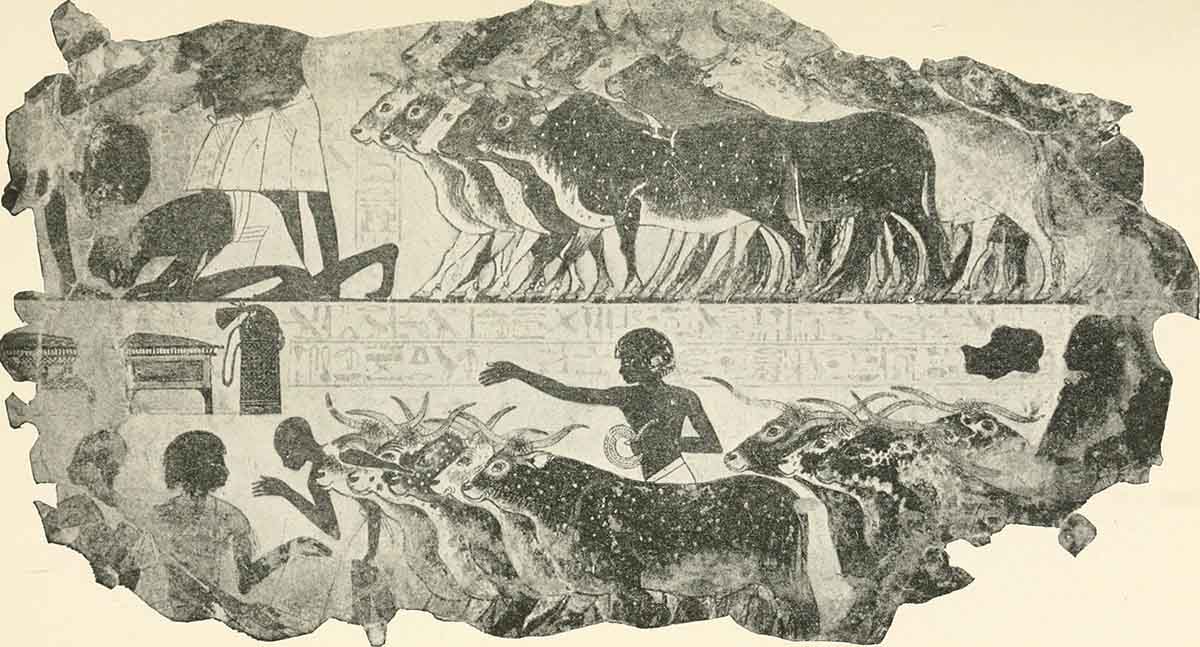
The apparent paradox resolves when the actual dairy products are considered. Early Neolithic populations were almost certainly not consuming fresh milk in large quantities. They were processing it. Late Neolithic pottery from Poland shows high curd-protein content consistent with cheesemaking, with evidence of milk from multiple species including cattle, sheep, and goats. Cheese production reduces lactose content substantially through the separation of whey during curdling and through bacterial fermentation during aging. Yogurt, kefir, and other cultured products reduce it further. Butter, produced by churning cream, contains almost none. These were not workarounds invented by lactose-intolerant people as a consolation. They were the original dairy technologies, developed before the genetics of tolerance existed, and they remain the foundation of the world’s dairy culinary tradition.
The culture of dairying preceded the genetics of dairy tolerance by thousands of years. The processing technologies were built first, and the mutation arrived later into an already established dairy culture.
A Mutation 3,500 Years in the Making
The C/T-13910 variant is not the lactase gene itself. It sits in a regulatory region roughly 13,910 base pairs upstream of LCT, inside an intron of an adjacent gene called MCM6. The T allele at this position appears to interfere with the normal shutdown of lactase expression after weaning, allowing LCT activity to persist into adulthood. The mechanism is still being characterized at the molecular level, but the population-level result is well established: carriers produce lactase throughout their lives and digest fresh milk without symptoms.
The allele first appears in the ancient DNA record around 4,700 to 4,600 BC but was not common until roughly 1,000 BC, nearly 3,500 years after it first emerged. For most of the Neolithic and Bronze Age, the variant existed at low frequency while dairying was already widespread. Whatever advantage the mutation eventually conferred, it did not manifest as a rapid sweep through the population the moment fresh milk became available.
The evolutionary genetics of the allele show how intense the eventual selection pressure became. Haplotype conservation around C/T-13910 places it among the most strongly selected loci in the human genome over the past 10,000 years. The selection signal is unambiguous. Its cause has been harder to pin down.
The Famine-and-Disease Hypothesis: Overturning the Standard Narrative
For decades, the dominant explanation for why lactase persistence spread was nutritional: individuals who could absorb lactose from fresh milk gained additional calories and calcium, outcompeted their non-persistent neighbors, and passed the trait at higher rates to their offspring. The calcium assimilation hypothesis added a geographic refinement, suggesting that in northern latitudes with limited sunlight and reduced vitamin D synthesis, lactose-facilitated calcium absorption provided a particularly strong advantage.
Both hypotheses have the intuitive appeal of a direct link between the ability to drink milk and the benefits of drinking it. A 2022 Nature study led by Richard Evershed at the University of Bristol, in collaboration with Mark Thomas’s group at University College London, found that the data do not support them.
The team assembled what is likely the most comprehensive database of prehistoric dairy use ever compiled: nearly 7,000 organic fat residues from pottery fragments at 554 archaeological sites across Europe, spanning the past 9,000 years. They then mapped those dairy use patterns against ancient DNA data from more than 1,700 prehistoric individuals carrying or lacking the C/T-13910 allele. The prediction from the nutritional hypothesis was that LP allele frequency should track milk use intensity across time and geography. It does not. Regions with intensive prehistoric dairying did not show faster LP spread than regions with less intensive use.
The research team’s conclusion shifted the model substantially. The selective pressure that drove the C/T-13910 allele to high frequency appears to have been driven by famine and pathogen exposure, not by the nutritional advantages of fresh milk under ordinary conditions. The mechanism is dehydration. In a lactose non-persistent individual with concurrent diarrheal disease, undigested lactose draws additional fluid into an already-compromised bowel. The combination of illness-driven fluid loss and lactose-driven osmotic diarrhea could prove fatal in populations already weakened by crop failure or epidemic. Individuals carrying the persistence allele who drank milk during a famine or disease outbreak lost less water and survived at higher rates. Their non-persistent neighbors did not.
“The lactase persistence genetic variant was pushed to high frequency by some sort of turbocharged natural selection,” said Mark Thomas, professor of evolutionary genetics at University College London and co-author of the study. “The problem is, such strong natural selection is hard to explain.”
The famine-and-disease model accounts for the timing. LP spread rapidly not during the long stable centuries of routine dairying but during the intermittent catastrophes that punctuated Bronze Age and Iron Age life: epidemic disease, crop failures, population displacement. The variant was always present at low levels. Repeated crises provided the turbocharged selection events that pushed it to dominance.
The Same Solution, Five Times Over
The C/T-13910 variant explains European lactase persistence. It does not explain the rest of the world’s.
Lactase persistence evolved independently at least five times in different human populations, each time through a distinct genetic mutation at or near the same regulatory region, each time in a population with a documented history of pastoralism. In East African groups including Tutsi, Oromo, and Fulani pastoralists, different variants at positions -14010, -13915, and -13907 confer the same phenotype through different molecular mechanisms. Among nomadic Arab populations in the Arabian Peninsula and East Africa, the -13915 variant is particularly common. These alleles arose on entirely different genetic backgrounds from the European mutation, with no shared evolutionary origin.
The global distribution of the trait maps onto this history with some precision. Northern and northwestern European populations show the highest frequencies, ranging from approximately 89 to 96 percent in Ireland, the United Kingdom, Scandinavia, the Netherlands, and Germany. Southern Europe contrasts sharply: frequency drops to approximately 17 percent in Greece and 14 percent in Sardinia. East African pastoralist populations reach comparably high rates through entirely different variants, with the Tutsi showing frequencies approaching 90 percent. East Asian populations, who do not have a deep history of pastoralism, show frequencies typically below 10 percent.
The convergence of independent mutations toward the same phenotype, in every population with a sustained dairying tradition, across three separate continents, is one of the cleaner demonstrations of strong natural selection anywhere in the human genome.
Tolerance Within a Lifetime
Genetic selection operates across generations. There is a separate process that operates within a single one.
Controlled studies have shown that daily lactose consumption in lactose non-persistent individuals produces measurable colonic adaptation within weeks: fecal beta-galactosidase activity increases, hydrogen production falls, and symptoms diminish. The mechanism is microbial. Regular lactose exposure shifts the composition of the colonic microbiome toward bacteria that ferment lactose efficiently and away from those that produce the osmotic and gaseous effects responsible for symptoms. A 2019 review in the American Journal of Clinical Nutrition concluded that intestinal lactase expression is essentially fixed, but the colonic microbiome is genuinely adaptable.
This is the same process ancestral populations were working through when they kept consuming dairy despite the discomfort. They were not selecting for a gene. They were conditioning a microbiome. The two mechanisms operated in parallel across thousands of years, one fast and individual, the other slow and population-wide, and both moved in the same direction. That parallel, and what it may mean for people who currently avoid dairy, is examined in Why Many Dairy-Intolerant People Report Tolerating Raw Milk and in the account documented in She Simply Tolerated the Lactose.
A Food Category Gained Over Millennia
The dairy tradition available today came out of a long process nobody designed. Populations that could not digest fresh milk domesticated animals anyway, milked them, and developed the fermentation and processing technologies to make dairy survivable: cheese aged until its lactose dropped to near zero, yogurt and kefir cultured by bacteria that consumed lactose in the process, butter and ghee with virtually none remaining. These were not compromises. They were the original dairy technologies, and they remain the foundation of most of the world’s dairy culinary tradition.
Those same populations consumed fresh milk during famines and epidemics despite the consequences, and the individuals who happened to carry a rare regulatory variant lived through those events at higher rates. Over centuries, that variant accumulated. The result was a population capable of drinking fresh milk without symptoms, with access not only to fluid milk but to the entire catalog of fermented and processed foods their ancestors had spent thousands of years developing.
That catalog is available today because of what the people who could not fully digest it chose to do with it anyway.