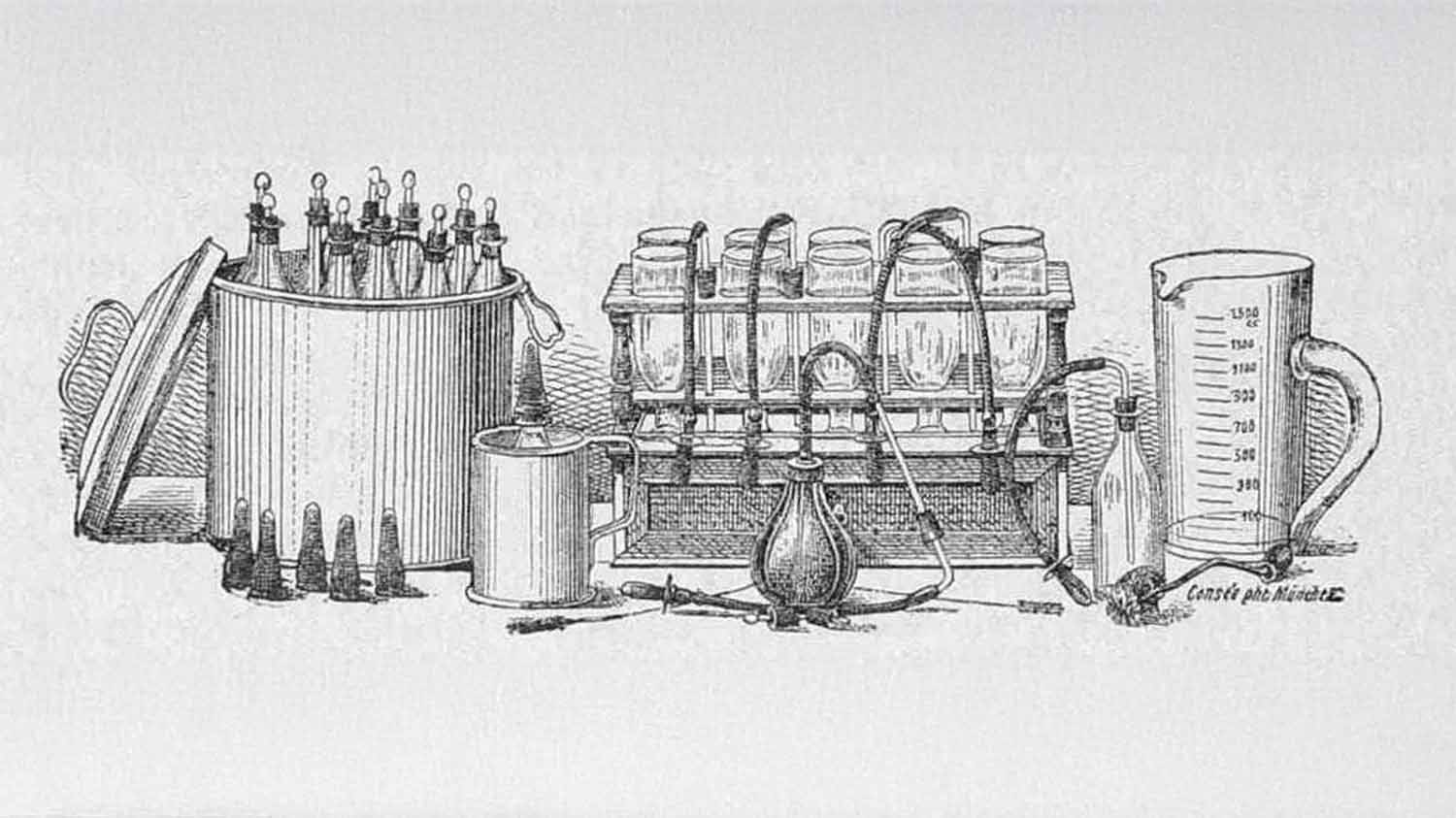
An 1888 illustration of the Soxhlet apparatus for sterilizing milk, two years after Franz von Soxhlet first proposed heat-treating the milk supply to protect infants. (Die Gartenlaube, public domain)
A Colorado Memo Got the History of Pasteurization Wrong, and the Real Story Is More Interesting
A February 2026 memo from Colorado’s Legislative Council Staff, prepared for state lawmakers considering raw milk policy, opens its discussion of pasteurization with a one-line history lesson: “Louis Pasteur invented pasteurization in 1863 in an effort to make milk last longer without spoiling and to prevent disease transmission.”
That sentence is wrong in almost every particular. Pasteur’s heat-treatment experiments in the 1860s had nothing to do with milk. The man who first proposed applying pasteurization to milk did so more than two decades later, for reasons that had little to do with Pasteur’s own goals. And the industrial milk-pasteurization systems that eventually spread across American and European cities were built in response to a public health emergency that Pasteur never addressed and likely never anticipated.
None of this changes the underlying science of how heat treatment affects pathogens in milk, which the memo covers reasonably well elsewhere. But the origin story matters, because it shapes how people understand pasteurization: as a deliberate food-safety intervention aimed at dairy, versus what it actually was, a chemistry technique invented for one industry and borrowed, retrofitted, and politically fought over by a different one decades later.
What Pasteur Was Actually Trying to Save
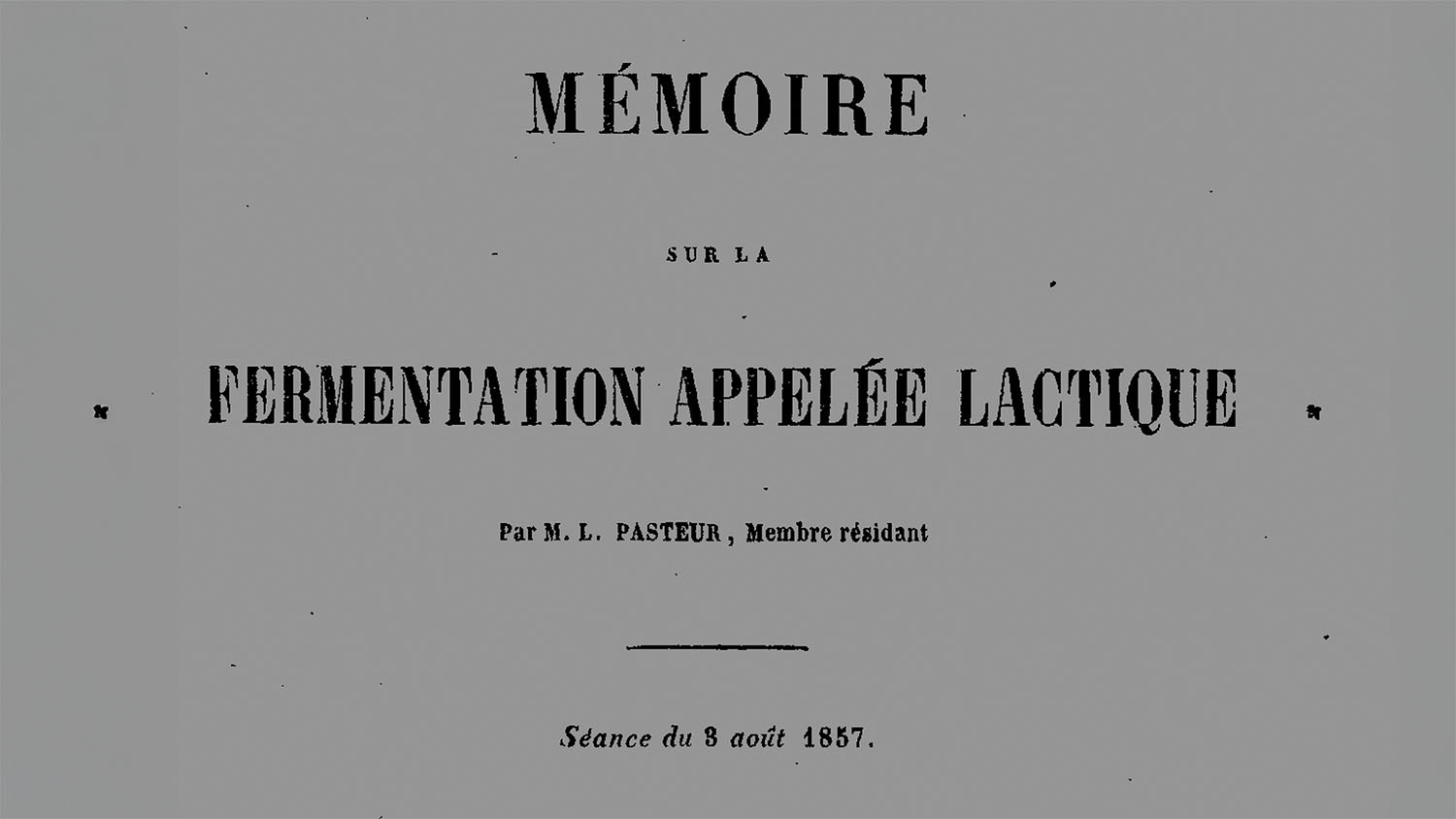
In 1863, Emperor Napoleon III asked Pasteur to investigate why French wines, a major export, were spoiling in transit and arriving undrinkable, a problem with serious economic stakes given a recent trade agreement with Britain (Institut Pasteur). The following summer, working out of a makeshift lab in his hometown of Arbois, Pasteur found that briefly heating wine to roughly 50-60°C killed the microorganisms responsible for souring it without ruining the flavor (Wikipedia: Pasteurization). He patented the process in 1865 specifically as a treatment for wine disease (Science History Institute).
Pasteur went on to apply the same heat-treatment logic to beer, most famously in a nationalist “revenge beer” project after France’s defeat in the Franco-Prussian War, when he demonstrated that pasteurized beer from Paris cafes stayed clear far longer than untreated beer (Science History Institute). Wine and beer, not milk, were the products Pasteur set out to protect, and the timeline runs from a 1863 commission through 1864 experiments to a 1865 patent, not a single moment of invention in 1863.
So even on the narrowest reading, the Colorado memo’s sentence compresses a multi-year process into the wrong year and points it at the wrong product.
The Man Who Actually Proposed Pasteurizing Milk
The connection between Pasteur’s wine work and milk did not happen until 1886, when Franz von Soxhlet, a German agricultural chemist at the Technical University of Munich, proposed that pasteurization be applied to milk and other beverages to prevent disease and spoilage (Wikipedia: Franz von Soxhlet). Soxhlet was not a footnote figure. He had already invented the Soxhlet extractor, performed the first chemical fractionation of milk’s major proteins, and produced the first description of lactose (Science History Institute). His proposal specifically targeted bottled milk for infant feeding, a use case Pasteur’s original wine and beer work never touched (Wiki Sanitarc).
The twenty-three-year gap between Pasteur’s wine patent and Soxhlet’s milk proposal is the clearest evidence that “pasteurization” as a named process and “pasteurization of milk” as an application are two different inventions separated by a generation, a different country, and a different scientist entirely. The process carries Pasteur’s name because he explained why heat treatment killed spoilage organisms, not because he designed it for the product it is now most associated with.
From Soxhlet’s Proposal to Your Local Dairy
A proposal in a German journal in 1886 did not translate into pasteurized milk on grocery shelves. The push that actually industrialized milk pasteurization came from a public health crisis playing out in American cities at the turn of the 20th century, commonly called the “swill milk” problem. Urban dairies confined cows in poor conditions, fed them distillery waste, and produced milk that was a major contributor to infant mortality rates that ran as high as a quarter of all infants under one in cities like New York (The Hill).
The response came from two men working together in New York in the early 1890s: Abraham Jacobi, a physician later regarded as the father of American pediatrics, and Nathan Straus, the businessman and co-owner of Macy’s. Jacobi had been prescribing heat-treated milk to infants with good results and coached Straus on how to pasteurize milk at scale. In 1893, Straus opened the first of what became a network of pasteurized milk depots across Manhattan, paired with the era’s largest milk-pasteurization plant (NY Historical Society; The Hill). Commercial pasteurization machines for milk came online commercially in the mid-1890s, roughly a decade after Soxhlet’s proposal and three decades after Pasteur’s wine patent (ChemistryViews).
The motivation here was specific and local: stopping a documented infant mortality crisis tied to identifiable contaminated dairies, driven by physicians and philanthropists responding to swill dairy conditions, not by a chemist’s general theory of fermentation applied decades earlier to a different beverage.
Why the Misattribution Sticks
Compressing this history into “Pasteur invented pasteurization for milk” is an understandable shorthand, since the word itself comes from his name and the underlying heat-kill mechanism he described does apply to milk pathogens the same way it applies to wine spoilage organisms. It is also a shorthand that quietly changes the story. Framing milk pasteurization as something a 19th-century scientist personally designed for dairy, rather than as a food-safety response to a specific and well-documented urban public health emergency that arrived decades later, makes the process sound like an inevitable scientific discovery rather than what it actually was: a contested, late-arriving public health intervention adopted unevenly, city by city and country by country, often over the objections of dairy producers and consumers who argued, much as some do today, that heat treatment changed the taste and nutritional character of milk.
Separate pieces on this site, Pasteur Never Pasteurized Raw Milk and Louis Pasteur: Chemist and Pasteurizer of Beer and Wine, covers the related history of how pasteurization mandates spread (and in some places failed to spread) through the UK and US in the decades after Straus’s milk depots opened. The throughline in both pieces is the same: the science of heat-killing pathogens in milk is well established and is not in dispute, but the historical narrative that frames pasteurization as Pasteur’s original purpose for dairy does not hold up against the documented timeline.
The Bigger Picture
None of this history changes the disease-transmission data that legislative memos like Colorado’s are trying to summarize. Raw milk and pasteurized milk carry genuinely different risk profiles, and that comparison stands on its own evidence. The history behind the technology itself, though, runs through a German chemist most people have never heard of, a New York department store owner, and a pediatrician responding to a documented public health emergency, a more accurate and, frankly, more interesting story than the one-line version.