Abraham Jacobi, Father of American Pediatrics, and the Milk Question
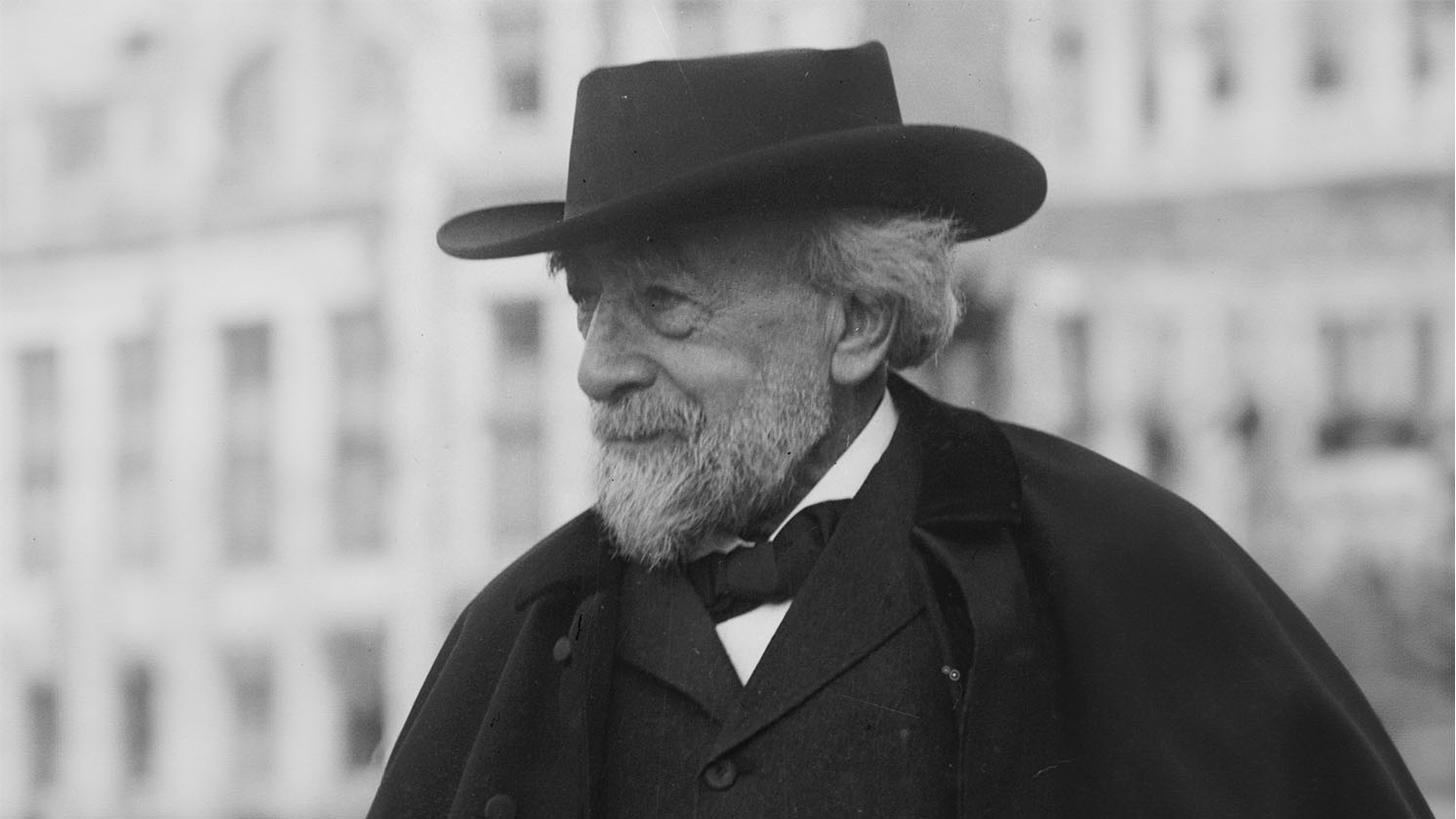
Abraham Jacobi was a Westphalian Jew who had been imprisoned for treason, stayed with Karl Marx in London, and arrived in New York in 1853 with no money, no connections, and no license to practice. He spent the next sixty-six years building the institutional foundations of American pediatrics, and in doing so made milk safety one of the central questions of late nineteenth-century public health. His advocacy for heat-treated milk, which began more than two decades before Nathan Straus opened his first depot and predated widespread commercial pasteurization by a generation, shaped the terms on which the milk debate in America was conducted.
The 1848 Revolution and Two Trials
Abraham Jacobi was born on May 6, 1830, in Hartum, a village in Westphalia then under Prussian administration. His parents were a poor shopkeeper and his wife, who educated their son at considerable personal sacrifice, sending him to the gymnasium in the nearby city of Minden. After finishing there, Jacobi enrolled in medicine at the University of Greifswald in 1848, continuing at Göttingen before completing his degree at Bonn in 1851.
The year he began his studies was also the year the revolutions of 1848 broke out across Europe. In France, the February revolution had deposed Louis-Philippe; in Prussia and the German states, liberals, republicans, and socialists had taken to the streets demanding constitutional government, national unification, and an end to aristocratic privilege. Jacobi, eighteen years old and politically radicalized by his reading and his circumstances, joined the movement. He became affiliated with the Communist League, corresponding with Karl Marx and associating with Carl Schurz, the future American senator and diplomat who was then also a young revolutionary in Bonn. The uprising failed. The Prussian crown reasserted control, and in the years that followed the government moved systematically to prosecute those it held responsible.
What followed for Jacobi was two distinct legal ordeals separated by the better part of two years. In 1851, shortly after receiving his medical degree, he was arrested and held in pretrial detention in prisons in Berlin and Cologne as a suspected member of the Communist League. He was one of eleven League members brought before the Prussian court in what became known as the Cologne Communist Trial, which ran from October 4 to November 12, 1852. The government’s case was built largely on fabricated evidence assembled by the police counsellor Wilhelm Stieber, and Marx directed the defense effort from London, working to expose the prosecution’s methods. Seven of the eleven defendants were convicted and sentenced to fortress imprisonment of three to six years. Jacobi was among the four acquitted, named alongside Roland Daniels, Johann Jacob Klein, and Johann Erhard in the final declaration Marx and Engels published after the verdict. Daniels, who had been held for eighteen months awaiting trial, died of tuberculosis contracted during his detention.
Acquittal did not mean freedom from prosecution. The Prussian authorities pursued Jacobi on a separate charge, and he was imprisoned again at Bielefeld and Minden, where in 1853 he was convicted of lese-majeste, a charge rooted in his political associations and writings rather than in any specific documented act. The distinction mattered: his revolutionary activity, as far as the surviving record shows, consisted of membership, correspondence, and ideological commitment, not of armed action or organized insurrection. He served his sentence and was released. Unwilling to risk further prosecution in Prussia and with no realistic future in German medicine, he left for England. He stayed for several months with Marx and Friedrich Engels in London, practicing medicine briefly to accumulate funds, then booked passage to the United States. He arrived in Boston in 1853 and soon settled in New York City.
The First Pediatric Clinics in America
In New York in 1853, pediatrics did not exist as a medical specialty. Children were treated by general practitioners who regarded specialization as professionally degrading, a form of trade rather than medicine. Jacobi disagreed. He had observed, in Germany and in the tenement wards of lower Manhattan, that children presented diseases differently from adults, required different dosages, and died from causes that adults rarely encountered. He set out to establish the study of childhood disease as a legitimate clinical field.
He opened a general practice on Howard Street, serving as visiting physician to the German Hospital and building a patient base among the city’s German-speaking immigrant community. In 1857, he gave his first formal pediatric lecture, on diseases of the larynx in children, at the College of Physicians and Surgeons. The reception was cautious but not hostile, and he continued. In 1860, New York Medical College created the first chair in pediatrics in the United States specifically for him; he lectured there for nearly twenty-five years. He established the first dedicated children’s clinic in the country at New York Medical College in 1862, insisting that medical students needed clinical contact with sick children, not merely textbook descriptions of their diseases. He moved to New York University in 1865, then to Columbia University’s College of Physicians and Surgeons in 1870, where he remained until 1902. At Mount Sinai Hospital, he founded the first department of pediatrics at a general hospital in the United States.
He also invented, though without securing a patent. In 1854, a year after arriving in New York, he developed an early form of laryngoscope, a device for examining the larynx, before Manuel Garcia’s better-documented invention of the instrument in 1855. He was among the first physicians to practice intubation of the throat in cases of diphtheria rather than the then-standard and far more dangerous tracheotomy, a contribution that saved an unknown number of children from death or permanent injury. He published 200 articles and books over the course of his career, including the foundational Treatise on Diphtheria in 1880 and Therapeutics of Infancy and Childhood in 1895, and co-founded the American Journal of Obstetrics.
His institutional positions accumulated across five decades. He served as president of the New York Pathological Society, the New York Obstetrical Society, and twice as president of the Medical Society of the County of New York. He became president of the New York Academy of Medicine in 1882 and created the pediatric section of the American Medical Association in 1880. In 1912, at the age of eighty-two, he became president of the AMA itself, the first immigrant and the first Jewish physician to hold the position. He was nominated for the Nobel Prize in Physiology or Medicine in 1918.
Throughout this institutional career, Jacobi maintained the socialist commitments he had carried from Westphalia. He corresponded with Marx through the 1860s, joined the New York Communist Club, advocated for birth control at a time when such advocacy was legally hazardous, denounced the tobacco industry decades before the medical profession as a body confronted it, and repeatedly insisted that poverty and working conditions were as medically relevant as pathogens. He demanded that physicians serve on school boards, health departments, and legislative bodies:
It is not enough to work at the individual bedside in the hospital. In the near or dim future, the pediatrician is to sit in and control school boards, health departments, and legislatures. He is the legitimate advisor to the judge and the jury, and a seat for the physician in the councils of the republic is what people have a right to demand.
— Abraham Jacobi
His published formulation, that the larger the institution housing orphaned children, the more certain their death, was not a rhetorical flourish; it was a position derived from his 1870 statistical report on institutional infant mortality, which he had compiled from data on orphanages and foundling homes in New York, Europe, and elsewhere.
Jacobi and the Milk Question
Jacobi’s engagement with milk safety predated every other major figure in the American pasteurization debate. As early as 1873, more than twenty years before Nathan Straus opened his first depot and more than thirty before Chicago enacted the first mandatory pasteurization ordinance, Jacobi published recommendations that mothers and caregivers boil cow’s milk before feeding it to infants. His clinical reasoning was straightforward: the milk supply available to urban families in New York was produced under conditions that no reasonable physician could consider safe, and no certification scheme or inspection regime then in existence could guarantee the absence of pathogenic bacteria. Heat was the only reliable intervention available at the point of consumption.
His position evolved as the science did. In 1886, the German chemist Franz von Soxhlet introduced a method for sterilizing milk in sealed bottles at home, involving prolonged boiling. Jacobi endorsed the Soxhlet apparatus and recommended it to the families in his clinical practice. By 1889, he had become a vocal supporter of pasteurization specifically, distinguishing between the partial heat treatment that pasteurization represented and the more extreme heat of full sterilization, which he recognized could damage nutritional content. He understood the tension: heat sufficient to kill pathogens also degraded some enzymes and altered some proteins. His position was not that pasteurization was ideal but that it was, for the urban poor who had no access to certified raw milk and no reliable way to assess the source or handling of the milk they purchased, the least bad option available.
The Journal of Dairy Science, reviewing a century of milk microbiology in 2017, noted that Jacobi’s 1873 advocacy for boiling placed him chronologically before any other figure in the American heat-treatment movement, and that Straus’s milk depots were opened “under the advice of Jacobi and others.” When Straus opened his milk laboratory at 151 Avenue C in 1893 and began distributing pasteurized milk from the Third Street pier, he was acting partly on a scientific and public health framework that Jacobi had been building for two decades.
Jacobi’s 1912 presidential address to the American Medical Association, published in JAMA under the title “The Best Means of Combating Infant Mortality,” is the fullest statement of his mature position on milk and child health. In it he acknowledged the contributions of pasteurization and milk modification to reducing infant deaths but pressed the association toward a broader view: that milk safety was one component of a larger problem of poverty, maternal health, and inadequate prenatal care. “We have spent more care on the health and efficiency of the cow and her milk than of the mother and her milk,” he told the assembled physicians. He cited Norway’s infant mortality rate of 8 percent under one year as evidence that the United States had not reached the limits of what was achievable, and argued that gains from milk reform needed to be matched by investment in maternal nursing support, prenatal care, and economic relief for overworked mothers.
This broader framing distinguished Jacobi from Straus. Where Straus approached infant mortality as a problem of milk supply to be solved through depots and eventually legislation, Jacobi regarded milk as one intervention within a social medicine framework that took working conditions, housing, and maternal health as equally causal. They reached similar practical conclusions about heat treatment, but from different diagnoses of what the problem fundamentally was.
Abraham and Mary Putnam Jacobi
Jacobi married three times. His first wife, Fanny Meier, died in 1856, three years after his arrival in New York. His second marriage, to Kate Rosalie Dessafo in 1862, ended with her death in 1871. He had eight children across his three marriages, the majority of whom did not survive to adulthood.
In 1873, Jacobi married Mary Putnam, a physician and the first woman admitted to the Faculté de Médecine in Paris. The marriage united two of the most consequential medical figures of the era. Mary Putnam Jacobi was a pioneer in scientific research methodology, a suffragist, and one of the most prolific medical writers of her generation. She had been elected to the Medical Society of the County of New York in 1871, during a meeting over which Jacobi presided; their professional relationship preceded and formed the basis of their personal one. Together they had three children. Their first daughter died at birth in 1874. Their son Ernst, born in 1875, died at the age of seven from diphtheria in 1882, the disease that his father had spent years studying and treating in other families’ children. Only their daughter Marjorie, born in 1878, survived to adulthood. Mary Putnam Jacobi died in 1906 from a brain tumor whose symptoms she documented meticulously in a final paper, predicting her own death with clinical precision. Jacobi survived her by thirteen years.
Jacobi’s personal losses did not produce the single catalytic moment that Straus described when he traced his depot campaign to the death of his children. But they gave him a physician’s proximity to diseases he studied in the clinic and could not always prevent at home, and that proximity informed the urgency with which he wrote about diphtheria and milk-borne illness across five decades.
Jacobi’s Institutional Legacy
Jacobi did not confine his critique to what he could observe at the bedside. He had written in 1870, in a report commissioned following his work at the Infants’ Hospital on Randall’s Island, that the mortality rate in large institutions for orphaned and abandoned children was catastrophically high, that the aggregation of infants in foundling homes killed them at rates that would be considered scandalous in any other context, and that the solution was disaggregation: placement with families rather than confinement in institutions. His data showed mortality rates at some establishments exceeding fifty percent in the first year. The New York Times, reviewing the report in November 1870, noted that the numbers “would rejoice the heart of Herod,” an editorial observation that captured both the scale of the problem and the shock the data produced.
His institutional legacy is substantial and durable. The pediatric clinic he founded at New York Medical College in 1862 was the first of its kind in the United States. The pediatric department at Mount Sinai Hospital, which he established, became the model for pediatric departments at general hospitals across the country. The pediatric section of the AMA, which he created in 1880, gave the specialty an organizational home within the country’s most powerful medical body. The academic chairs he held at Columbia for more than thirty years trained generations of physicians in a clinical approach to childhood disease grounded in observation, documentation, and social context. Jacobi Medical Center in the Bronx, a major public hospital serving one of the poorest congressional districts in the United States, carries his name.
His 1873 recommendations preceded by twenty years the organized milk depot movement and by more than three decades the mandatory pasteurization ordinances that Straus and others pushed through city governments. He provided the clinical and scientific framework within which Nathan Straus’s depot campaign operated and the medical authority that made heat treatment a defensible recommendation rather than a commercial expedient. His position differed from Henry Leber Coit’s certified milk movement not on the importance of clean milk but on whether farm-level hygiene could be trusted as the primary intervention for the urban poor. His 1912 JAMA address, delivered as mandatory pasteurization was spreading from city to city, pressed the assembled physicians toward a broader accounting: pasteurization had contributed to reducing infant deaths, but maternal health, poverty, and working conditions remained causes that milk reform alone could not reach.
He died on July 10, 1919, at his summer home in Bolton Landing, New York, at the age of eighty-nine. The New York Times obituary the following day identified him as one of the foremost physicians in the United States. He had outlived his three wives, most of his children, and almost every figure of his generation in American medicine. When he arrived in New York in 1853, no medical specialty existed for the treatment of children. By the time he died, pediatric departments were fixtures of general hospitals across the country, children’s health had become a recognized domain of public policy, and the question of what infants should drink had been argued, tested, and legislated at every level of the American government. The clinical premise he established in a rented room on Howard Street in 1853 remains a permanent fixture of health discourse.