Henry Leber Coit: Newark Pediatrician Who Founded Certified Milk
In 1887, Henry Leber Coit’s infant son, named John Summerfield Coit after Henry’s own father, died of diphtheria contracted from cow’s milk, according to a history of American milk safety that draws on archival correspondence. For two years afterward, Coit searched for a dependable source of clean milk, a search that ended with a small suburban dairyman who kept four cows and delivered daily to the Coit household, a man Coit later described as “an honest and industrious man, but without knowledge of hygiene.” That dairyman, Coit wrote, had become “unwittingly a dangerous element in my family life.”
Other accounts describe the loss in different terms. A biographical sketch states simply that Coit “lost his own son.” A commentary in Pediatric Research attributes the death to a typhoid epidemic, and a memorial plaque at Newark Beth Israel Medical Center, which absorbed the hospital Coit later founded, describes “his first son at age two from intestinal disease.” The names, dates, and causes vary across these sources, but they agree on the central fact: Coit lost a child to milk-borne illness before he founded the certified milk movement, and that loss shaped everything that followed. Coit had at least one other child, a daughter named Eleanor Gwinnell Coit, who survived into adulthood, attended Smith College, and became a recognized figure in workers’ education in her own right. By 1889, with the search for clean milk behind him and pediatrics established as his chief interest after six years of practice in Newark, Coit was ready to take the problem beyond his own household.
From Pharmacy to Pediatrics
According to one account, Coit’s path to medicine began almost by accident. As a young man, he fainted at the sight of blood at the scene of an accident, and when a bystander remarked that he would “never make a doctor,” Coit resolved to prove otherwise, studying medicine in his spare time while he worked.
Coit was born on March 16, 1854, in Peapack, New Jersey, the son of a Methodist minister who died while Henry was still a boy. His mother, Ellen Neafie Coit, moved the family to Newark to raise her children. Coit attended Newark’s public schools and went on to the New York College of Pharmacy, graduating as valedictorian of the class of 1876. He spent several years afterward working as a chemist for Tarrant & Company, a New York pharmaceutical and chemical manufacturer, before entering the College of Physicians and Surgeons. He graduated in 1883, at age 29, and began practicing medicine in Newark that same year.
This background, pharmacy and chemistry before medicine, shaped how Coit approached the milk problem a decade later. Where many physicians of the era treated milk-borne illness as it arrived, Coit’s instinct was to treat the production process itself as something that could be measured, specified, and verified, the same way a chemist would specify the purity of a reagent.
A First Attempt That Failed
Coit’s response to the milk problem did not begin with certification. According to a 1912 history of the medical milk commission movement by C. A. Rhodes, it began in 1890 with an attempt at legislation. Under Coit’s leadership, the Medical Society of New Jersey, the oldest medical organization in the United States, appointed a committee of forty physicians to investigate the state’s milk supply and its effect on public health. The committee’s report established a direct relationship between milk and infant mortality, and for two years the society pushed for legislation that would impose strict scientific supervision on every dairy in the state.
The legislative effort went nowhere. Rhodes wrote that it accomplished little beyond raising the medical profession’s awareness of the problem. A separate biographical account corroborates this sequence, noting that Coit turned to voluntary cooperation with physicians and dairymen only after failing, despite persistent appeals, to win help from the New Jersey legislature. Coit’s pivot from public legislation to private certification, the plan that became the Essex County Medical Milk Commission in 1893, came directly out of that failure. Where a state law would have required political consensus across an entire dairy industry, a private commission needed only a single willing dairyman and a group of physicians prepared to inspect his farm.
The Plan
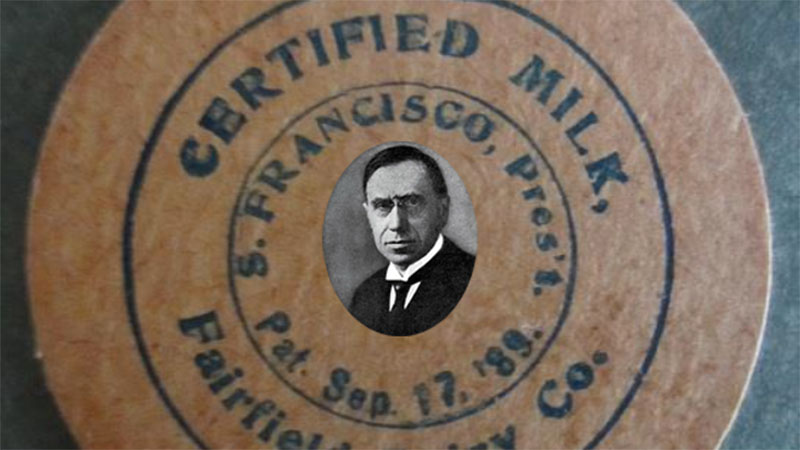
In January 1893, Coit presented a paper to the Practitioners’ Club of Newark titled “A Plan to Procure Cows’ Milk Designed for Clinical Purposes.” The plan called for a commission of medical men who, “with the support of physicians generally, should, by voluntary supervision, paid expert inspection, and final certification, endeavor to influence a supply of milk produced under regulations imposed by themselves.” In exchange, a dairy meeting those standards could sell its milk at a premium under a protected label. That April, Coit enlisted colleagues to form the Essex County Medical Milk Commission, which entered into contract with a New Jersey dairyman named Stephen Francisco of Caldwell, whose operation was known locally as Fairfield Dairy. Francisco agreed to produce milk under conditions the Commission specified, covering clean hands, clean udders, sterile containers, healthy cows, tested workers, and proper housing and feed. According to a local history of Fairfield Dairy drawing on Roscoe DeBaun’s Country Life in Fairfield, New Jersey, the resulting agreement ran to 68 separate points covering every detail of production, and certified milk from the farm sold for close to double the price of an ordinary eight-cent quart.
Rhodes recorded the Commission’s stated purpose in its own words: to establish clinical standards of purity for cow’s milk, to take responsibility for periodic inspection of participating dairies, to provide for chemical and bacteriological examination of the product, and to arrange frequent scrutiny of the herd by a veterinarian, all serving professional and public interests rather than commercial ones. According to a later hospital account, the world’s first bottle of milk produced and certified entirely under this kind of medical supervision was delivered in 1894, one year after the Commission’s formation.
The label Coit coined for this milk, “Certified Milk,” belonged to no single farm. It belonged to the standard itself, and to the commission that verified a dairy was meeting it. That structure, a trademarked designation controlled by a third-party medical body rather than by any producer, became the template that spread to dozens of American cities over the following decades.
Coit’s ambitions for the plan were not modest. In a letter to his brother and sister written around the time of the Commission’s founding, he described his goal in terms of the gap between rich and poor families: that “the poorest baby in Coomes Alley will now fare equally well with Thomas Edison’s baby in Lewellen Park.” The certified milk model was, in Coit’s own framing, a way of making the same quality of milk available regardless of a family’s means, even if the price premium meant that, in practice, certified milk reached a narrower market than that ambition implied.
Babies Hospital
In 1896, Coit helped found Babies Hospital in Newark, working with Dr. Edward J. Ill and others. It was the first hospital of its kind in the United States built specifically to treat children under five. Certified milk produced under the Essex County Commission’s standards was distributed through the hospital to families across Newark, and according to a later hospital memorial, the program distributed as many as 150,000 bottles a year at its peak. The hospital was eventually renamed Babies Hospital, Coit Memorial, in his honor, and decades later it merged with other institutions to form what became part of the Newark Beth Israel Medical Center campus.
Building a National Standard
Coit’s Essex County model did not stay local for long. Other cities adopted the same structure, and by 1907 most of the resulting local Medical Milk Commissions had federated into the American Association of Medical Milk Commissions, an organization in which Coit held office and helped shape policy. On May 1, 1912, the AAMMC adopted its Methods and Standards for the Production and Distribution of Certified Milk, reprinted by the U.S. Public Health and Marine Hospital Service, work that helped formalize the bacteriological and inspection standards that commissions across the country would apply. Coit presented the resulting Code of Standards before the annual meeting of the American Pediatric Society that same year.
Coit’s reputation extended beyond certified milk specifically. In 1910, he delivered the presidential address, “Factors in the Conservation of Child Life,” at the first annual meeting of the New Jersey State Pediatric Society, an organization he had helped establish. He also held office in international medical congresses, part of a public health career that extended well beyond Newark and well beyond milk.
The Fate of the First Certified Dairy
According to the same local history, Fairfield Dairy prospered under the certification arrangement for more than two decades, eventually supplying a depot in the affluent community of Montclair in addition to Newark. The arrangement held until 1915, when the farm purchased additional cattle from New York to keep pace with demand. The new animals carried bovine tuberculosis, and by the time routine testing caught it, the infection had spread through the herd; roughly a third of the cattle had to be destroyed. The Medical Milk Commission responded by prohibiting certified herds from adding cattle born off the home farm, a rule that made rebuilding the herd to its former size effectively impossible. Fairfield Dairy declined over the following years and closed in the 1920s. Francisco died in 1923, six years after Coit.
The outbreak had consequences beyond the herd. According to a history of American milk safety drawing on archival correspondence, when tuberculosis was discovered in one of Coit’s certified partner dairies, Nathan Straus, the New York philanthropist and most prominent advocate for pasteurization, described Coit in a private letter as “thoroughly discredited.” Coit, for his part, privately considered Straus “selfish.” The exchange reflected a disagreement that ran deeper than one farm’s troubles. Coit dismissed pasteurization throughout his career, at one point describing it as a “compromise for pure milk” and a way of making “dirty milk clean,” and as late as 1915, the same year as the Fairfield Dairy outbreak, he was still calling it a “temporary expedient” rather than a real solution. The fuller story of Fairfield Dairy’s rise and collapse is its own chapter.
The Newark Plan
Coit’s final year of active practice coincided with one of the worst public health crises of his career, though this one had nothing directly to do with milk. In the summer of 1916, a polio epidemic moved through the New York metropolitan area, and on July 14 the Newark health officer, Charles V. Craster, declared an epidemic in the city. Newark was hit harder than New York itself: one tally put the city at 1,422 cases and 376 deaths, an incidence rate nearly double that of New York City, while a separate analysis found mortality concentrated especially among infants under one year old.
Newark became the first city to adopt a comprehensive plan for the after-care of paralyzed polio survivors, and Coit took an active role in organizing it. He gave up his vacation that summer to take charge of the medical relief effort, work later described as alone sufficient to earn him the gratitude of his fellow citizens. He documented the result in a paper titled “The Newark Plan for the After-Care of Victims of Infantile Paralysis: Its Organization and Practical Working,” a model for coordinated clinic-based rehabilitation that addressed an epidemic which, unlike most of the era, left large numbers of survivors with permanent disability rather than simply counting its dead.
Death and Legacy
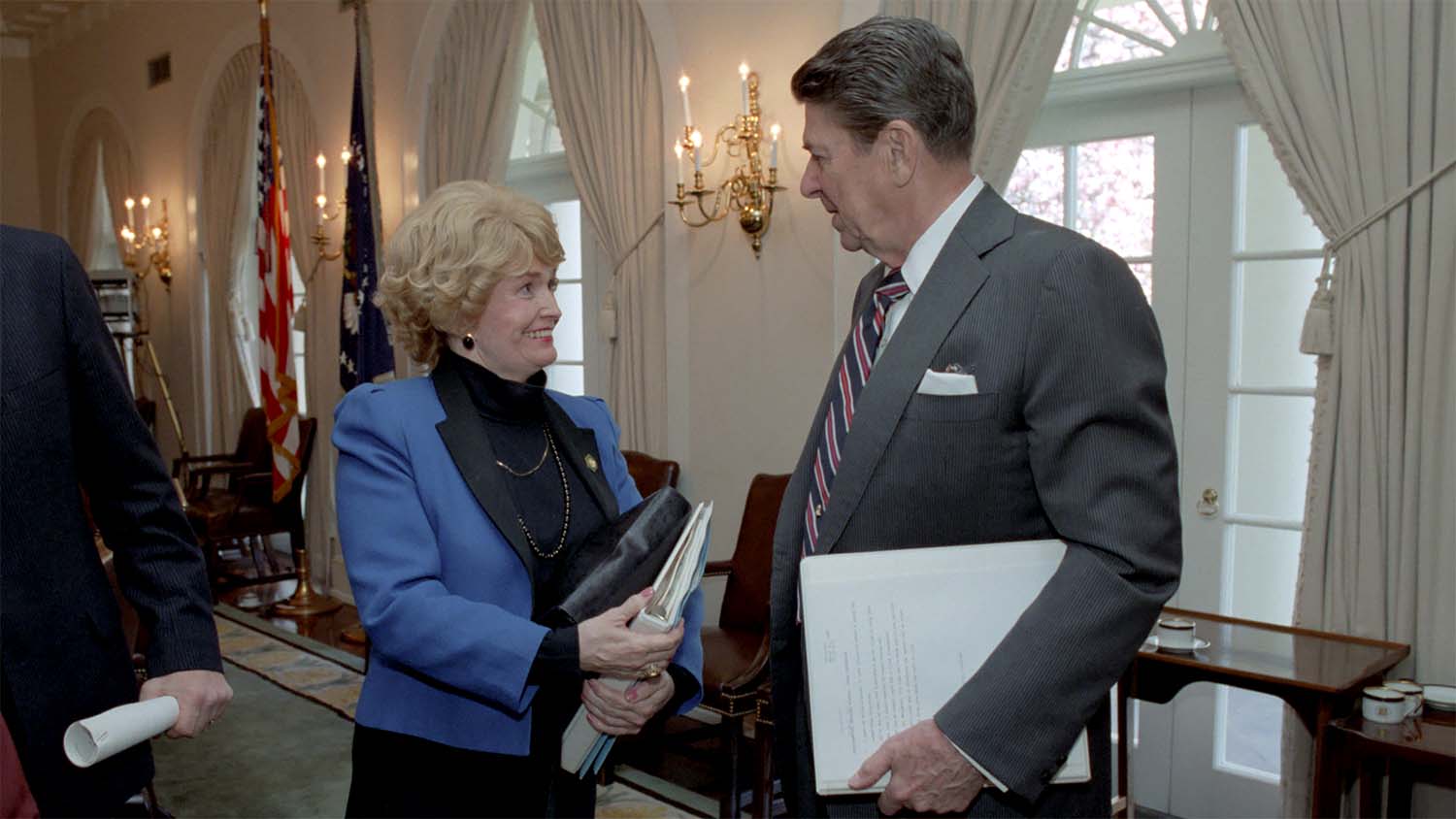
Coit was still actively practicing at Babies Hospital when he died on March 12, 1917, suddenly and unexpectedly, probably from a flu infection that progressed to his heart. He was sixty-two.
Roughly fifty years later, Coit’s children donated his papers, correspondence, case notes, photographs, and an extensive collection of personal notebooks, to the National Library of Medicine’s History of Medicine Division, where they remain available to researchers today. A current biography project, based on that collection, continues to examine how Coit’s pediatric career and his advocacy for clean milk developed together.
The model Coit built in Essex County in 1893, a physician-administered standard with measurable bacteriological limits, third-party inspection, and a protected label, spread to 58 cities under the AAMMC and remained the dominant private quality framework for raw milk until the economic pressures of the Depression and the regulatory consolidation that followed displaced it. The fuller story of that movement, its standards, its national network, and its eventual decline is its own chapter. What began it was a Newark physician, two years of searching for clean milk for his own household, a failed attempt at getting the state to fix the problem by law, and a decision to write down exactly what “clean” would have to mean if anyone else was going to be able to trust it.