The Farm Behind the World’s First Certified Milk, 1893–1923
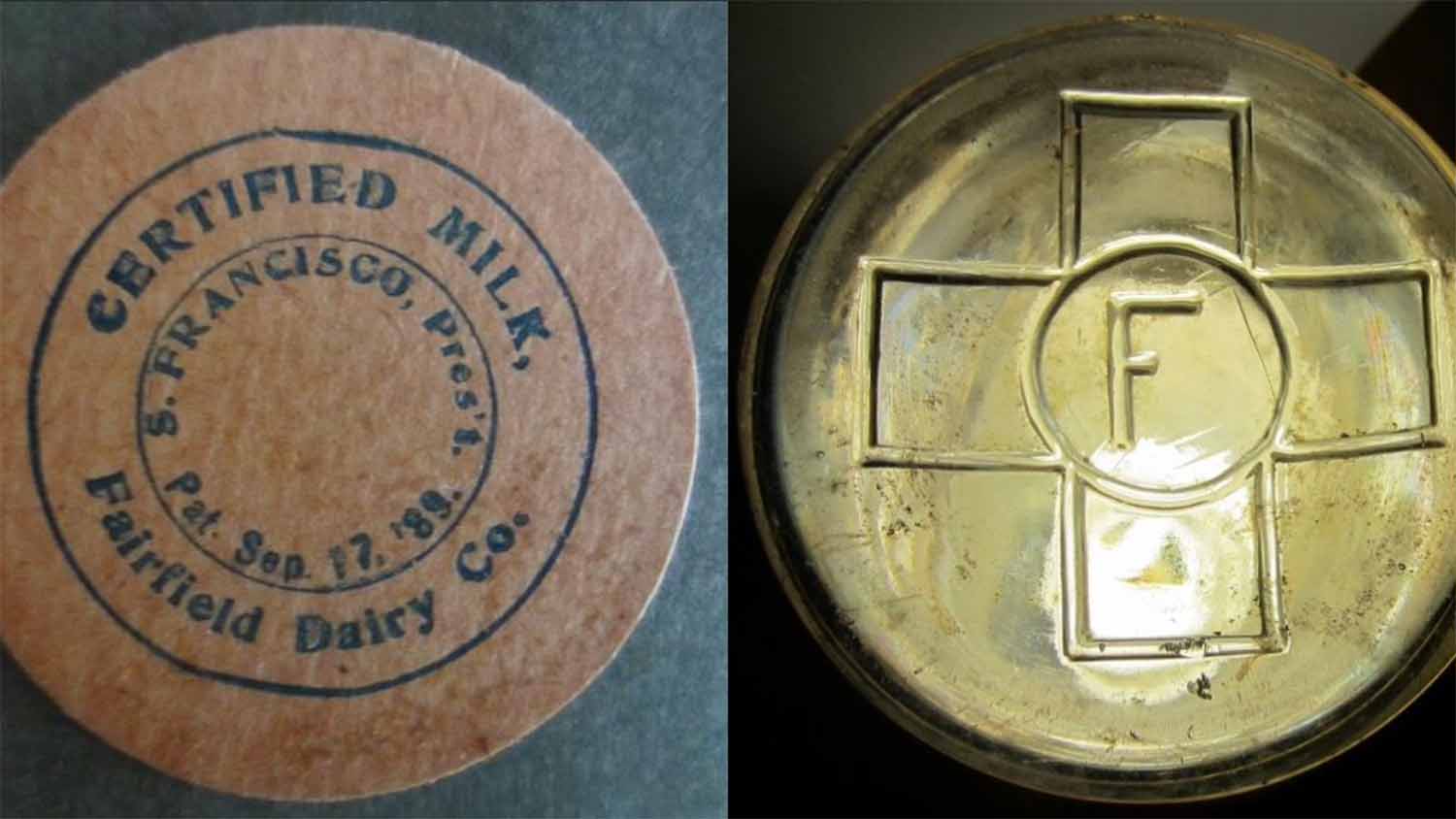
When Henry Leber Coit went looking for a dairy that could meet the standards he had spent years trying to define on paper, he did not start from scratch. According to a local history of the operation, Coit first visited the dairy already supplying his own Newark household and was dismayed by what he found there. He was directed instead to a farm in Caldwell Township, Essex County, already known as one of the better-run dairy operations in the area: Stephen Francisco’s Fairfield Dairy. In April 1893, that farm became the first to operate under Coit’s Essex County Medical Milk Commission, and the following year it produced what a later hospital account calls the world’s first bottle of milk certified entirely under medical supervision. For the next two decades, Fairfield Dairy was not just a participant in the certified milk movement. It was, by most contemporary accounts, its showcase.
The Francisco Family and the Land
The dairy sat in territory with a long settlement history. The area later known as Caldwell Township, and renamed Fairfield Township in 1963, was part of the Horseneck Tract, land originally purchased from the Lenape in 1701 and settled afterward largely by families of Dutch descent, a heritage still visible in the Fairfield Dutch Reformed Church, built in 1804 on land where the congregation had worshipped since 1720. According to a local history of the dairy, the Francisco family’s roots in the area traced back to those original land purchases, and Stephen Francisco, known locally as “Dutch” Francisco, was already running a dairy operation there before Coit ever arrived.
A Montclair newspaper clipping from August 1888, cited in the same local history, describes “the Fairfield dairy, formerly owned by S. Francisco,” being placed under the management of “Francisco & Freeland” after a man named George Freeland was taken into partnership, with the dairy’s milk thereafter kept at Freeland’s residence on Portland Place in Montclair, near Valley Road. Freeland later served as superintendent of the operation’s Montclair office. Whatever the exact ownership structure in the late 1880s, by the time Coit came looking for a certified dairy in 1893, the operation was known simply as Fairfield Dairy, and Francisco was its public face.
What the 1893 Agreement Actually Required
The contract between the Essex County Medical Milk Commission and Fairfield Dairy is the document that turned Coit’s plan from a proposal into a product. According to the local history, the agreement ran to 68 separate points, covering every stage of production: clean hands, clean udders, sterilized containers, tested cows, tested workers, and specific standards for bedding, feed, and housing. The detail was not incidental. A dairy attempting to meet all 68 points faced a level of capital investment and operating discipline that made the certification effectively impossible for smaller competitors to replicate.
The economics worked because the product commanded a premium. Certified milk from Fairfield Dairy sold for close to double the price of an ordinary eight-cent quart, a markup that affluent buyers readily accepted, according to the local history. The most prominent of these customers were in Montclair, an affluent community near Caldwell, where Fairfield Dairy operated a depot dedicated to adjusting the milk’s fat content to individual physicians’ prescriptions, a service that functioned much as today’s choice between whole, two-percent, and skim milk does, except ordered by a doctor rather than a shopper. A Cornell University archival collection independently lists correspondence files for “Fairfield Dairy Company [Montclair, NJ], 1914-1917,” confirming that the Montclair operation was active and significant enough to generate its own paper trail in the years immediately preceding the dairy’s later troubles.
Labor at the farm was managed with the same rigor applied to the cows. According to the local history, Francisco recruited Polish immigrant workers who were required to sign pledges against alcohol consumption before they even left their home country, a condition of employment consistent with the certification’s restrictions on intoxicating liquor among dairy staff. The first Federal Food and Drug Act was still thirteen years away when the 1893 agreement was signed, which makes the specificity of Fairfield Dairy’s self-imposed rules notable: the farm was operating under a private regulatory regime more detailed than anything the federal government would require for over a decade.
National Prominence
By the early twentieth century, Fairfield Dairy had become the most prominent certified milk operation in the country, according to the local history, drawing visits from prominent physicians and dairy operators from around the world hoping to replicate its model. Francisco himself reportedly trademarked the term “certified milk,” though by the time he did so the phrase had already passed into general use across the growing network of Medical Milk Commissions, limiting whatever commercial advantage the trademark might otherwise have provided.
The farm’s prominence meant that its reputation was also Coit’s reputation. The certified milk model depended on the public trusting that a “Certified Milk” label meant something specific and verifiable, and Fairfield Dairy, as the original and most visible certified operation, carried an outsized share of that trust.
The 1915 Outbreak and a Private Letter
That trust broke in 1915. To keep pace with demand, Fairfield Dairy purchased additional cattle from New York farms. The new animals carried bovine tuberculosis, and by the time routine testing identified the infection, it had spread through the herd. Roughly a third of the cattle had to be destroyed.
The damage went beyond the herd itself. According to a history of American milk safety published by the Works in Progress newsletter, drawing on archival correspondence, Coit’s reputation took a direct hit from the episode. Nathan Straus, the rival philanthropist and pasteurization advocate, wrote privately that the discovery left Coit “thoroughly discredited.” Straus and Coit had clashed for years over the certified-versus-pasteurized question, and the Fairfield Dairy outbreak handed Straus the kind of concrete failure that an abstract argument about bacteriological standards could not provide. A farm that had spent two decades as proof that certification worked had just demonstrated, publicly, that it could fail.
The Medical Milk Commission’s institutional response was to tighten the rules rather than abandon them: certified herds were prohibited from adding cattle born off the home farm, closing the exact loophole that had let the infection in. For Fairfield Dairy specifically, the rule meant that rebuilding a herd diminished by a third would have to happen entirely through the farm’s own breeding, a slow process that left the operation undersized relative to demand for years afterward.
Decline and Closure
The years after 1915 were difficult ones for Fairfield Dairy. According to local historical accounts, lightning struck and destroyed one of the farm’s three 200-cow barns that same year, compounding the losses from the tuberculosis outbreak. A separate dispute over a local road assessment on Old Dutch Lane, the lane running through the dairy’s land, ended in litigation; Francisco won on a procedural technicality but likely still bore the underlying cost. According to a family memoir cited in the local history, the dairy itself was sold in 1916, though it appears to have continued operating under the Fairfield Dairy name for several more years before closing in the 1920s.
Stephen Francisco died in 1923, six years after Coit. He and his wife Lydia were buried at Prospect Hill Cemetery beneath an epitaph that reads, according to the local history, “Friends of Little Children,” a fitting summary of what certified milk had been for, even if the business built to deliver it did not survive its founders.
What Fairfield Dairy Represents
Fairfield Dairy’s arc, from the most celebrated certified operation in the country to a cautionary tale cited in a rival’s private correspondence, captures something the broader history of certified milk can only describe in general terms. The 10,000 CFU bacteriological standard, the 68-point contracts, the AAMMC’s national framework, all of that infrastructure was real and consequential. But it operated through individual farms run by individual families, and those farms were subject to the same risks as any agricultural operation: a bad purchase of cattle, a lightning strike, a market downturn. The certification system could specify standards and inspect for compliance, but it could not fully insulate a single farm from the consequences of a single bad decision, or guarantee that the farm would survive long enough to matter once the larger economic pressures of the 1920s and 1930s arrived.
Henry Leber Coit built the standard. Fairfield Dairy proved it could work, then proved it could fail, and the response to that failure, tighter rules rather than abandonment, was itself part of how the certified milk movement operated for the rest of its existence. The farm in Caldwell Township is gone, and so is the company that ran it, but the bottle it filled in 1894 remains the starting point for every certified and tested raw milk standard that followed.