Nathan Straus and the Pasteurized Milk Depots, 1893–1920
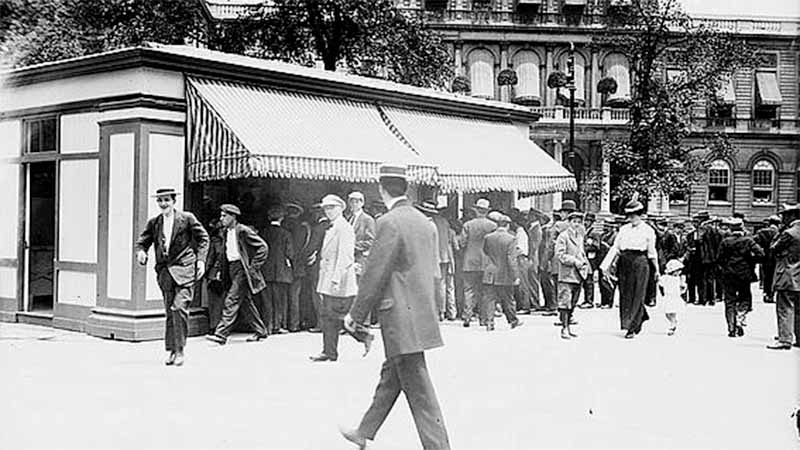
In the summer of 1893, a shaded wooden pavilion appeared at the Third Street Recreation Pier along Manhattan’s Lower East Side waterfront. Mothers crowded the benches, feeding bottled milk to infants. A sign in English, Russian, Hebrew, and Italian advertised pasteurized milk for a cent a glass. The structure was the first of what would become nearly three hundred milk depots operated across thirty-six American cities over the following three decades, all funded by a single man: Nathan Straus, co-owner of R.H. Macy and Company, whom historians of public health have credited as the most influential private advocate for milk pasteurization in the United States.
Straus did not come to public health through medicine or science. He came through commerce, personal grief, and a practical conviction that large-scale problems required large-scale demonstration. His depot network was not charity in the conventional sense. It was a sustained empirical argument, pressed city by city and year by year, that pasteurized milk could be produced affordably, distributed reliably, and proven to save children’s lives. The data he accumulated, and the political pressure he applied, eventually persuaded American cities and then the federal government to mandate pasteurization for the entire milk supply. The infant mortality rate in New York City fell from roughly 24 percent in 1891 to 6.6 percent by 1923, a decline Straus and his allies attributed substantially to pasteurization, though concurrent improvements in sanitation, refrigeration, and adulteration enforcement were factors the historical record does not cleanly separate.
From Bavaria to New York: The Straus Family in America
Nathan Straus was born on January 31, 1848, in Otterberg, in the Palatinate region of Bavaria, the third child of Lazarus and Sara Straus. His father, a merchant, emigrated to the United States in 1852, settling first in Talbotton, Georgia, a small town where the family operated a dry-goods store. Sara, Nathan, and siblings Hermine, Isidor, and Oscar followed in 1854, crossing on a paddlewheel steamer and joining Lazarus in a household that attended the local Baptist church because no synagogue existed within hundreds of miles.
Life in Talbotton was stable until the Civil War. Lazarus Straus had accumulated a stockpile of cotton, which was destroyed in the disorder following the Confederacy’s collapse, leaving the family without assets. Undaunted, Lazarus moved the family to Philadelphia and then to New York City. Nathan joined the family business, L. Straus and Sons, in 1866 at the age of eighteen, studying bookkeeping at Bryant and Stratton College before taking up the trade in crockery and glassware that his father had established. In 1874, L. Straus and Sons began operating the china and glassware departments of R.H. Macy and Company under lease. Nathan’s merchandising instincts proved transformative. He introduced the depository account, an early form of layaway, and insisted on rest rooms and emergency medical care for customers. In 1888, the Straus family acquired a half-interest in Macy’s; in 1896, Nathan and his elder brother Isidor became co-owners outright.
On April 28, 1875, Nathan had married Lina Gutherz, the daughter of a German Jewish immigrant family. They had six children together, of whom two died in infancy, from causes Straus would later attribute to contaminated milk. That conclusion would shape the second half of his life entirely.
The Milk Crisis in Gilded Age New York
The danger of urban milk in the 1880s and 1890s was not hypothetical. In 1880, roughly 28.8 percent of babies born in New York City died before their first birthday, and infectious disease carried by milk accounted for a substantial share of those deaths. The pathogens in question included tuberculosis, typhoid fever, scarlet fever, and diphtheria. The city’s milk supply was produced largely in industrial dairies and transported over long distances with no refrigeration standards and no bacteriological testing. The 1858 swill milk scandal, in which Frank Leslie’s illustrated newspaper exposed distillery dairies feeding whisky mash to diseased cows and selling the output as “pure country milk,” had not fundamentally reformed the trade; distillery operations simply shifted to Brooklyn, then an independent city, and continued supplying Manhattan well into the 1870s.
The scientific basis for understanding why milk was lethal took decades to consolidate. Robert Koch identified the human tuberculosis bacillus in 1882, but he initially doubted that bovine tuberculosis was transmissible to humans. It was not until the late 1890s that American bacteriologist Theobald Smith established bovine tuberculosis as a distinct but related pathogen and published evidence that humans could contract it through milk. By the time that paper circulated, physicians and public health officials were already in open disagreement about whether heat treatment was the answer. Many pediatricians, including Henry Leber Coit of Newark, argued that pasteurization degraded milk’s nutritional value and that rigorous dairy hygiene was the correct and more durable remedy. Coit’s position was not simply conservative resistance: he held that heat treatment addressed the symptom of a contaminated supply rather than its cause, and that the energy devoted to pasteurization would be better spent reforming dairy conditions at the farm. The certified milk movement he founded in 1893 produced carefully inspected raw milk under veterinary supervision, though at prices that limited its reach to middle-class families and at volumes that served a small fraction of the city’s infants.
Straus arrived at his position through a different path. A family cow he owned on a New Jersey property died during a veterinary examination; post-mortem testing revealed bovine tuberculosis. Straus later wrote that the discovery crystallized his thinking: “Even the cow I trusted was a carrier of death.” Two of his children had already died. He became convinced that no amount of farm inspection could eliminate the risk of pathogens in raw milk as long as the milk remained unheated before reaching consumers.
Building the Depot Network: Scale, Cost, and Evidence
In the summer of 1893, Straus opened his first milk depot at the Third Street pier. The location was deliberate: the pier served the most densely populated immigrant tenement districts of the Lower East Side, where bottle-fed infants were dying at catastrophic rates and where families had no access to tested or refrigerated milk of any kind. Pasteurized milk was sold for one cent per glass or five cents per day’s supply; mothers who could not pay received it free through a voucher system.
The following year, Straus commissioned architect John B. Snook to design a dedicated milk laboratory at 151 Avenue C, between Ninth and Tenth Streets. The building served as a processing and testing facility where milk was pasteurized, bottled, and verified before distribution to the depot network. In its first year of operation, the plant produced 34,000 bottles. An 1894 article in The New York Times described the City Hall Park depot as a scene of sustained popular demand, with working-class men, women, and children pressing past one another for a cent’s worth of ice-cold milk, the supply running dry twice each day.
The depots operated on a deliberately loss-making structure. Straus absorbed the full cost of the pasteurization plant, the laboratory staff, the bottling, and the distribution machinery. Contemporary accounts estimated the annual cost at over $100,000, roughly equivalent to several million dollars in present-day terms, sustained entirely from Straus’s commercial income. He did not ask the city or the state for operating funds. He was building evidence, not seeking reimbursement.
The evidence accumulated rapidly. In 1897, Straus donated pasteurization equipment to the orphan asylum on what is now Roosevelt Island in the East River, an institution then operated by the city’s Board of Health. The death rate among children at the asylum had stood at 44 percent in 1897. The following year, with pasteurized milk as the only significant change to the institution’s operation, it fell to 20 percent. Across the broader depot program, over a four-year period, 20,111 children were fed exclusively on Straus pasteurized milk. Six died. During the first decade of the laboratory’s operation, the child mortality rate in New York City dropped from 126 deaths per thousand to 74.5.
By 1900, the depots were distributing over half a million bottles of milk annually in New York City alone. Straus simultaneously began replicating the model in other cities, funding depots in Boston, Philadelphia, and eventually dozens of municipal markets across the country. His approach in each city was the same: establish a depot, demonstrate the mortality outcomes, present the data to local health authorities, and advocate for municipal assumption of the program and eventually for mandatory pasteurization ordinances.
From Board of Health to National Legislation
Straus had not confined himself to business and philanthropy. He had served as Park Commissioner of New York City from 1889 to 1893 and as a member of the New York State Forest Commission. In 1894, the Democratic Party offered him the nomination for mayor of New York City; he declined. In January 1898, under Mayor Robert Anderson Van Wyck, he accepted appointment as president of the city’s Board of Health. He served only through March of that year, but used the position immediately to donate pasteurization equipment to the orphan asylum and to press the board toward adopting pasteurization as a public health standard.
The opposition he encountered was substantial and came from multiple directions. Milk producers and distributors resisted the added cost of heat treatment. Physicians attached to the certified milk model argued that pasteurization was a commercial shortcut that masked dirty farming practices rather than correcting them; Coit, with whom Straus maintained a mutual private contempt, was the most prominent voice in that camp. At one point, Straus was arrested on a charge of adulterating milk, because the infant formula he distributed at depots, modified with barley and oat water to approximate a nutritionally appropriate composition for newborns, did not conform to the city’s existing milk standards. The charge was investigated and found to be without basis.
He also published. In 1894, his first major article appeared in The Forum, a widely read journal of public affairs, laying out the statistical case for pasteurization and describing the depot program in detail. He corresponded extensively with health officers, mayors, and governors across the country and, eventually, in Europe. His papers at the New York Public Library include scrapbooks of international clippings on infant mortality and pasteurization from Germany, France, and Britain, reflecting a sustained effort to track and publicize global evidence.
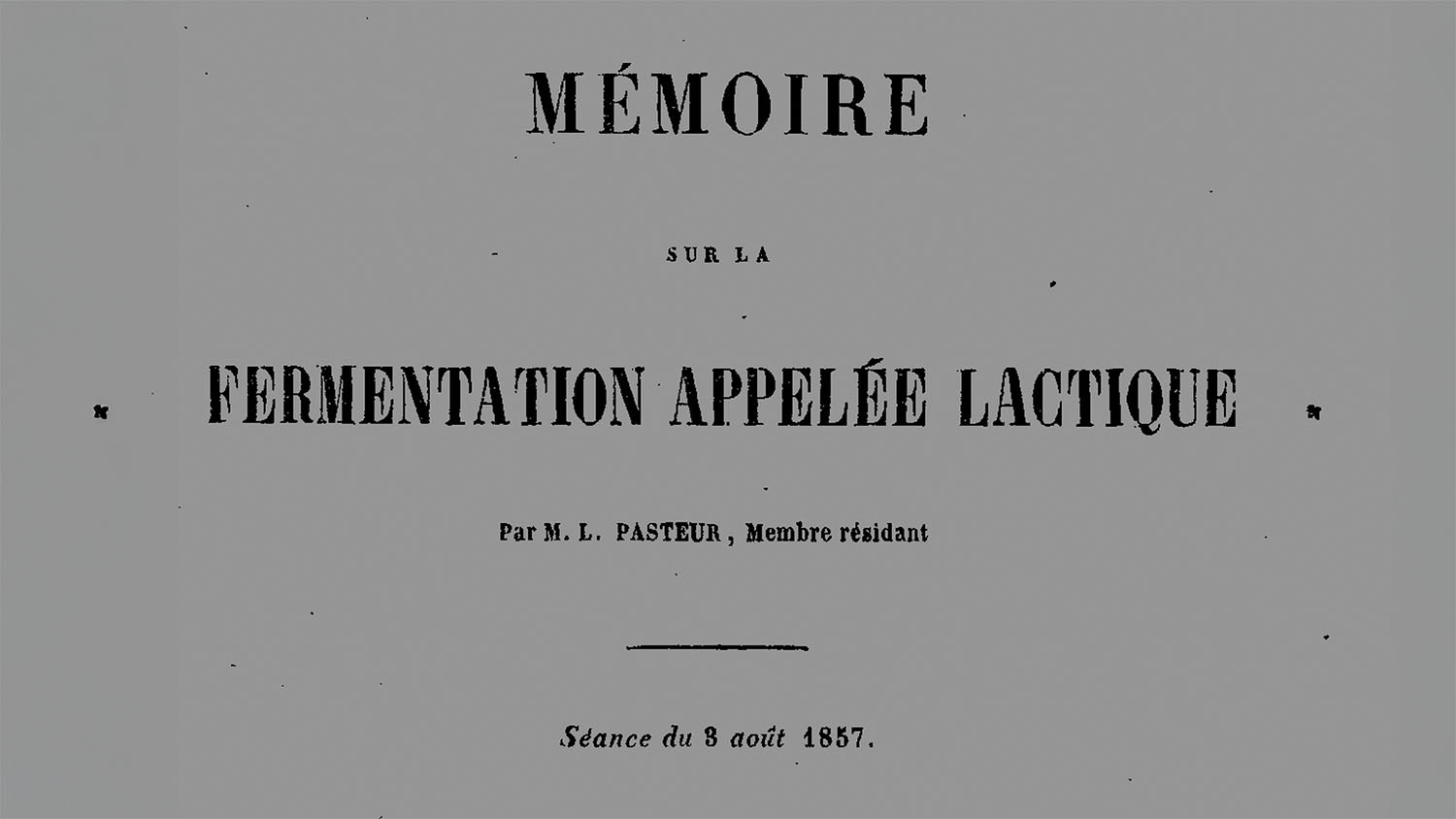
In 1907, President Theodore Roosevelt ordered the U.S. Public Health Service to investigate the benefits of pasteurized milk. Surgeon General Walter Wyman’s resulting report concluded that pasteurization “prevents much sickness and saves many lives.” Chicago enacted the first mandatory pasteurization ordinance in 1908. The pace of adoption quickened, aided by commercial dairy interests who stood to benefit from the capital barriers mandatory pasteurization would impose on smaller competitors, a dimension of the legislative push that ran parallel to Straus’s advocacy and complicated its legacy. New York City moved to ban unpasteurized milk sales in 1910, with the ordinance taking effect and being enforced beginning in 1914, a delay partly attributable to a typhoid epidemic that removed any remaining political resistance. By 1920, Straus had established 297 depots in 36 cities and had transferred his New York City pasteurization plant and depot operations to the municipal government. By 1924, every American city with a population over half a million was pasteurizing at least half its milk supply. The national infant death rate fell from 125.1 per thousand in 1891 to 15.8 in 1925. Louis Pasteur had never applied his heat-treatment process to milk; the translation of that science into a public health mandate was the work of advocates like Straus operating across three decades.
The slogan Straus had used throughout his campaign, “Raw Milk Can Kill,” resurfaced in 1945 as the headline of a widely circulated Coronet magazine article that helped drive the first statewide raw milk ban, in Michigan in 1948.
The Tuberculosis Preventorium and Palestine
Straus understood that milk was one vector in a broader system of disease affecting tenement children, and his philanthropic efforts extended accordingly. In 1891, he and Lina donated a cottage to the Adirondack Cottage Sanitarium at Saranac Lake, the institution that would later become the Trudeau Tuberculosis Sanatorium. In 1909, he founded the Tuberculosis Preventorium for Children in Lakewood, New Jersey, housing it initially in the Cleveland Cottage, a property adjacent to his Lakewood hotel. The preventorium’s premise was prevention rather than treatment: children from tenement households who showed exposure to tuberculosis but no active disease were brought to the countryside for periods of fresh air, nutritious food, and monitored rest, to build physical resistance before the disease could take hold. After 92 children had passed through the program in its first months, with all showing improvement, the preventorium’s operating committee announced it as the first institution of its kind in the United States. It later moved to Farmingdale, New Jersey, when a donor offered the use of a farm, and it became the model for more than 45 tuberculosis preventoria that subsequently opened across the country and abroad.
During the same years, Straus deepened his engagement with Jewish communal life and with the project of building public health infrastructure in Ottoman and later Mandate Palestine. He and Lina visited Palestine in 1904. The disease, famine, and absence of basic sanitation they encountered there drove both to sustained philanthropic commitment. He helped fund a soup kitchen and contributed to establishing a health office there. His largest Palestine-focused contribution came through his partnership with Hadassah, the Zionist women’s organization, to which he made one of the earliest and largest gifts in support of its medical mission to the region. The city of Netanya, on the Mediterranean coast of present-day Israel, was named for him. Straus Square in Manhattan’s Lower East Side, near where several of his depots operated, was dedicated in his honor shortly after his death.
His other relief activities were less systematic but extensive. During the Panic of 1893, Straus used his milk depot infrastructure to distribute coal at five cents for twenty-five pounds, or free to those who could not pay, and opened lodging houses where 64,000 people could obtain a bed and breakfast for five cents. He funded 50,000 meals at one cent each. He donated an ice plant to American troops suffering in Santiago, Cuba, during the Spanish-American War in 1898. After the Messina earthquake of 1909, he sent food, clothing, and medical supplies to survivors. When his brother Isidor and Isidor’s wife Ida went down with the Titanic in April 1912, Nathan retired from active management at Macy’s. He sold his yacht to the Coast Guard at the onset of the First World War and directed the proceeds to feeding war orphans.
Straus, Coit, and the Pasteurization Debate
Straus’s relationship with Coit and the certified milk movement hardened over the 1890s and into the following decade. When tuberculosis was discovered in one of Coit’s certified partner dairies, Straus described Coit in a private letter as “thoroughly discredited.” Coit, for his part, wrote privately that he found Straus “selfish” and self-aggrandizing. The professional antagonism reflected a genuine policy disagreement: Coit maintained until 1915 that pasteurization was a “temporary expedient,” while Straus had come to insist, by around 1910, that even certified raw milk should be pasteurized. Both men were motivated by the deaths of their children. Both built institutions that improved the milk available to some segment of the population. Where they differed was on what the problem fundamentally was: a supply chain requiring heat treatment at scale, or a farming system requiring reform at the source.
The question of whether pasteurization represented the best solution to the milk problem, or whether it displaced investment in the dairy hygiene and animal health measures that underpinned the certified milk standard, remained a genuine controversy through the first decade of the twentieth century, argued by pediatricians, bacteriologists, and municipal health officers across dozens of journal articles and public hearings. That debate, and its implications for contemporary discussions of raw milk production standards and dairy regulation, did not end with Straus’s political victory. The regulatory framework that followed reflected his priorities, not Coit’s, and the terms on which that choice was made remain contested among historians of public health and food policy.
Straus is credited by historians of public health as the leading private actor in the adoption of mandatory milk pasteurization in the United States. Andrew Fisher’s 2026 biography, published by Rutgers University Press and the first comprehensive book-length account of Straus’s life, situates his milk work within four overlapping philanthropic campaigns and argues that his insistence on grounding each initiative in medical science and on documenting outcomes systematically gave his advocacy a persuasive force that went beyond his considerable personal wealth. He gave away the majority of his fortune during his lifetime rather than establishing an endowed foundation, and he personally designed, oversaw, and publicized each program.
Nathan Straus died in New York City on January 11, 1931, at the age of eighty-two. His funeral drew an estimated 8,000 mourners. New York City named a square, a school, a library, and a community center in his honor. Israel named a coastal city and a Jerusalem street after him. The milk depots he founded and funded for more than a quarter century were by then fully absorbed into the public health infrastructure of American municipalities, which was precisely what he had intended from the beginning.