Leite e Produtos Lacteos — ASAE
ASAE guidance on milk and dairy products regulations in Portugal, including requirements for raw milk sales under Portaria n.o 74/2014.
View Official Resource →Direct farm supply of small quantities of raw cow milk is legal under Portaria n.o 74/2014. DGAV authorization required.
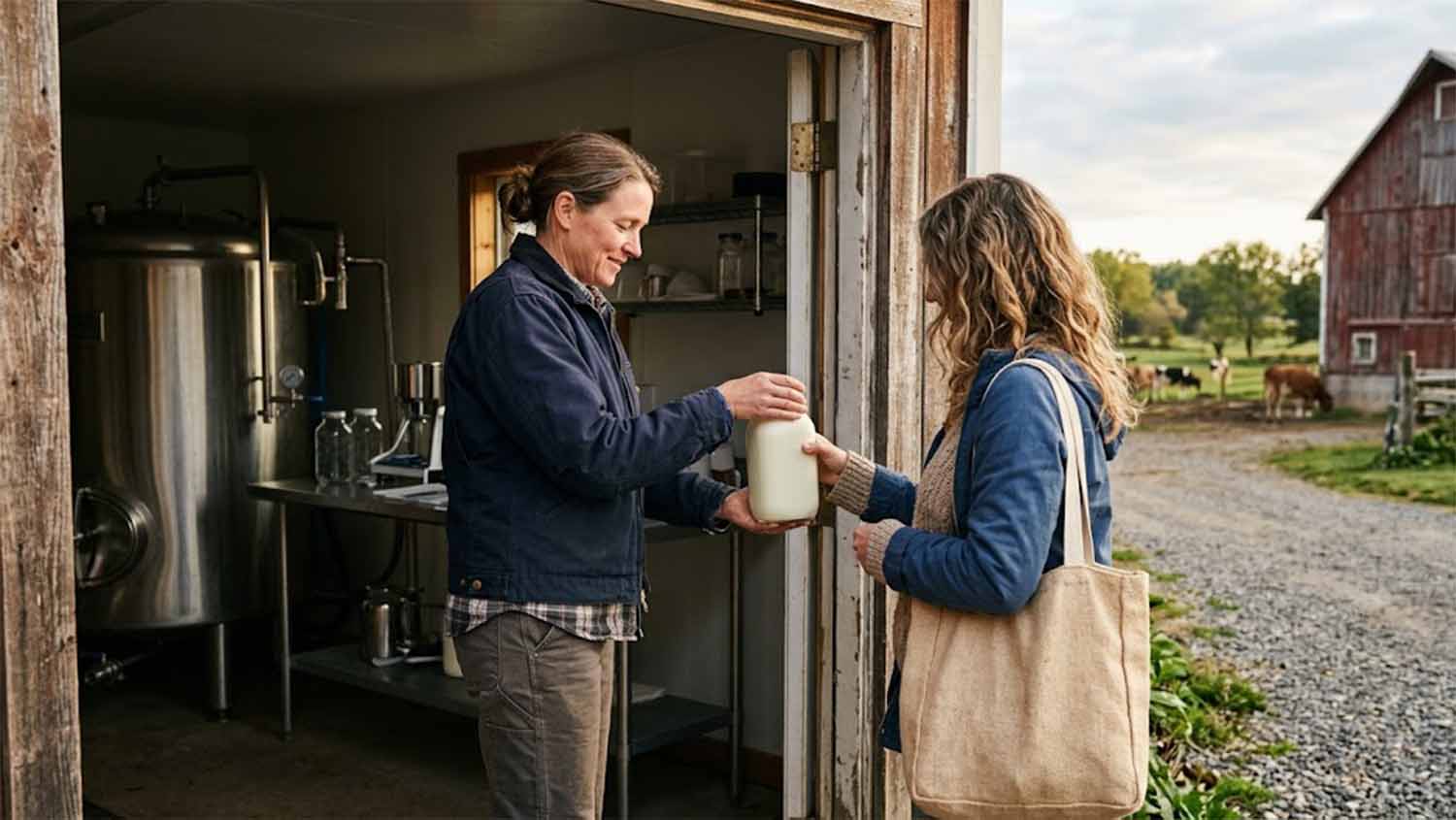
Portugal permits the direct farm supply of small quantities of raw cow milk (leite cru) to consumers under Portaria n.o 74/2014 (Fornecimento direto de pequenas quantidades de leite cru de vaca). Authorization from the Directorate General for Food and Veterinary (DGAV) is required. The Portuguese Food Safety and Economic Agency (ASAE) is responsible for enforcement.
Production and sale must comply with EU Regulation (EC) No 853/2004 hygiene requirements, including animal health conditions, milking hygiene, temperature controls, and microbiological criteria. Labeling must clearly identify the product as raw milk (leite cru).
Official government documents and legal resources for Portugal
ASAE guidance on milk and dairy products regulations in Portugal, including requirements for raw milk sales under Portaria n.o 74/2014.
View Official Resource →EU regulation establishing specific hygiene rules for food of animal origin, including raw milk. Provides the legal baseline for raw milk production and sales across EU member states.
View Official Resource →Search for raw milk sources near popular locations in Portugal
Select a jurisdiction to view its specific regulations.
Portuguese law and EU Regulation 853/2004 apply. Farm-direct raw milk sales practiced in an archipelago renowned for its dairy heritage — notably São Miguel's grass-fed cattle and Queijo São Jorge.
Portuguese law and EU Regulation 853/2004 apply. Small local dairy sector present; farm-direct raw milk sales practiced under the same framework as mainland Portugal.
Free, no paywalls, no private equity.
Keep this project going and growing.
Connect people with raw milk sources.
Every tip keeps real food accessible.
✓ You're supporting a free community resource. This is a tip/donation, not a purchase of milk or products.
Trusted by farms, local businesses, and startups nationwide.
Unfortified milk contains too little vitamin D to matter nutritionally, and fortification, not pasteurization, supplies almost all of what is on the label.
The milk fat globule membrane’s own proteins respond to heat unevenly: some resist modification, one shows stabilization, and processing can add proteins in.
Between alkaline phosphatase and lactoperoxidase sits GGT, a milk enzyme whose heat sensitivity distinguishes specific pasteurization intensities.
HPP denatures a different set of whey proteins than heat, preserves human milk miRNA far better, but isn’t automatically gentler overall.
Milk’s main native protein-cutting enzyme survives standard pasteurization largely intact and even retains activity after UHT, unlike most milk enzymes.
Unlike most milk components, oligosaccharides show up consistently unaffected by standard pasteurization across more than a decade of independent research.