South Dakota allows raw milk purchases at the producing farm and, usefully, permits the producer to deliver directly to you. That delivery provision extends access well beyond households able to drive out to a dairy, and it is the feature that distinguishes South Dakota from several neighbours.
Is raw milk legal in South Dakota?
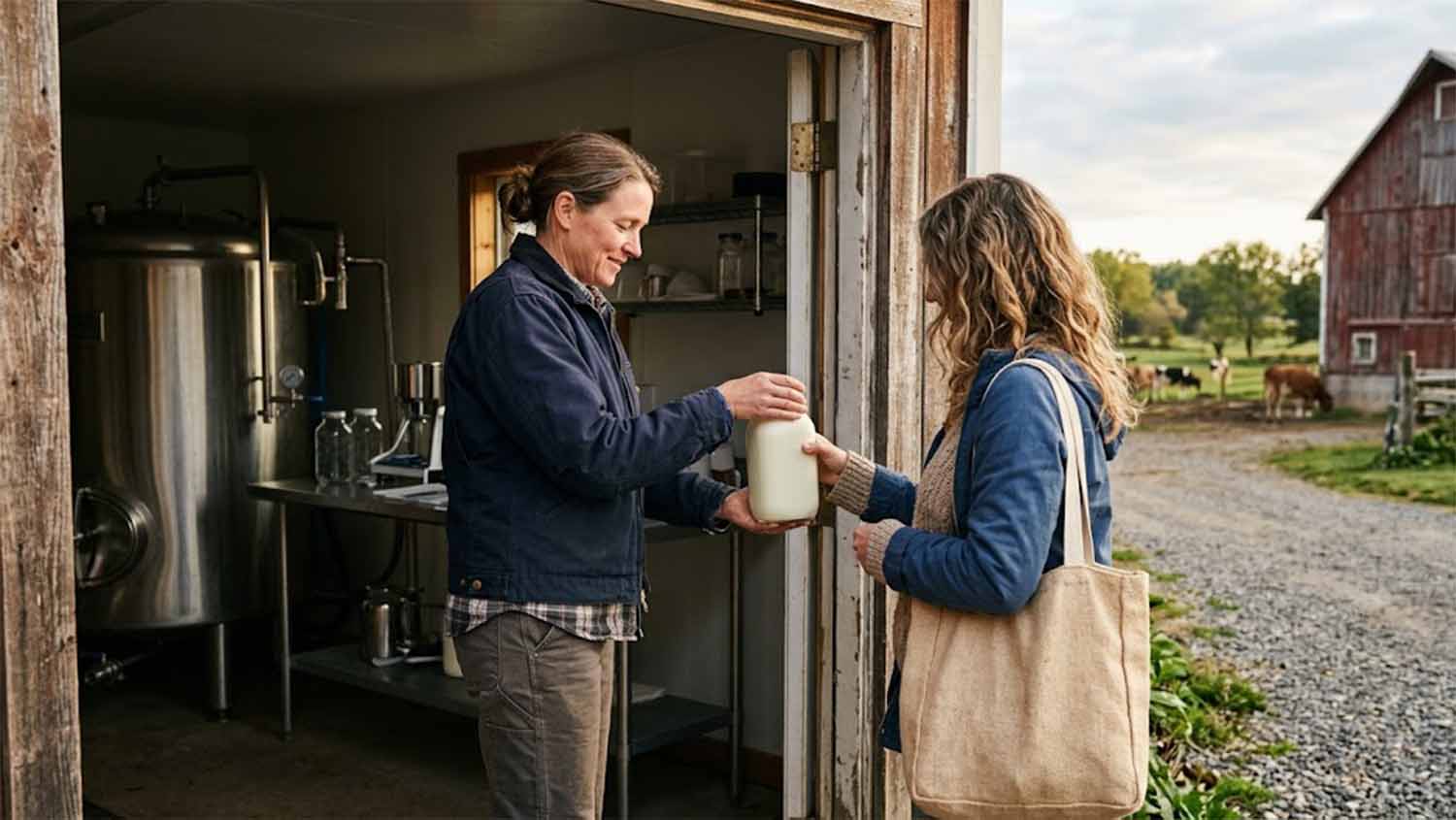
Yes. Under South Dakota Codified Laws chapter 39-6, raw milk for human consumption may be secured or purchased for personal use by any consumer at the place or farm where the milk is produced, and the milk may be delivered directly to the consumer by the producer. No person may sell raw milk for human consumption unless it has been produced and packaged by a producer holding a permit issued by the secretary, and specific quality standards must be met.
Where sales can and cannot happen
South Dakota's rule is location-based rather than channel-based, and the distinction is precise. Purchases take place at the producing farm, or through the producer's own delivery. Raw milk may not be purchased at a farmers market, or at a farmer-owned retail store that is not located at the place or farm where the milk is produced.
The practical reading: a farm store on the dairy itself is fine, because it is at the place of production. An off-site outlet run by the same farmer is not. A market stall in town is not. But the producer loading a cooler and driving to you is expressly permitted.
What producers must do
Producers hold a permit from the secretary and meet defined quality standards for raw milk sold for human consumption. The state Department of Agriculture and Natural Resources publishes an educational guide for raw milk setting out those requirements, which is a useful document if you want to understand what stands behind the milk you are buying, or if you are a producer considering entering the market.
How to find a producer
Contact permitted producers directly to arrange collection or delivery. Because delivery is lawful, a standing weekly arrangement is the normal pattern rather than repeated farm trips.
Farms operate across the eastern farming counties and the James River valley, serving Sioux Falls, Rapid City, Aberdeen, Brookings, Watertown and Mitchell. South Dakota has Hutterite colonies with significant dairy operations, and a scattering of small diversified farms. Farmers market contacts are still useful for finding producers even though you cannot buy the milk at the stall itself, and local food networks and community boards work well.
Crossing state lines
South Dakota's neighbours offer useful alternatives. North Dakota to the north expanded in 2025 to cover raw milk products including butter, cheese, yogurt and ice cream. Minnesota to the east permits purchase of milk, cream and skim milk at the farm of origin. Iowa to the southeast allows licensed farm-direct sales and delivery. Nebraska to the south allows on-farm sales of milk and cream with no permit at all. Wyoming to the west has among the broadest access in the country under its Food Freedom Act, including sales through grocery retail. Montana permits unlicensed small-dairy sales of any raw dairy product. Federal law at 21 CFR 1240.61 restricts interstate commerce in raw milk, though the FDA has stated it has never taken and does not intend to take enforcement action against an individual transporting raw milk across a state line solely for personal consumption. For the federal framework, see the United States raw milk laws overview.