Iran presents one of the widest gaps between formal rule and daily practice in the region. There is no single national statute banning raw milk outright, but provincial branches of the Veterinary Organization have issued circulars prohibiting the purchase and sale of raw milk in milk and dairy shops, and the national regulator declines to vouch for any raw or bulk milk reaching consumers. Despite that, bulk milk remains widely available and traditional raw dairy is woven deeply into Iranian food culture.
Is raw milk legal in Iran?
Not through the formal retail system. Iran's Veterinary Organization has stated that traditional dairy units are permitted to supply dairy products but not raw milk, and provincial veterinary directorates have issued bakhshnameh (administrative circulars) barring the buying and selling of raw milk in dairy shops, citing brucellosis control as the reason. Where a premises is found distributing raw milk, enforcement action follows in coordination with the Veterinary Organization.
The prohibition therefore sits in administrative instruments and licensing conditions rather than in a headline piece of legislation, which is part of why it is applied unevenly. Consuming raw milk is not itself an offence, and there is no restriction on a household drinking milk from its own animals. The Ministry of Health advises the public to avoid unpasteurized milk and, where it is used anyway, to boil it for a full minute before drinking.
Who regulates dairy in Iran
Oversight is split three ways, and the boundary matters. The Iran Veterinary Organization (Sazman-e Dampezeshki), under the Ministry of Agriculture Jihad, supervises livestock holdings and animal-origin products up to the point where raw milk is collected at the factory. Beyond that point responsibility passes to the Food and Drug Organization under the Ministry of Health and Medical Education. The Iran National Standards Organization (INSO), known as the Institute of Standards and Industrial Research of Iran (ISIRI) until it was renamed in 2011, sets the technical standards for milk and dairy products, including microbiological limits and test methods.
Because veterinary oversight stops at the factory gate, milk that never enters the formal collection system falls outside the chain of custody that the Veterinary Organization is willing to certify. Its deputy for health and prevention has said plainly that for raw milk and traditionally distributed dairy there is no health assurance from the organization and it cannot take responsibility for them.
Bulk milk and traditional dairy shops
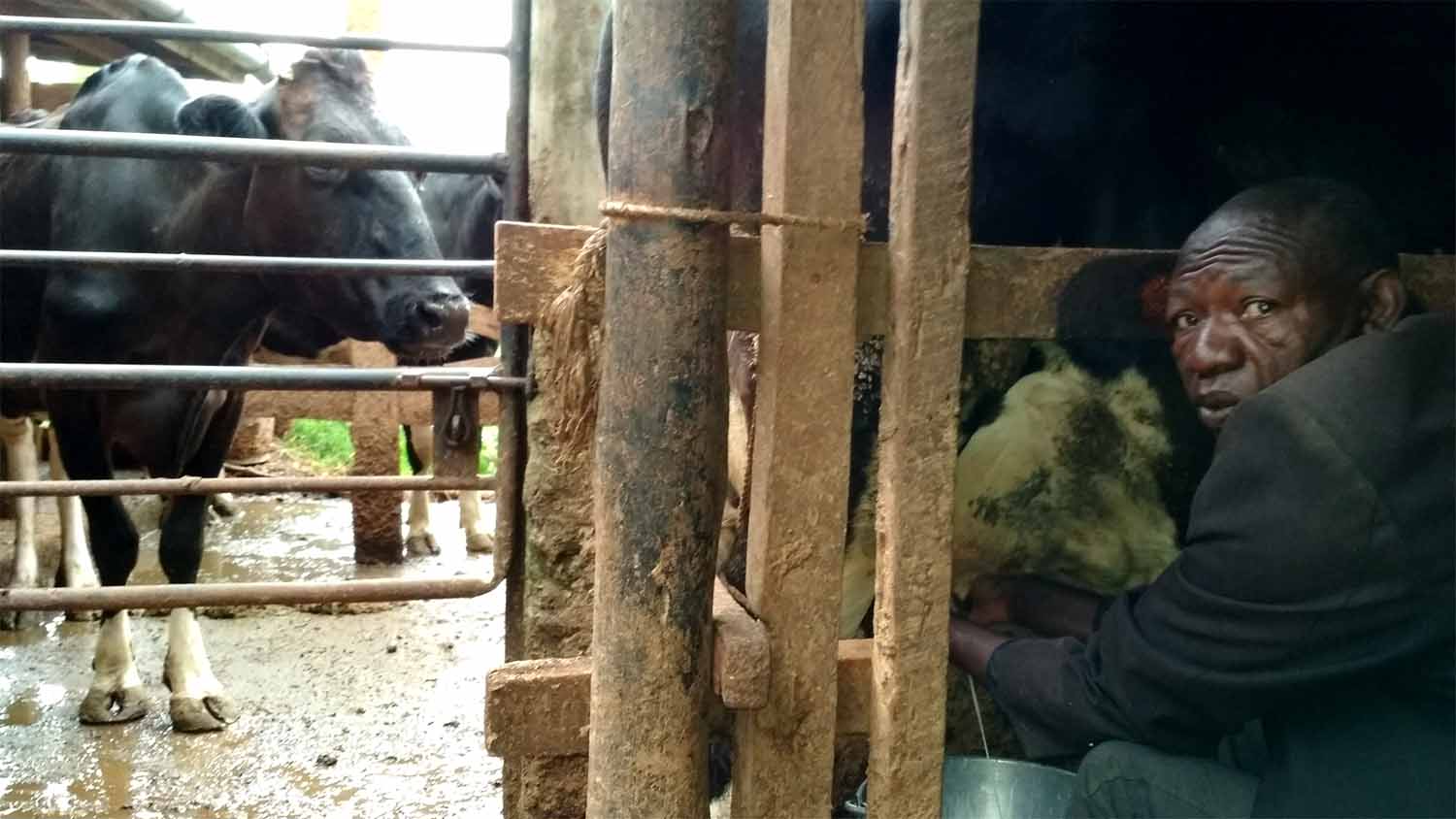
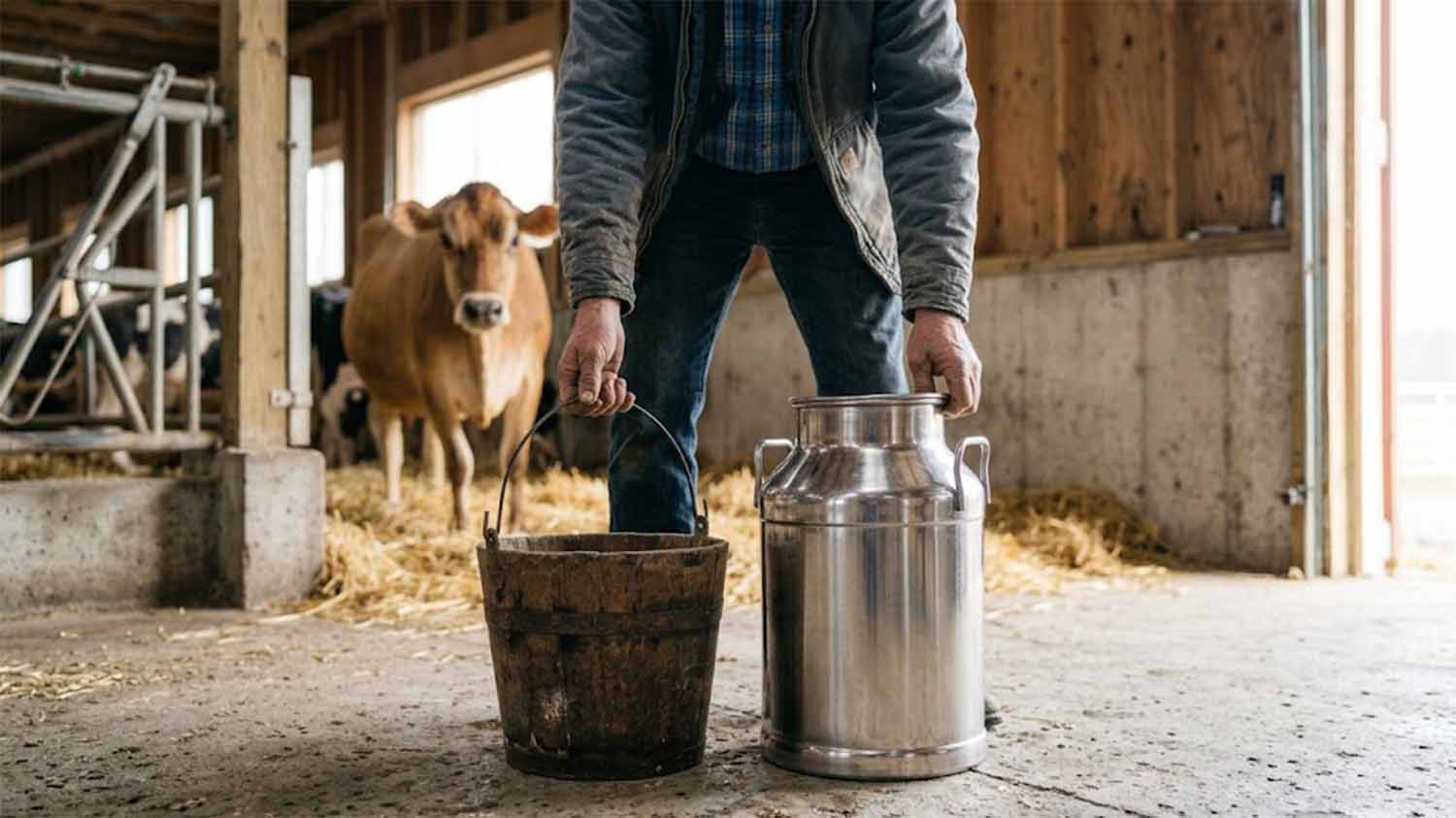
The informal trade runs on what Iranians call shir-e felleh (شیر فله), literally bulk or loose milk, sold unpackaged by volume rather than in sealed retail containers. It moves through traditional dairy shops (labaniyat-e sonnati), neighbourhood vendors, direct arrangements with farmers, and rural markets. Farmers deliver milk in cans to collection centres either directly or through intermediaries, and milk diverted before it reaches those centres is what supplies the bulk trade.
Consumer demand is genuine rather than merely a matter of price. Many Iranian buyers regard bulk milk as fresher and better tasting than the pasteurized product, and traditional dairy shops remain a normal part of urban retail as well as rural supply.
Traditional dairy culture
Iran's dairy traditions descend from the pastoral and nomadic cultures of the Iranian plateau, and ewe's milk has historically been the preferred raw material, a preference that persists in popular taste today. Milk from cows, sheep, goats, camels and water buffalo all circulate, and Iran is among the world's larger goat milk producers.
The central products are kashk, a dried and fermented whey or yogurt preparation that has long been a staple protein source for nomadic communities; doogh, the salted fermented yogurt drink flavoured with mint that functions as a national beverage; mast (yogurt); and panir, the white brined cheese eaten at breakfast. Industrial cheese is made from pasteurized milk, but traditional and ethnic cheesemakers generally work with raw milk, which they regard as essential to the flavour and texture of aged varieties. Fermentation, boiling, salting and drying have served as the traditional safety controls for centuries.
Overall dairy consumption has been falling. Per capita milk consumption declined from roughly 26.8 kg in 1991 to 22.7 kg in 2021 and yogurt from 16.6 kg to 11.1 kg, while cheese rose from 2.4 kg to 3.8 kg.
Standards and history
INSO maintains national standards covering raw milk, pasteurized milk, and the microbiology of milk and dairy products, setting specifications and test methods across pasteurized, UHT, extended shelf life, fermented, dried and probiotic categories. These standards define what commercially processed milk must achieve; they are not themselves the instrument that restricts raw milk sale.
Pasteurization arrived in Iran through the Pasteur Institute of Iran, inaugurated in Tehran on 24 August 1921 with French scientific support. The country's first milk pasteurization plant, called Alpha, opened in the Javadiyeh district of Tehran in November 1950, processing five tons of milk a day under the health supervision of the Pasteur Institute. It closed in 1959. Industrial pasteurization is therefore a relatively recent overlay on a dairy culture thousands of years older, which helps explain why the informal trade has proved so durable.
Finding raw milk in Iran
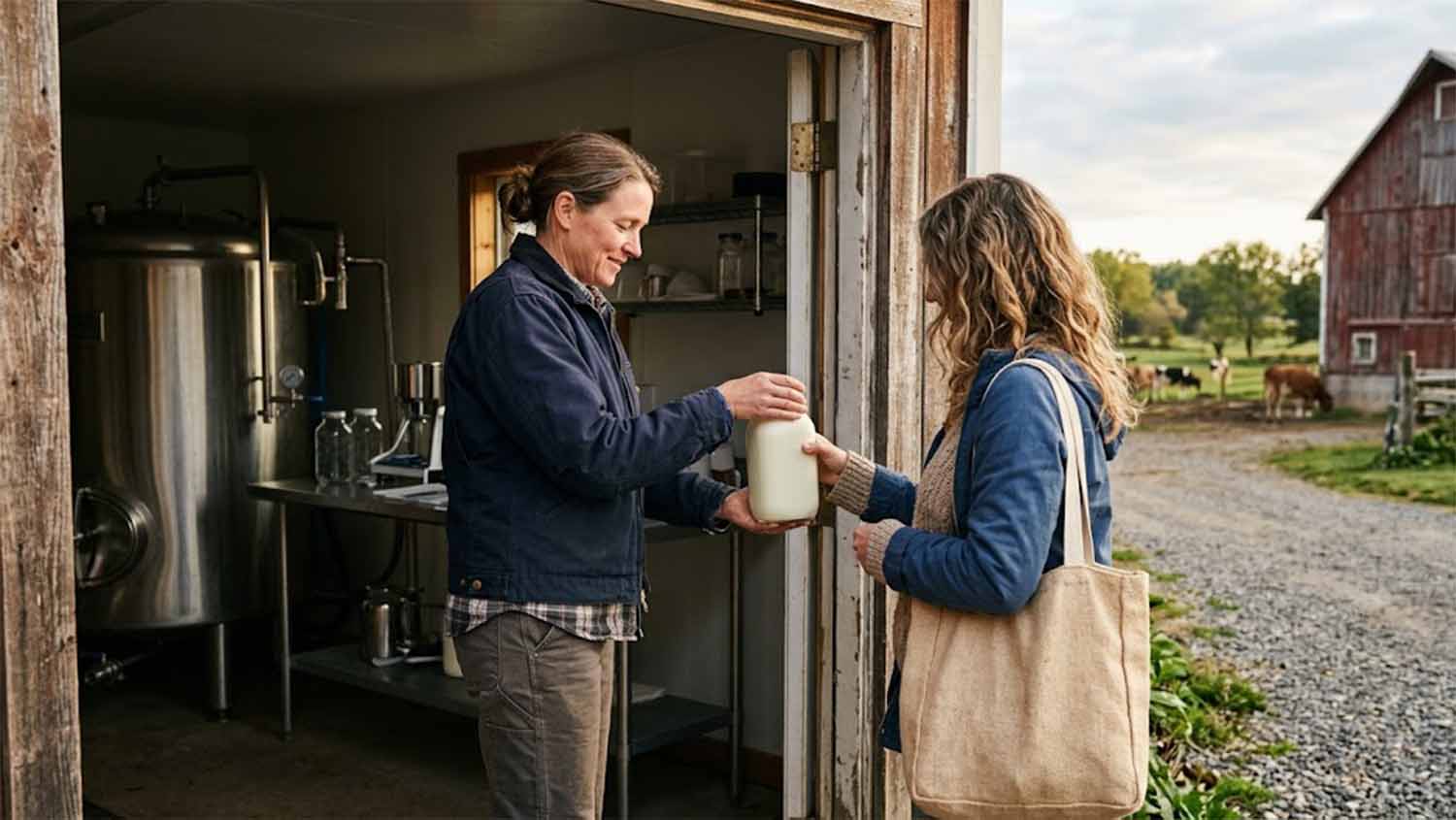
Bulk milk is not difficult to find. It is sold through traditional dairy shops, neighbourhood vendors and directly from farms, and is most freely available in rural areas, among nomadic and pastoral communities, and in provinces with significant sheep and goat herding. Buyers should understand that the trade sits outside the regulated chain: the Veterinary Organization explicitly offers no assurance for it, dairy shops selling it are acting against provincial circulars, and enforcement, while inconsistent, does occur.