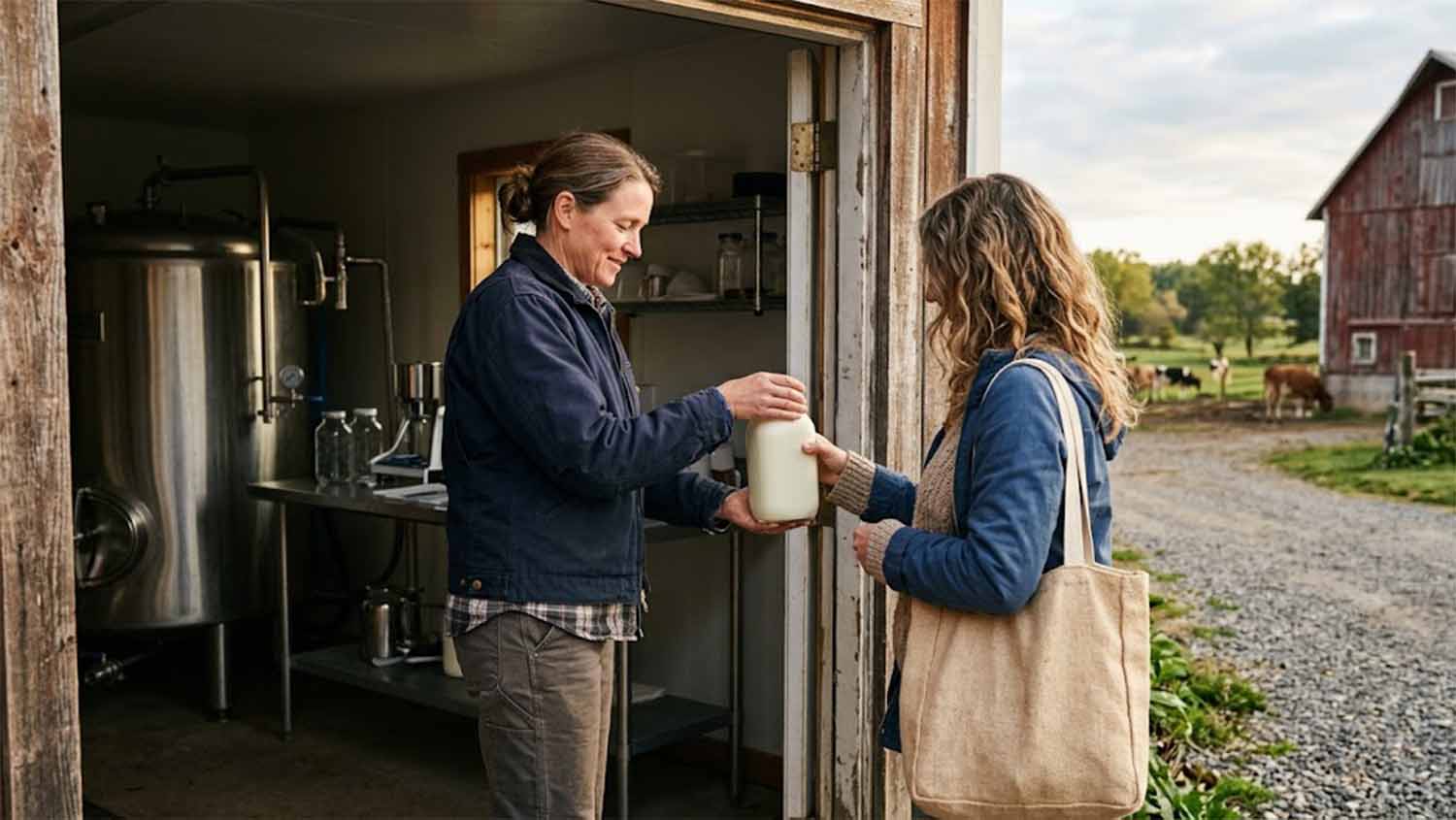
Raw milk is sold legally in South Africa in the areas of the local authorities listed in Annex C of the Regulations relating to milk and dairy products (R. 1555 of 1997, made under the Foodstuffs, Cosmetics and Disinfectants Act 54 of 1972, regulation 3(1)). Inside those areas farms, farm shops, markets and stores may sell raw milk, raw cream and raw sour milk to the public. Annex C, as amended in 2008 (R. 866), 2010 (R. 1262) and 2014 (R. 127), names towns including Centurion, Benoni, Boksburg, Pietermaritzburg-Msunduzi, Polokwane, Tzaneen, Ermelo, Middelburg, Piet Retief, Volksrust, Ladysmith, Aliwal North and Colesberg, and four whole district municipalities: Central Karoo in the Western Cape, Waterberg in Limpopo, and Fezile Dabi and Thabo Mofutsanyana in the Free State. Any other local authority that can oversee raw milk sales may ask the Minister of Health, through its provincial health department, to be added (regulation 3(2)).
Raw milk and raw cream for sale come in a closed container labelled "Unpasteurised" / "Ongepasteuriseerd" or "Raw milk" / "Rou melk"; when milk is tapped into the buyer's own container, the dispensing container carries the same words (regulation 4(h) to (j)). Raw sour milk is labelled "Unpasteurised sour milk" / "Ongepasteuriseerde suurmelk" or "Raw sour milk" / "Rou suurmelk" (regulation 5). The milk comes from a herd enrolled in the bovine tuberculosis and bovine brucellosis schemes under the Animal Diseases Act 35 of 1984, or one that tests negative for both every year (regulation 4(k)), and meets the regulation's standards for plate count (50,000 per ml), coliforms, E. coli, somatic cells and residues.
The marking rules under the Agricultural Product Standards Act (R. 1510 of 2019) say the same thing from the label side: milk and cream that have not been heat treated carry "Unpasteurized" or "Raw" in their class designation (regulation 29(6)), and a tank that milk is sold from is marked "raw" or "unpasteurised" next to the tap in letters at least 50 mm high (regulation 26(4)). The word "fresh" is allowed on pasteurised and raw milk alike (regulation 28(10)), so look for "raw" or "unpasteurised" on the label. A revision of R. 1510 was published for comment in August 2025 (R. 6501); the 2019 regulations remain the ones in force.
Dairy farms that sell milk for drinking milk their cows in an approved milking shed, with a certificate of acceptability from the local authority (R. 961 of 2012). R. 1555 makes yoghurt, cultured milk and sour cream from pasteurised milk, while its definition of cheese sets no heat treatment, so farmhouse cheeses made from raw milk are sold across the country.