British Columbia takes a structurally different approach from the rest of Canada. Rather than relying only on dairy licensing law, BC designates unpasteurized milk as a health hazard by regulation, which pulls it under the Public Health Act and its considerably heavier enforcement machinery.
The health hazard designation
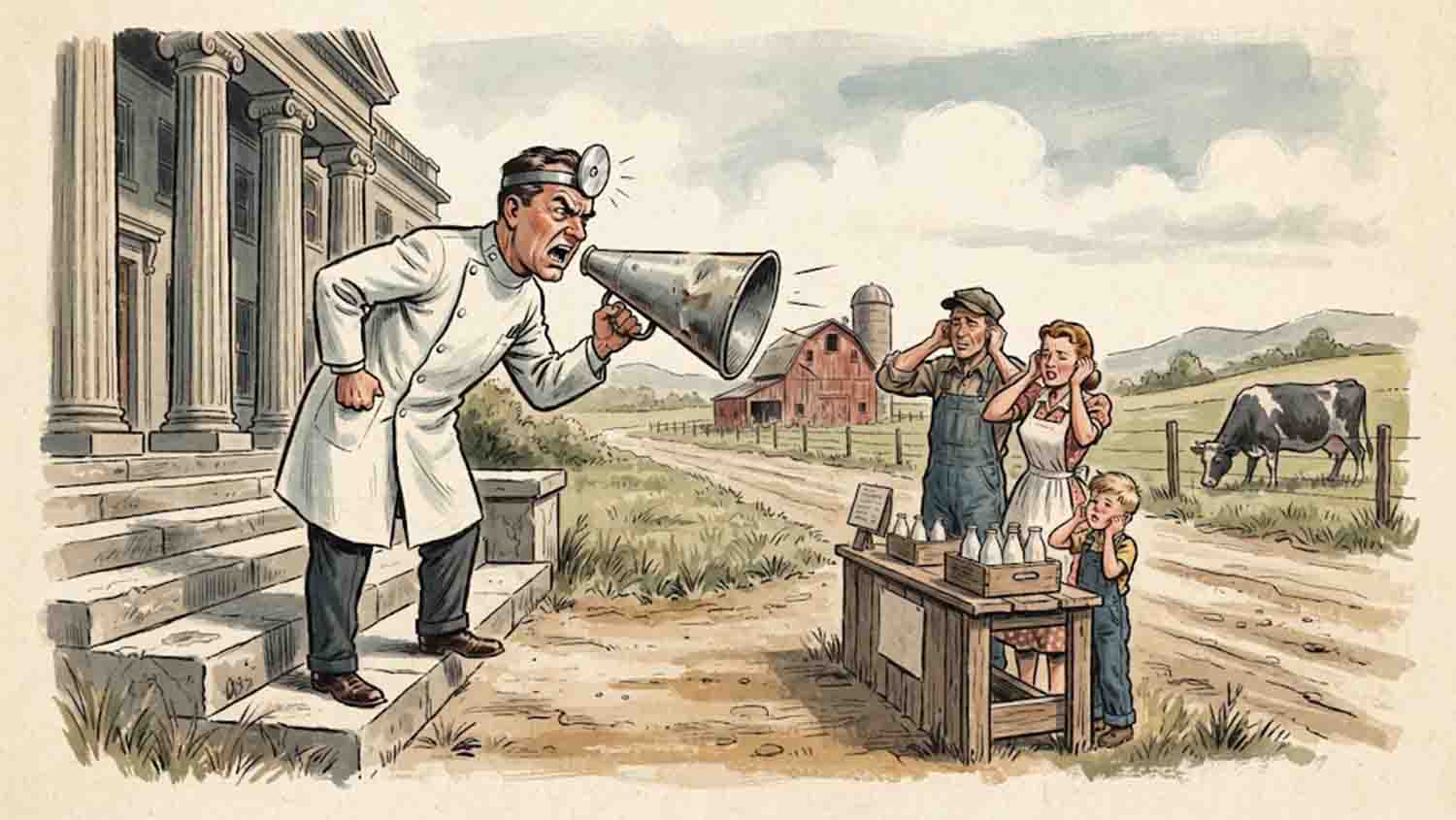
Section 2(a) of the Health Hazards Regulation (B.C. Reg. 216/2011) prescribes that milk for human consumption which has not been pasteurized at a dairy plant licensed under the Milk Industry Act is a health hazard. The original designation was made in 1988. The practical consequence is significant: health hazard provisions under the Public Health Act carry maximum penalties reaching into the millions of dollars and up to three years imprisonment, an order of magnitude beyond the fines available under ordinary provincial dairy legislation. It also means regional health authorities, rather than agriculture inspectors, drive enforcement.
Cow-shares and the courts
BC produced Canada's best known cow-share confrontation outside Ontario. Alice Jongerden of Home on the Range in Chilliwack milked a herd for roughly 400 cow-share members until the Fraser Health Authority obtained a court injunction in March 2010 barring packaging and distribution for human consumption. That case tested the ownership question squarely: the members did hold shares in the cows and the containers were marked not for sale, and the court held that in British Columbia the distinction was not relevant. Jongerden continued, labelling bottles "Not For Human Consumption," and was found in contempt in December 2010 on the basis that she knew members would drink the milk.
Challenges have continued and continued to fail. Cow-share advocate Gordon Watson filed a constitutional challenge in April 2024 seeking to restrain the government from enforcing the Public Health Act in respect of raw milk, arguing that fractional owners of an animal should not have their property rights interfered with. In a ruling issued in Vancouver in October 2024, the BC Supreme Court dismissed it, holding that his claims were barred because the same matters had already been decided in earlier rulings in 2011 and 2013. After more than two decades of litigation, the health hazard designation remains undisturbed.
The herdshare community
Despite the prohibition, British Columbia has the largest and best organized raw milk community in Canada. The BC Herdshare Association (BCHA), a legally incorporated non-profit society, estimated that dozens of herdshares numbering well over 100 were operating province-wide. Participants who keep the animals are known in BC usage as agisters, a term drawn from the law of agistment, under which one person boards and cares for livestock owned by another. That framing is central to how these arrangements are structured: members hold an ownership interest in the animal and the agister is paid for boarding and milking rather than for milk.
BCHA built a genuine voluntary safety infrastructure around this community rather than leaving it informal, offering Grass-to-Glass agister training, milk sample testing, farmer-to-farmer mentorship, and listing through the Raw Milk Institute (RAWMI) certification program. It also drafted a model regulation to legalize herdsharing in the province. In November 2021 BCHA announced the formation of the Canadian Artisan Dairy Alliance, which has since carried the advocacy work forward nationally. The BCHA website is no longer online, and its material is now accessible only through web archives.
Availability
There is no legal source of raw drinking milk in British Columbia, and the province carries the heaviest penalty exposure in Canada for distribution. In practice, access runs through herdshare arrangements and private membership associations, which remain outside the law regardless of how the ownership is structured, as the Jongerden and Watson cases established. Consumers generally find these through community networks, including the Raw Milk British Columbia Facebook group, which had over 2,000 members as of April 2022.
Cross-border purchasing is also common. Washington State licenses raw milk farms and permits retail sale, with roughly 39 licensed farms and more than 100 stores stocking it, and residents of the Lower Mainland and southern interior regularly buy raw milk while shopping in Washington. Personal transport for one's own consumption is treated differently from importation for distribution, and bringing raw milk into Canada to supply others engages both Canadian food law and customs rules.
Aged raw milk cheese is legal under the federal 60 day rule. For the national picture, see the Canada raw milk laws overview.