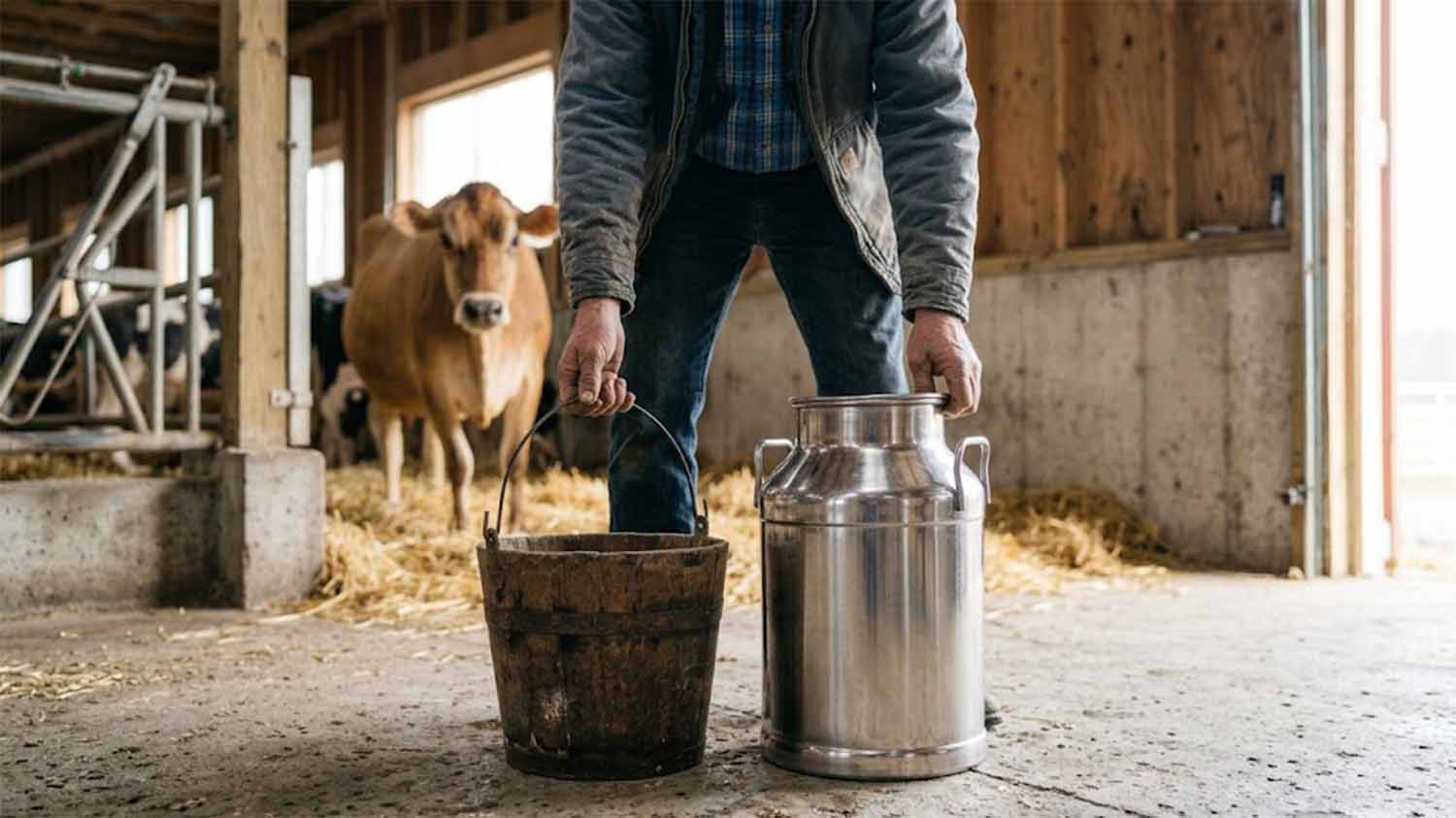
Italy has one of the largest raw milk vending networks in the world. Farms sell raw milk (latte crudo) directly and through vending machines (distributori di latte crudo) at the farm, in town squares and outside shops, usually for around one euro a litre. The system has been authorized nationally since 2007.
Is raw milk legal in Italy?
Yes. A State-Regions agreement (Intesa Stato-Regioni) of 25 January 2007, published in the Gazzetta Ufficiale on 13 February 2007, set national hygiene requirements for selling raw milk directly to consumers at the farm and through vending machines located on or off the farm. The rules were later placed in statute by Article 8 of Decree-Law 158/2012 (the Balduzzi decree, converted by Law 189/2012), with machine and labeling details set by a Ministry of Health decree of 12 December 2012.
Registering a vending machine
Under the 2007 agreement, a farm that wants to sell through vending machines files a registration with a technical report on how it will sell the milk, and may start once 45 days pass without a refusal from the local veterinary service (ASL). Machines can be placed on the farm or elsewhere within the farm's province or a neighboring province. Each machine is registered under EU Regulation (EC) No 852/2004.
The farm's milk must meet the EU criteria for raw milk, with the plate count and somatic cell count checked as a rolling average of at least two samples a month, and regions may set stricter limits. Veterinary services inspect participating farms. Machines are restocked daily. Milk not sold the same day goes back to the farm, where it is pasteurized, used for long-aged cheese, or fed to animals. If milk falls outside the limits, sales pause until the problem is fixed, and the farm cannot substitute milk from another farm in the meantime.
Rules for raw milk vending machines
Under the 2012 decree, an operator selling raw milk from a vending machine must:
- display on the front of the machine, in red letters at least 4 centimetres high, the words "prodotto da consumarsi previa bollitura" (product to be consumed after boiling);
- show clearly the date of milking and a use-by date no more than three days after milking; and
- not offer cups or other containers for drinking at the machine.
Machines that also fill bottles must print the boiling notice and the dates on each bottle, in red letters at least 1 centimetre high. Machine information also includes the words "latte crudo non pastorizzato" (raw unpasteurized milk), required since the 2007 agreement.
Direct sales and packaged raw milk
Article 8 of Decree-Law 158/2012 also requires packaged raw milk and raw cream to carry the boiling notice on the label, and requires farms selling raw milk directly to post a sign telling buyers to boil it before consumption. Raw milk and raw cream are not served in collective catering, including school canteens, and ice cream makers using raw milk must heat-treat it during production.
Raw milk cheese
Italy's most famous cheeses are raw milk cheeses. Parmigiano Reggiano is made from raw milk with no additives, and many other protected cheeses across the Alps and the south are made the same way.
Finding raw milk in Italy
Machines are densest in the dairy regions of the north, including Lombardy, Piedmont, Veneto and Emilia-Romagna, with others near Rome, in the south and on Sicily and Sardinia. Current machine locations and farms are listed at raw milk in Italy. For a full guide to the network, see Italy's Raw Milk Vending Machines: The Distributori di Latte Crudo, and for how the machines work, How a Raw Milk Vending Machine Works.