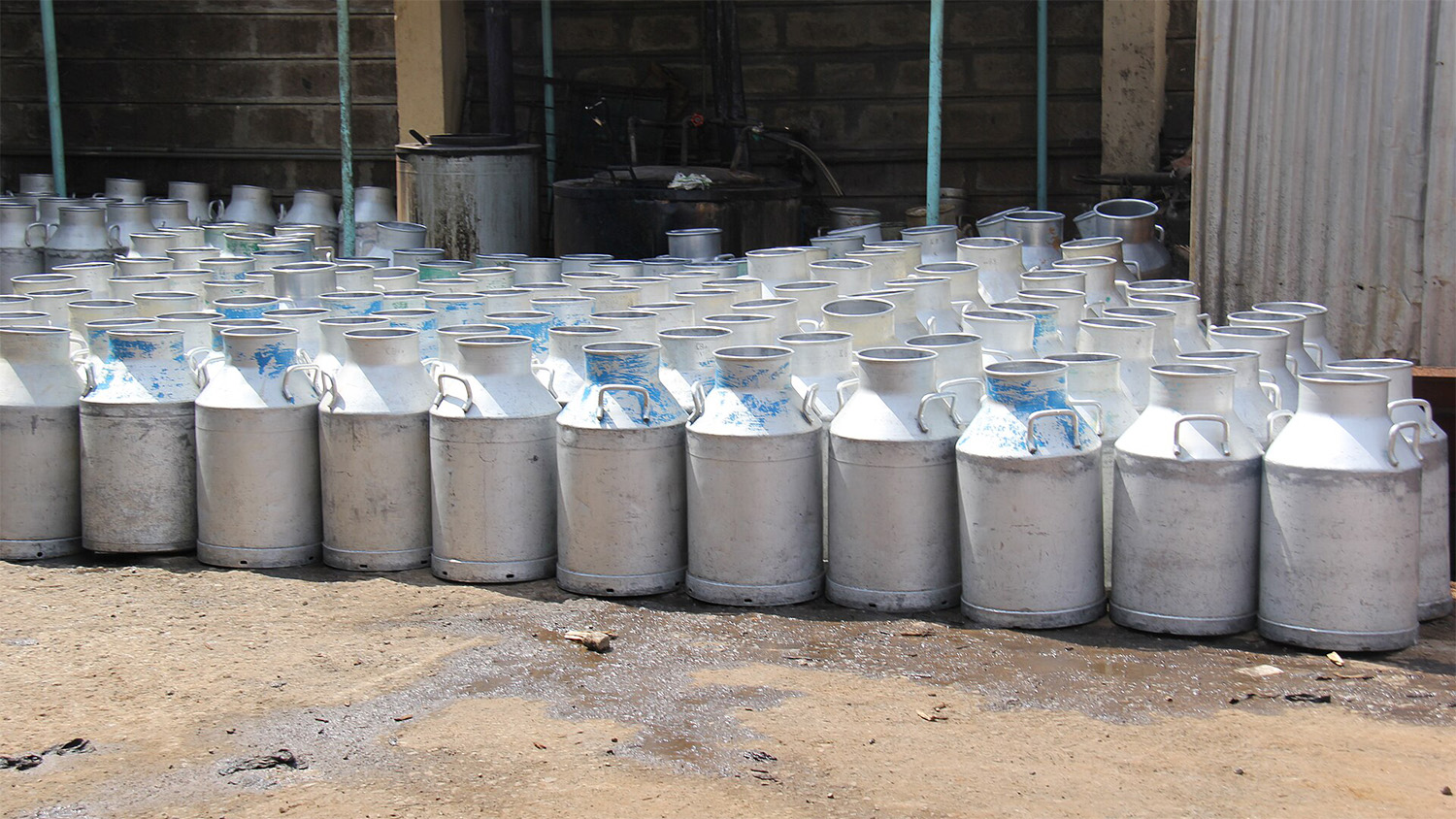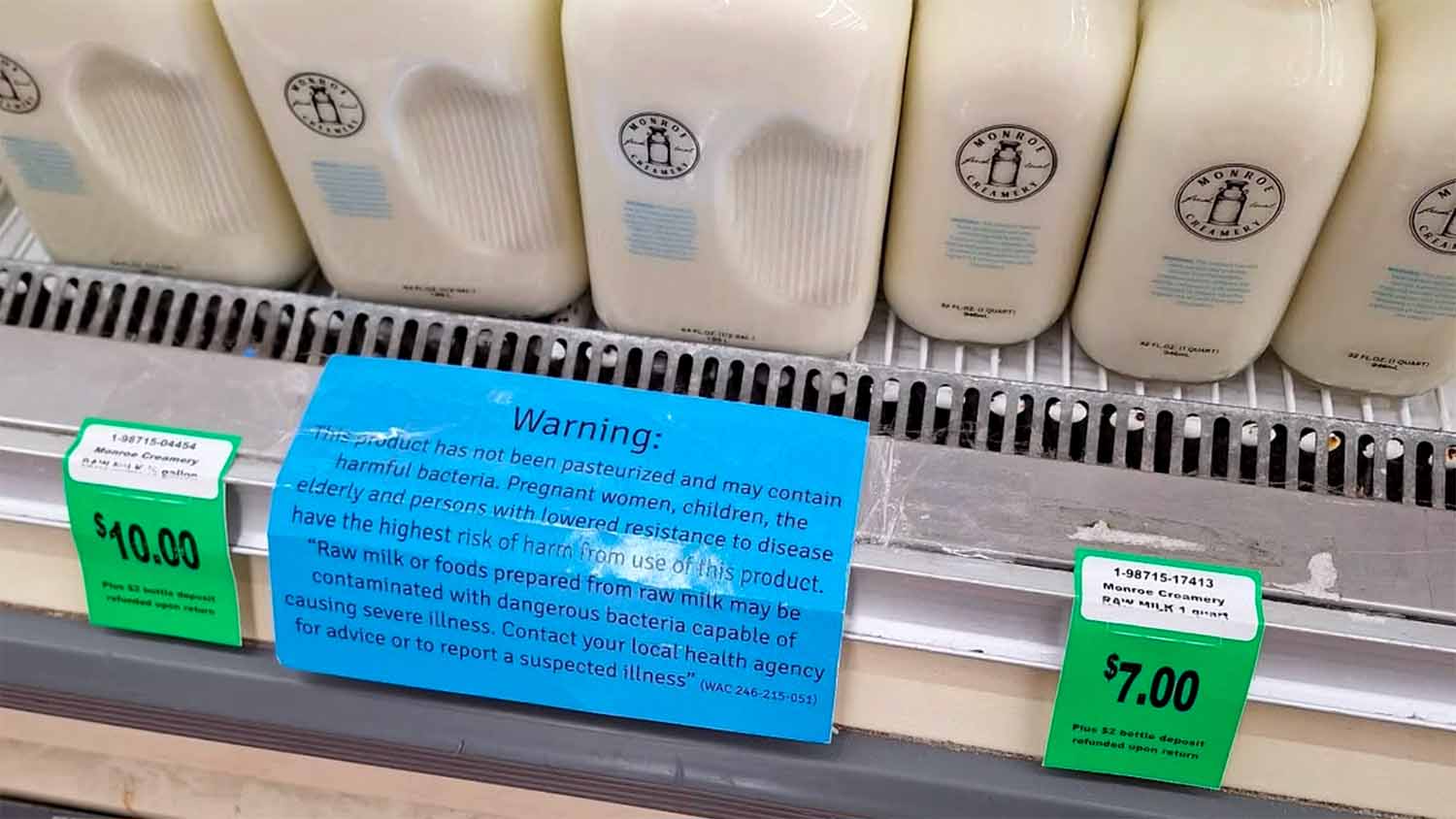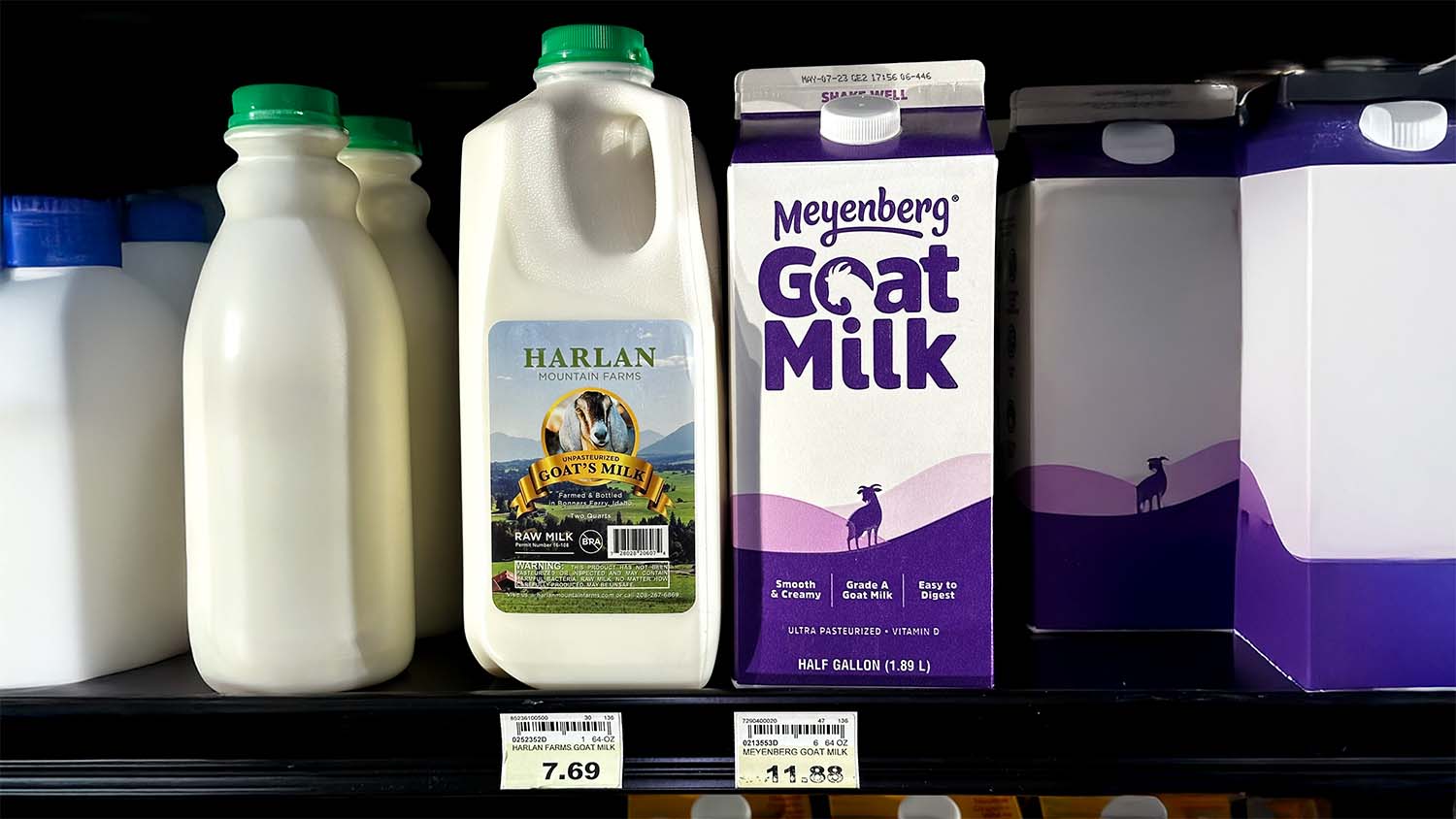
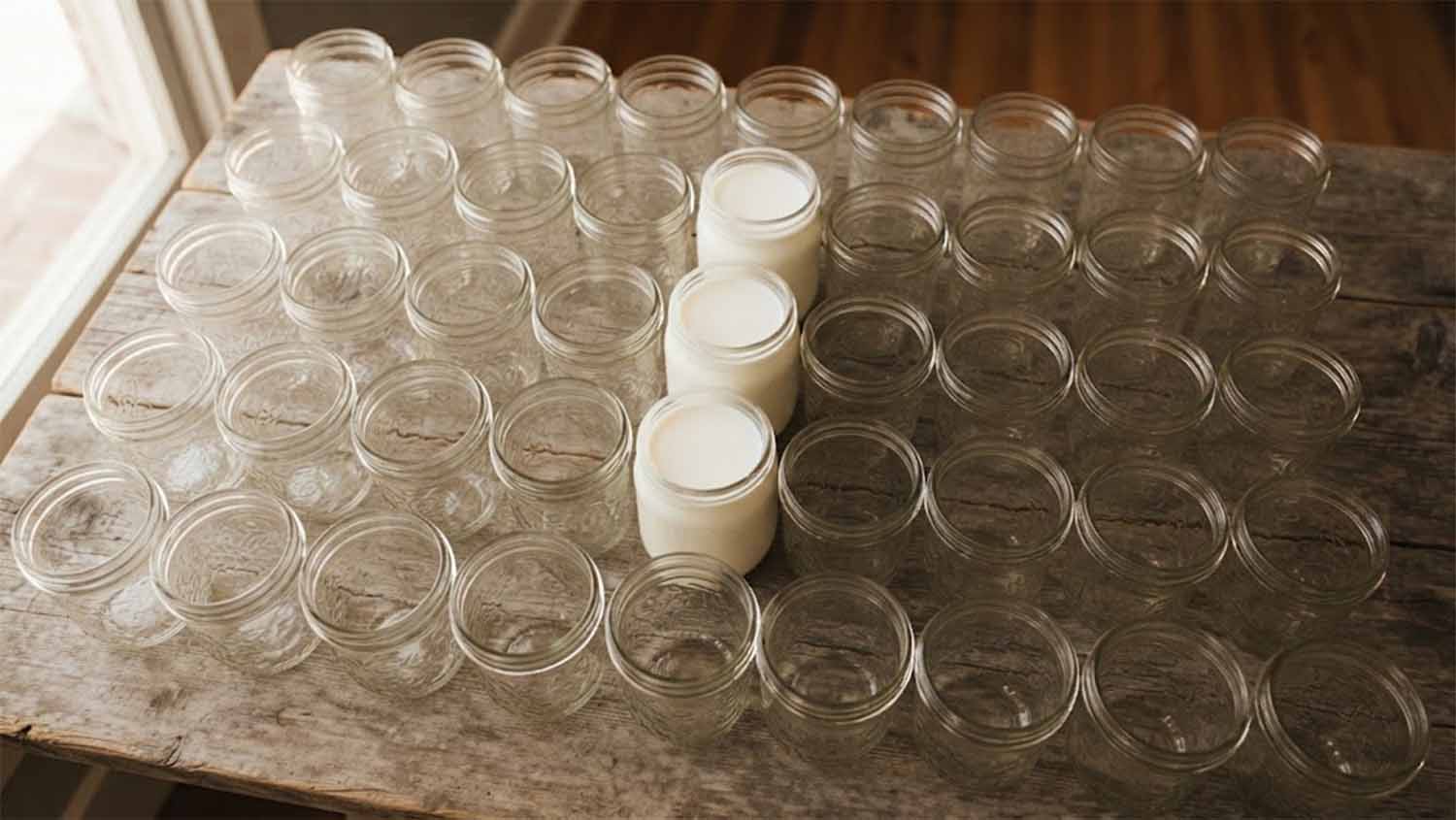
A few full jars among many empty ones: about 4% of US adults, roughly 11 million people, drink raw milk in a given year.
How Many People Drink Raw Milk in the US?
About 4% of American adults, roughly 11 million people, drank raw milk at least once in the past year. Two independent national estimates agree on that share: FDA’s Food Safety Survey (2016) and Food Safety and Nutrition Survey (2019) found 4.4%, and a 2025 survey by the University of Pennsylvania’s Annenberg Public Policy Center found 4%.
Regular drinkers are a smaller group. In the FDA data, 1.6% of adults drank raw milk at least once a month and 1.0% at least once a week. At today’s population, those rates work out to about 4.3 million adults who drink it at least monthly and 2.7 million who drink it at least weekly.
These figures, alongside sales, legal access and worldwide data, are collected in raw milk statistics.
Raw milk consumption in the US at a glance
- Past year: about 4% of adults, roughly 11 million people
- At least monthly: about 1.6% of adults, roughly 4.3 million
- At least weekly: about 1.0% of adults, roughly 2.7 million
- Daily: about 1 million adults (2016 to 2019 estimate)
- Households: about 2% of at-home meal preparers consume or serve raw milk in a typical week, about 3.2 million people (2014 to 2016)
The past-year figure comes from Lando et al. 2022 and the Annenberg Public Policy Center’s 2025 survey. The monthly, weekly and daily figures come from Lando et al. The household figure comes from a USDA Economic Research Service analysis by Rhodes and Kuchler. Current totals apply each rate to the Census Bureau’s Vintage 2025 estimate of about 270 million adults.
Every national survey of raw milk drinkers
Six surveys have measured raw milk consumption across the US or large parts of it. They ask different questions over different time windows, so their headline numbers differ.
| Survey | Years | Who was asked | Time window | Result |
|---|---|---|---|---|
| FoodNet Population Survey (CDC) | 1996 to 1997 | 7,493 adults in 5 states | 5 days before the interview | 1.5% |
| FoodNet Population Survey (CDC) | 2006 to 2007 | 17,372 people of all ages in 10 states | Past 7 days | 3.0% |
| American Time Use Survey, Eating and Health Module (analyzed by USDA ERS) | 2014 to 2016 | 23,031 at-home meal preparers, nationwide | Typical week | 2%, about 3.2 million people |
| Food Safety Survey and Food Safety and Nutrition Survey (FDA) | 2016 and 2019 | 6,747 adults, nationwide | Past 12 months | 4.4%, about 10.7 million adults |
| FoodNet Population Survey (CDC) | 2018 to 2019 | Residents of 10 FoodNet sites, all ages | Past 7 days | About 2% |
| ASAPH survey (Annenberg Public Policy Center) | 2025 | 1,716 adults, nationwide | Past 12 months | 4%, plus 2% not sure |
The 2018 to 2019 FoodNet figure is reported in Lando et al. CDC uses the same survey as a baseline in outbreak investigations: a 2025 MMWR report put background raw milk consumption in the California population at 1.9%.
The 10 FoodNet sites in 2006 to 2007 covered about 45.9 million people, roughly 15% of the US population. Costard et al. 2017, a widely cited study of raw dairy illness, cites this survey for its figure of 3.2% of the population drinking raw milk. The published atlas reports 528 of 17,372 respondents, or 3.0%, and notes that its percentages are unweighted.
Why raw milk survey numbers differ
The time window. A past-year question catches everyone who had raw milk once at a farm visit or a friend’s house. A past-week question catches mostly regular drinkers. That is why the past-year surveys land near 4% and the past-week surveys land between 1.5% and 3%.
Who is counted. The FDA and Annenberg surveys count adults only. The 2006 to 2007 and 2018 to 2019 FoodNet surveys include children, with parents answering for younger kids. The time use survey counts the person who prepares meals at home, a measure of household use rather than individual drinkers.
Where. FoodNet covers a set of surveillance sites rather than the whole country. The FDA, Annenberg and time use surveys are nationally representative.
The “less than 1 percent” figure. FDA’s consumer page on food safety and raw milk says that “a small number of Americans (less than 1 percent) have rejected pasteurization in favor of raw (or unpasteurized) milk,” with no source given. A separate FDA page on raw milk misconceptions uses “less than 1%” for something different: raw milk’s share of total milk volume. FDA’s own researchers measured 4.4% of adults in the past year. The “less than 1 percent” figure still circulates, for example in a 2026 University of Wisconsin Extension article that cites FDA. It roughly matches the share who drink raw milk weekly (1.0%), not everyone who drinks it.
Self-reporting. All of these surveys rely on people remembering what they drank. In the 2025 Annenberg survey, another 2% of respondents were not sure whether they had had raw milk in the past year.
How often people drink raw milk
Lando et al. asked past-year drinkers how often they drink raw milk. Most drink it occasionally, but about 1 in 4 drink it at least once a week.
| How often | Share of raw milk drinkers | US adults (2016 to 2019) |
|---|---|---|
| Less than once a year | 23.1% | about 2.4 million |
| A few times a year | 36.5% | about 4.0 million |
| Once a month | 5.3% | about 570,000 |
| A few times a month | 8.1% | about 840,000 |
| Once a week | 4.9% | about 500,000 |
| Two to three times a week | 8.8% | about 990,000 |
| Daily | 9.5% | about 1.0 million |
About 60% of drinkers have raw milk less than once a month. The authors suggest that price, which can be two to three times that of pasteurized milk, and the limited number of places to buy it hold down how often people drink it. The survey counted 227 raw milk drinkers, so each frequency row has a wide margin of error.
Who drinks raw milk
Lando et al. also identified the characteristics that predict raw milk consumption, after adjusting for other factors:
- Age. Adults aged 18 to 35 make up 47% of raw milk drinkers, compared with 31% of non-drinkers. Their odds of drinking raw milk are 3.7 times those of adults 66 and older.
- Rural living. Rural residents make up 25% of drinkers, compared with 17% of non-drinkers, and have 1.7 times the odds of drinking it. An earlier FoodNet survey from 1996 to 1997 found raw milk consumption of 8.6% among people living on a farm, compared with 1.1% in cities.
- Legal access. Adults in states that allow retail sales have twice the odds of drinking raw milk as adults in states where sales are not legal. Of all raw milk drinkers, 87% lived in a state with some legal form of sale.
- Region. Northeasterners have about twice the odds of drinking raw milk as Southerners.
- Income. People in higher income groups are more likely to drink it.
- No significant difference: education, gender, and race or ethnicity.
Frequent and occasional drinkers may differ in education. Among drinkers who have raw milk at least monthly, 24% were college graduates, compared with 41% of occasional drinkers, though the gap was not statistically significant.
Household data points the same way. Analyzing the time use survey, Rhodes and Kuchler found that younger and male meal preparers, larger households and households outside metropolitan areas were more likely to use raw milk in an average week.
Raw milk consumption by state
State surveys show wide variation from one place to another.
- Vermont. A 2013 statewide telephone survey found that 11.6% of Vermont adults had bought or otherwise obtained raw milk in the past year, more than two and a half times the national past-year rate. The survey followed a 2009 Vermont law allowing on-farm sales.
- California. The 1994 California Behavioral Risk Factor Surveillance System survey found that 3.2% of California adults drank raw milk in the previous year. The 2018 to 2019 FoodNet survey put California’s background rate at 1.9%.
- The 2006 to 2007 FoodNet sites. Past-week consumption ranged from 2.3% in Minnesota to 3.8% in Georgia, across California, Colorado, Connecticut, Georgia, Maryland, Minnesota, New Mexico, New York, Oregon and Tennessee.
Is raw milk consumption growing?
The national surveys do not yet show a statistically clear jump in the share of adults who drink raw milk. FDA’s analysis found no significant difference between its 2016 and 2019 surveys, and Annenberg’s 2025 result (4%) sits in the same range as FDA’s (4.4%). The surveys use different methods, so they are not a precise trend line.
Other signals point upward:
- Retail sales. NielsenIQ data reported by the Associated Press showed weekly retail raw milk sales running 21% to 65% above the same weeks a year earlier in spring 2024. NielsenIQ tracks only stores, not farm-direct sales or herdshares.
- More legal access. Since the 2019 FDA survey, several states have opened or widened legal sales, including Georgia (2023), Iowa (2023), Alaska (2023), West Virginia (2024), Delaware (2024), Louisiana (2024), Arkansas (2025), North Dakota (2025), Utah (2026) and Oklahoma (2026). Lando et al. found that legal retail access doubles the odds that an adult drinks raw milk, so wider access is likely to mean more drinkers over time.
Annenberg reported only past-year consumption, not frequency, and no national survey published since 2019 reports how often Americans drink raw milk. Weekly and daily drinkers consume far more milk than occasional ones, so growth among regular drinkers can lift sales sharply without moving a past-year number much.
What the consumer count means for illness rates
The number of raw milk drinkers is the denominator in any per-consumer illness rate. With between about 9.6 million and 11 million consumers and an estimated 730 outbreak-related illnesses a year, the rate works out to about 1 in 13,000 to 1 in 15,000 consumers a year. Raw Milk Illness Rate Per Consumer: Updated Data from 2022 explains that calculation. Is Raw Milk Safe? What the Research Shows covers the wider safety evidence, and Raw Milk Legalization and Foodborne Illness looks at what happened to outbreaks as access expanded.
Raw milk outside the US
In several European countries, raw milk is sold openly through farm shops and self-service vending machines. For how other countries handle it, see raw milk in France, Italy, Switzerland and Austria and Norway. To find a source closer to home, browse raw milk farms and retailers in the United States or check raw milk laws by state.